What you wear for NYC engagement photos should support movement, weather, and the location without making either person feel costumed. The strongest wardrobe usually combines one polished outfit with one relaxed outfit, coordinates formality and color without matching exactly, and includes shoes that can survive real New York sidewalks.
The goal is not to follow a generic neutral-color formula. It is to choose clothing that feels recognizable, fits while walking and sitting, and belongs in the part of New York where the session will happen.
We have photographed couples across New York since 2007. This guide was reviewed by Julian Ribinik in August 2026 using practical lessons from current engagement sessions in Manhattan and Brooklyn.
NYC engagement outfit guide
Dress like yourselves, with enough intention for the city around you.
Start with fit, movement, weather, and equal formality. Color comes after those decisions.
Choose outfits that feel like a deliberate version of what you already wear. Coordinate the level of formality, let one pattern or statement piece lead, and test every outfit while walking, sitting, reaching, and embracing.
Plan one polished outfit and one relaxed outfit if time allows.
Coordinate colors instead of wearing identical ones.
Use comfortable walking shoes between photographs.
Bring weather layers that look intentional.
Remove large logos, phones, keys, and overfilled pockets.
Try every complete outfit together before the session.
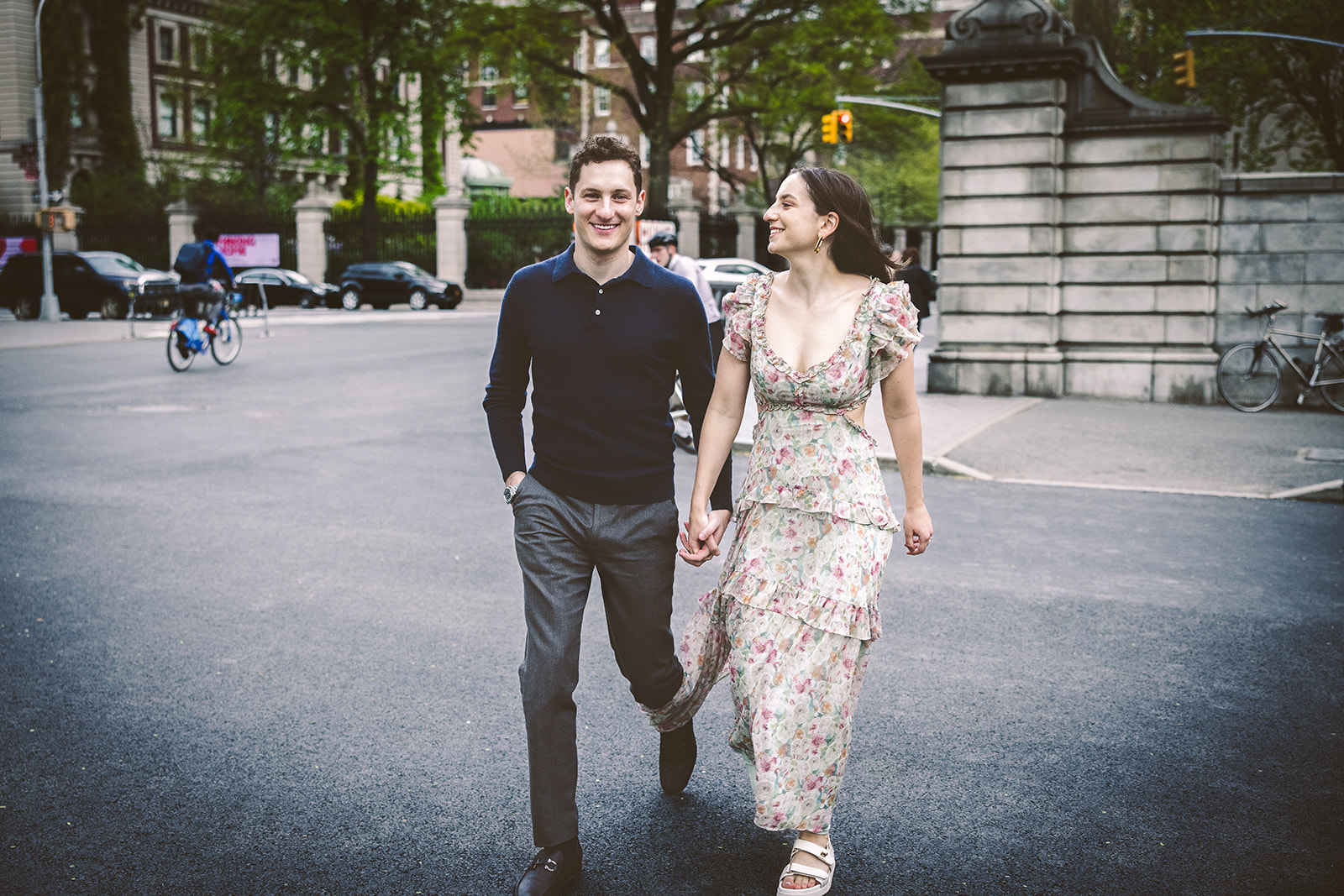
Similar formality and a restrained palette let the people and the Manhattan street share the frame without competing.
Start with how you want the photographs to feel
Polished
Structured and city-ready
Tailored trousers, a suit or blazer, a dress, a skirt, a crisp shirt, a refined knit, or a structured coat can make a session feel deliberate. The exact garment matters less than clean fit and equal effort from both people.
This approach works especially well with stone architecture, hotel interiors with permission, formal gardens, and evening city light.
Relaxed
Recognizable and lived-in
Jeans, knitwear, leather or denim jackets, clean sneakers, boots, and familiar layers can create photographs that feel like an actual New York date. Relaxed does not mean accidental. Fit, condition, and coordination still matter.
A relaxed outfit works naturally in the West Village, Brooklyn Heights, neighborhood restaurants, pizza stops, waterfront walks, and at-home sessions.
The essential rule
Match the effort, not the exact clothing
If one person wears a formal evening look while the other wears weekend errands clothing, the difference reads before the location does. The outfits do not need to share a uniform, gendered formula, or identical color. They do need to feel as if both people are attending the same occasion.
Look at the two complete outfits side by side. Ask whether the fabrics, season, formality, and footwear belong in the same story. This catches more problems than choosing a palette first.
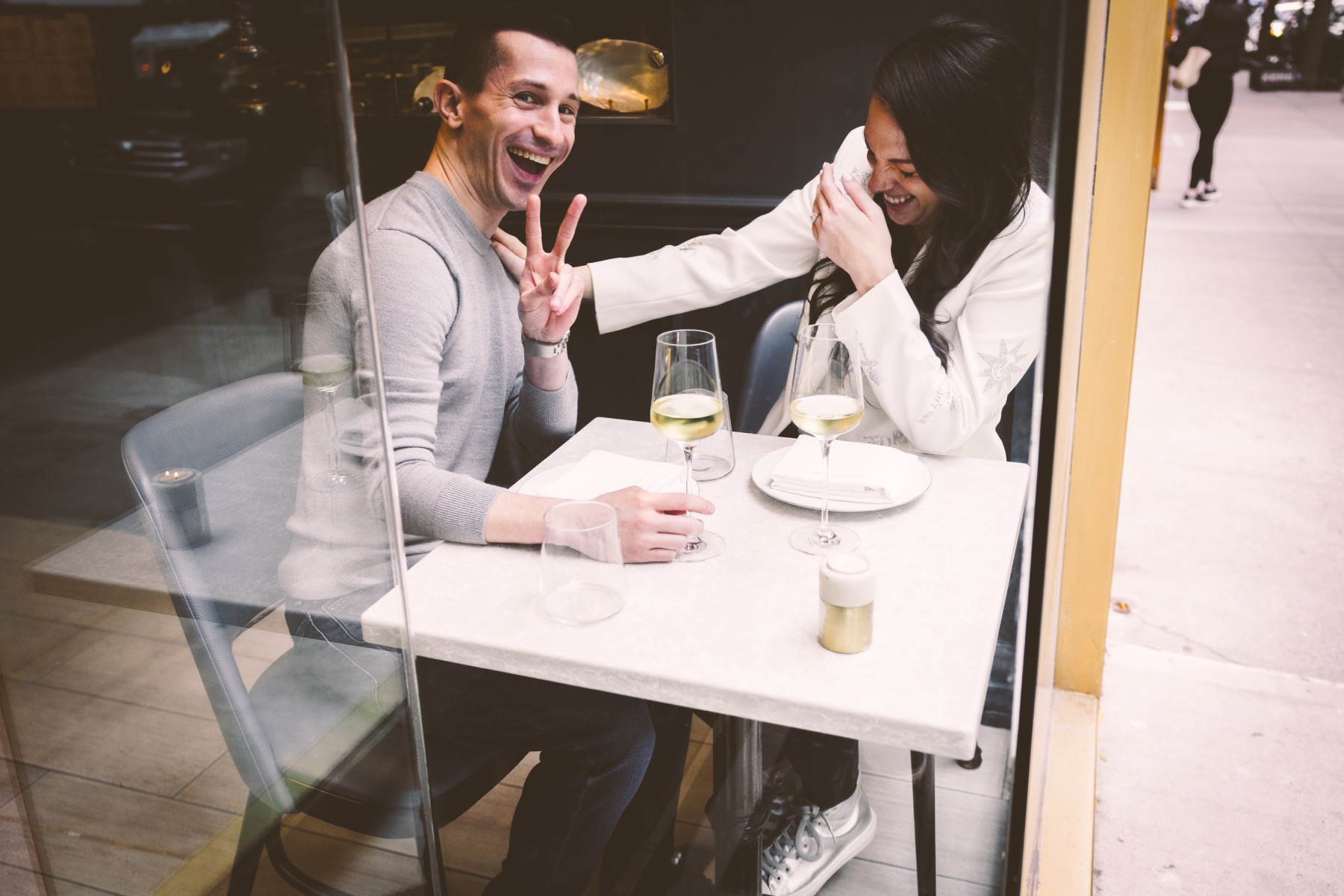
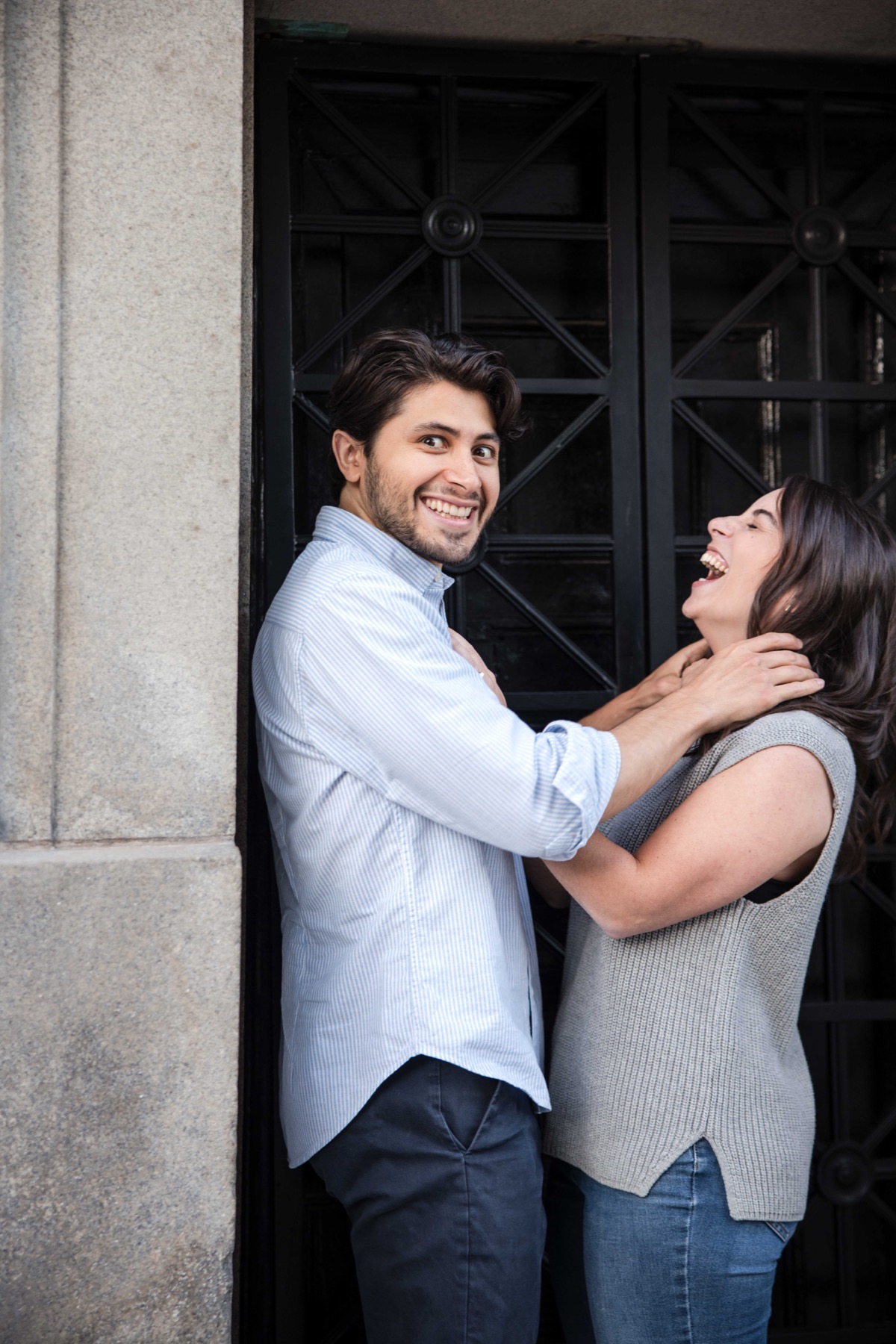
Casual layers feel intentional when the setting and activity are equally relaxed.Light tones work well when both outfits retain texture and the background provides contrast.
Match the outfit to the NYC location
An outfit does not exist separately from the background. Cobblestones change shoe decisions. A dark restaurant changes how black clothing separates from the room. A windy waterfront changes hair, hemlines, and lightweight layers. Choose the location and wardrobe together.
Setting
Useful direction
Practical reason
Central Park
Soft tailoring, texture, dresses or separates with movement, practical footwear
Paths, grass, stairs, seasonal color, and long walking distances reward clothes that move and shoes with traction.
West Village
Relaxed tailoring, denim, knitwear, boots, a strong coat
Brownstones, restaurants, narrow sidewalks, and a neighborhood pace favor clothes that feel personal rather than ceremonial.
SoHo and Tribeca
Clean lines, structured pieces, restrained patterns, walkable city shoes
Cast iron, stone, glass, and wider streets can carry a more graphic wardrobe without requiring identical neutrals.
Begin with the garment that has the strongest color, pattern, or silhouette. The second outfit can borrow one quieter tone or match the level of formality without repeating the statement.
Two statement patterns often compete. One pattern plus one solid or subtle texture is easier to control.
Check contrast against the setting
Black can look precise against light stone but disappear in a dark bar. Pale clothing can feel fresh against brick but lose separation in bright stone or overexposed sky. The solution is not banning colors. It is checking contrast.
Use texture for quiet depth
Wool, linen, silk, denim, leather, velvet, and substantial knitwear respond differently to light and movement. Texture can make a restrained palette feel dimensional without adding a busy print.
Test small patterns on camera
Tiny stripes, tight checks, and dense prints may vibrate or become visually noisy. Photograph the complete outfit with a phone from full-body distance. If the pattern becomes distracting at that scale, simplify it.
Outerwear, footwear, and movement matter because a neighborhood engagement session is a real walk, not one stationary pose.
Fit and movement matter more than the label
An outfit can look perfect while standing still and fail as soon as the session begins. Engagement photographs involve walking, sitting, turning, leaning, reaching, stairs, wind, and close embraces. Clothing should allow all of that without constant pulling or checking.
Run a movement test
Walk quickly and take a long step.
Sit on a chair, bench, or low wall.
Raise both arms and reach across the body.
Turn sideways and check every closure.
Place phones, keys, and a wallet in the planned pockets.
If a garment needs correction after each test, it will interrupt the session too.
Choose support that stays invisible
Check every outfit in daylight and from the back. Make sure underlayers, straps, socks, shapewear, and tailoring support the garment during movement rather than creating a new distraction.
Fit advice should never require hiding a body. The goal is comfort, reliable movement, and clothing that lets each person stop thinking about the outfit.
Shoes are part of the route
New York engagement sessions cover actual pavement. Cobblestones, subway stairs, park paths, wet sidewalks, and long blocks change how a person stands and moves. Pain appears in posture and expression even when the shoes are outside the frame.
Wear walkable shoes, or carry a light pair for transportation and change into the photographed shoes at each location. Practice walking in new shoes before the session. Bring blister protection, and avoid making a first attempt at difficult footwear during a two-location route.
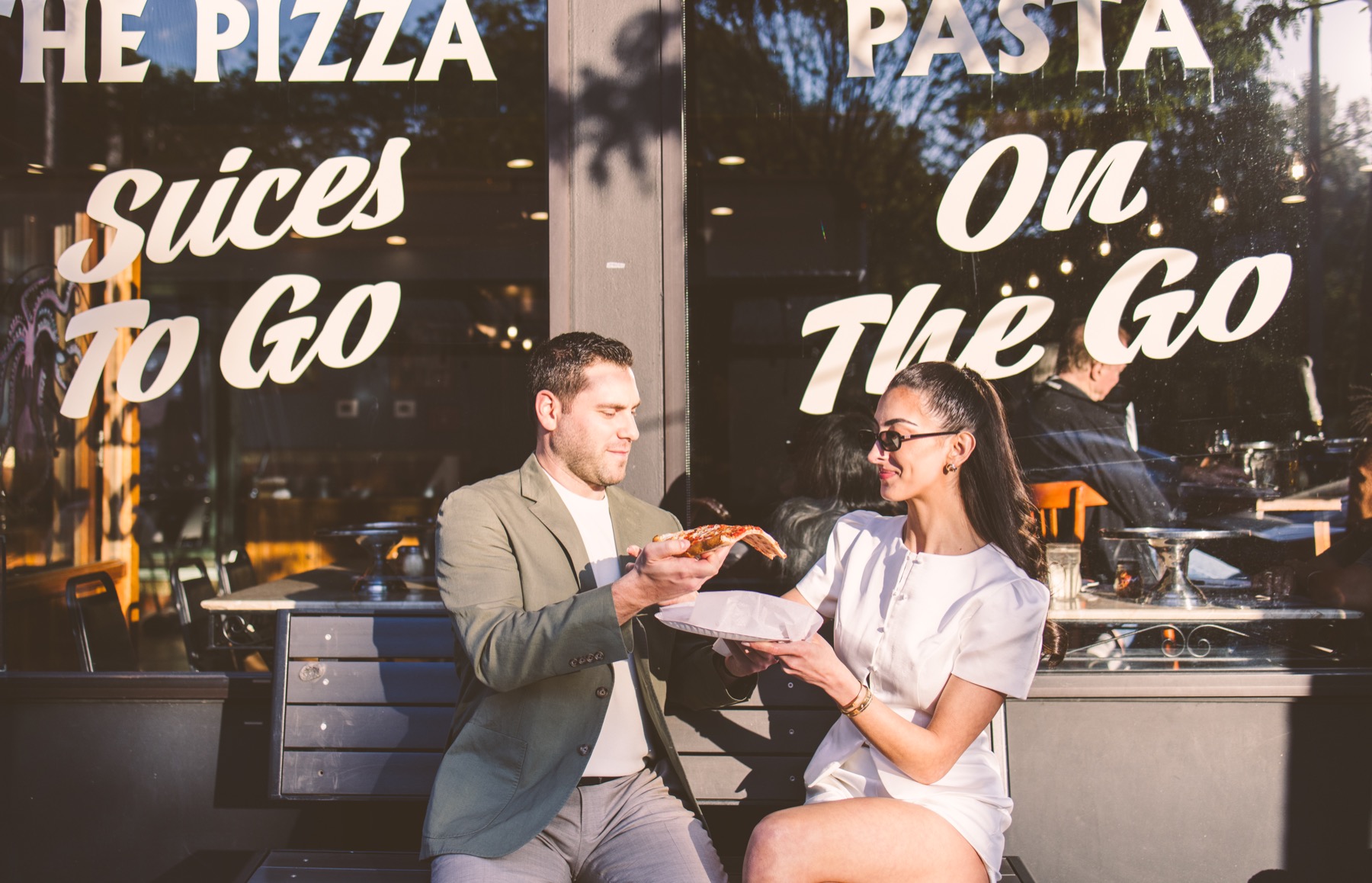
A personal activity and a relaxed outfit can create a stronger story than dressing for an imaginary version of the session.
Should you bring a second outfit?
A second outfit is useful when it changes the story, not simply because two sounds better than one. Pair a more polished look with a relaxed one, or use a meaningful difference such as evening and daytime, indoor and outdoor, or formal architecture and neighborhood life.
Changing takes time and requires a lawful, private place. Public restrooms, building lobbies, cars on a busy street, and restaurant bathrooms should not be assumed available. A coat, jacket, scarf, jewelry change, or different shoes can create variety without a complete change.
For a short session, one excellent outfit is usually stronger than two rushed ones. For a multi-location plan, read our guide to a pre-wedding photoshoot in NYC before deciding how much travel and changing the schedule can absorb.
What to wear by season in New York
Spring
Variable temperature and damp ground
Use layers that still look complete when removed. A jacket, trench, knit, or light coat gives flexibility. Check bloom locations against the actual date, and assume park paths may remain soft after rain.
Summer
Heat, humidity, and visible comfort
Choose breathable fabrics, reliable underlayers, and colors that do not show every mark from heat or travel. Avoid a heavy second outfit that requires carrying and changing in full sun.
Fall
Texture and removable warmth
Knitwear, jackets, wool, leather, and richer textures photograph well, but the temperature can change quickly. Coordinate with foliage instead of copying it from head to toe.
Winter
The coat is the outfit
Choose outerwear you genuinely want photographed. Thin hidden layers, gloves between frames, warm socks, and short covered pauses preserve posture and expression. Bare skin and clenched shoulders rarely look effortless.
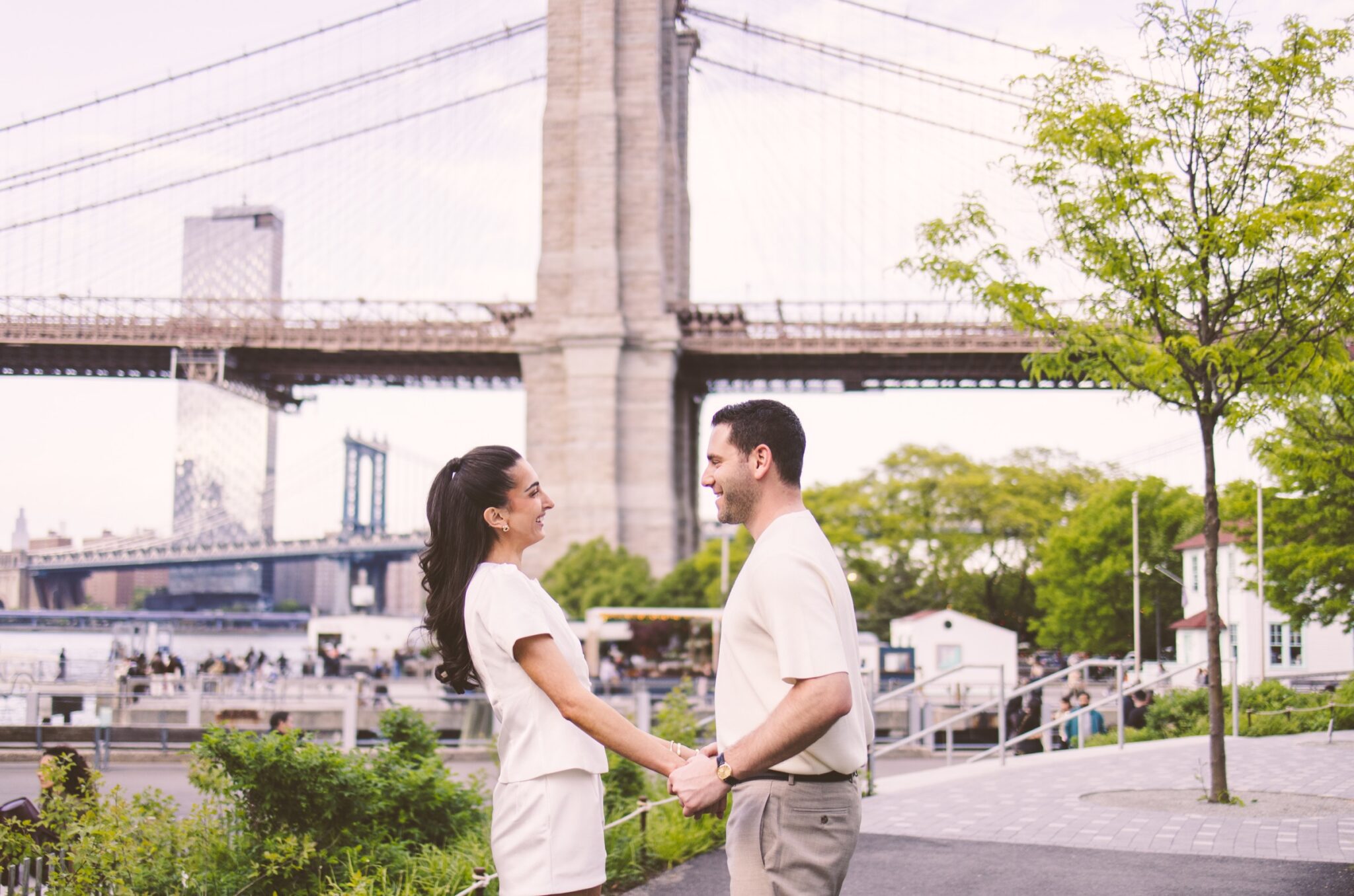
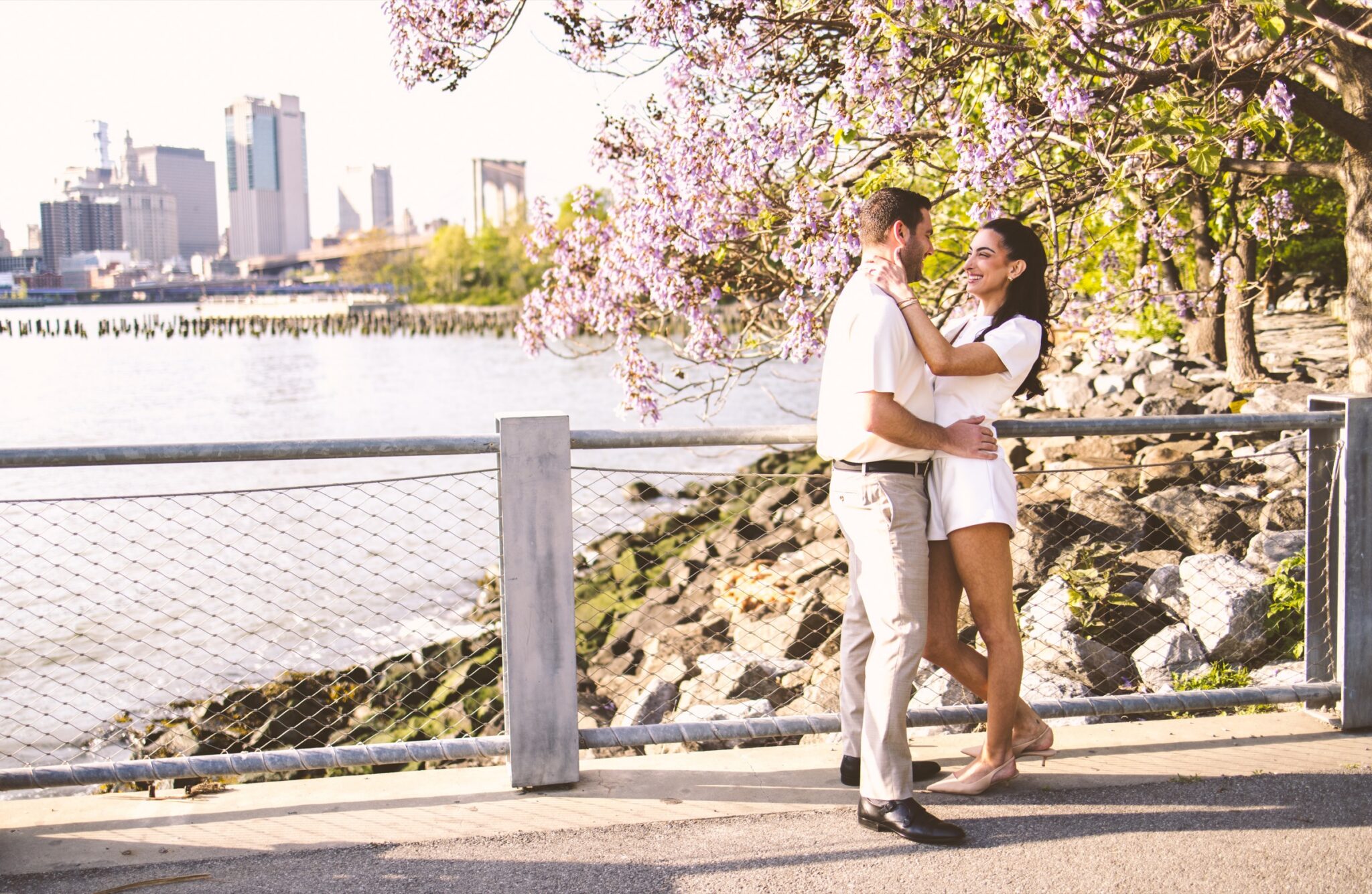
Layering creates flexibility when shade, wind, and temperature change across a park route.Light spring clothing works when the outfits remain distinct from the blossoms and bright waterfront.
Rain, wind, and indoor alternatives
A clear or dark neutral umbrella, a coat that belongs in the photographs, shoes with traction, and a dry walking layer are more useful than pretending the forecast will cooperate. Bring a small towel, backup socks, and only the touch-up products that solve a specific problem.
Do not plan clothing around a lobby, station, museum, bar, or hotel unless the location has approved the session. Our rainy-day and indoor NYC engagement guide separates lawful planned interiors from places that merely look available online.
Hair, makeup, grooming, and accessories
Professional services are optional. Use them when they help a person feel recognizable and confident, not because an engagement session requires a prescribed presentation. If scheduling a hair or makeup trial, make sure the result still fits the clothing, weather, and level of formality.
Check haircuts, facial hair, nails, glasses, jewelry, watches, and outerwear as part of the complete look. Clean lenses before the session. Bring sunglasses only if they are part of the story rather than a way to avoid being seen. Secure loose accessories for waterfront wind.
What usually causes problems in engagement photos
Large logos and readable slogans: text becomes a competing subject and dates the image quickly.
Unequal formality: one carefully planned outfit cannot carry two people.
Untested new clothing: stiff fabric, unreliable closures, and unexpected fit appear only after movement begins.
Overfilled pockets: phones, keys, wallets, and cases change the garment’s shape.
Fragile shoes on a walking route: pain changes posture, pace, and expression.
Too many pieces to manage: bags, garment covers, changes, and props reduce the time available for photographs.
Ignoring the coat: if the coat will be worn for half the session, it is part of the wardrobe.
Dressing as different people: unfamiliar clothing can make every movement feel self-conscious.
The night-before checklist
Wear and inspect everything
Steam or press garments.
Remove temporary stitching and tags.
Check closures, hems, buttons, and pockets.
Clean shoes and glasses.
Photograph both outfits together in daylight.
Pack one small session bag
Walking shoes and photographed shoes.
Weather layer, umbrella, and compact towel.
Lint roller and necessary touch-up items.
Water and weather-appropriate comfort items.
No unnecessary props or large luggage.
If you are considering a full clothing change or two distinct settings, read our two-location NYC engagement session guide before choosing the wardrobe. It explains where changing is realistic and how travel affects the photographs.
Frequently asked questions about NYC engagement outfits
What should we wear for NYC engagement photos?
Wear a deliberate version of clothing that already feels like you. Coordinate formality and color without matching exactly, test the complete outfits while moving, and choose footwear for the actual route.
Should our engagement photo outfits match?
No. The outfits should feel equally formal and visually connected, but identical colors or garments can look forced. Let one pattern or statement piece lead while the other outfit supports it.
How many outfits should we bring?
One excellent outfit is enough for a shorter session. Two can work for a longer session when they create genuinely different stories and a lawful, private changing location is planned.
Can we wear black for engagement photos in NYC?
Yes. Black can look precise against light stone, greenery, or bright streets. In a dark restaurant or nighttime setting, add texture, shape, or contrast so the clothing does not disappear into the background.
Are patterns bad for engagement photos?
Not automatically. One controlled pattern can add personality. Tiny stripes, dense checks, or two competing patterns may become visually noisy, so test them from full-body camera distance.
What shoes should we wear for an NYC engagement session?
Choose shoes that can handle the route’s pavement, stairs, paths, and weather. If the photographed shoes are not walkable, carry a light pair for moving between locations and change before photographs.
What should we wear for winter engagement photos in NYC?
Choose a coat you want photographed, use warm hidden layers, and bring gloves for breaks. Clothing should protect natural posture and expression instead of requiring continuous exposure to the cold.
What should we wear if rain is forecast?
Use shoes with traction, intentional outerwear, and a clear or dark neutral umbrella. Bring a dry walking layer, towel, and backup socks. Any indoor alternative must be approved before the session.
Should we get professional hair and makeup?
Only if it helps you feel recognizable and confident. Professional services are not required. The result should still suit the clothing, weather, and way you normally want to see yourself.
Can we send outfit ideas to our photographer?
Yes. Send complete outfit photographs rather than isolated shopping links. Seeing both looks together helps the photographer evaluate formality, contrast, movement, location, and weather.
The best engagement-session wardrobe makes room for the people inside it. Choose the route, decide how the photographs should feel, and build clothing that can move through the actual city without becoming the entire story.