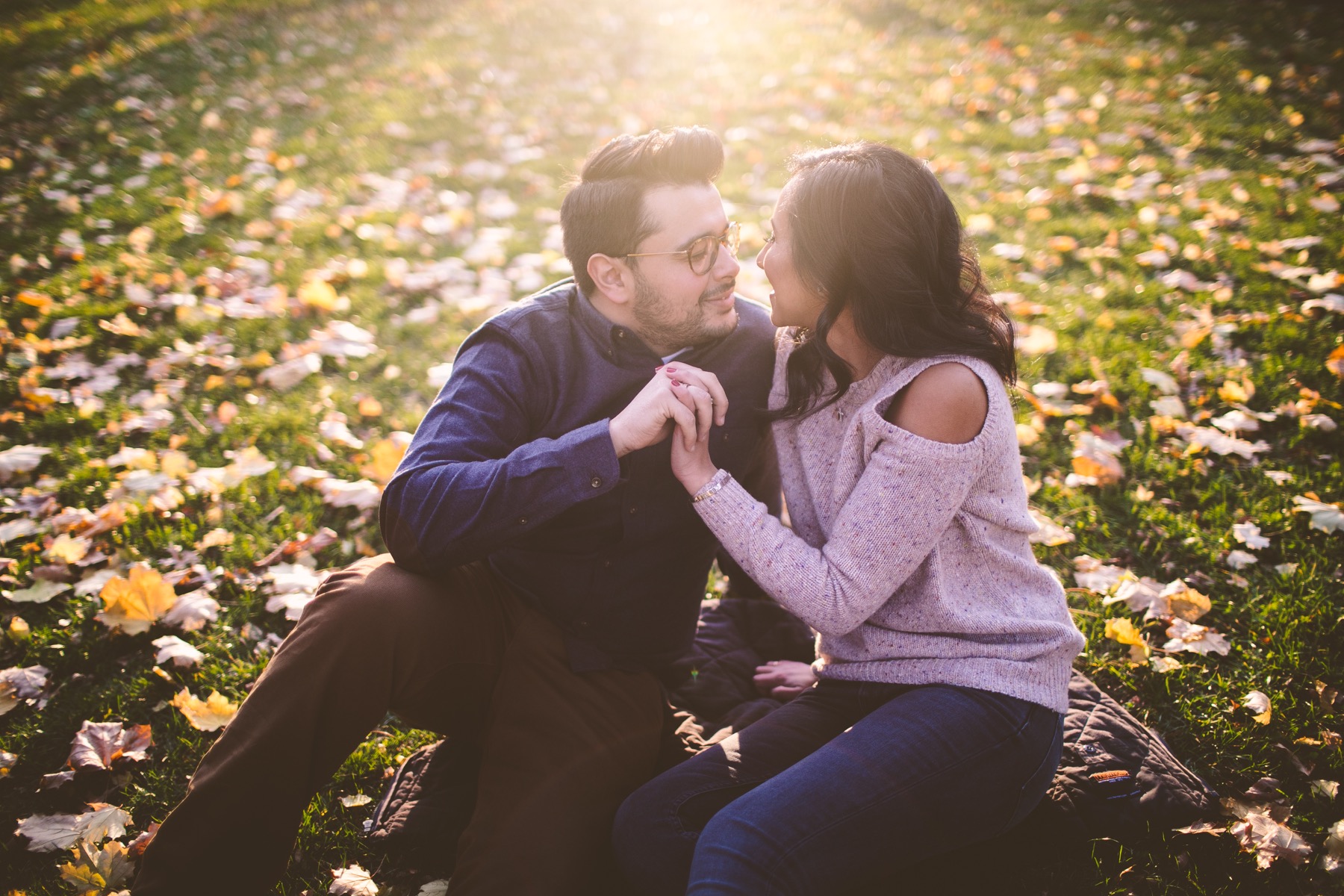
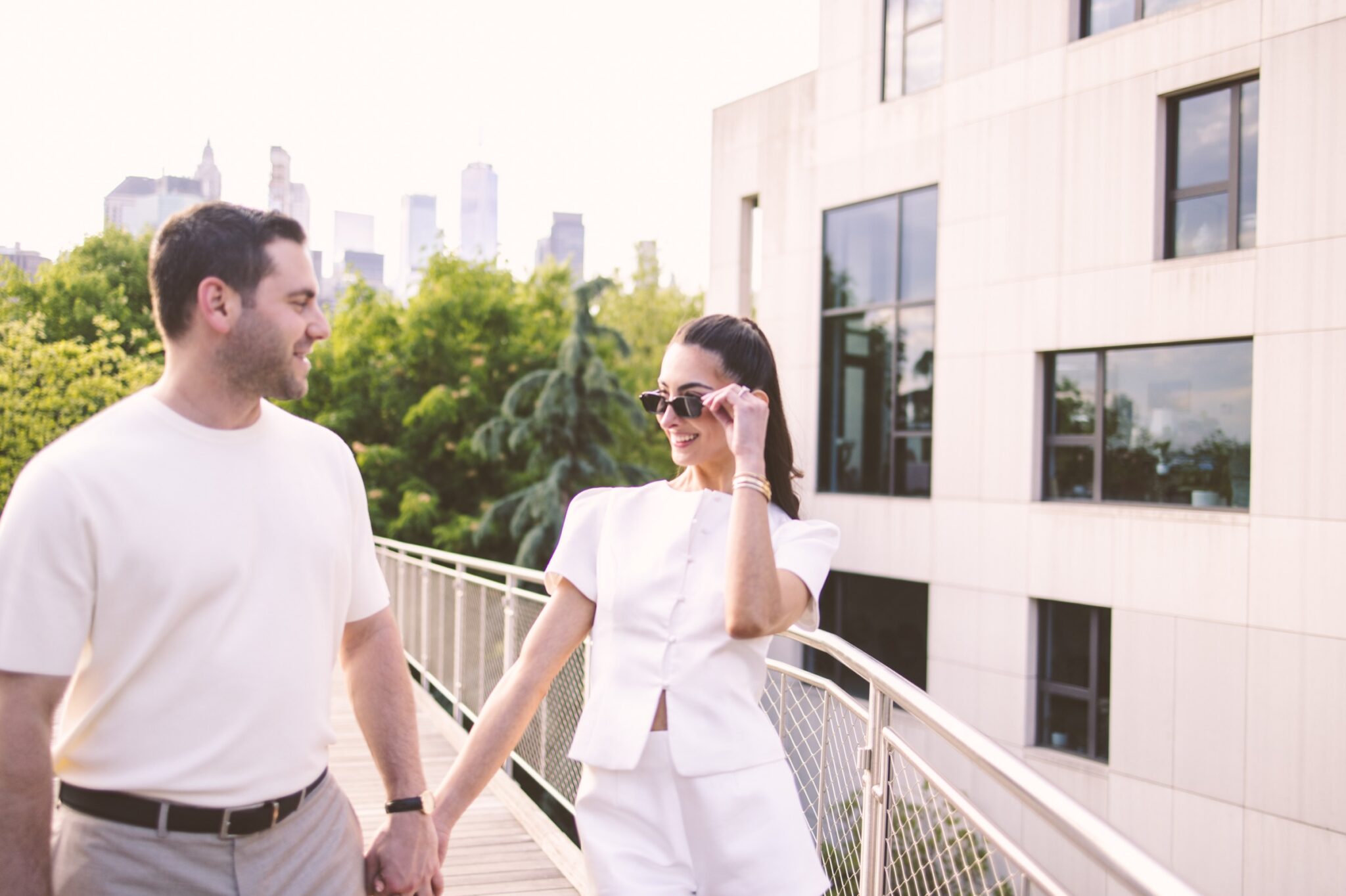
The best time for NYC engagement photos depends first on the location and the kind of city you want in the photographs. Sunrise is usually the strongest choice for the Brooklyn Bridge, DUMBO, and other famous places where an empty background matters. Late afternoon through blue hour works better when you want neighborhood movement, warmer light, waterfront color, restaurant energy, or illuminated streets.
Golden hour is not a universal answer in New York. Tall buildings can remove direct light from a street well before the published sunset time. A useful plan considers the direction of the route, the height of the surrounding buildings, commuter traffic, opening hours, weather, and how much energy you have at that hour.
We have photographed couples across New York since 2007. Julian Ribinik reviewed this guide in August 2026 using current engagement sessions in Manhattan and Brooklyn. Use an exact-date solar calculator for the final schedule because sunrise and sunset shift every day.
At an iconic location, crowd level can change the photograph as much as the direction of the light.
NYC engagement-session timing guide
Schedule the city you want, not only the light you were promised.
Choose between quiet streets, active neighborhoods, soft daylight, skyline color, and city lights. One hour cannot deliver every version of New York.
Use sunrise when access, empty backgrounds, and quiet movement matter most. Use the final ninety minutes before sunset when warmth, skyline color, and a livelier city matter more. Continue through blue hour or night when illuminated windows, headlights, restaurants, and flash photography are part of the plan.
Choose the location before choosing the hour.
Use a weekday whenever crowd control matters.
Start iconic routes at sunrise, not merely early morning.
Check building shadows, not only sunset time.
Allow fifteen to twenty minutes for blue-hour photographs.
Avoid rush hour when the route crosses major commuter corridors.
What each part of the day actually gives you
Sunrise
Quiet, clean, and logistically demanding
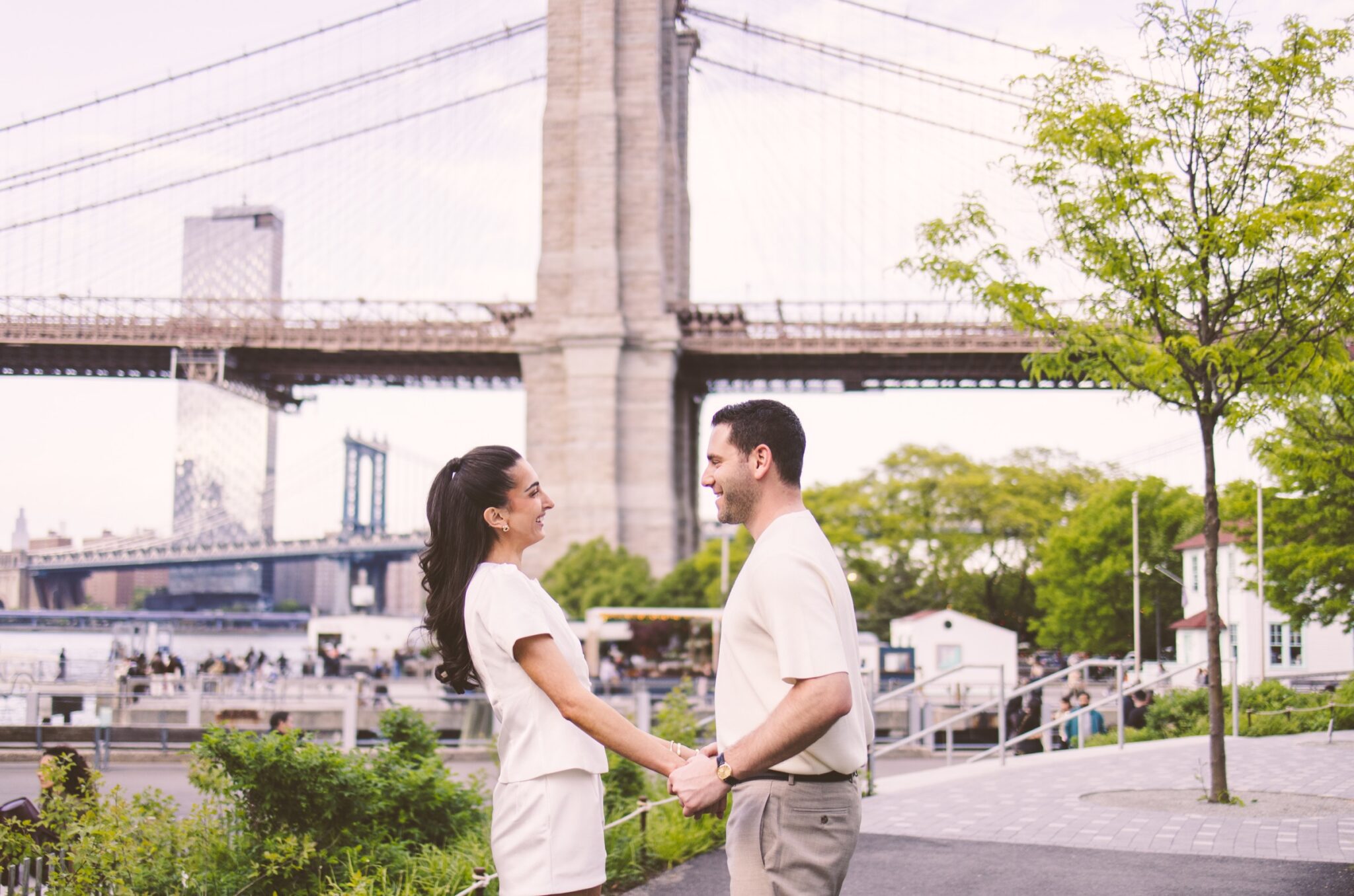
Sunrise creates the best chance of open sidewalks and readable architecture at the Brooklyn Bridge, Washington Street in DUMBO, Bethesda Terrace, Bow Bridge, and other places that fill quickly. The light begins before the sun clears the horizon, so the meeting time is often earlier than the published sunrise.
The tradeoff is practical. Hair, makeup, travel, children, pets, and early hotel departure all need to work before the city feels awake. Sunrise is valuable only if both people can arrive rested and on time.
Morning
Useful soft light without a predawn start
A later weekday morning can work well in brownstone neighborhoods, shaded streets, restaurants that approve a quiet session, or Central Park routes where an empty landmark is not the main goal. Morning also gives indoor locations enough ambient light to feel dimensional.
By late morning, exposed waterfronts and open bridges become brighter and more crowded. The route needs shade, architecture, or an indoor chapter.
Late afternoon
Warmth, movement, and more people
The final ninety minutes before sunset can create warm edges, longer shadows, and changing color over the rivers. It is often a good fit for Brooklyn Bridge Park, neighborhood walks, rooftops with written permission, and a route designed to continue into blue hour.
It is also a popular time for visitors, runners, commuters, restaurant arrivals, and other photo sessions. The city will be present. That can feel alive, but it is not the same visual promise as sunrise.
Blue hour and night
City lights become the subject
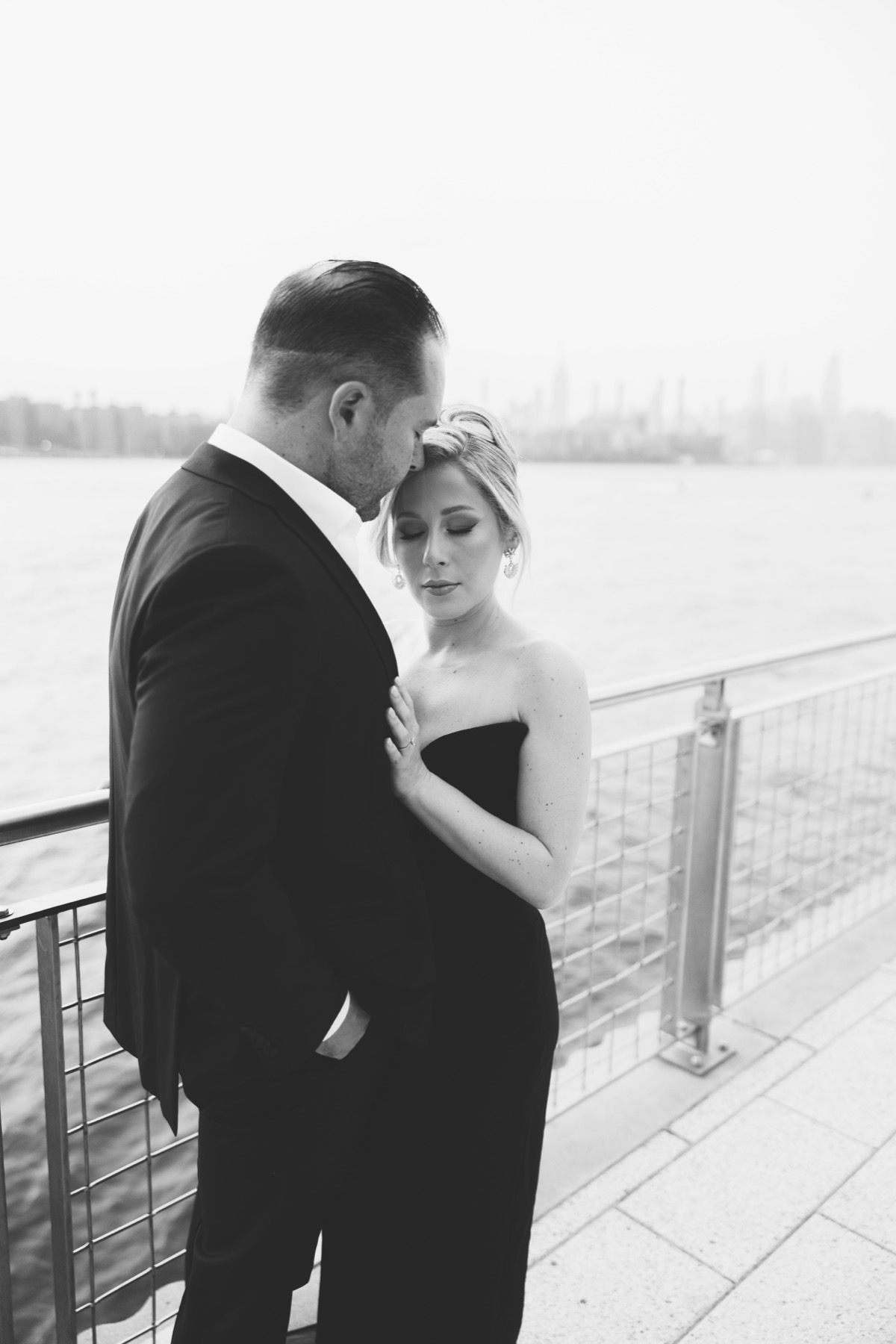
Blue hour begins after sunset while the sky still carries color. It is brief, and the exposure changes quickly. Night photographs use storefronts, traffic, streetlights, hotel bars with permission, reflections, and deliberate flash rather than pretending darkness is a problem.
This is the strongest option when the desired photographs should feel unmistakably urban. It works best as the final chapter of a session, not as an accidental extension after daylight disappears.
Midday is not automatically wrong
Open shade and interiors can outperform a forced sunset plan
Midday light is difficult in exposed places, but New York is full of building shade, arcades, covered passages, restaurants, homes, studios, and interiors with permission. A short midday route can work when scheduling, weather, access, or comfort matters more than a generic golden-hour recommendation. The photographer must know where direct sun will fall and where clean shade will remain.
Street trees and surrounding buildings can create useful daylight outside a narrow golden-hour window.Restaurants and neighborhood businesses introduce their own opening hours, permissions, and patterns of activity.
Best time by NYC engagement-photo location
The published sunrise or sunset is only one input. A route beside open water receives light differently from a Manhattan block surrounded by tall buildings. A place can be legally open and still be unpleasantly crowded. A quiet-looking interior can become a commuter corridor within minutes.
Location
Best starting point
Why and what to watch
Brooklyn Bridge and DUMBO
Weekday sunrise
The bridge, Washington Street, and waterfront viewpoints fill quickly. Sunrise gives the cleanest chance of seeing architecture rather than a crowd. Wind and maintenance activity can still affect the route.
Central Park
Sunrise for landmarks; later morning or late afternoon for quieter routes
Bethesda Terrace and Bow Bridge reward an early start. A reservoir, woodland, or neighborhood-edge route can work later because the goal is not an empty landmark.
West Village
Weekday morning or late afternoon
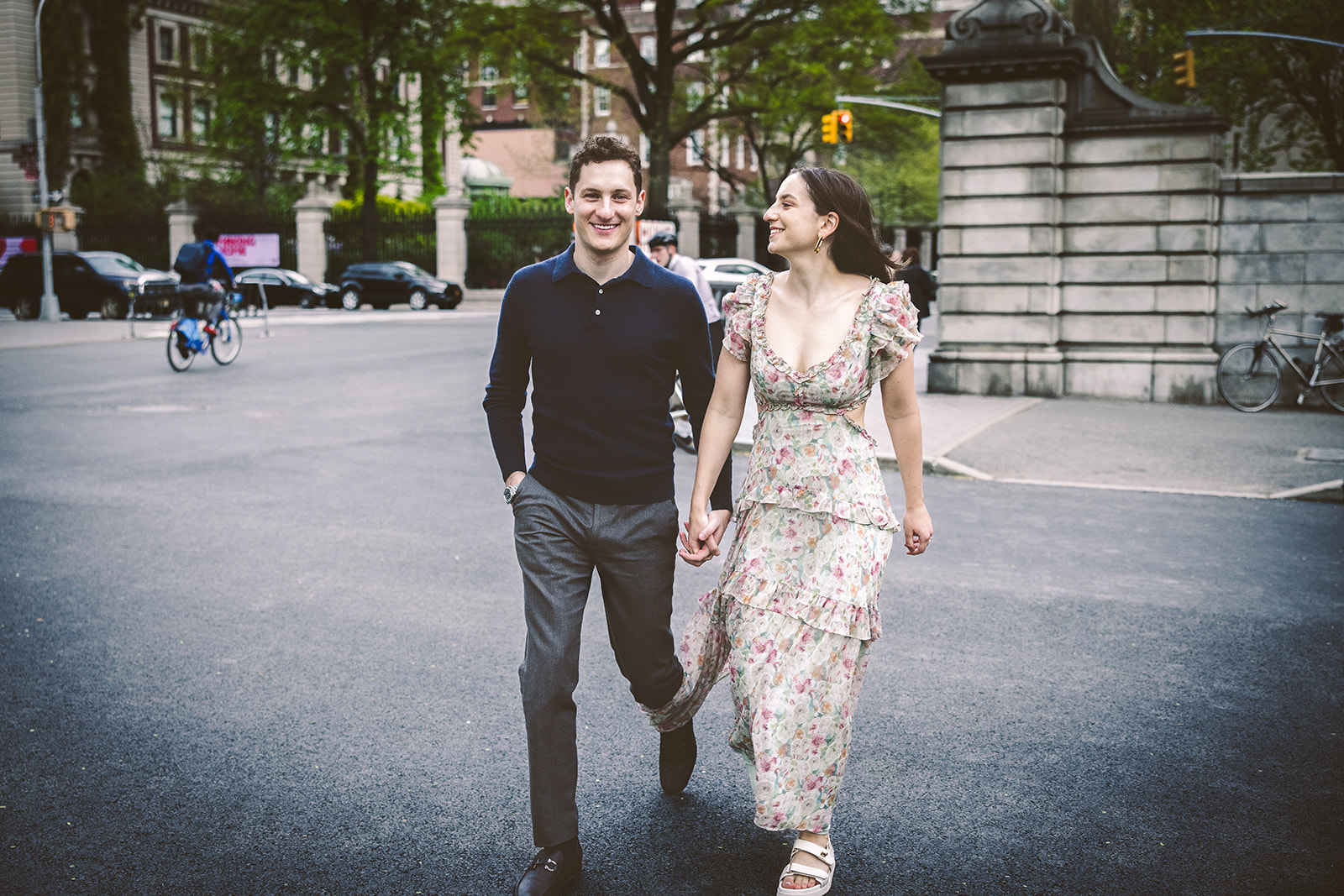
Morning favors cleaner brownstone streets. Late afternoon and early evening add neighborhood life, restaurant activity, and warmer street light. Delivery trucks and school dismissal can matter block by block.
SoHo and Tribeca
Weekend morning for quieter architecture; late afternoon for movement
Cast-iron blocks create strong shade patterns. Morning simplifies sidewalks. Later sessions can feel more energetic, but loading activity, shopping traffic, and building shadows require a precise route.
Brooklyn Bridge Park
Sunrise or the final ninety minutes before sunset
Morning reduces crowds. Late afternoon adds skyline color and can continue into blue hour. The park is officially open daily from 6:00 a.m. to 1:00 a.m., though individual facilities have separate hours.
Grand Central Terminal
Early weekend morning or a carefully chosen off-peak window
The terminal is officially open daily from 5:15 a.m. to 2:00 a.m., but being open does not mean it is quiet. Avoid commuter peaks and confirm current photography rules before planning equipment or a formal production.
Restaurants, hotels, and private interiors
The approved access window
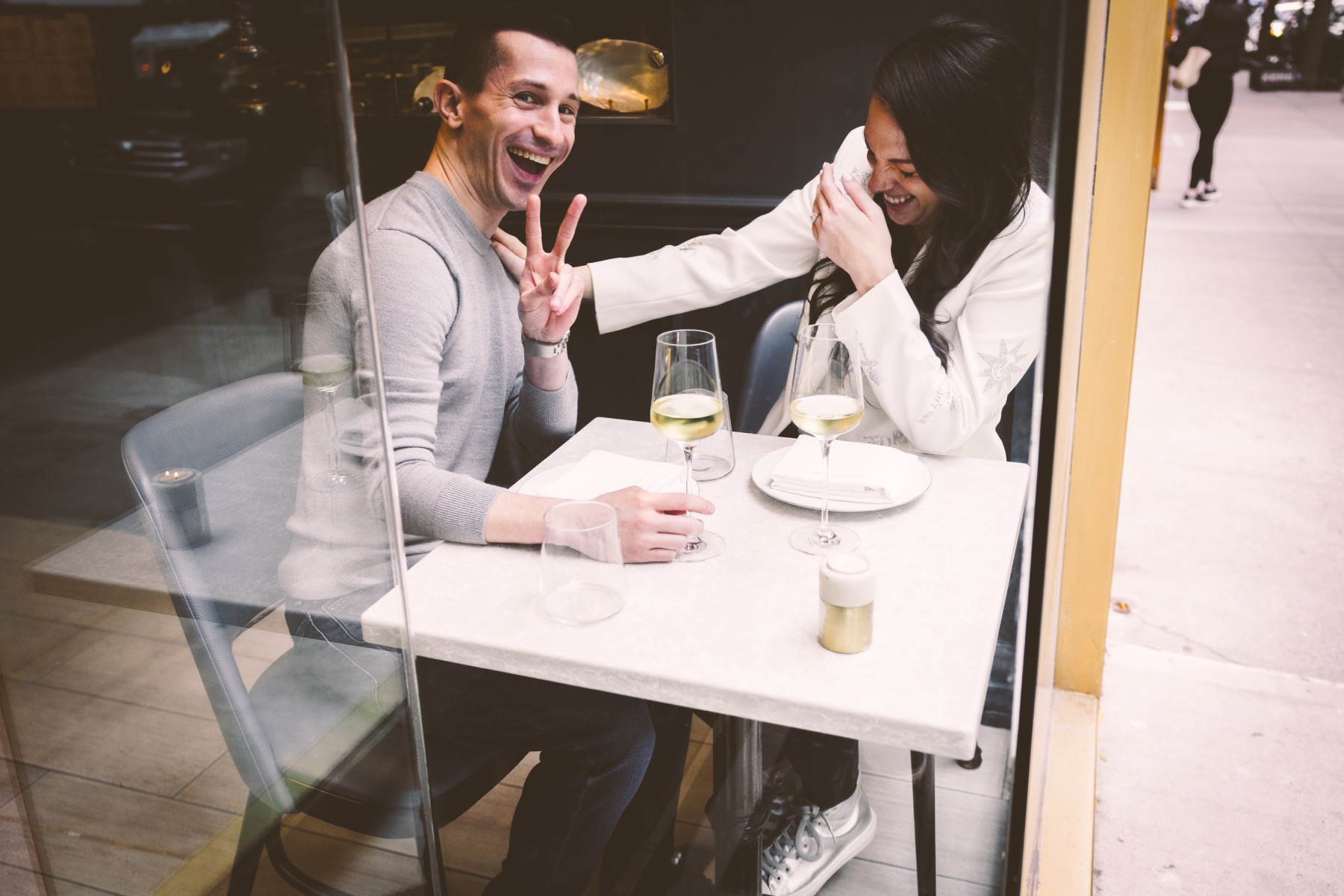
Permission and business operations lead the schedule. The best photographic light is irrelevant if staff, guests, or service activity make the location unavailable.
A quieter route can make timing more flexible because the photograph does not depend on clearing a famous landmark.
Season changes both the clock and the session
New York sunrise can be roughly two hours earlier in June than in early January, while sunset can shift by about four hours across the year. Daylight-saving changes make the transition feel abrupt. Do not reuse a start time from another couple’s gallery without checking the exact date.
Winter
Late sunrise, early darkness
Winter makes sunrise easier to reach but compresses the afternoon. Cold can shorten natural movement and expression before the light becomes a problem. Build a compact route, photograph the coat intentionally, and use an interior with permission when wind or temperature would dominate the session.
Spring
Fast-changing foliage and popular dates
Spring light extends quickly, but bloom timing, rain, school activity, and park crowds can change the picture. Sunrise is valuable around famous blossoms. A flexible tree-lined route is more reliable than promising one precise bloom.
Summer
Very early sunrise, long evenings, real heat
Summer sunset creates a long evening option, but humidity and exposed pavement can affect clothing, hair, comfort, and energy. Sunrise may be visually excellent and personally unrealistic. A shaded neighborhood or indoor-outdoor plan can be the better decision.
Fall
Beautiful conditions and heavy demand
Fall combines comfortable temperatures with busy parks, weddings, tourism, and early darkness after the clock change. Book the date early, choose a weekday when possible, and separate foliage goals from empty-landmark goals.
Check the exact date with the NOAA Solar Calculator. NOAA notes that calculated sunrise and sunset can vary from observed conditions, and New York buildings add another layer of obstruction. The calculator starts the conversation. It does not replace location scouting.
Waterfront light remains open longer than light on many narrow Manhattan streets.Seasonal color is useful, but comfort and crowd level still shape the session.
How to sequence two locations without losing the best light
A two-location session should move toward the light or city condition that matters most. Do not spend the final daylight underground or in a car because the route looked short on a map.
Quiet to active
Begin in a park or residential neighborhood, then finish near restaurants, illuminated streets, or a waterfront. This allows the city to become more visible as the session progresses.
Daylight to blue hour
Start with open shade or warm late light, arrive at the skyline before sunset, then keep fifteen to twenty minutes for blue-hour color and city lights.
Interior to exterior
Use an approved interior while direct light is harsh, then move outside when the street becomes workable. Confirm operating hours and travel time before assuming the locations connect.
One compact route
When changing clothes or traveling would consume the light, stay within a few blocks. More time together usually creates more useful photographs than a longer list of backgrounds.
A connected walking route protects expression, momentum, and usable light.
The schedule must work for the people inside it
A sunrise plan is not superior if it leaves both people exhausted, late, or uncomfortable. A sunset plan is not superior if one person is anxious about crowds. Think about sleep, travel, hair and makeup, work schedules, medication, mobility, temperature sensitivity, children, pets, and how long everyone can walk while staying present.
Sunrise is usually best for famous, crowded locations. Late afternoon through blue hour is usually better for warm light, waterfront color, neighborhood movement, restaurants, and city lights. The exact answer depends on the location and desired atmosphere.
Is sunrise or sunset better for engagement photos in NYC?
Choose sunrise when open backgrounds and quieter streets matter most. Choose sunset when warmth, skyline color, evening activity, and a transition into night matter more. Sunrise is not useful if the early schedule makes the session miserable.
When should Brooklyn Bridge engagement photos begin?
Begin around sunrise on a weekday for the strongest chance of lighter foot traffic. Arrive early enough to meet, settle in, and begin while the sky is brightening. Maintenance, weather, and other photo sessions can still affect the bridge.
What time is best for Central Park engagement photos?
Use sunrise for Bethesda Terrace, Bow Bridge, and recognizable landmarks with fewer people. Later morning or late afternoon can work for reservoir, woodland, or neighborhood-edge routes where the goal is interaction rather than an empty landmark.
Does golden hour work between Manhattan buildings?
Sometimes, but published sunset time does not guarantee direct light on a Manhattan street. Tall buildings can block the sun much earlier. The route direction, street width, building height, and season all matter.
Can we take NYC engagement photos at night?
Yes. Night sessions can use storefronts, headlights, restaurant windows, reflections, streetlights, and deliberate flash. Plan night photography as a visual choice and select a compact route rather than simply extending a daylight session.
Are weekdays better than weekends for NYC engagement photos?
Weekdays often reduce weekend visitors but introduce commuter traffic, deliveries, school dismissal, and business activity. Weekend sunrise can be quieter in commercial neighborhoods. The answer depends on the exact blocks and hour.
How early should we arrive for sunrise engagement photos?
Plan to meet before the intended first photograph so introductions, clothing adjustments, and walking do not consume the quietest window. The photographer should set the meeting time from the exact date and location.
How long should an NYC engagement session be?
Seventy-five to ninety minutes is usually enough for one compact route. Allow closer to two hours for two distinct locations, a clothing change, or a planned transition from daylight into blue hour and night.
What happens if the weather changes the light?
Clouds can make timing more flexible, while rain, wind, heat, and cold can change the route and the couple’s comfort. Keep the exact schedule flexible, use a prepared backup, and do not promise a sunset that the weather may remove.
The best time of day is the one that creates the New York you actually want while leaving room to move, talk, and react naturally. Choose the location, decide whether quiet or energy matters more, check the exact date, then build a route that protects the most important fifteen minutes instead of gambling them on transportation.