
Contrast
Change the visual language
Pair greenery with architecture, residential streets with a waterfront, or daylight with illuminated city blocks. Two locations should not produce the same background with a longer commute.
A two-location NYC engagement session works when the locations create two genuinely different chapters and the transition does not consume the best light. Keep both places within one walkable area for a seventy-five to ninety-minute session. Allow about two hours when the route requires a car, subway, private outfit change, or a planned transition from daylight into blue hour.
The most common mistake is choosing two famous places that look close on a map but behave like separate productions. Central Park and DUMBO are not a sensible ninety-minute route. Neither are Grand Central at rush hour and the Brooklyn Bridge at sunset. New York travel time is not only distance. It includes waiting, traffic, station access, walking, changing, security, crowds, and finding each other again.
We have photographed couples across New York since 2007. Julian Ribinik reviewed this guide in August 2026 using current Manhattan and Brooklyn engagement sessions.
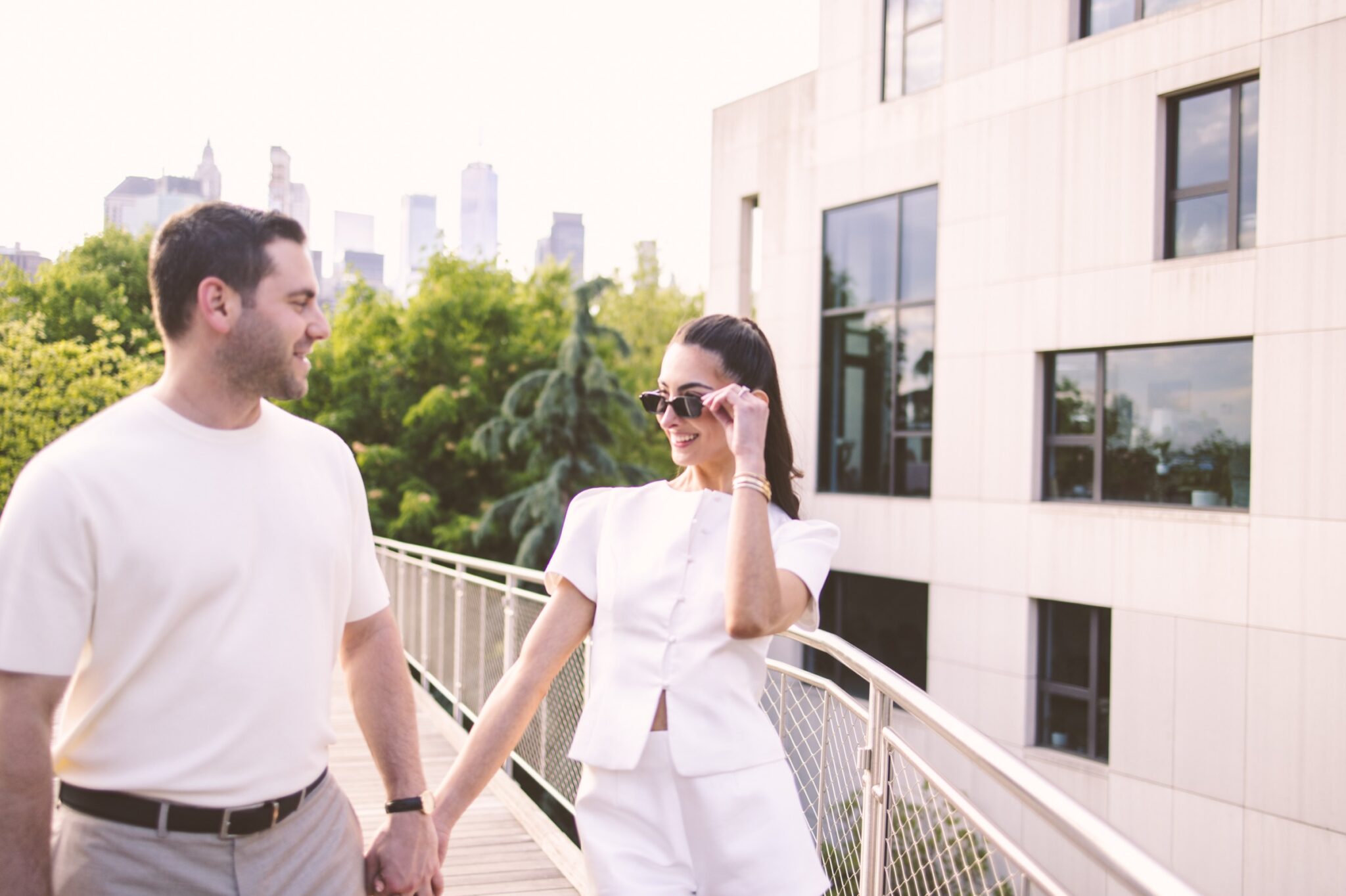
Two-location NYC engagement-session guide
Choose one geographic story, protect the best light, and make travel part of the photographs only when it adds something.
Use one primary area and one nearby secondary setting. Give each location a different job, such as park plus neighborhood, architecture plus waterfront, or daylight plus night. If the transition takes more than fifteen minutes door to door, schedule at least two hours or remove the second location.
Contrast
Pair greenery with architecture, residential streets with a waterfront, or daylight with illuminated city blocks. Two locations should not produce the same background with a longer commute.
Meaning
A neighborhood, restaurant with permission, home, first-date corner, or regular walking route can carry more value than another landmark. Use the second location to make the session personal.
Light
Begin in soft daylight, arrive at the waterfront before sunset, and finish during blue hour. The transition should move toward the light, not place the most important minutes inside a car or train.
Activity
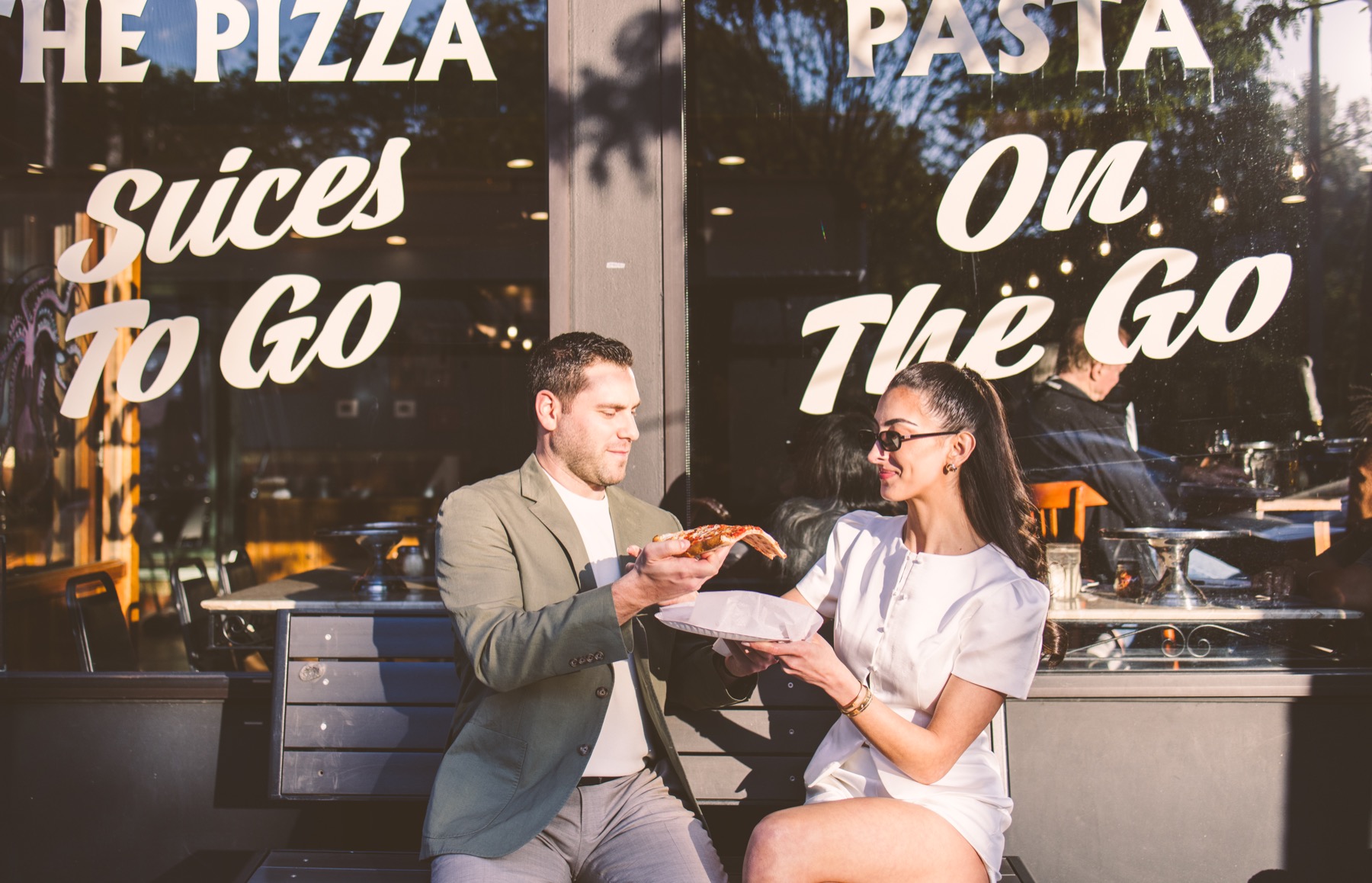
Walk, share pizza, stop at a bar with permission, or move from a park into neighborhood streets. A real activity changes body language more effectively than changing backgrounds.
The useful test
If the answer is no, stay in one area and photograph it more deeply. More locations do not automatically create more variety. They can reduce conversation, momentum, and the number of photographs made during the best conditions.
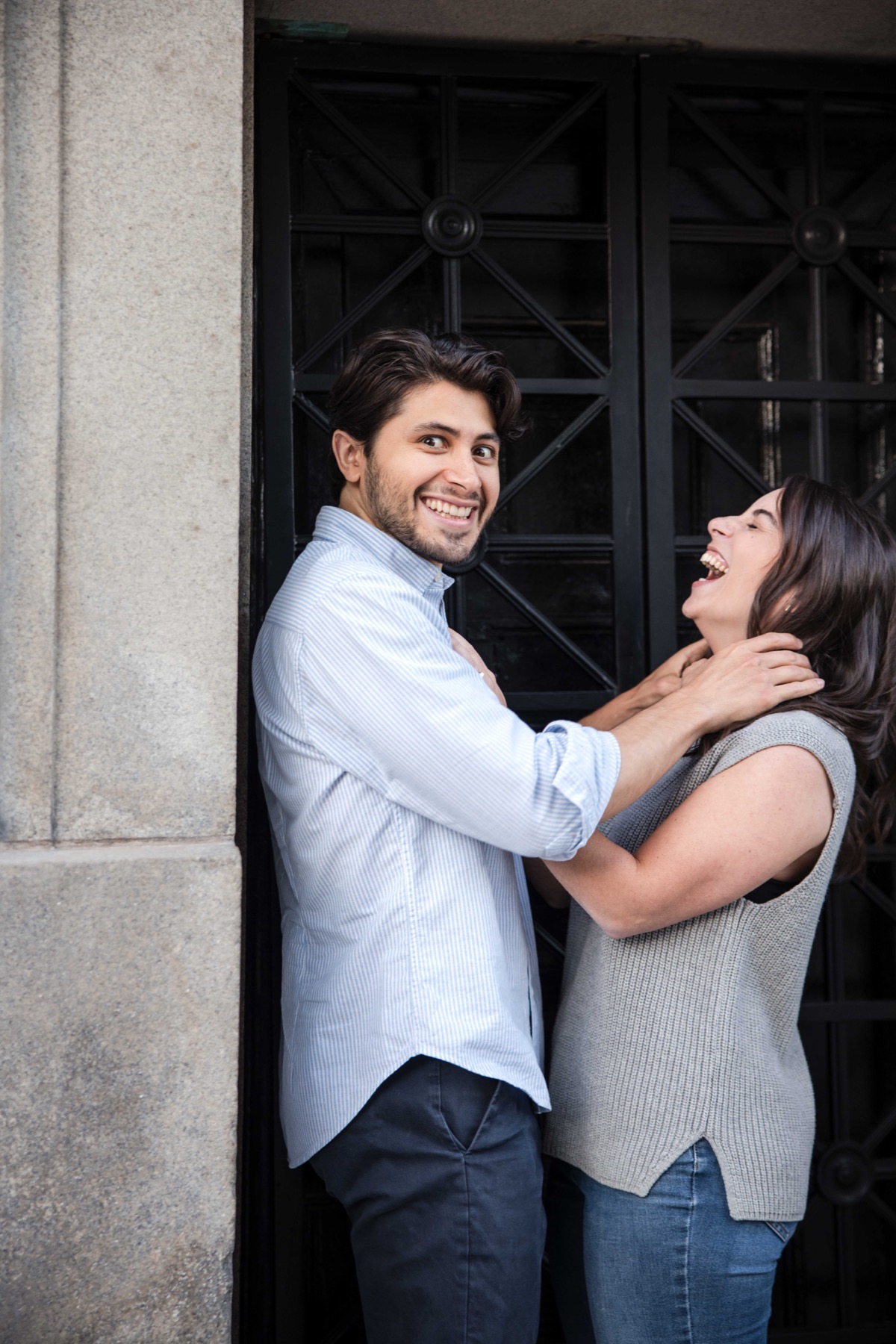
Route pairing
Recommended time
Why it works
Brooklyn Bridge plus DUMBO waterfront
75 to 90 minutes
This is one connected sunrise route, not two separate productions. Bridge structure, Washington Street, brick, cobblestones, and the waterfront change quickly on foot.
DUMBO plus Brooklyn Heights
90 minutes to 2 hours
The waterfront and skyline contrast with brownstones and neighborhood streets. The walking transfer can remain part of the session when footwear and weather allow.
West Village plus SoHo
90 minutes to 2 hours
Residential warmth shifts into cast-iron scale and stronger lines. Choose exact blocks near the connecting route instead of treating both neighborhoods as unlimited lists.
Central Park plus Upper East Side
90 minutes to 2 hours
A park route can finish on nearby residential streets or at an approved restaurant. Exit the park on the correct side or the transfer becomes the session.
Central Park plus Midtown
2 hours
This can move from greenery to stone architecture or city lights, but only with a controlled park exit, realistic travel, and an off-peak second location.
SoHo or Tribeca plus waterfront
90 minutes to 2 hours
Architecture can transition toward Hudson River light. The route must identify a specific waterfront arrival point and protect the final daylight.
Neighborhood plus approved interior
90 minutes
A home, restaurant, studio, or hotel space with written permission adds intimacy and weather protection. Access hours determine the sequence.
Start with our guides to DUMBO engagement photos, West Village engagement photos, SoHo and Tribeca engagement photos, and Central Park engagement photos.

A map estimate is not a session estimate. The clock includes gathering belongings, reaching the street, waiting for transportation, traffic or train delays, walking from the station, finding the exact meeting point, changing clothes, and settling back into the photographs.
Use one walkable area with two nearby settings. Examples include DUMBO bridge plus waterfront, or a West Village street route plus an approved café nearby.
Allow one short walking transition and possibly a jacket or shoe change. Avoid a full clothing change unless a private location sits directly on the route.
Use one purposeful transfer, two distinct chapters, or a daylight-to-night sequence. Keep the transfer to roughly fifteen minutes when possible and leave recovery time.
Useful for travelers, complex permissions, several private locations, or a day-in-the-life approach. It should not be a workaround for an unfocused location list.
Choose the start time with our best-time guide for NYC engagement photos. Published sunset time alone is not enough because building shadows and crowds can change the usable route.
Public bathrooms, coffee shops, hotel lobbies, parked cars, and building hallways should not be assumed available for changing. Plan a home, hotel room, studio, private office, or business that has approved the change. A coat, jacket, shoe, jewelry, or accessory shift can create useful variety without losing fifteen minutes.
Carry as little as possible. Phones, bags, garment covers, shoes, umbrellas, and coats need a handler or must move through every photograph. If no one is available to help, one strong outfit often produces a better session than two outfits plus visible luggage.
Use our guide to what to wear for NYC engagement photos to coordinate formality, walking shoes, weather layers, and movement.
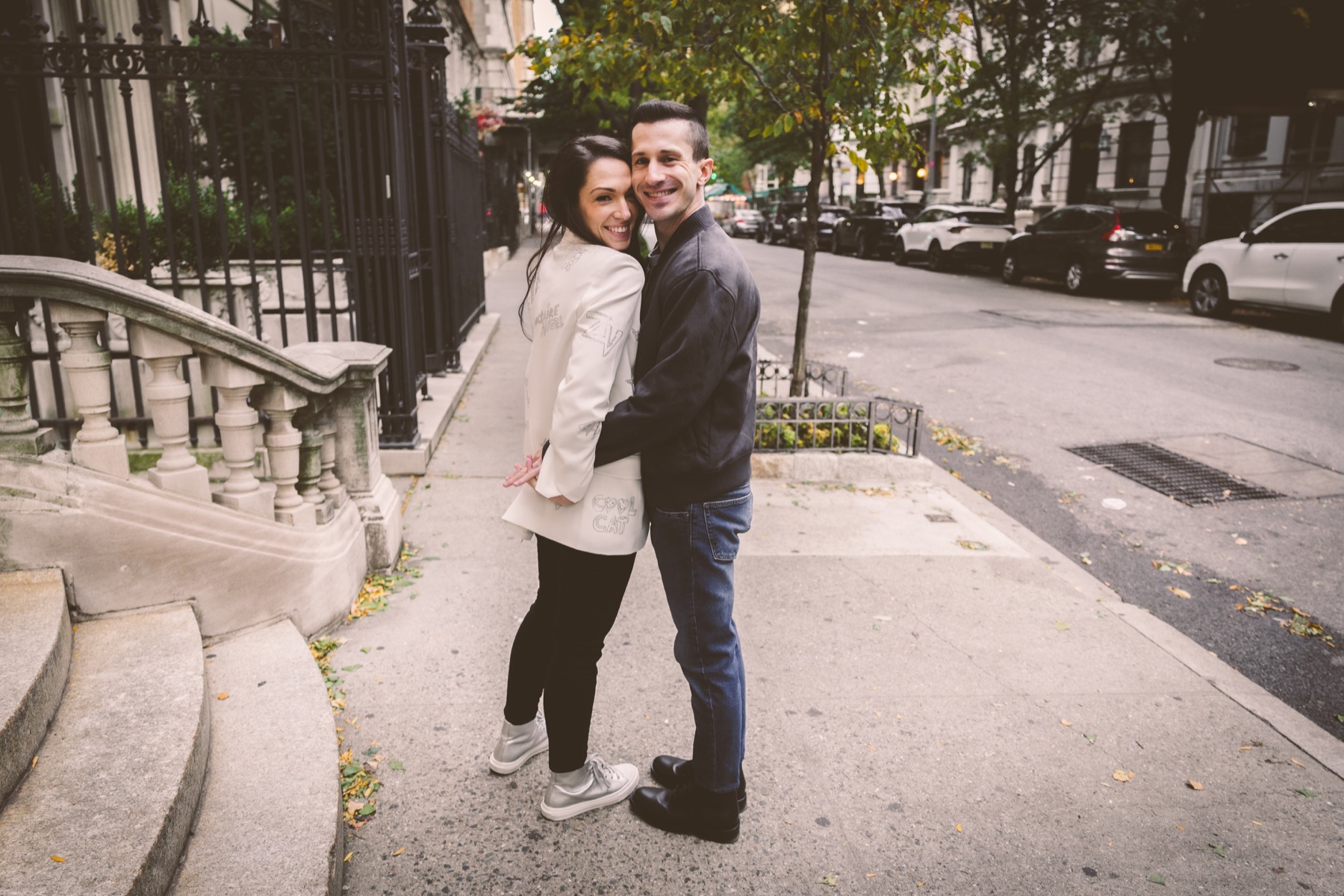
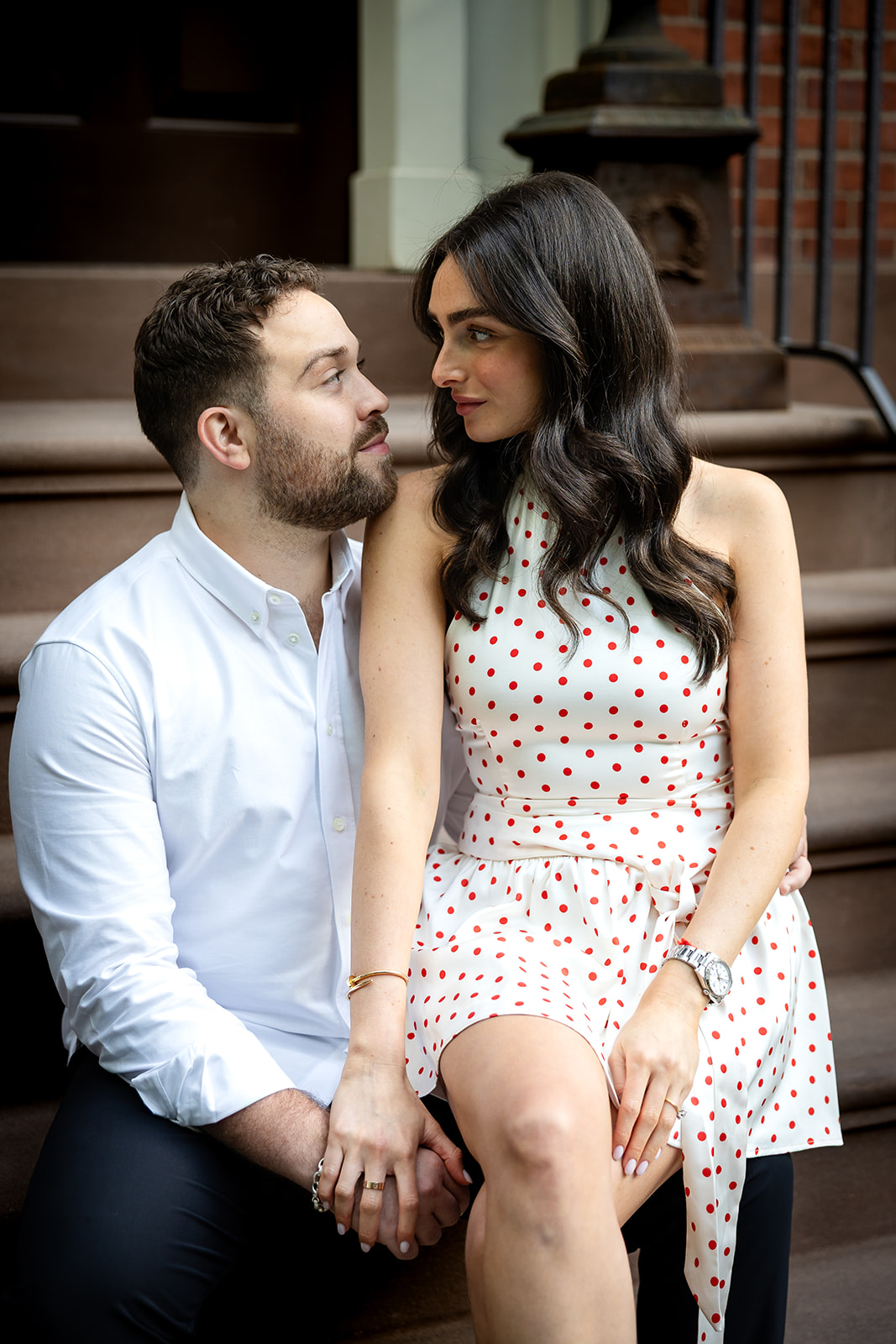
A backup is not useful if it sits across town. Pair an outdoor route with a covered or approved alternative in the same area. Light rain may support wet streets and umbrellas. Heavy rain, unsafe wind, extreme temperature, or flooding can require redesigning or rescheduling the session.
Private interiors, managed landmarks, NYC rooftops, restaurants, hotel spaces, equipment, and larger productions may require permission, insurance, fees, or advance applications. Approval at the second location does not create approval at the first. Confirm each place independently and carry the documentation.
For practical alternatives, read our rainy-day and indoor NYC engagement guide.
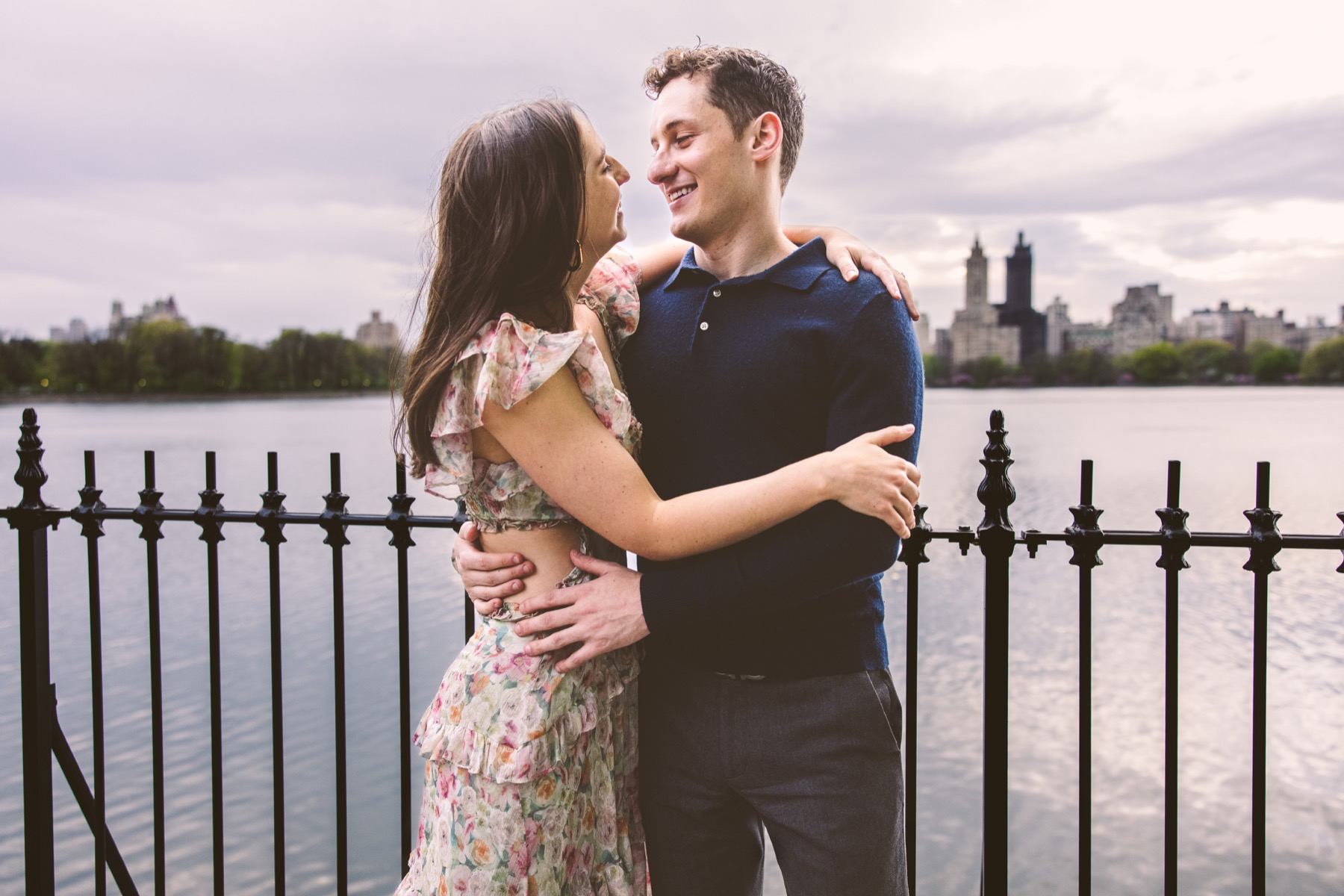
Yes. Use two walkable settings in seventy-five to ninety minutes, or allow about two hours for one meaningful transfer. Each location should add a distinct visual or personal chapter.
Ninety minutes can work when both places are nearby. Use two hours when the session includes a car, subway, full clothing change, private access, or a daylight-to-night transition.
Yes, but not responsibly in a short session. Allow more than two hours, accept meaningful travel time, and decide which location receives the best light. In many cases, one deeper route is better.
The Brooklyn Bridge with DUMBO, DUMBO with Brooklyn Heights, West Village with nearby SoHo blocks, and Central Park with the adjacent Upper East or Upper West Side are practical when the exact route stays compact.
Only when a lawful private changing place is confirmed and the change creates a genuinely different story. A jacket, coat, shoe, or accessory shift often gives enough variety with less lost time.
Either can work, but neither is predictable. A taxi can stall in traffic. A train requires station access, waiting, and walking. Build buffer time and consider whether the transition itself belongs in the photographs.
Yes, when it is part of the story and the plan remains respectful and mobile. Avoid blocking circulation, using disruptive equipment, or treating a busy platform like a private set.
Photograph the less light-sensitive location first, then arrive at the priority waterfront or skyline location before the final daylight. Do not schedule the transfer during the best fifteen minutes.
Choose a nearby backup with a different access risk. Check events, construction, operating hours, permissions, and weather before the session, then keep the route flexible.
Absolutely. One neighborhood can provide architecture, movement, food, greenery, and quiet interaction. A concentrated session often creates more variety than travel between disconnected landmarks.
A successful two-location session is not measured by the number of pins visited. It is measured by whether the route leaves enough time for people to stop thinking about the route. Choose one geographic story, give the second location a clear purpose, and protect the conditions that matter most.
Compare all neighborhoods in our complete NYC engagement photos guide.
