SoHo and Tribeca engagement photos can look similar in a search result, but the neighborhoods behave very differently during a real session. SoHo gives cast-iron facades, compressed streets, storefront reflections, fire escapes, and faster city energy. Tribeca gives wider warehouse blocks, cobblestones, pale stone, quieter intersections, and an optional waterfront finish.
The strongest plan is not to chase every recognizable corner. Choose one visual story, build a continuous walking route, and protect enough time for photographs that feel like the two of you rather than a neighborhood checklist.
We have photographed couples across New York since 2007. For a citywide comparison, begin with our NYC engagement photo locations guide. Reviewed by Julian Ribinik in August 2026. Permit guidance below reflects current city and property rules, but it should be confirmed again for the actual date, equipment, and route.
SoHo and Tribeca engagement guide
Choose the neighborhood by rhythm, not by a single famous background.
SoHo is graphic and energetic. Tribeca is spacious and cinematic. A thoughtful route can combine them, but most couples get a stronger gallery by letting one neighborhood lead.
SoHo works best for couples who want graphic architecture, fashion-forward street photographs, reflections, taxis, and dense downtown energy.
Best conditions: weekday morning, one compact route, minimal equipment, and flexibility around deliveries and construction.
Choose Tribeca for
Cobblestones, warehouses, open scale
Tribeca works best for couples who want calmer blocks, strong stone and brick architecture, wider compositions, and the option to end near the Hudson River.
Best conditions: weekday morning or late afternoon, comfortable shoes, and a deliberate decision about whether the waterfront is worth the permit and walking time.
The practical difference: handheld photography on ordinary city sidewalks generally does not need a MOME permit when it does not claim exclusive use. Hudson River Park follows a separate process and requires authorization for commercial photography. Private interiors, rooftops, hotel spaces, and businesses require direct permission.
Three routes that actually work
Route
Time
Best start
Best for
SoHo cast-iron loop Greene, Mercer, Wooster, Crosby, Prince, and Spring area
75 to 90 minutes
Weekday morning
The strongest concentration of cast iron, storefront glass, cobblestones, and unmistakable downtown architecture.
Tribeca warehouse walk White, Franklin, Leonard, Staple, and Laight area
75 to 90 minutes
Morning or late afternoon
Quieter streets, larger facades, cobblestones, loading doors, and more room for environmental portraits.
Tribeca to the Hudson Warehouse streets followed by Pier 25 or nearby river paths
90 minutes to two hours
Tribeca, finishing west
Architecture followed by open sky and water, with separate Hudson River Park permission confirmed in advance.
Our default 90-minute plan
01
Begin on the quieter edge
Start away from the most photographed corner. Walking and close portraits are easier before delivery trucks, shoppers, and sidewalk queues dictate the frame.
02
Change scale as you walk
Move between wide architecture, storefront reflections, side streets, and tighter portraits. Variety comes from sequence, not from racing between addresses.
03
Choose one real finish
End with evening storefronts, a permitted interior, Staple Street from public space, or the river. Adding all four usually weakens the session.
Best locations for SoHo and Tribeca engagement photos
Session rhythm
The neighborhood should support the people, not overpower them
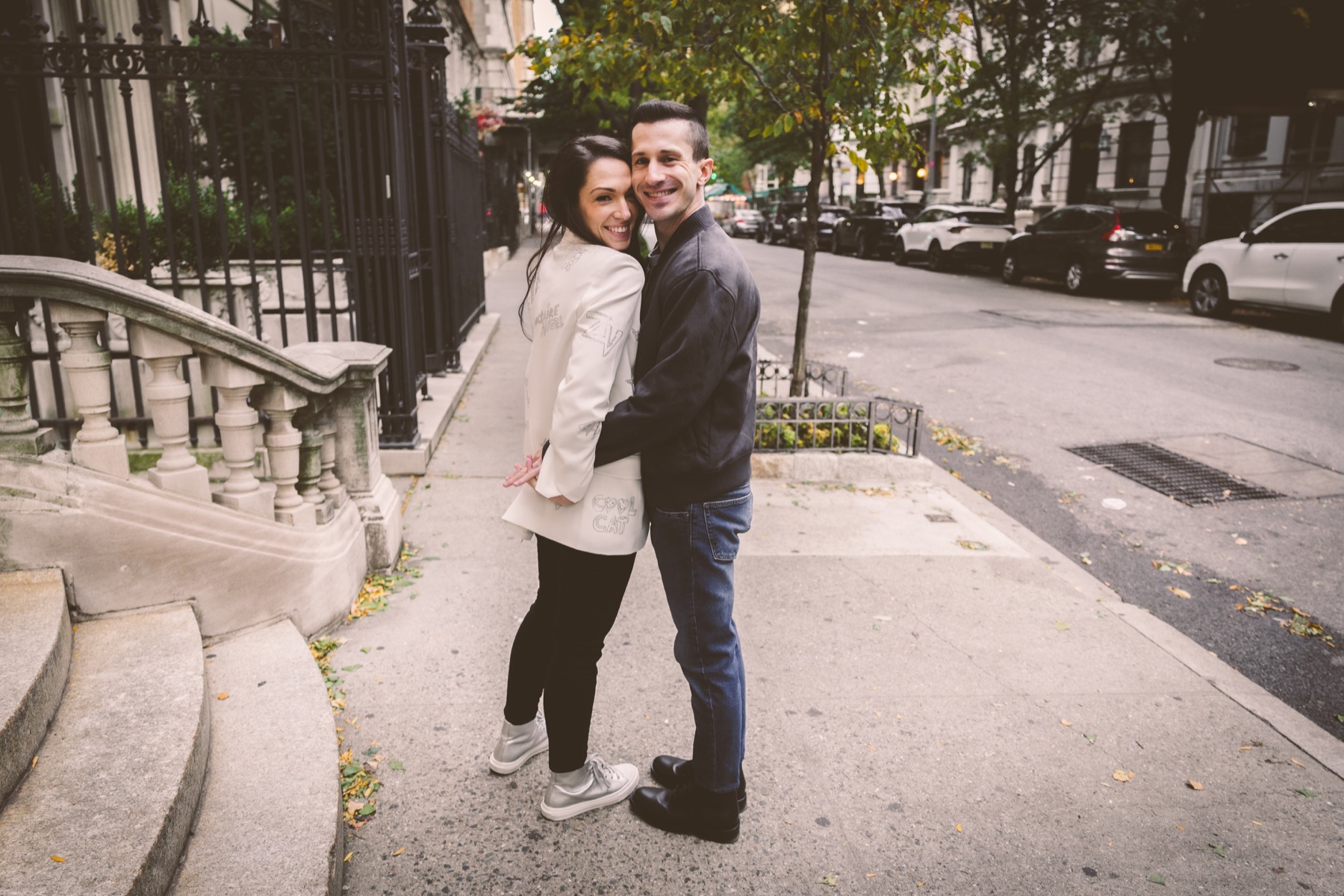
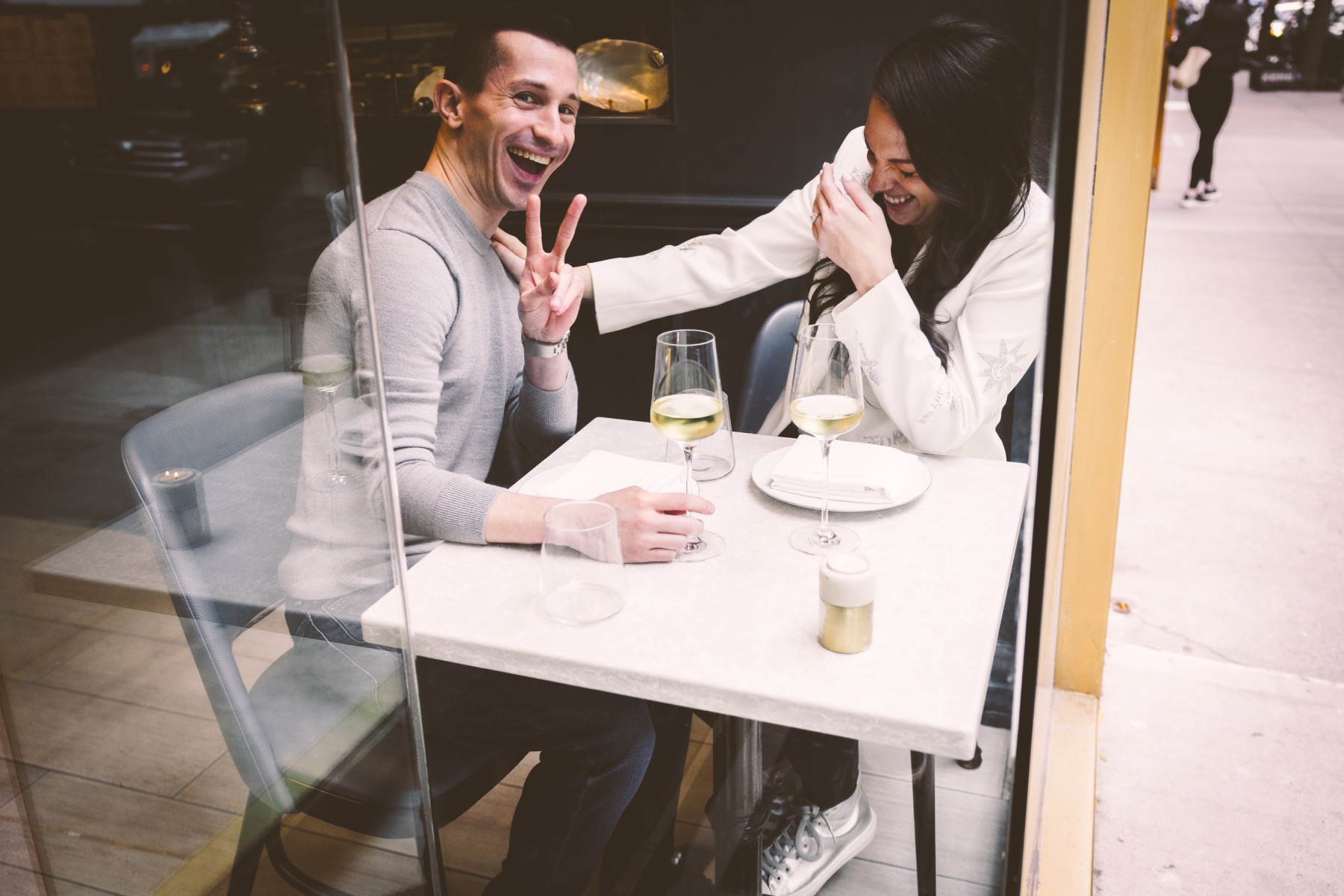
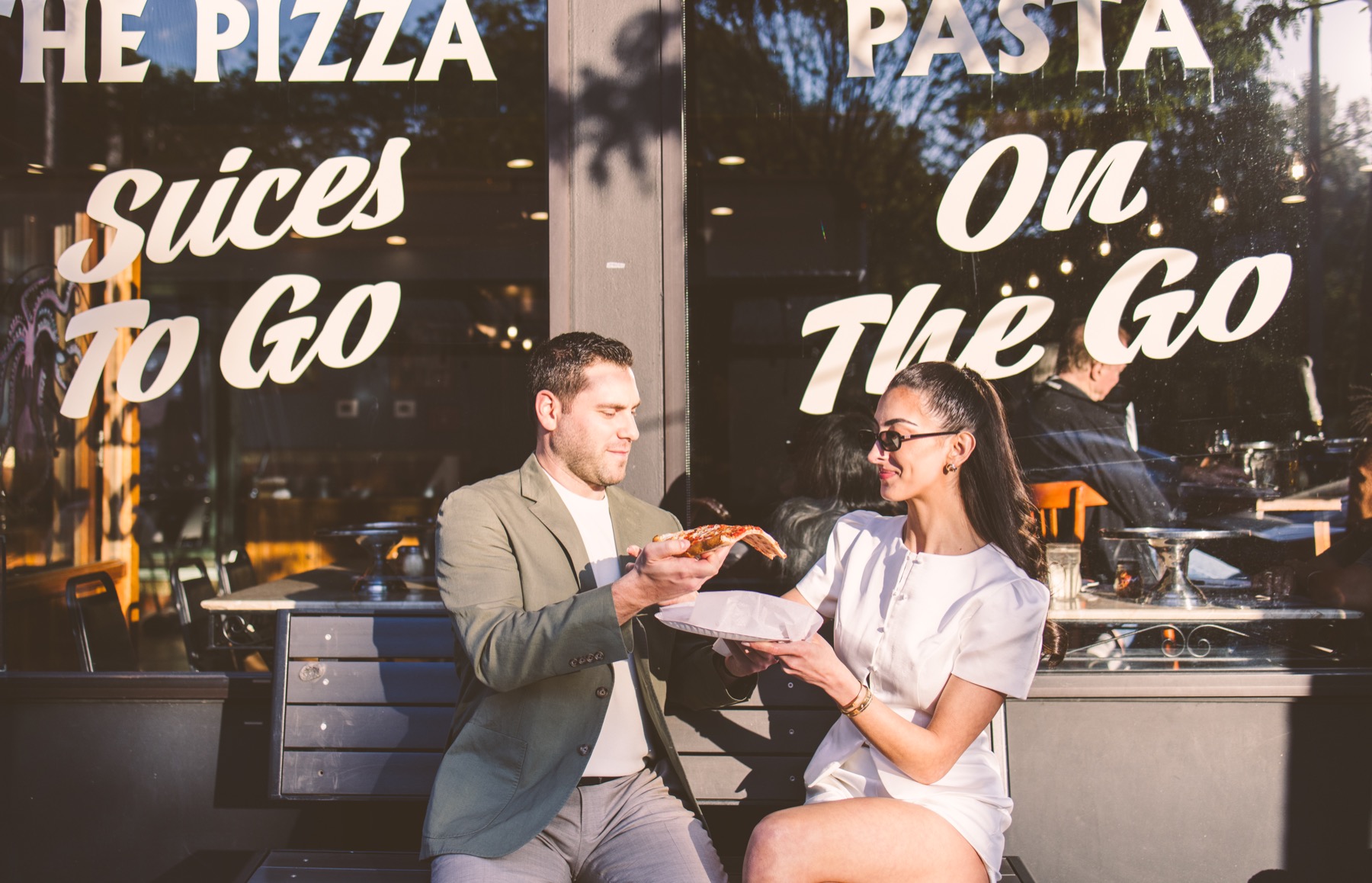
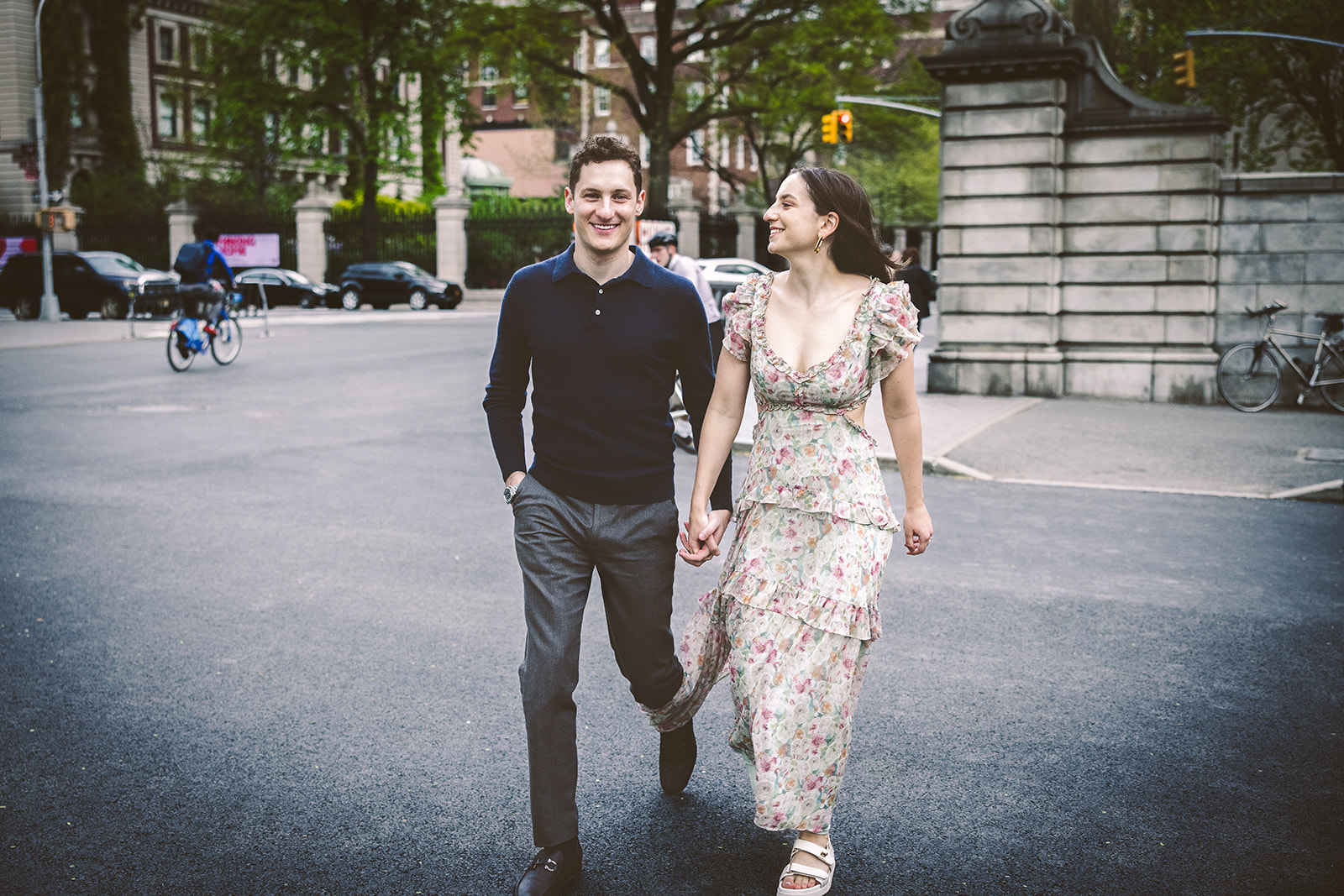
These photographs illustrate the three kinds of moments we want to protect in any downtown route: movement, a quieter storefront chapter, and something that belongs to the couple’s actual life in New York. They are planning examples, not claims about the blocks pictured.
Movement keeps strong architecture from becoming stiff or overly posed.Storefront glass and warm interior light can create a quieter chapter without entering private space.
A shared New York ritual can feel more personal than another posed street corner.
SoHo location 1
Greene Street and the cast-iron district
Greene Street provides one of SoHo’s clearest combinations of cast-iron facades, repeating windows, stone sidewalks, storefronts, and long architectural sight lines. It is also active commercial space. Morning gives the cleanest chance to use the buildings without fighting shoppers, queues, parked vehicles, and deliveries.
The SoHo Cast-Iron Historic District is larger than one block. If Greene Street is blocked by construction or a production, nearby Mercer and Wooster can preserve the same visual language without forcing a weak frame.
SoHo location 2
Mercer, Wooster, and Crosby Streets
These parallel streets let a route adapt quickly. Mercer and Wooster offer broad cast-iron facades and active storefronts. Crosby is narrower and often more intimate, with brick, loading doors, and stronger directional light. Conditions change block by block, so the route should follow current light and street activity rather than a rigid pin list.
SoHo location 3
Prince and Spring Streets, used selectively
Prince and Spring make the neighborhood immediately recognizable, but they are usually the busiest part of the route. Use them early, cross them for motion, or let them appear as context. Building an entire session around the most crowded intersections produces more waiting and less connection.
Tribeca location 1
White, Franklin, Leonard, and Staple Streets
This compact part of Tribeca combines pale stone, brick warehouses, cobblestones, loading doors, and quieter cross streets. Staple Street is visually distinctive, but its overhead bridge is connected to private property. Photograph it from lawful public space, never imply access to the bridge, and keep residential and working entrances clear.
Tribeca location 2
Laight Street and the warehouse scale
Laight Street and nearby blocks create wider perspectives than SoHo. Large windows, older warehouses, cobblestones, and open intersections work well for walking photographs and environmental portraits. Traffic, loading zones, scaffolding, and construction can change the usable angle on any date.
The most useful downtown routes create space for relaxed walking between architectural frames. Begin with the widest view while the block is clear, then move closer as street activity changes.
Tribeca location 3
Pier 25 and the Hudson River
Pier 25 and the surrounding Hudson River Park add open sky, water, skyline, wind, and a completely different scale. This works best as a deliberate final chapter, not an automatic add-on. The walk takes time, the waterfront can be windy, and Hudson River Park requires advance authorization for commercial photography.
Private option
Cafes, bars, hotels, and rooftops
An interior can solve rain, provide an outfit-change location, or create a more personal beginning. It is never guaranteed simply because a business is open. Secure written permission, confirm any fee or purchase requirement, and ask what equipment, timing, and guest impact the property permits.
Best time of day
Weekday morning is the safest choice for both neighborhoods. SoHo becomes crowded quickly once stores open, while Tribeca’s loading activity varies by block. Late afternoon can work beautifully when the route is built around directional light and an evening finish.
Midday creates deep contrast between sunlit intersections and shaded streets. A photographer who knows the area can use that contrast, but it reduces the number of forgiving angles.
Traffic, crowds, and construction
Delivery trucks are not a rare interruption downtown. They are part of the working neighborhoods. Construction, scaffolding, outdoor dining, film productions, and street work can also change a block without much warning.
A good plan includes parallel streets and backup corners. The visual identity of the neighborhood matters more than reproducing a photograph at one exact address.
What to wear
SoHo supports a sharper, more graphic look. Tribeca handles both tailored clothing and softer movement because the streets and facades have more breathing room. In either neighborhood, shoes must handle cobblestones and real walking.
Bring a second look only if there is a private changing place and enough time. A short session usually benefits more from one strong outfit and uninterrupted momentum.
Rain plan
Light rain can improve the streets through reflections, softer crowds, umbrellas, and richer color. Heavy rain needs either a flexible reschedule policy or a pre-approved interior. Sidewalk sheds are not a dependable creative plan, and private lobbies are not public studios.
Do SoHo or Tribeca engagement photos require a permit?
New York City’s Mayor’s Office of Media and Entertainment says a permit generally is not required on exterior public City property when a session uses a handheld camera or tripod, does not claim exclusive use, does not request production parking, and does not add larger equipment, stunts, prop vehicles, prop weapons, or performers in official uniforms.
That rule does not grant access to private stoops, storefront interiors, hotel spaces, rooftops, residences, or the Staple Street bridge. Hudson River Park is separately managed and says commercial photography requires a permit, proof of insurance, fees, and advance processing. Confirm the current rule for the exact route and use before the session.
Frequently asked questions about SoHo and Tribeca engagement photos
Is SoHo or Tribeca better for engagement photos?
Choose SoHo for cast iron, storefronts, reflections, fashion, and denser street energy. Choose Tribeca for cobblestones, warehouses, quieter blocks, wider compositions, and an optional waterfront finish.
What are the best SoHo engagement photo locations?
Greene, Mercer, Wooster, and Crosby Streets provide the strongest cast-iron and downtown variety. Prince and Spring are recognizable but busier, so they work best early or as a short part of a larger route.
What are the best Tribeca engagement photo locations?
White, Franklin, Leonard, Staple, and Laight Streets provide warehouse architecture, stone, brick, cobblestones, and quieter intersections. Pier 25 can add water and skyline when its separate permit requirements are handled.
Can we combine SoHo and Tribeca in one session?
Yes. Allow at least 90 minutes, choose only one or two priorities in each neighborhood, and use a one-direction route. A short session is usually stronger when one neighborhood leads.
What time should a SoHo engagement session start?
Weekday morning is usually best because sidewalks and recognizable cast-iron blocks are calmer before stores, deliveries, and visitors fill the area.
What time should a Tribeca engagement session start?
Morning provides quieter streets. Late afternoon works when the route follows the light and finishes near the Hudson. Loading activity and traffic still vary block by block.
Do we need a permit for SoHo or Tribeca engagement photos?
A small handheld session on ordinary public city sidewalks generally does not require a MOME permit when it does not claim exclusive use or add a larger production footprint. Private properties and Hudson River Park follow separate rules.
Can we take photos at the Staple Street bridge?
The bridge can be photographed from lawful public street space. It is connected to private property, so a session should not imply access to the bridge or block entrances and normal street use.
Can we take engagement photos inside a SoHo cafe or Tribeca bar?
Yes, with direct permission from the business. Confirm the date, time, equipment, purchase or fee, guest impact, and whether a private changing space is included.
What happens if it rains?
Light rain can produce reflections and quieter streets. Heavy rain usually requires rescheduling or a pre-approved interior because public sidewalks do not provide a reliable covered route.
The best SoHo or Tribeca engagement session is built around a coherent route, honest access, and enough time for real interaction. Architecture should give the gallery a sense of place without becoming more important than the people in it.