
A Black Tie Wedding at Guastavino’s, NYC
Nick and Max met online and had been together about a year and a half when Nick proposed, on August 28, in their New York City apartment, a few days before a trip to Greece that most of their friends and family had quietly decided was going to be the proposal. It was not. It happened at home, before anyone got the chance to guess right.
They married at Guastavino’s on an early September evening. Black tie. Black, white and kelly green. Two of their closest friends stood up and married them. Their dog walked down the aisle and then got a cocktail named after him. Rather than open with a first dance, they came in with the whole wedding party, which turned out to be the best decision anyone made all night. I have photographed a lot of weddings under those tile vaults, and this one moved differently from the first hour.
The morning, and a bow tie that took three people
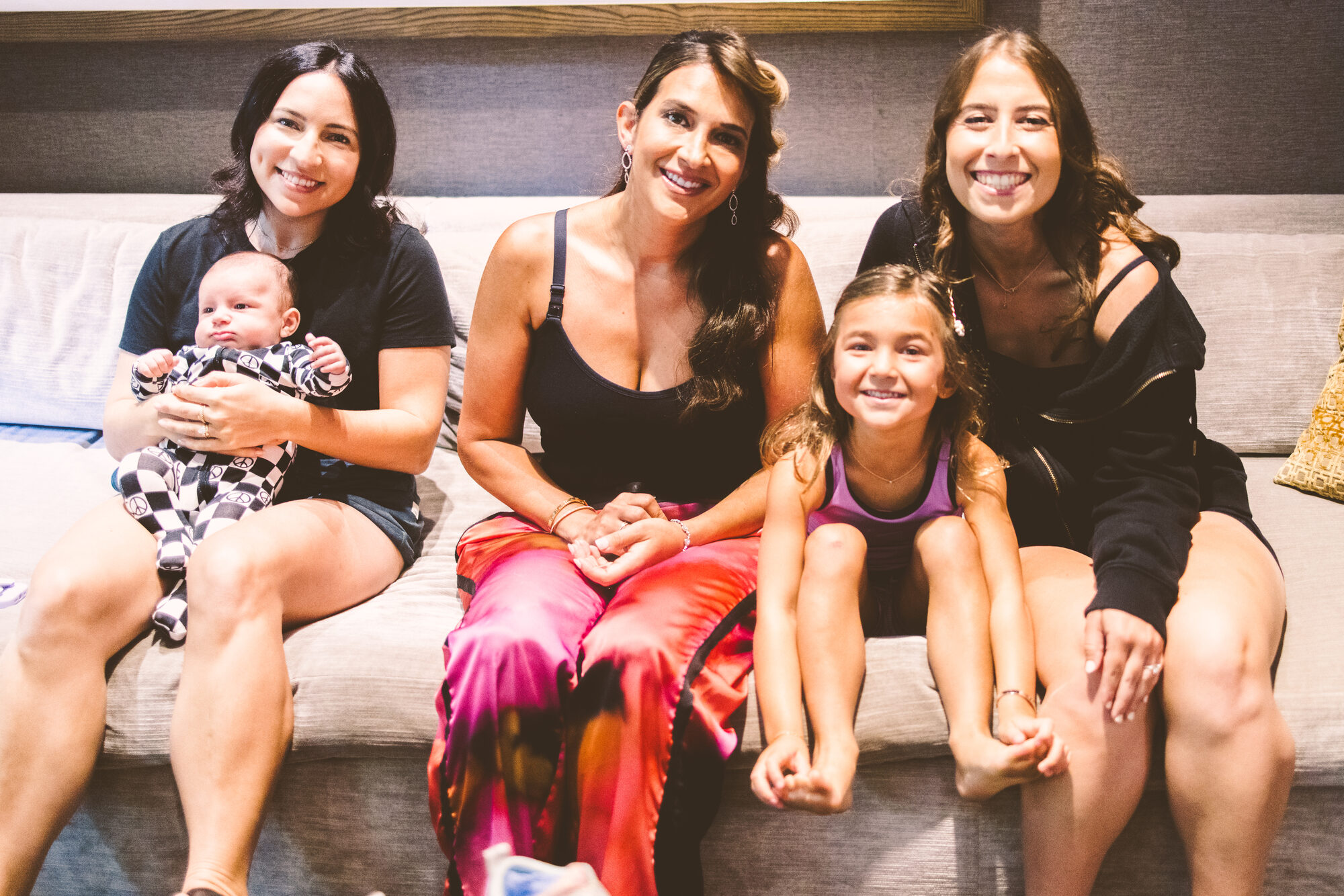
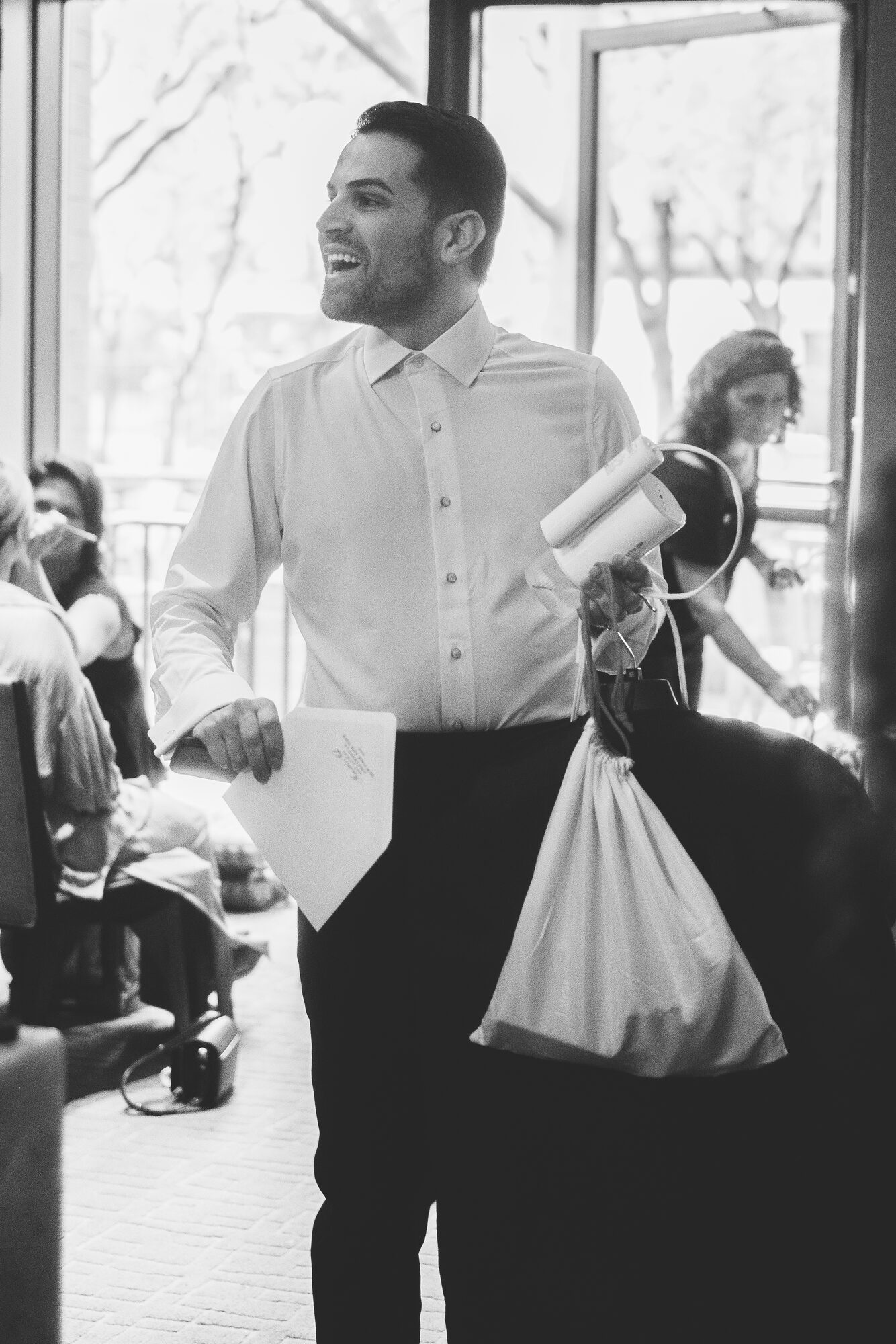
They got ready together, in an apartment high enough that the window looked down onto what I am fairly sure is Rockefeller Center. I photograph a lot of hotel suites. This was better. It was somebody’s living room with the good glasses out, friends in undershirts, a bottle open at eleven in the morning, and the invitation suite sitting on the counter next to a set of car keys.
It felt less like a getting ready call and more like a family reunion at somebody’s home. Someone’s mother arrived with bags. Kids ended up on the sofa. Hair and makeup happened a few feet from where people were eating. Two grooms do not have much in the way of getting ready things to photograph, so what you get instead is everybody, in one place, all morning.






The first look, on a footpath uptown
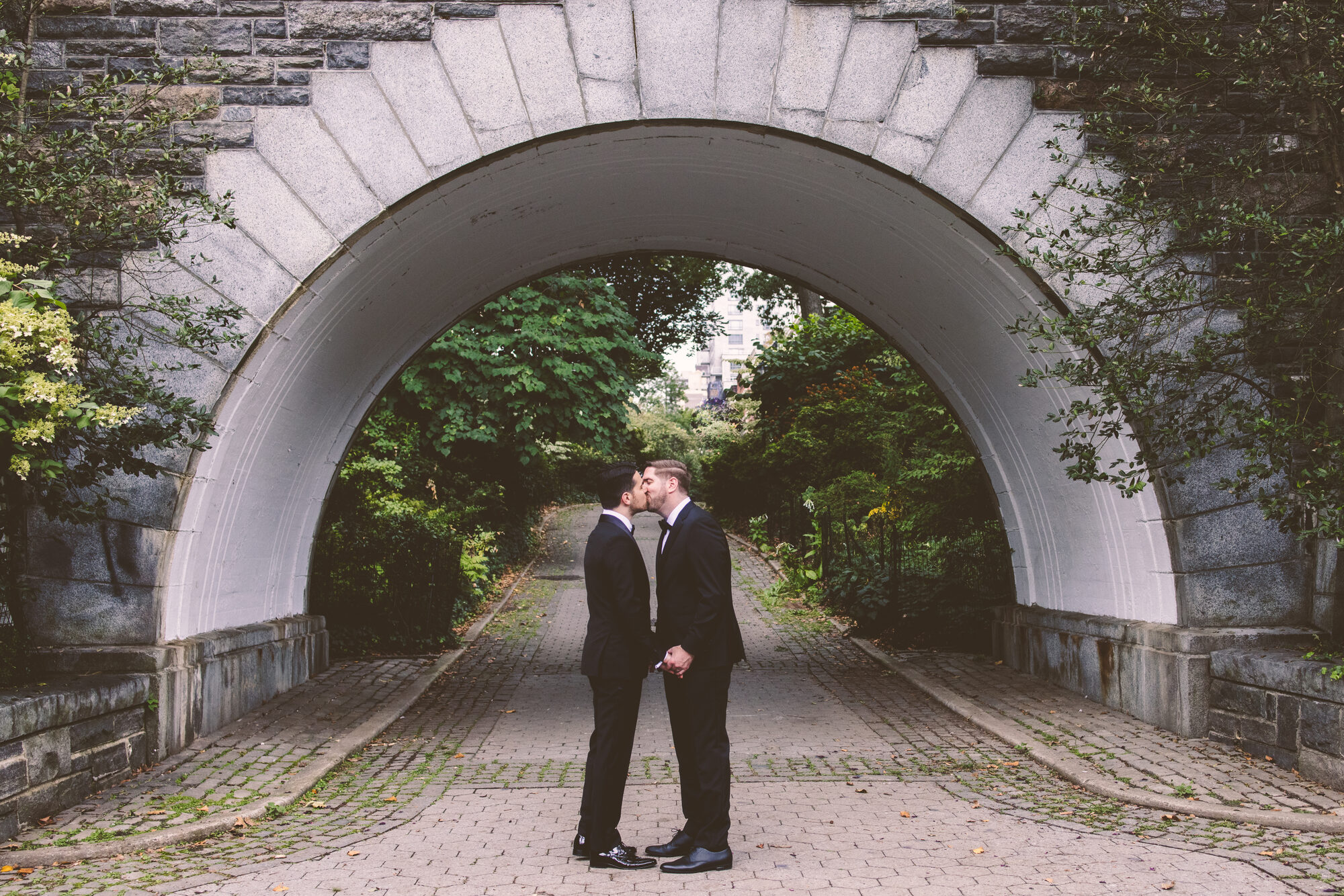
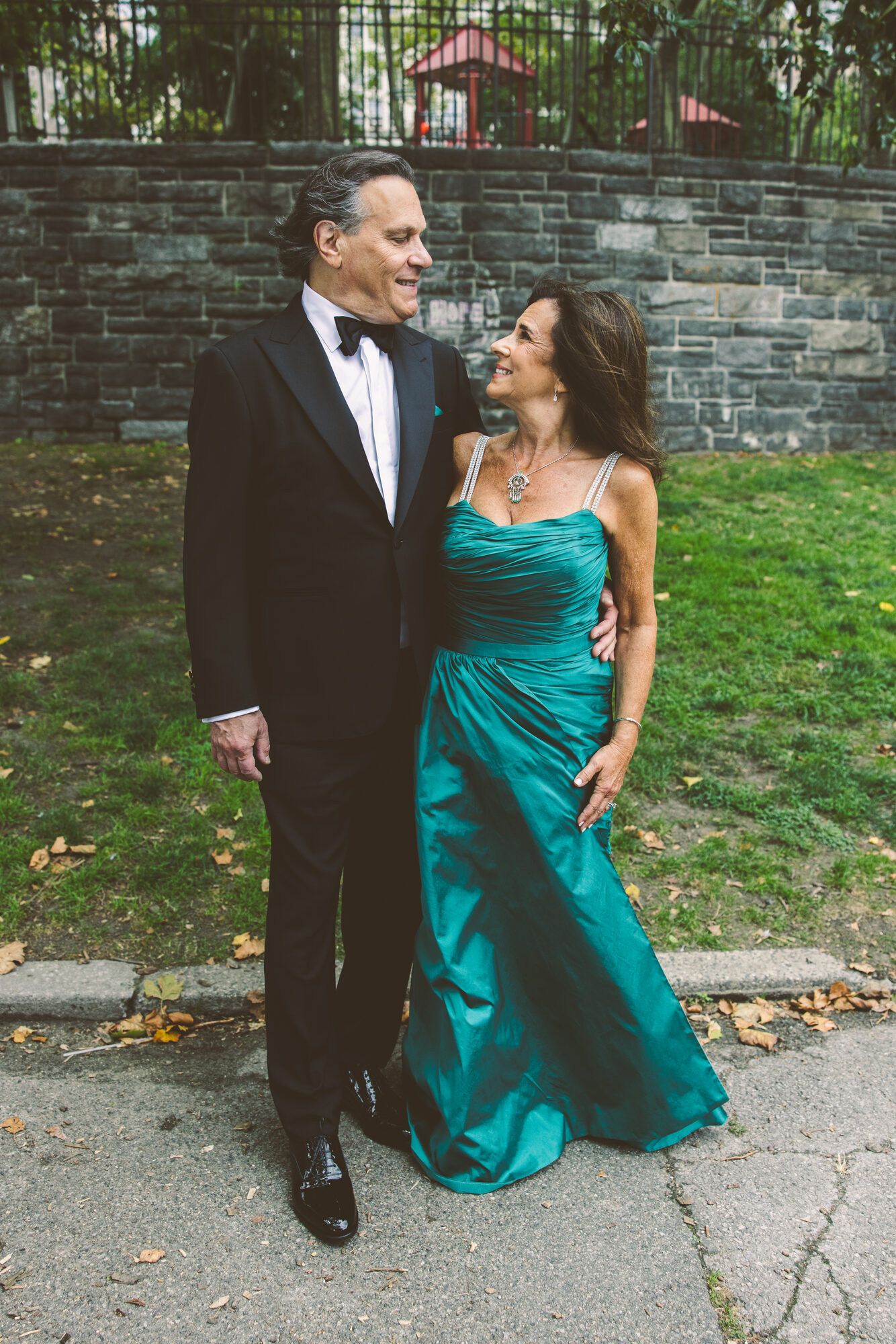
We left for a park uptown, one with a long stone arch and a view out to the river. I am not going to name it, partly because half the appeal is that it stays quiet on a Saturday afternoon.
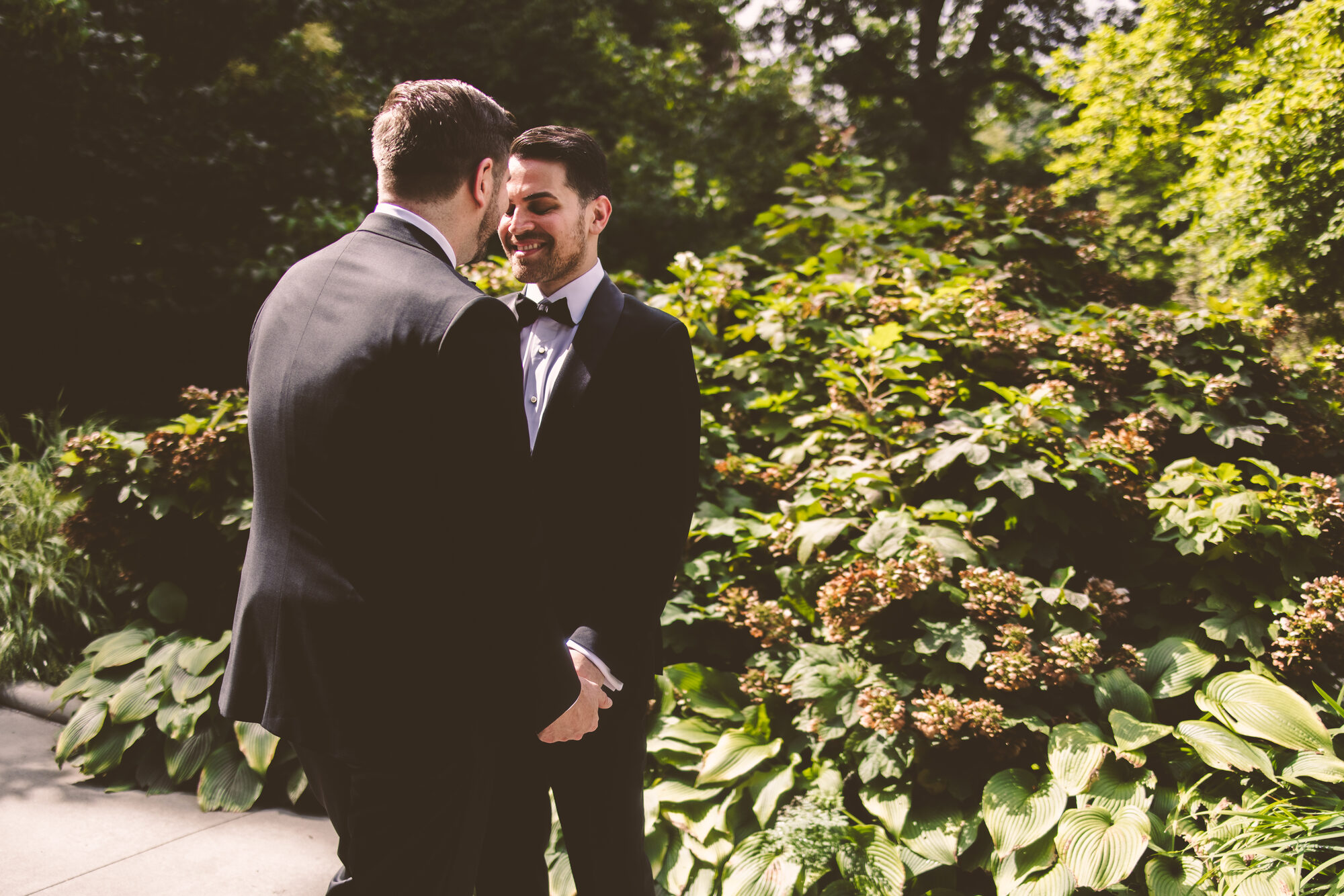
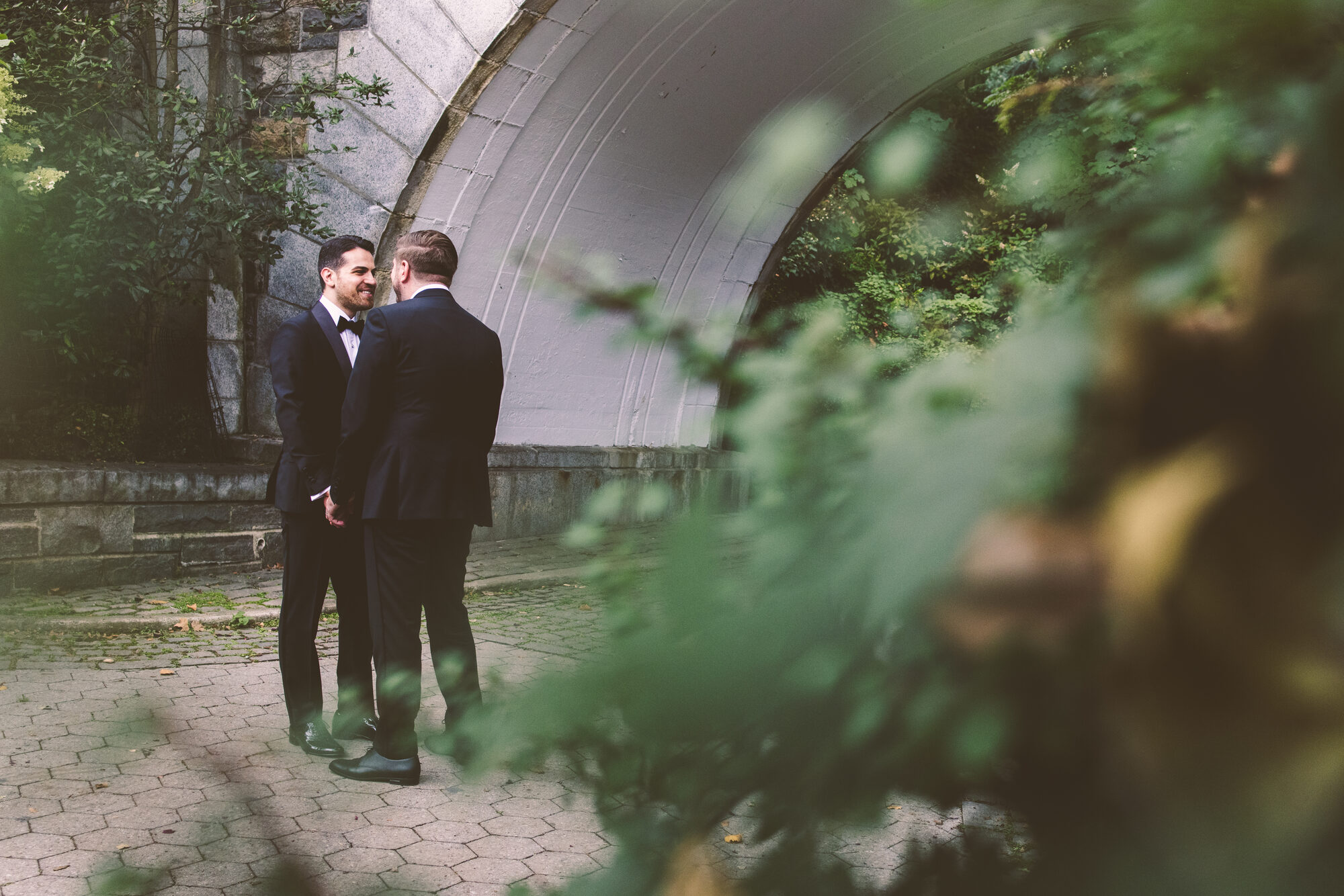
Nick and Max did a first look on a footpath with nobody else around. Neither of them had read the other’s vows. They had agreed on that months earlier and they held to it, so what happens in these frames is two people who genuinely do not know what is coming later. There is a stretch of about ninety seconds where they just hold onto each other and say nothing. Those are the ones I would print.




Portraits under the stone arch
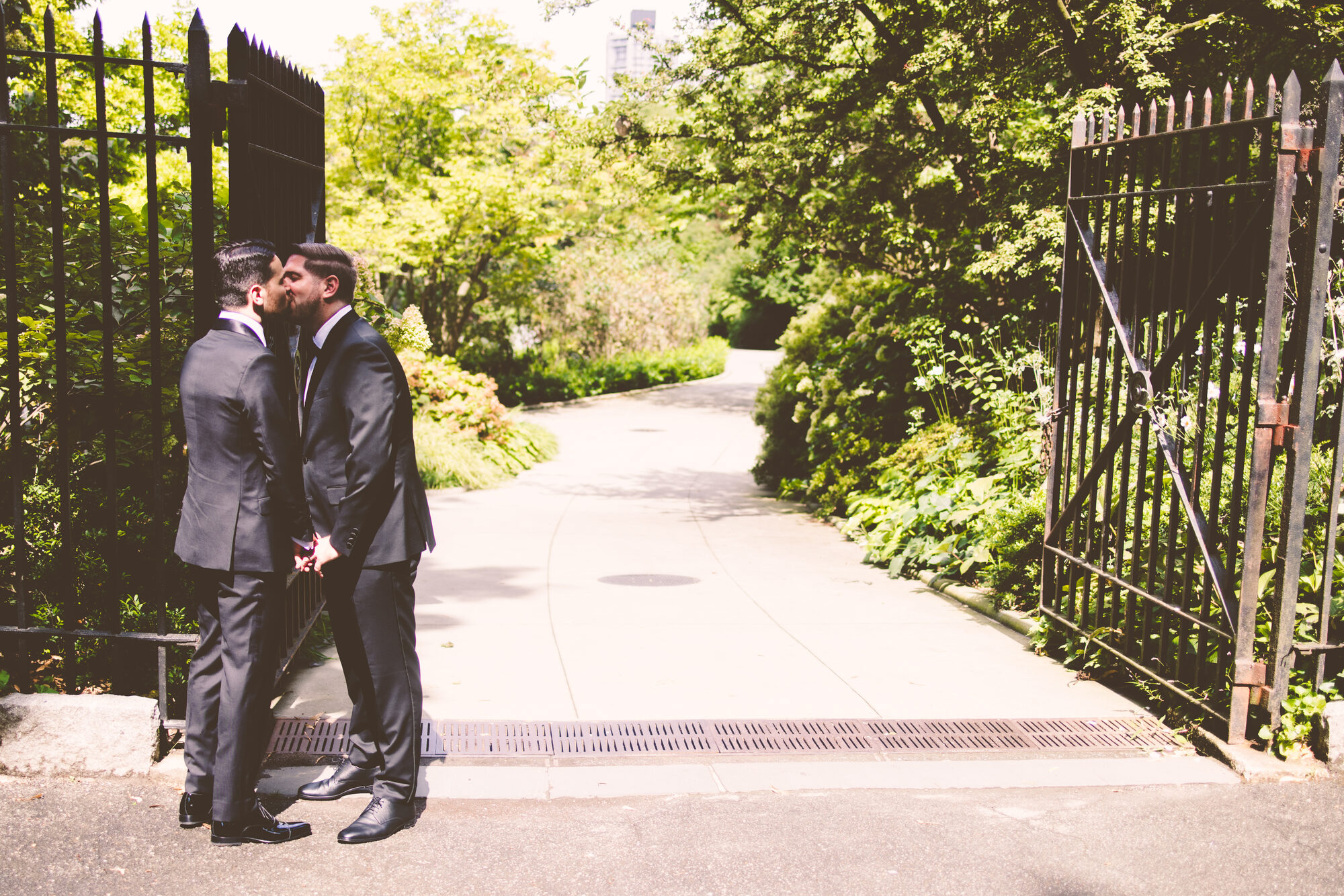
The arch does most of the work. It is deep enough to throw real shade, which means you get soft light on faces and a bright frame around them at the same time, and the path runs straight through it so you can shoot long and let the two of them walk. We worked it for maybe twenty minutes and then took the path on either side of it.
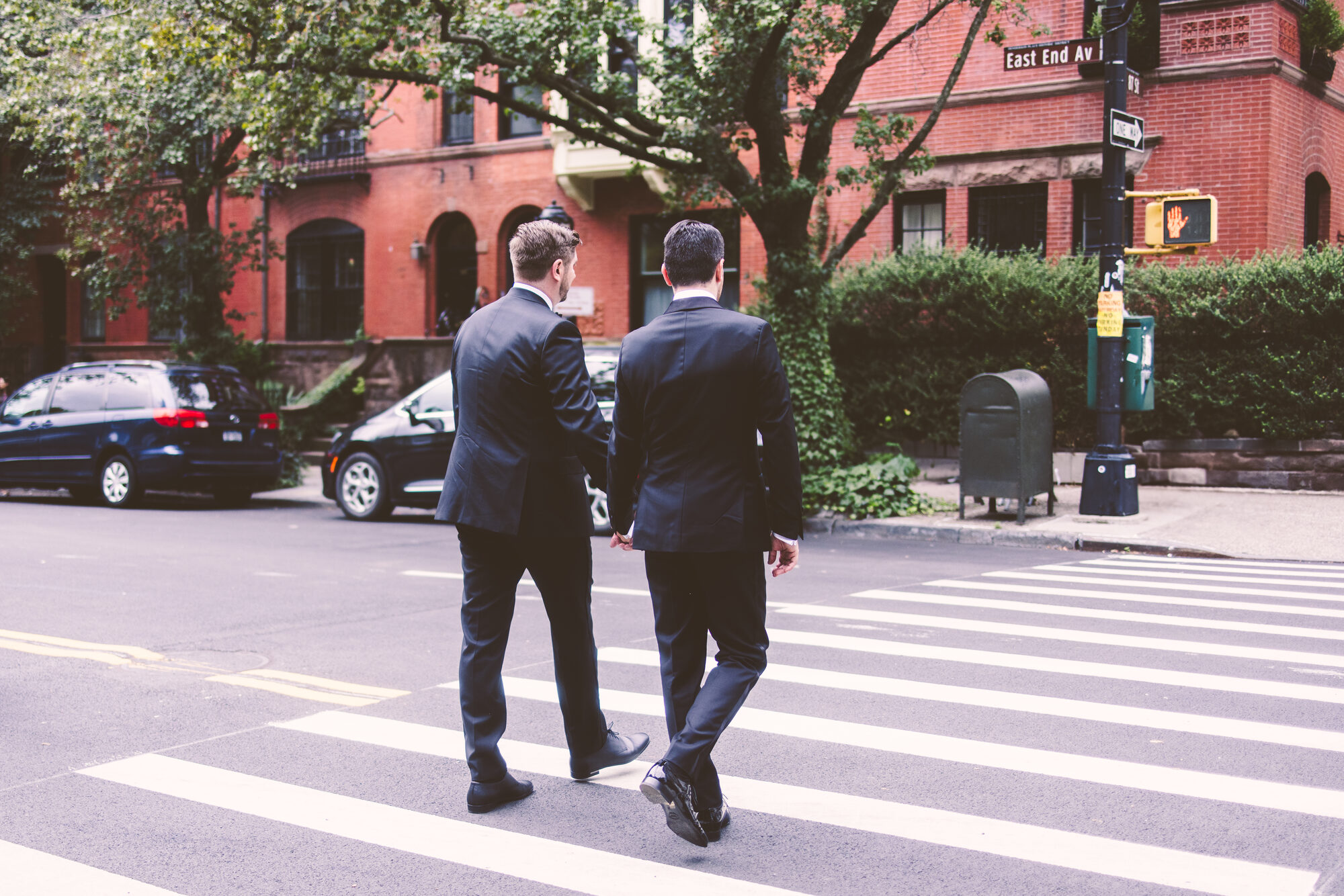
Black tie helps here. Two men in well cut tuxedos against pale stone is a simple, strong picture, and it does not need styling to hold up. We finished on the sidewalk crossing toward the venue, which is my favorite kind of transition frame: still in the day, already headed somewhere.






Family, in the order that matters
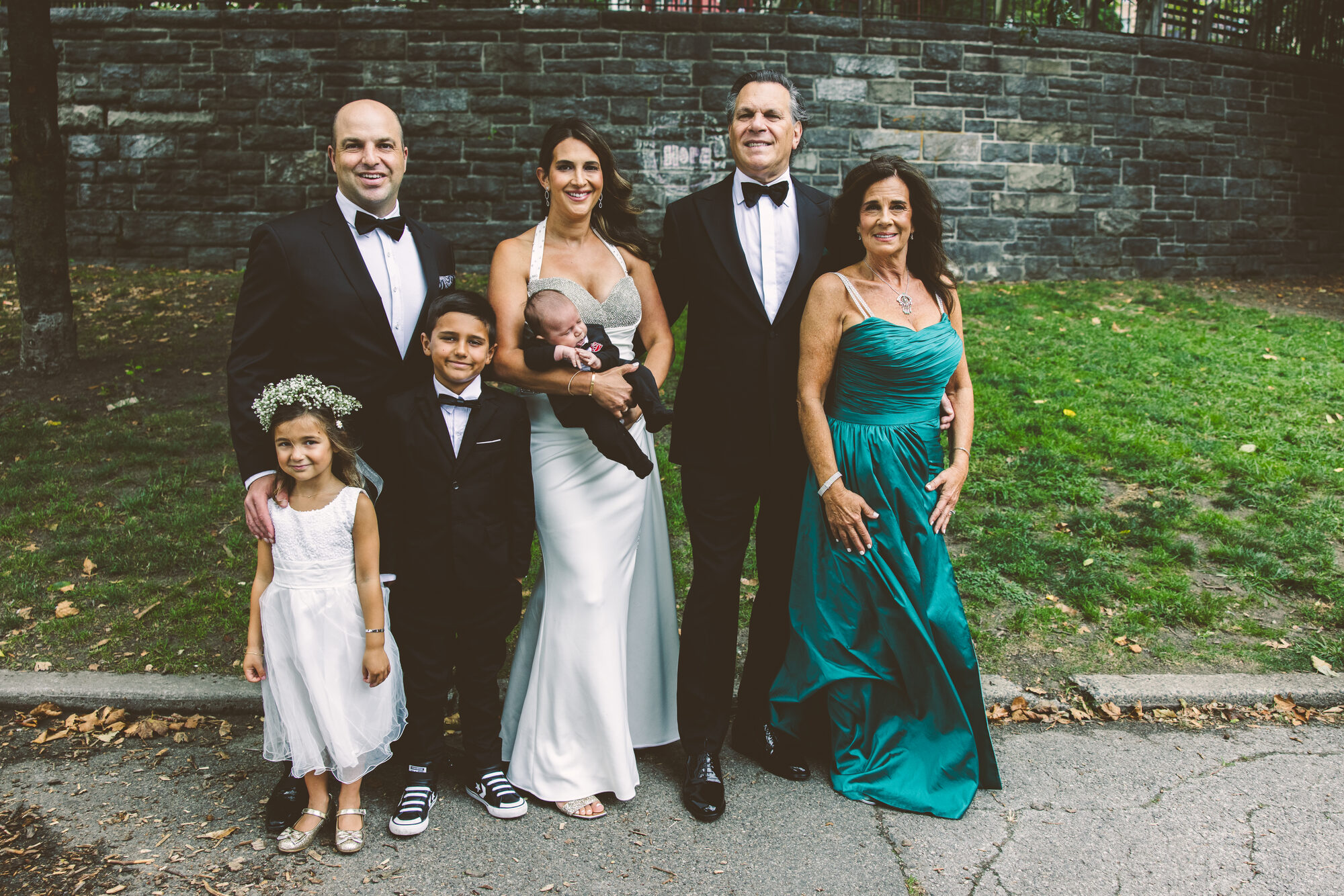
We photographed the family groups against a stone wall and then along the water. We always make a point of accommodating the very young and the older members of the family first, in the easiest setting we can give them, so that nobody has far to walk or long to stand, and so they can settle and rest well before the main part of the evening begins. Comfortable people photograph better.
Later, inside, we photographed the wedding party and the immediate family under the chuppah before guests came in. That space is the best backdrop in the building, and it is only clear for one short stretch of the day, so we planned around it.



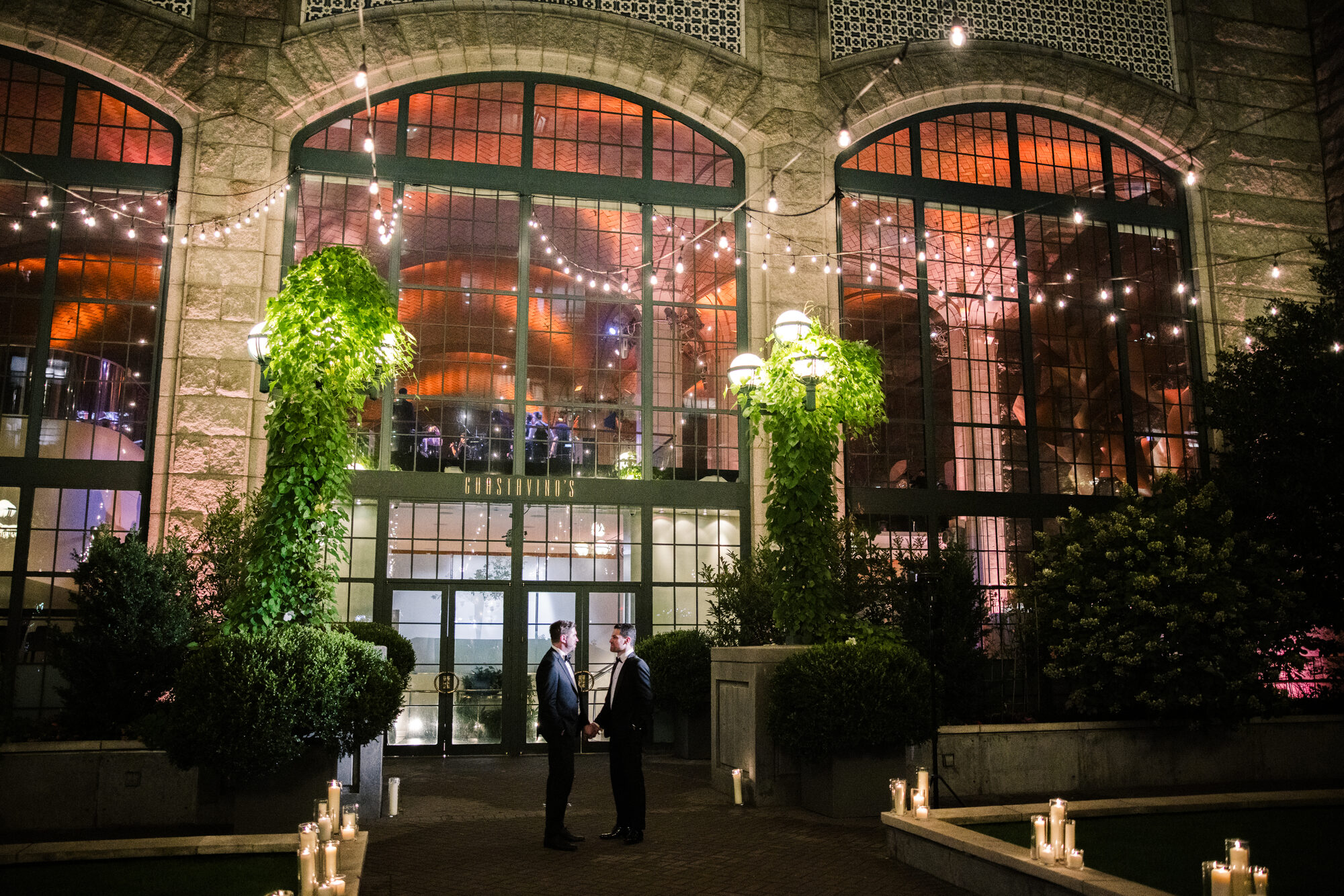
Arriving at Guastavino’s
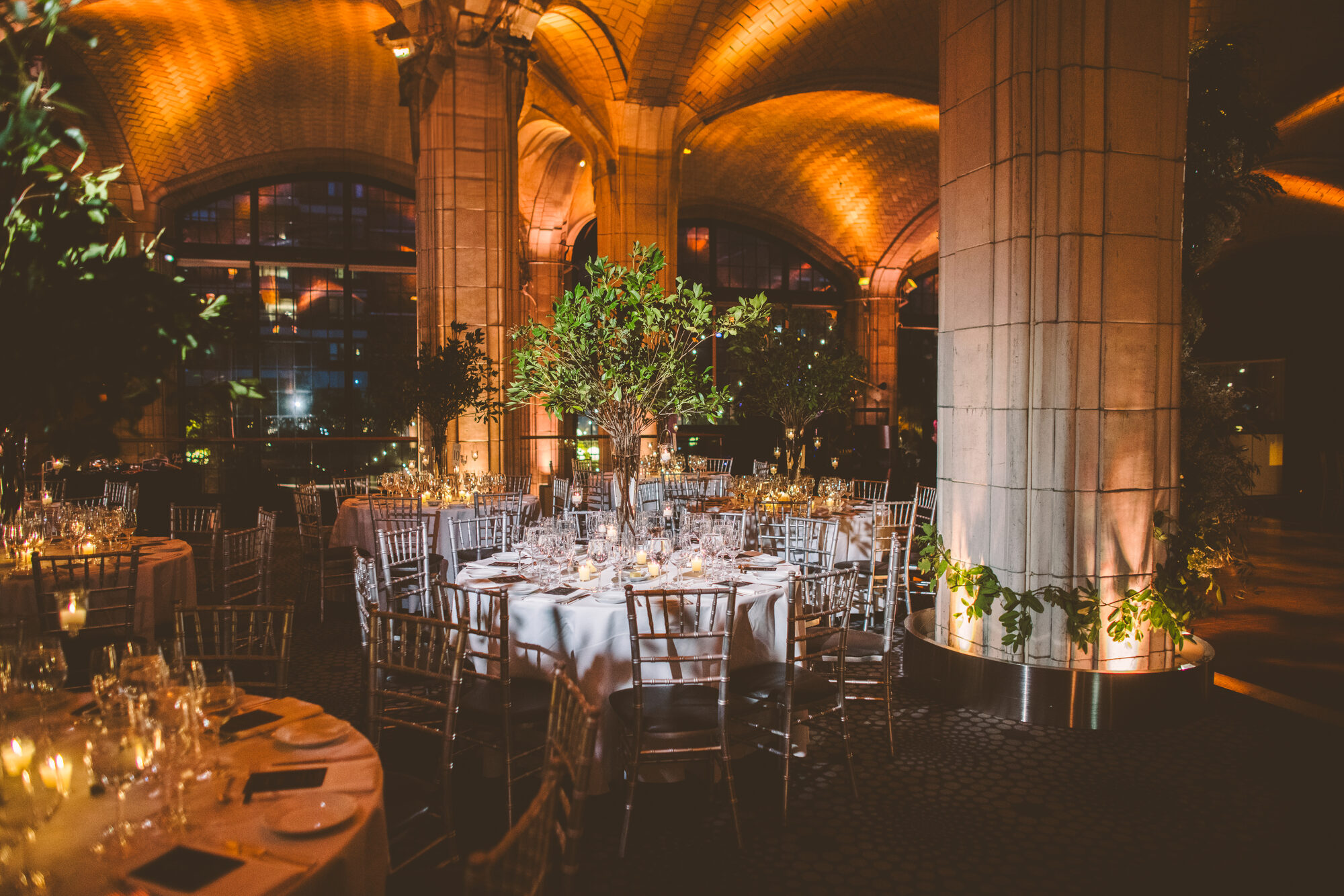
Guastavino’s sits underneath the Queensboro Bridge approach on the east side of midtown, and it is a designated New York City interior landmark. The short version of the architecture, and I do mean short because you can read the long version in a hundred other places: Rafael Guastavino and his son built self supporting tile vaults, laid in herringbone courses, that hold themselves up without steel. The ceiling you are looking at is the structure. That is the whole trick.
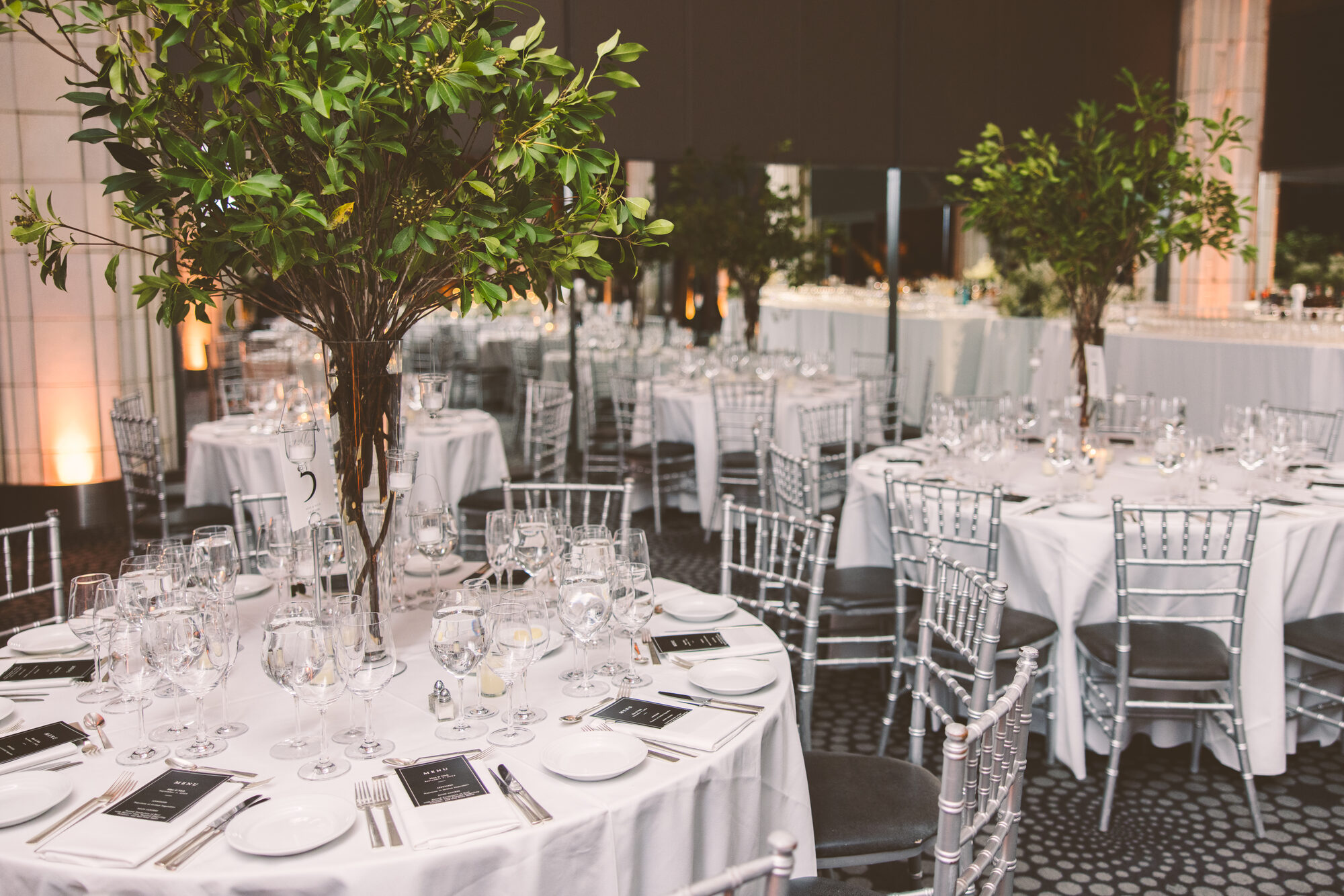
What matters on a wedding day is more practical. The vaults are high and pale, so light bounces instead of dying. The space is enormous but it reads warm once it is lit. And the building has a private garden, which is genuinely rare for a venue this size in this part of Manhattan, and which most couples do not find out about until they tour.


The ceremony
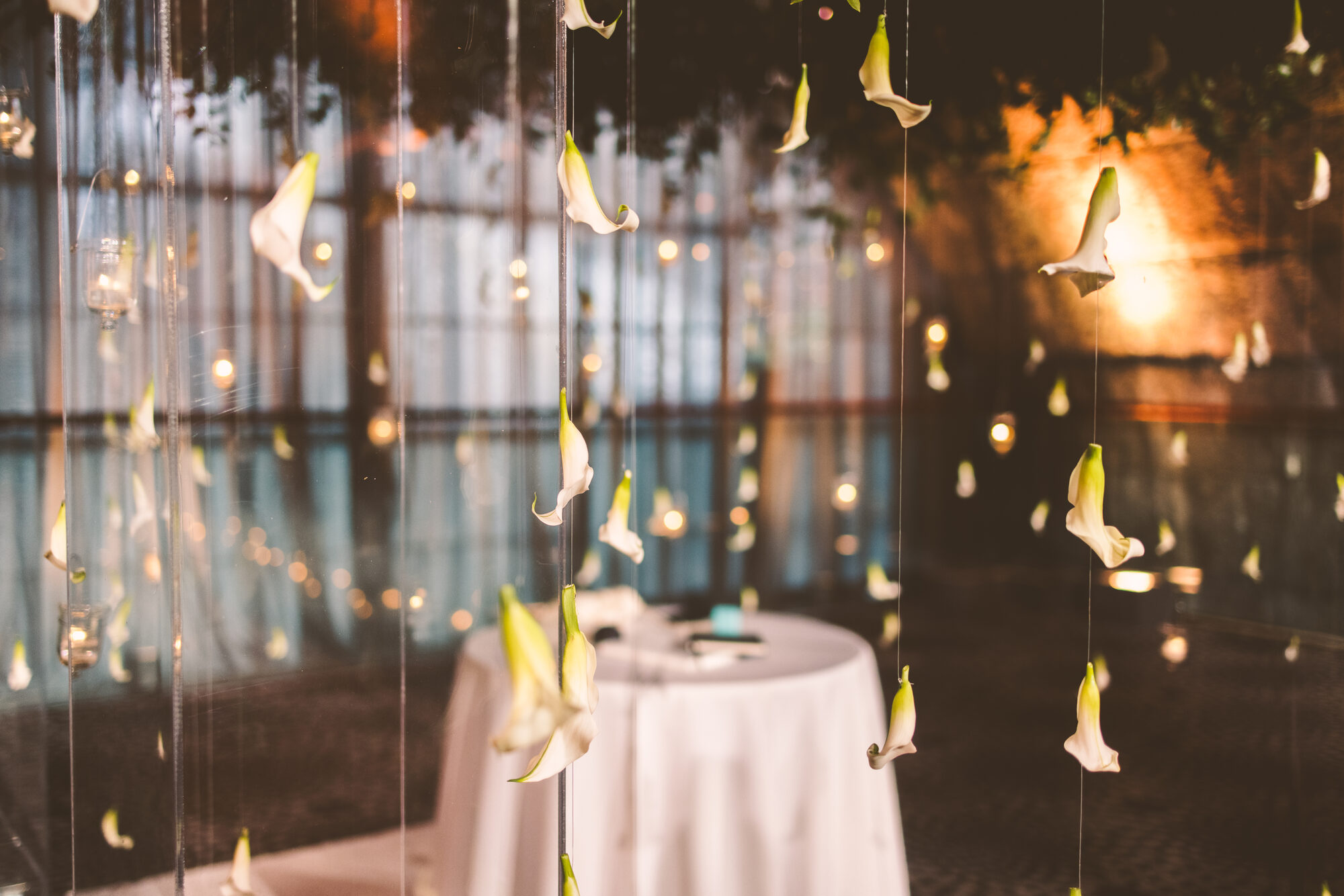
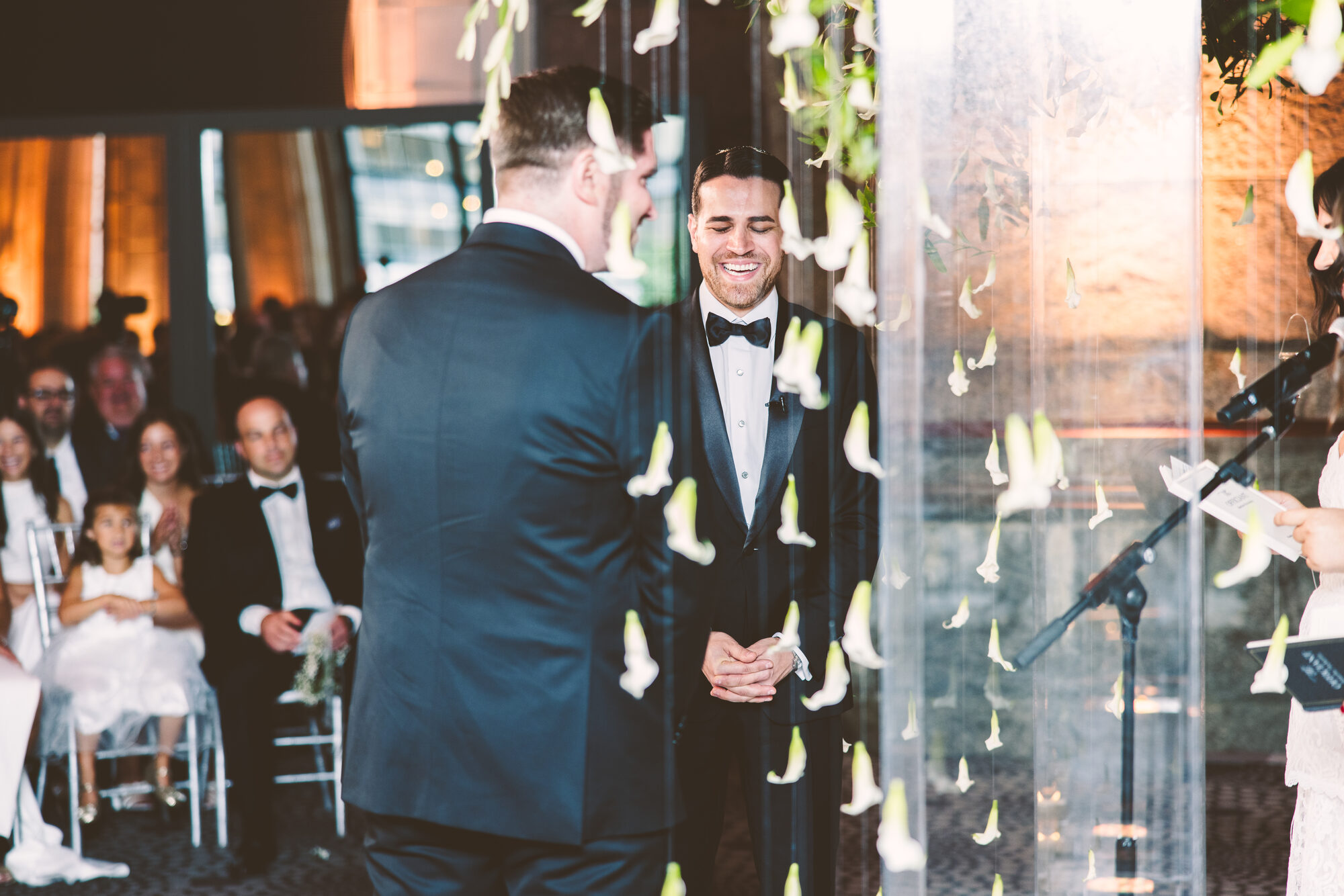
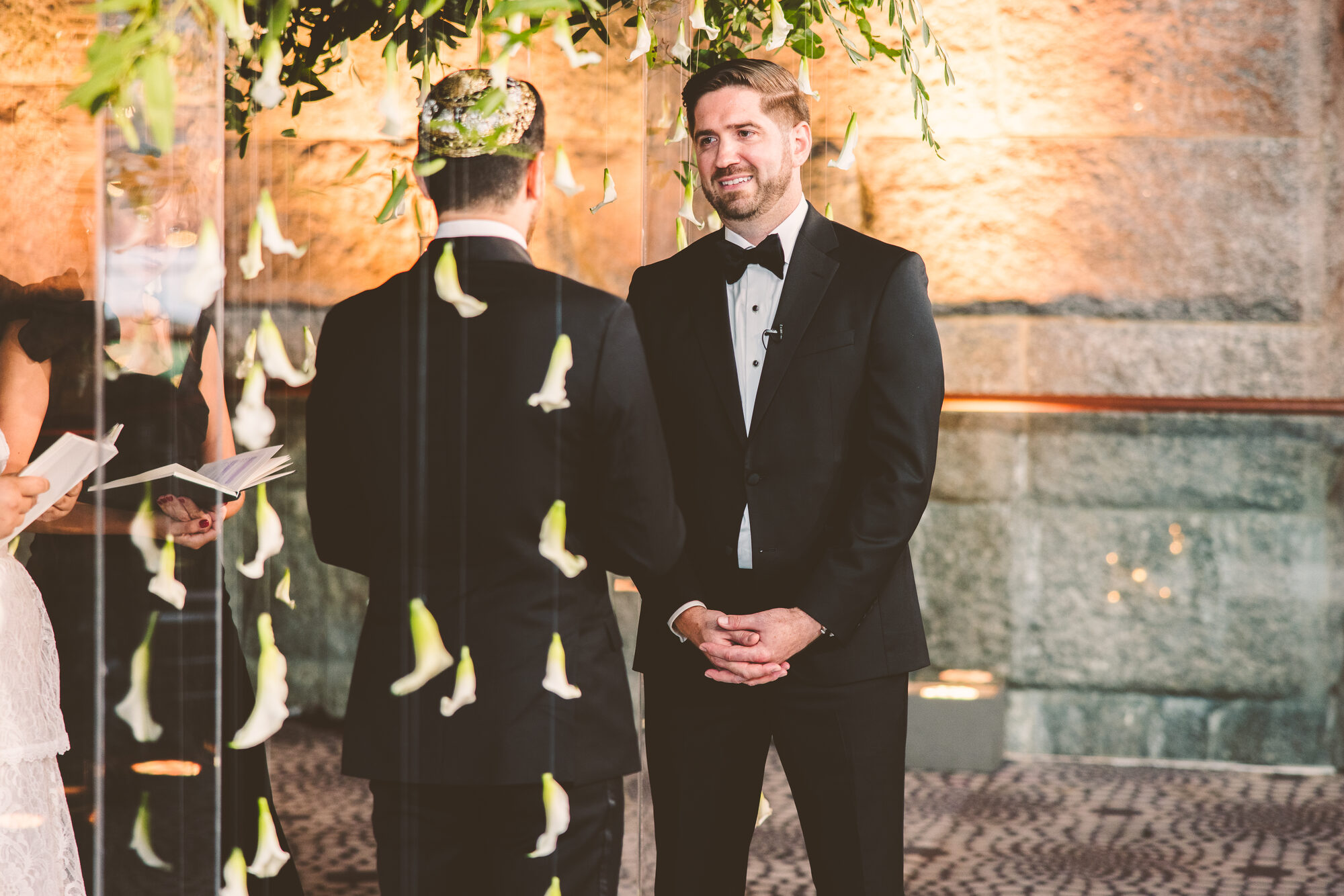
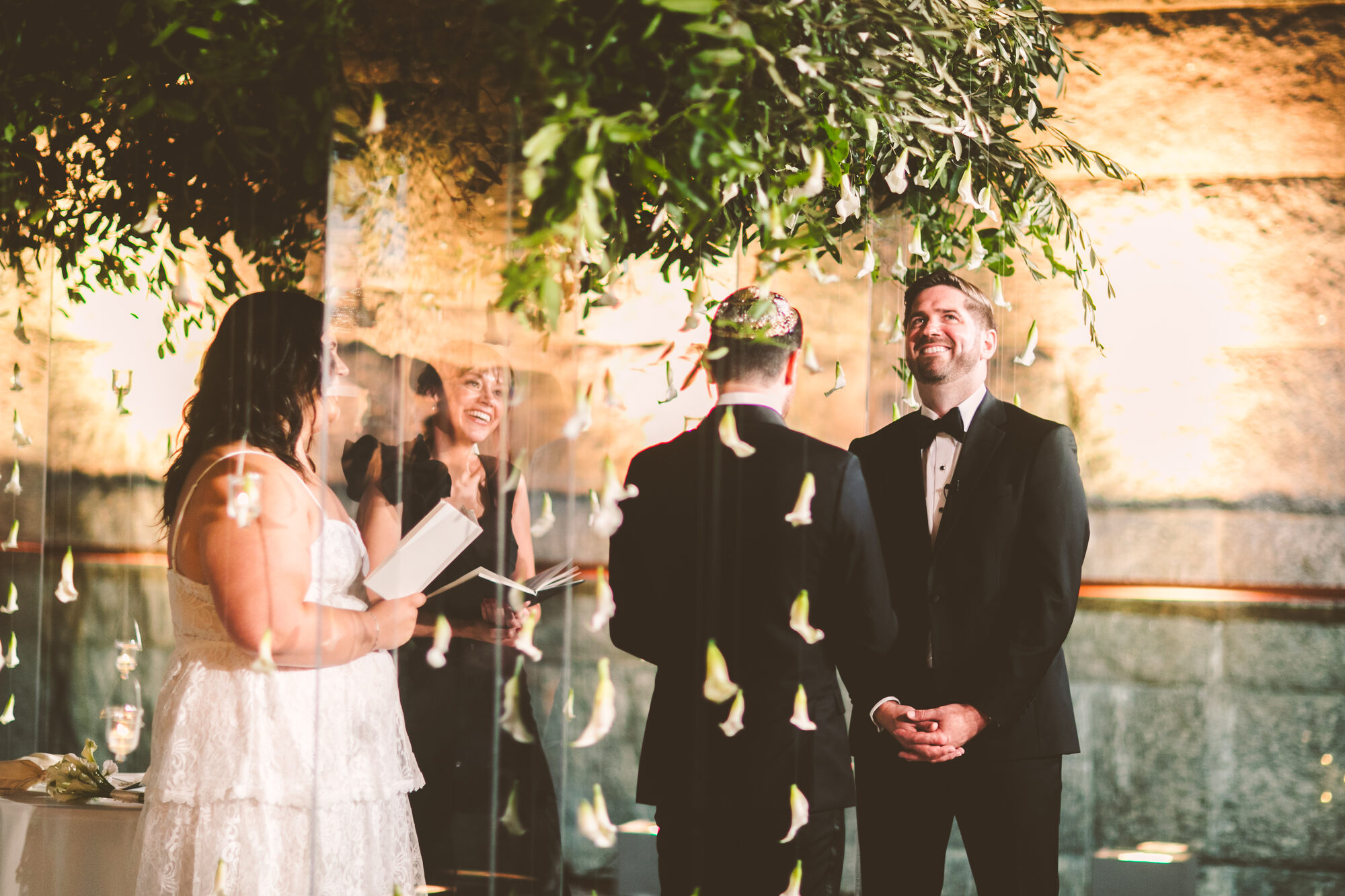
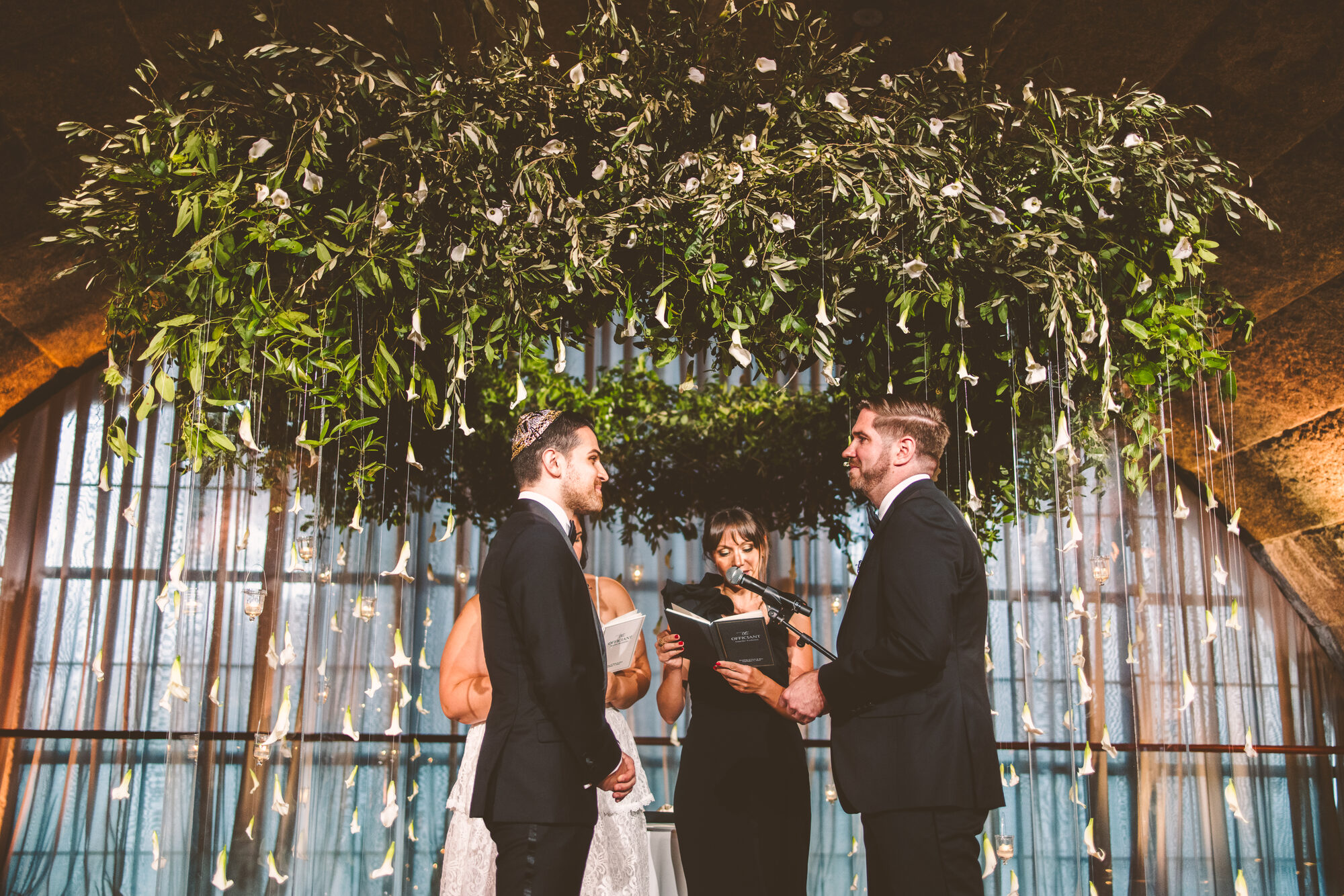
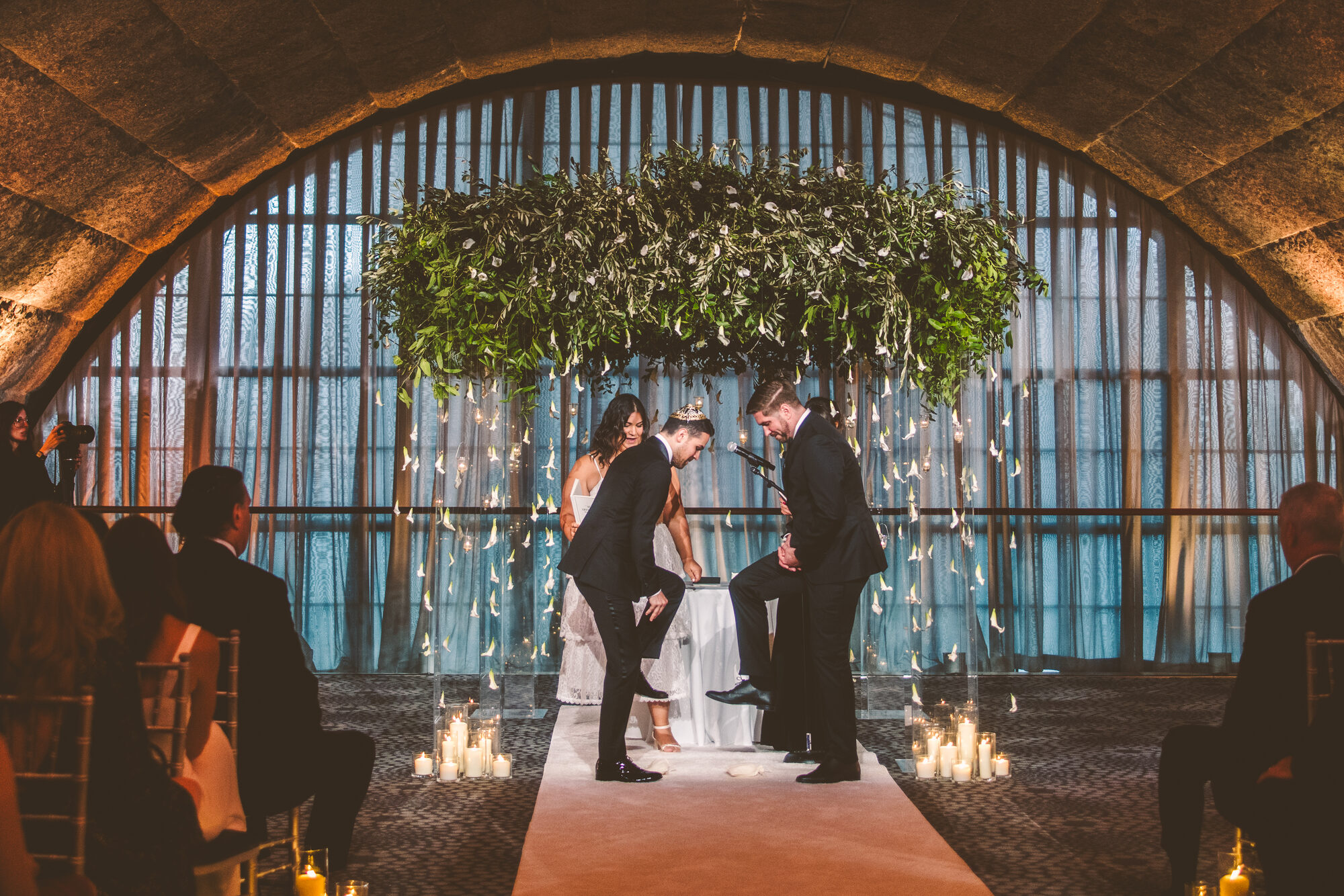
They set the ceremony under a wide arch of greenery, olive branches by the look of it, hung against the teal glass wall at the far end of the space, with candles running the length of the aisle. It photographs beautifully because the glass throws a cool color behind a warm foreground, and you get separation without any work.
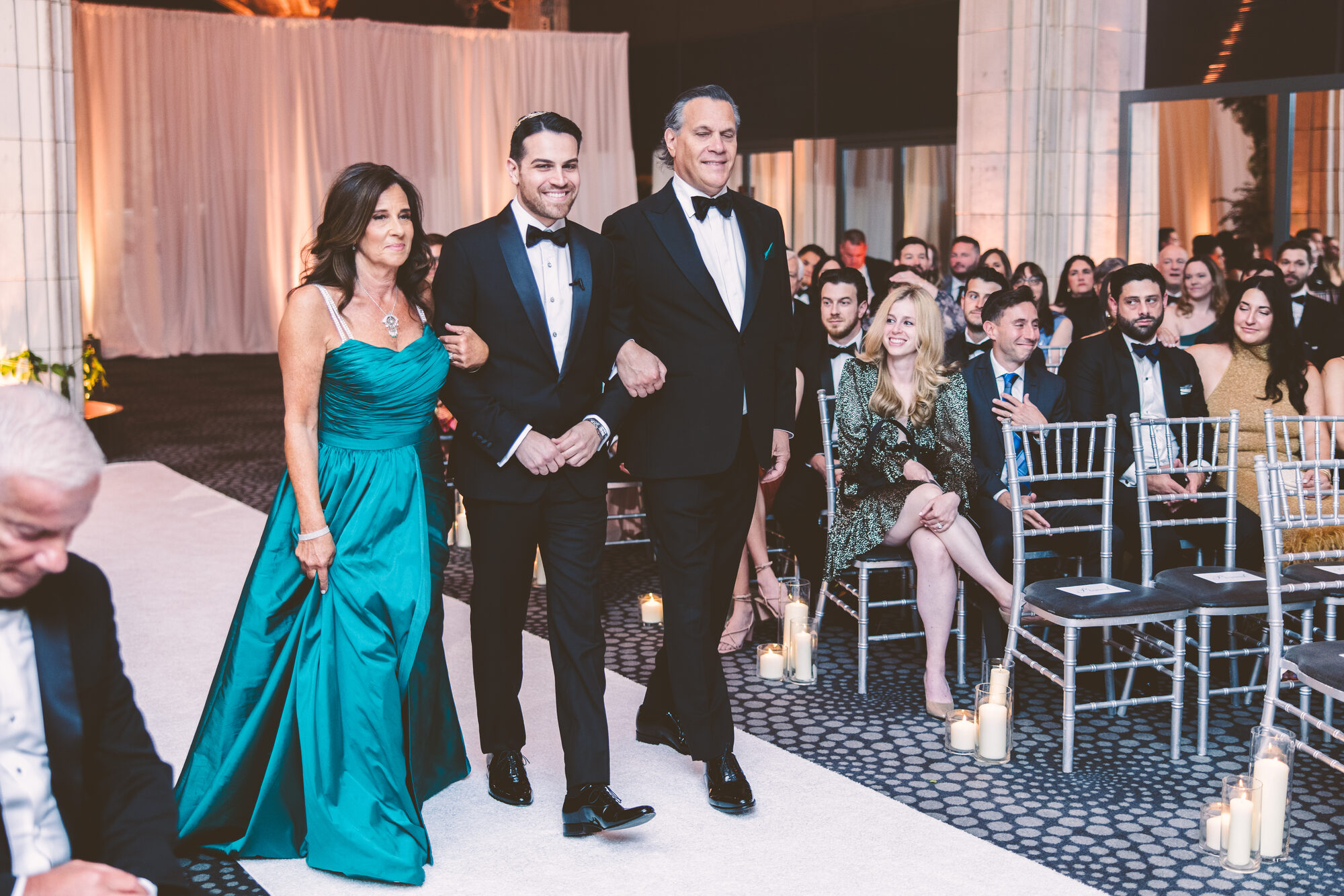
Max walked partway down the aisle on his own, met his parents halfway, and finished the walk with them. I have photographed that moment before and it moves me every time. It says something clean about being your own person and being somebody’s son at the same time.
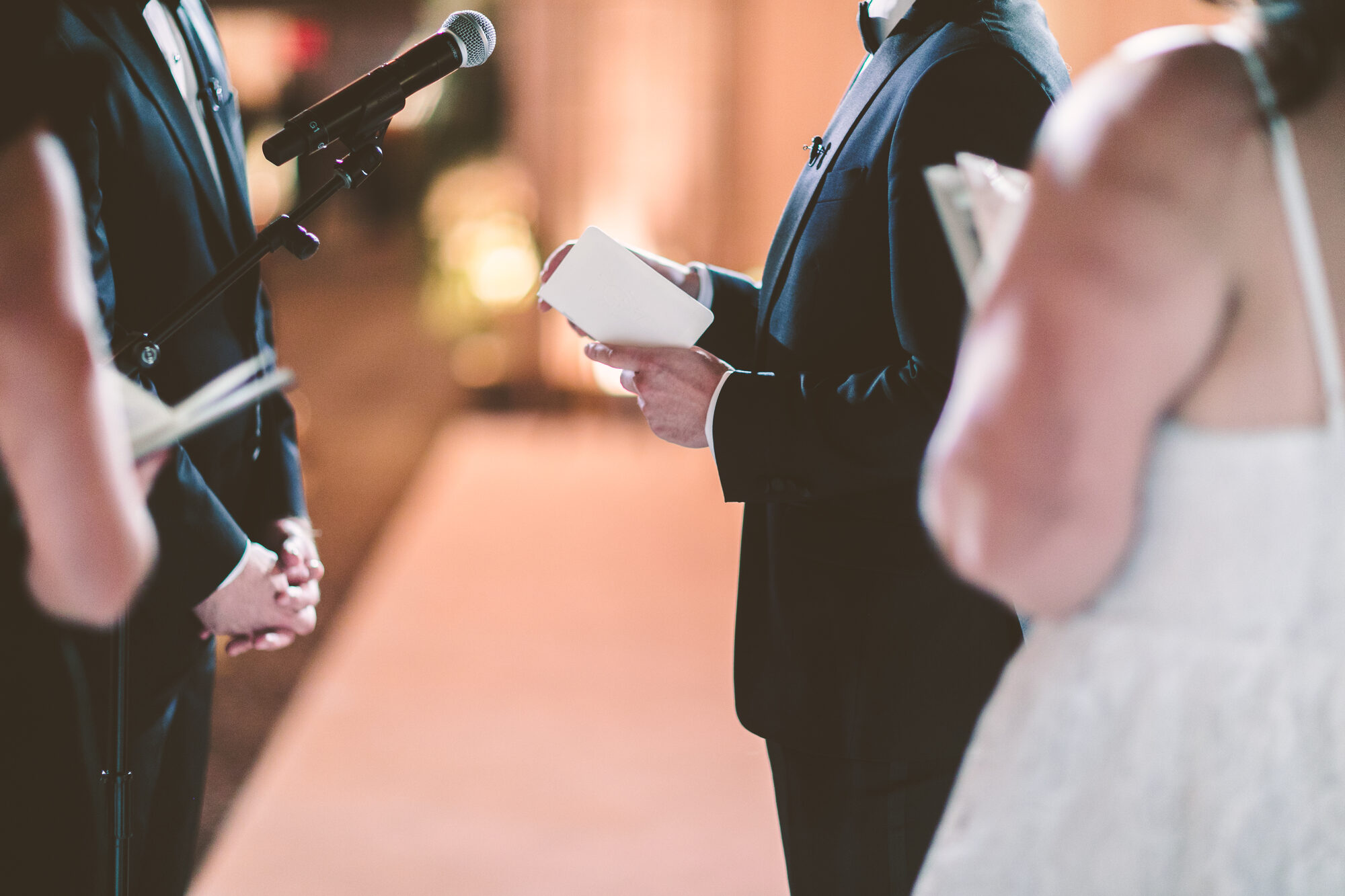
Two of their closest friends co-officiated. This is worth saying plainly: friends who know you will build a ceremony nobody else could have written, and they will land jokes a professional would never risk. Their families and friends laughed the way people only laugh when the person speaking actually knows them, and then went quiet for the vows, which neither Nick nor Max had heard before. Both of them broke a glass at the end. Then they walked back up the aisle into the kind of noise their friends had clearly been saving all evening.







Rummy, and the cocktail that came from him
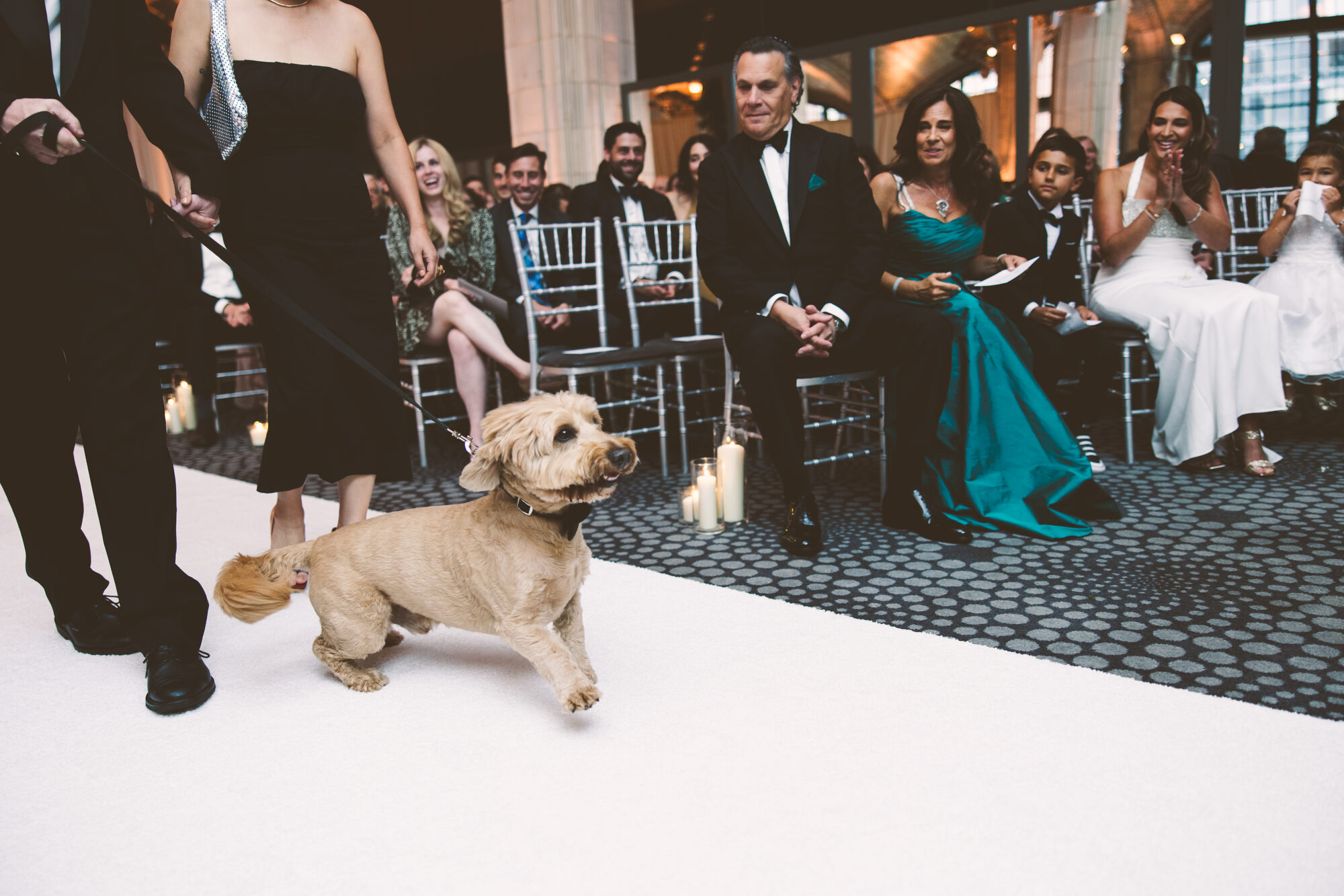
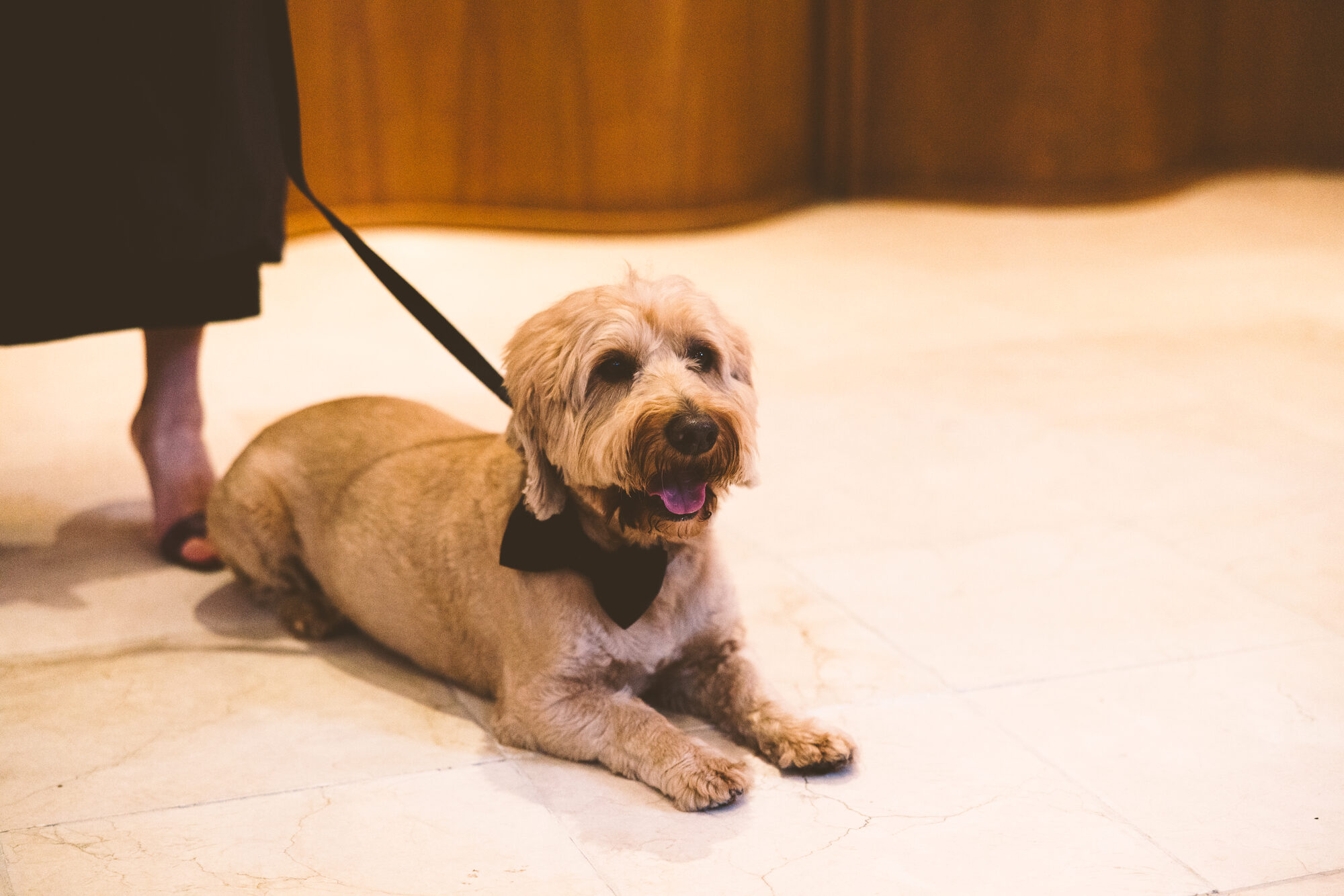
Their dog Rummy walked down the aisle, and then spent cocktail hour being the most photographed guest at the wedding. There were two signature drinks: a Gin Rummy, named for him, and an Aperol Shvitz, named for the two families celebrating together. Nick’s side is Italian. Max’s side is Jewish. The drinks menu did the introductions.
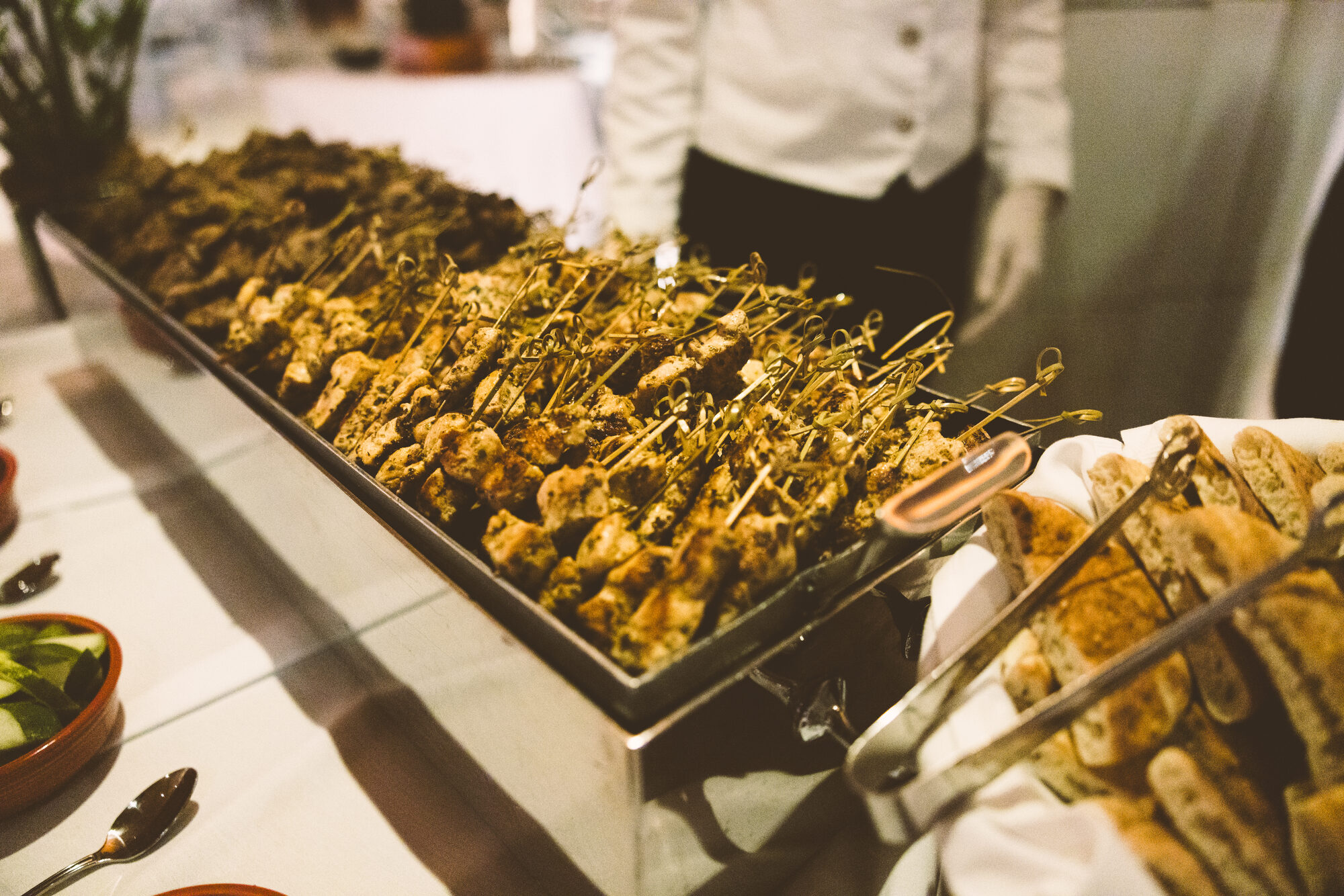
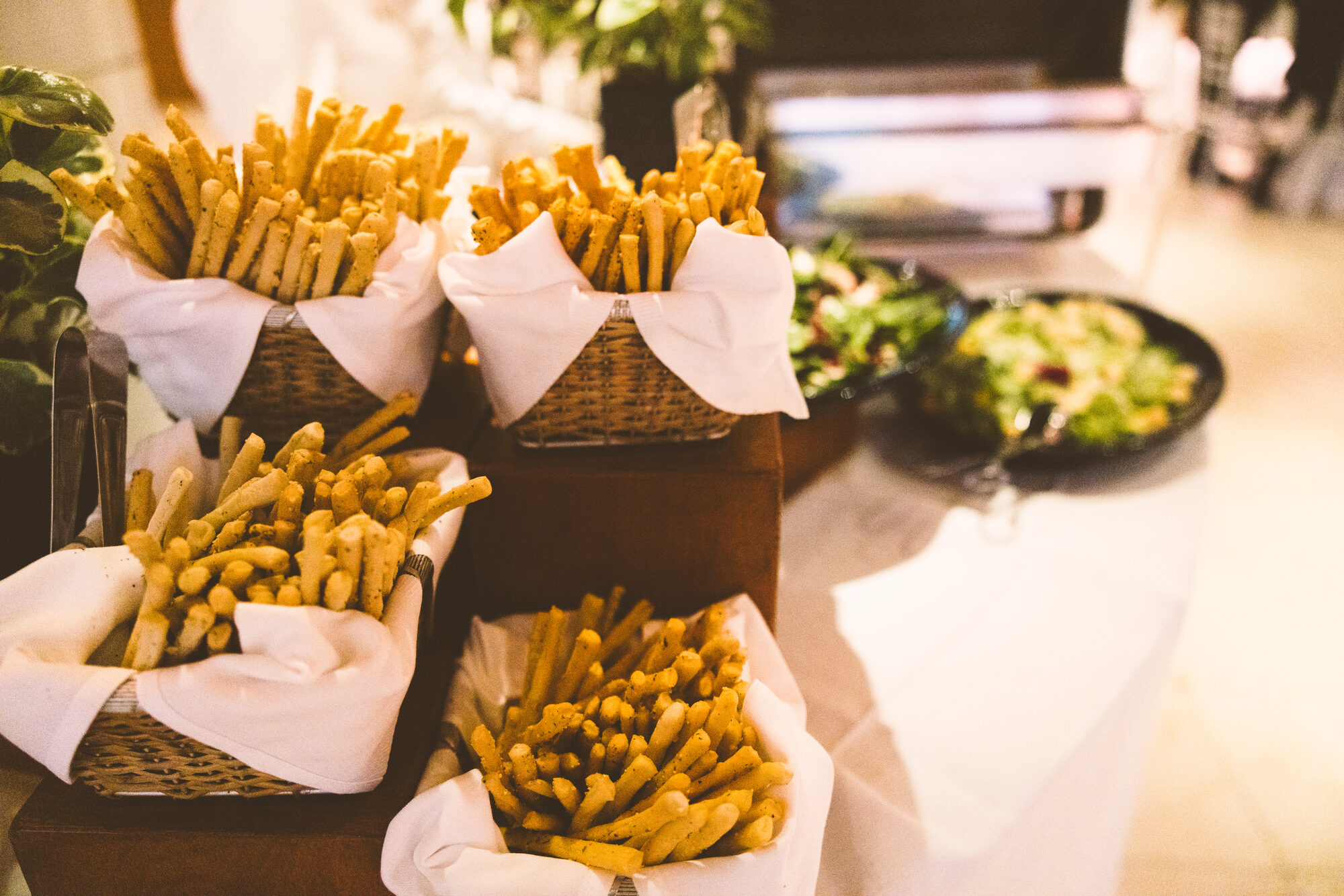
On the food, since people ask me this more than anything else about Guastavino’s: it is very good. The catering is handled in house, and cocktail hour was the kind where guests stop mid sentence. I have shot in a lot of landmark buildings where the food is an afterthought to the architecture. This is not one of them.





Planning a wedding at Guastavino’s
See if your date is openWeddings photographed in New York, South Florida and beyond
The space, the olive trees, and the one vendor question everyone asks
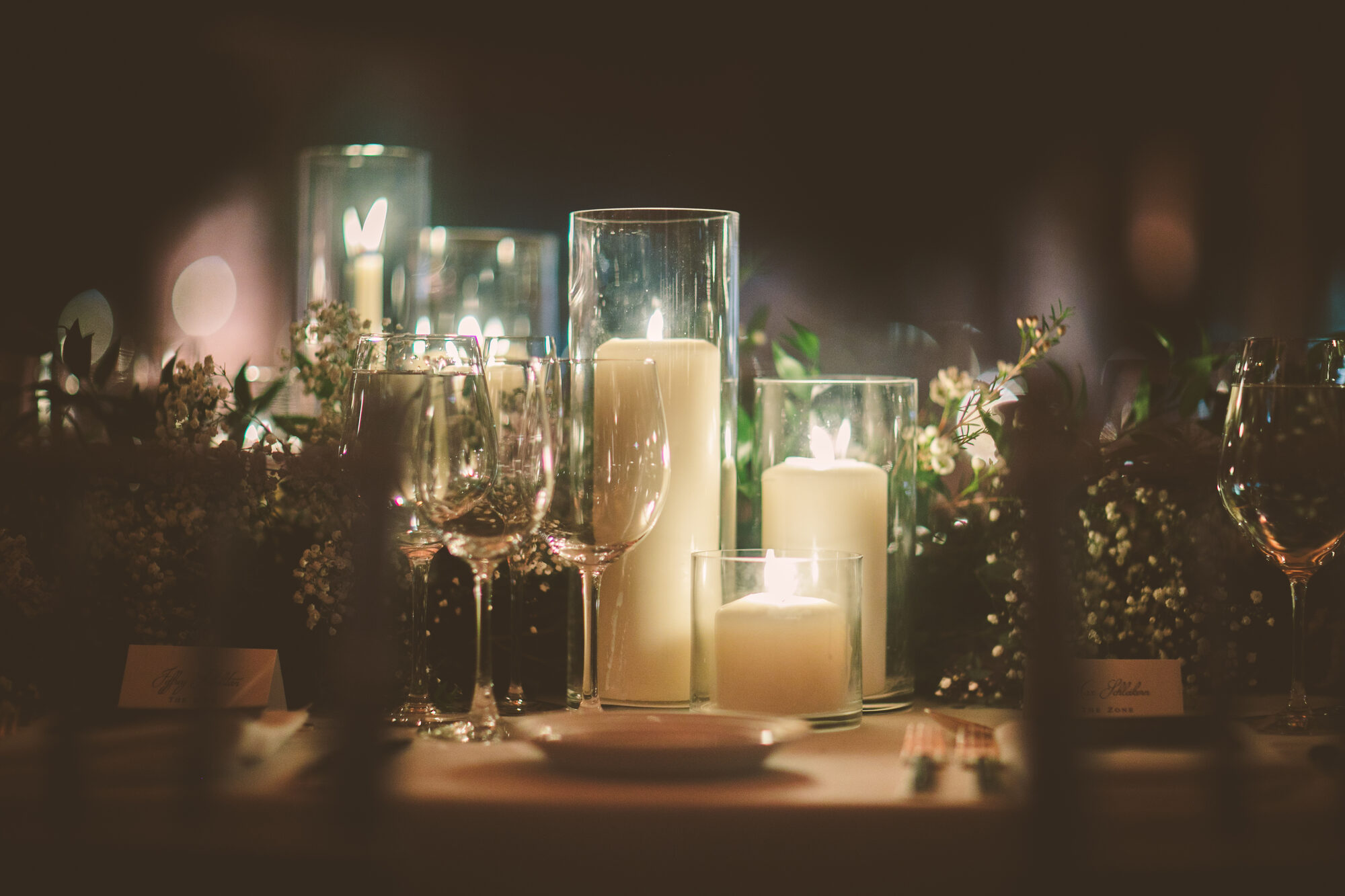
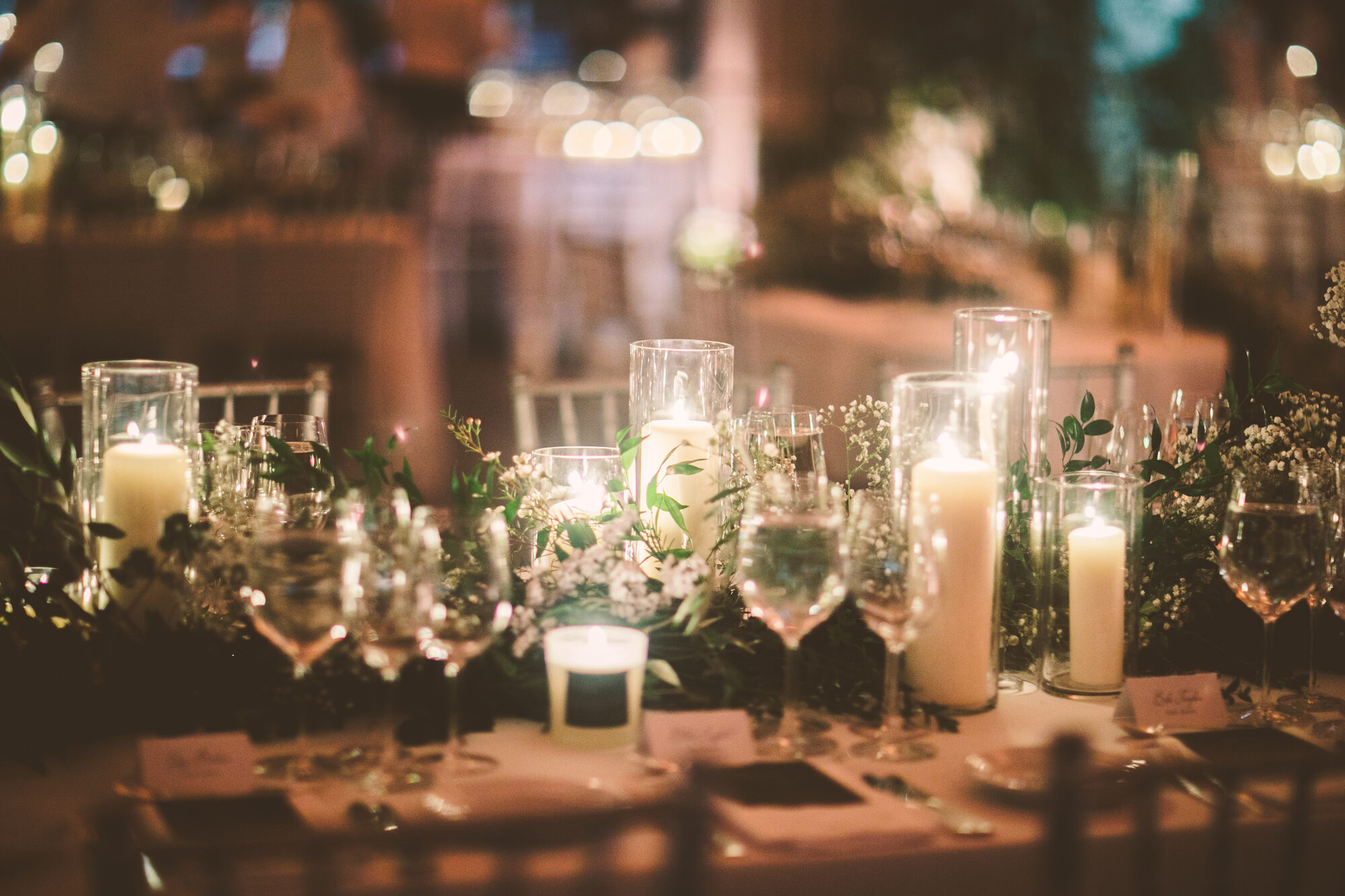
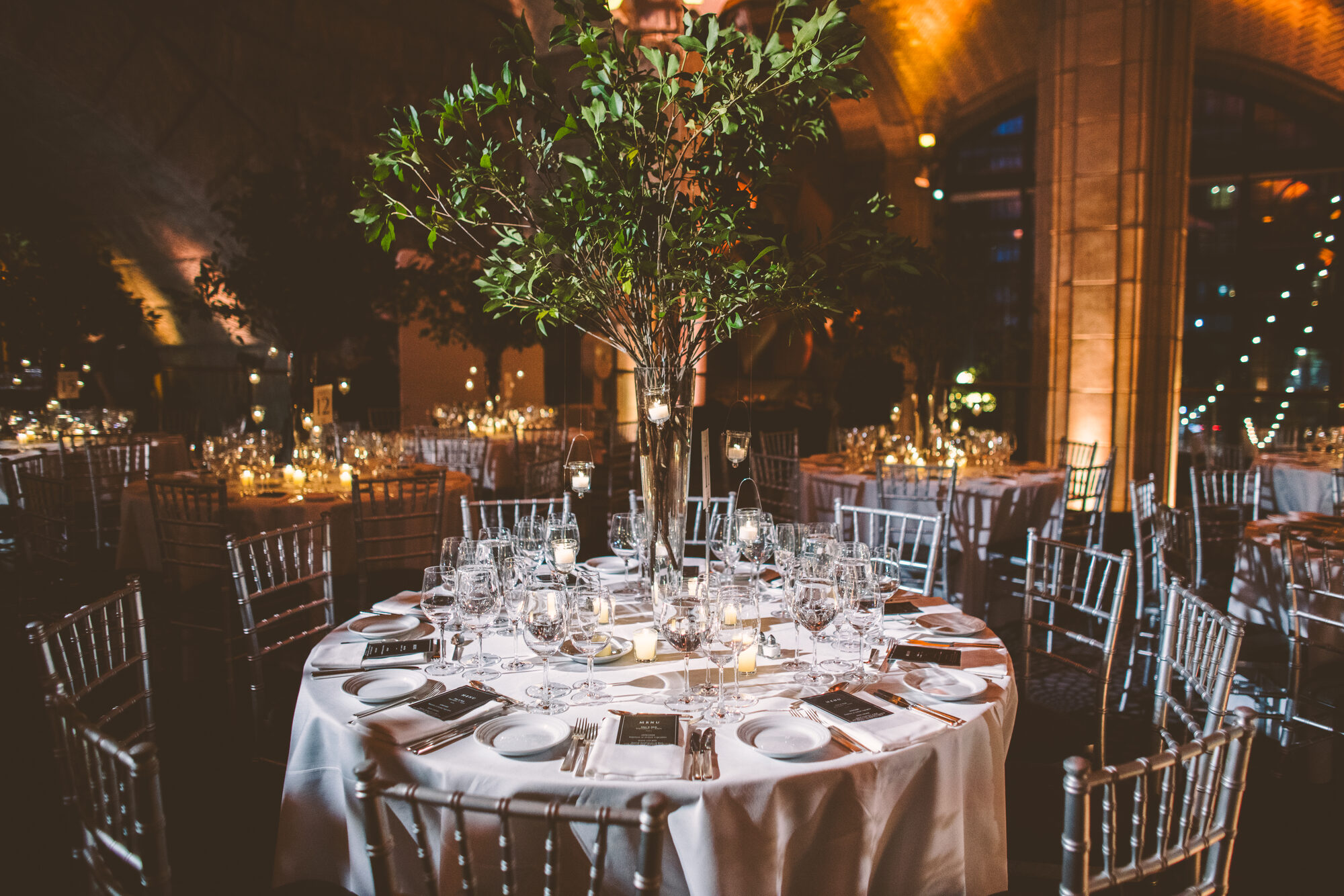
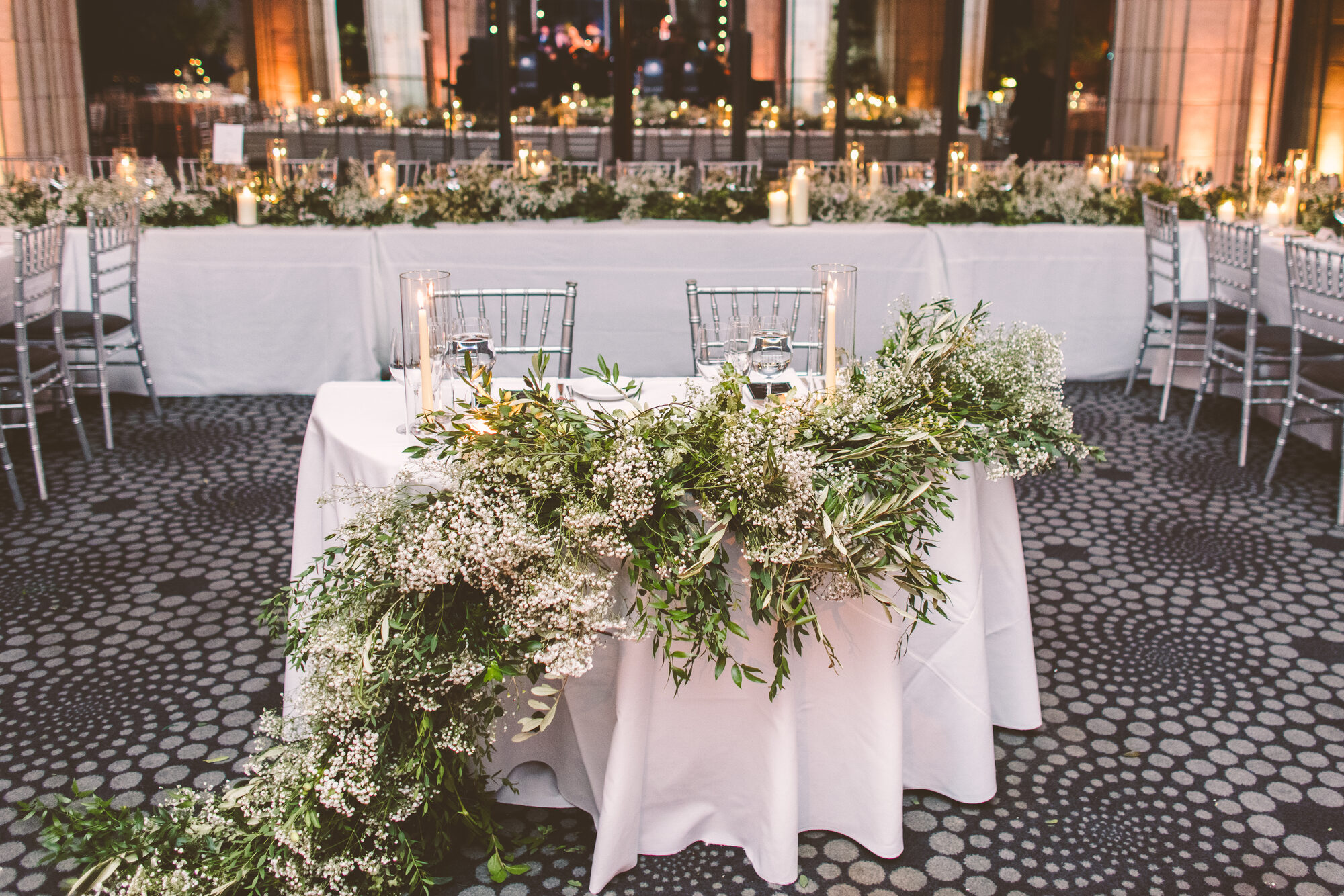
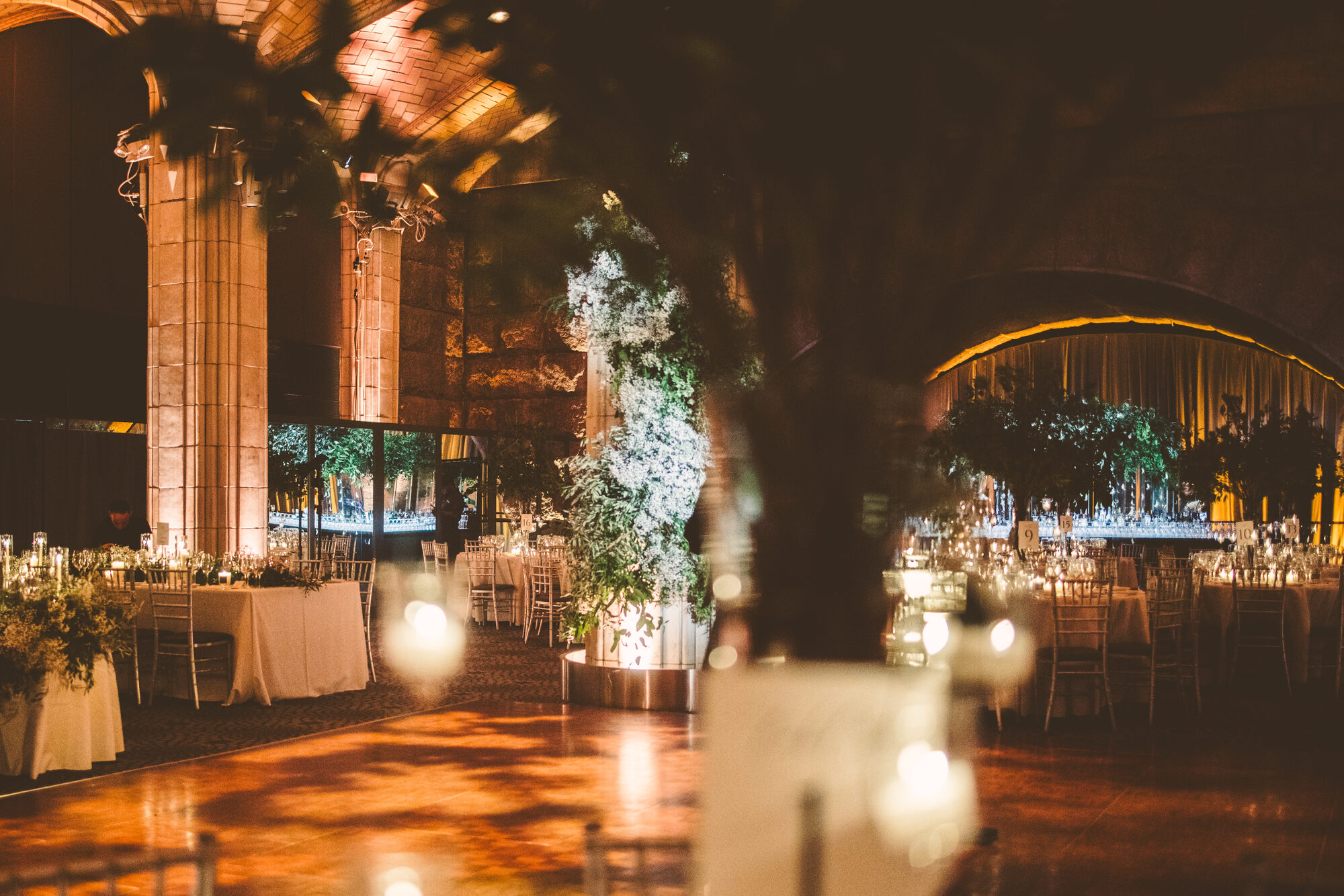
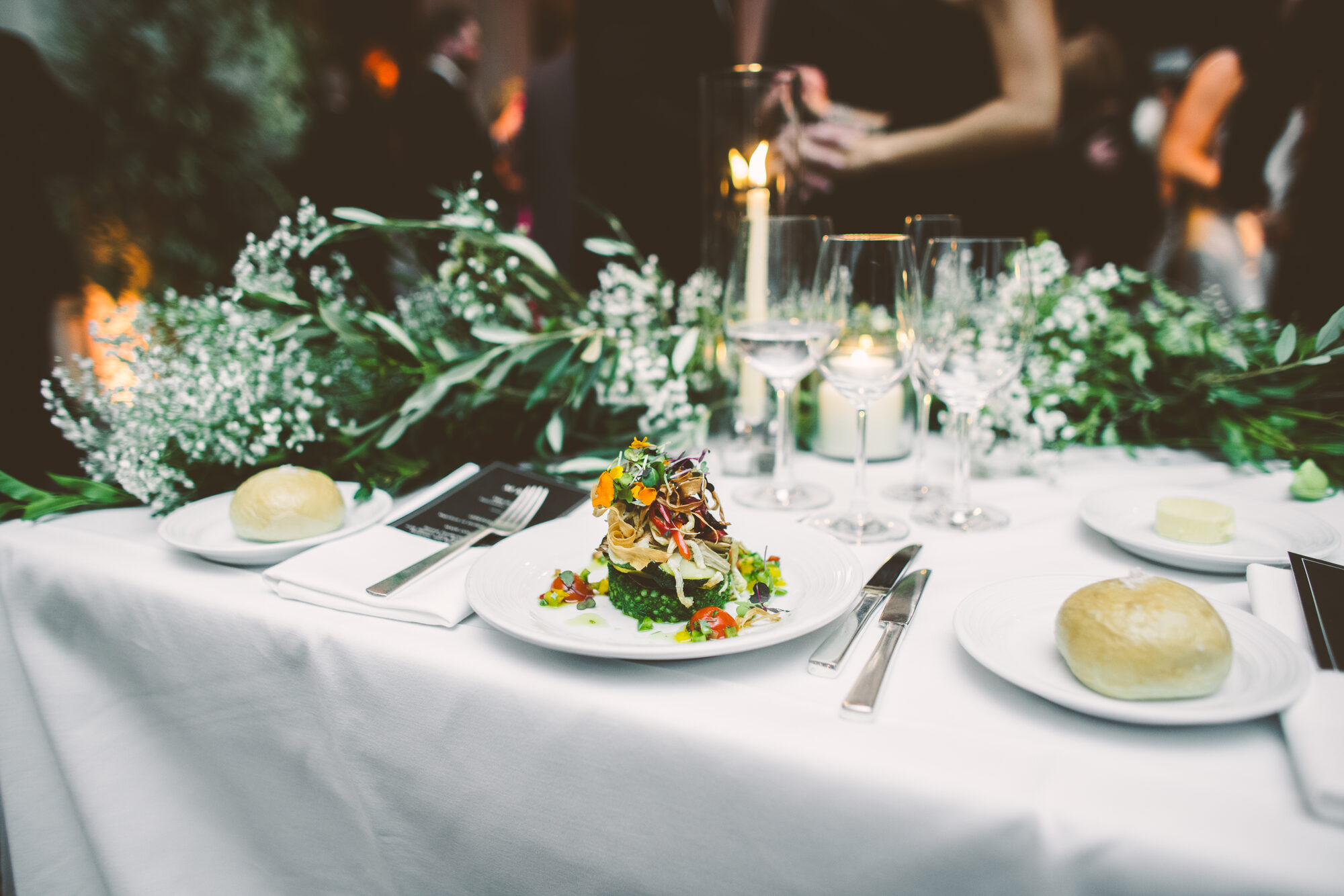
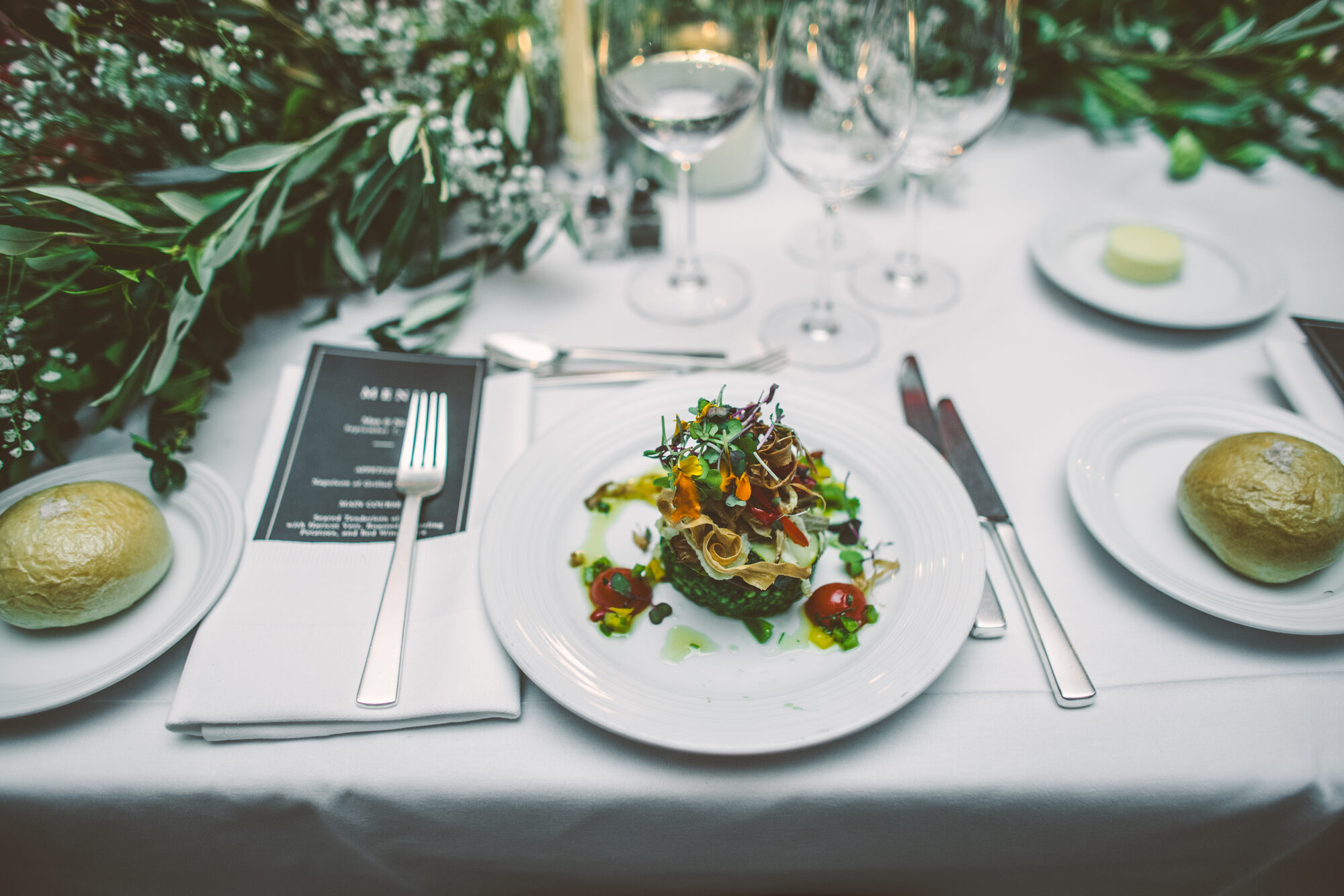
Dinner was set with small trees on the tables, olive by the look of them, tall enough that you saw the space through the trunks instead of over the centerpieces. Low candles everywhere else. Green and white against those pale tiles, with the columns wrapped in greenery. It is a big space and it can swallow small decor, so going tall was the right call.
Here is the thing couples always ask me about this venue, and I want to answer it properly because nobody else seems to. Lighting and sound at Guastavino’s run through Gala Productions, and you do not have the option of bringing your own. That surprises people until they understand why. The lighting and sound infrastructure is built into the building and owned by the AV company. The space physically cannot take outside rigging, because you cannot hang load from a self supporting tile vault the way you would from a steel grid. So a single vendor who already owns the gear and knows the building is the only arrangement that works. Functionally it is the same as using in house venue staff, and you get specialists on their own equipment in a space they run every week. Gala holds the same kind of exclusive arrangement at other New York venues for exactly this reason; their own site names the Harvard Club. It is not a limitation so much as the honest consequence of getting married inside a landmark ceiling.







They opened with everybody
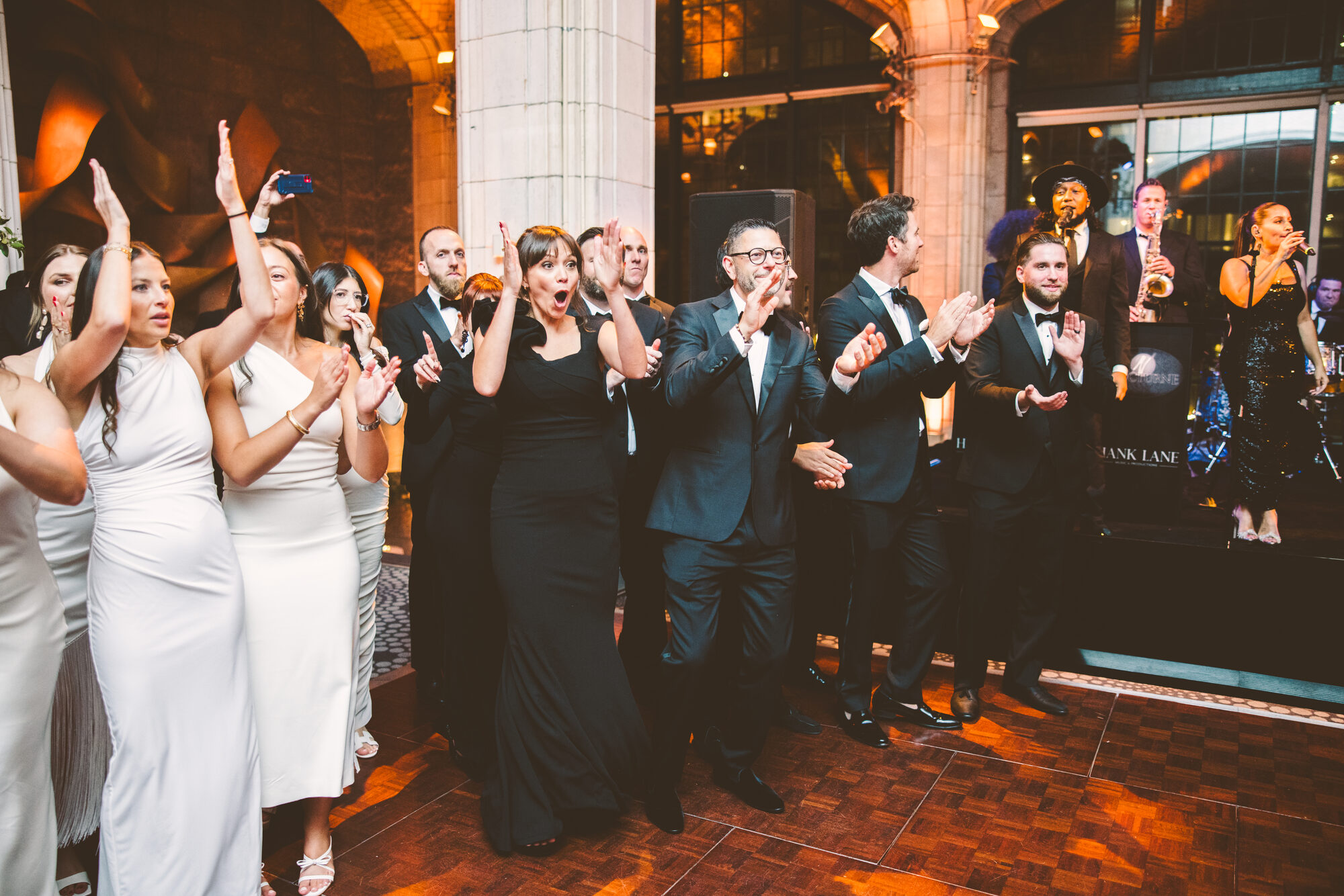
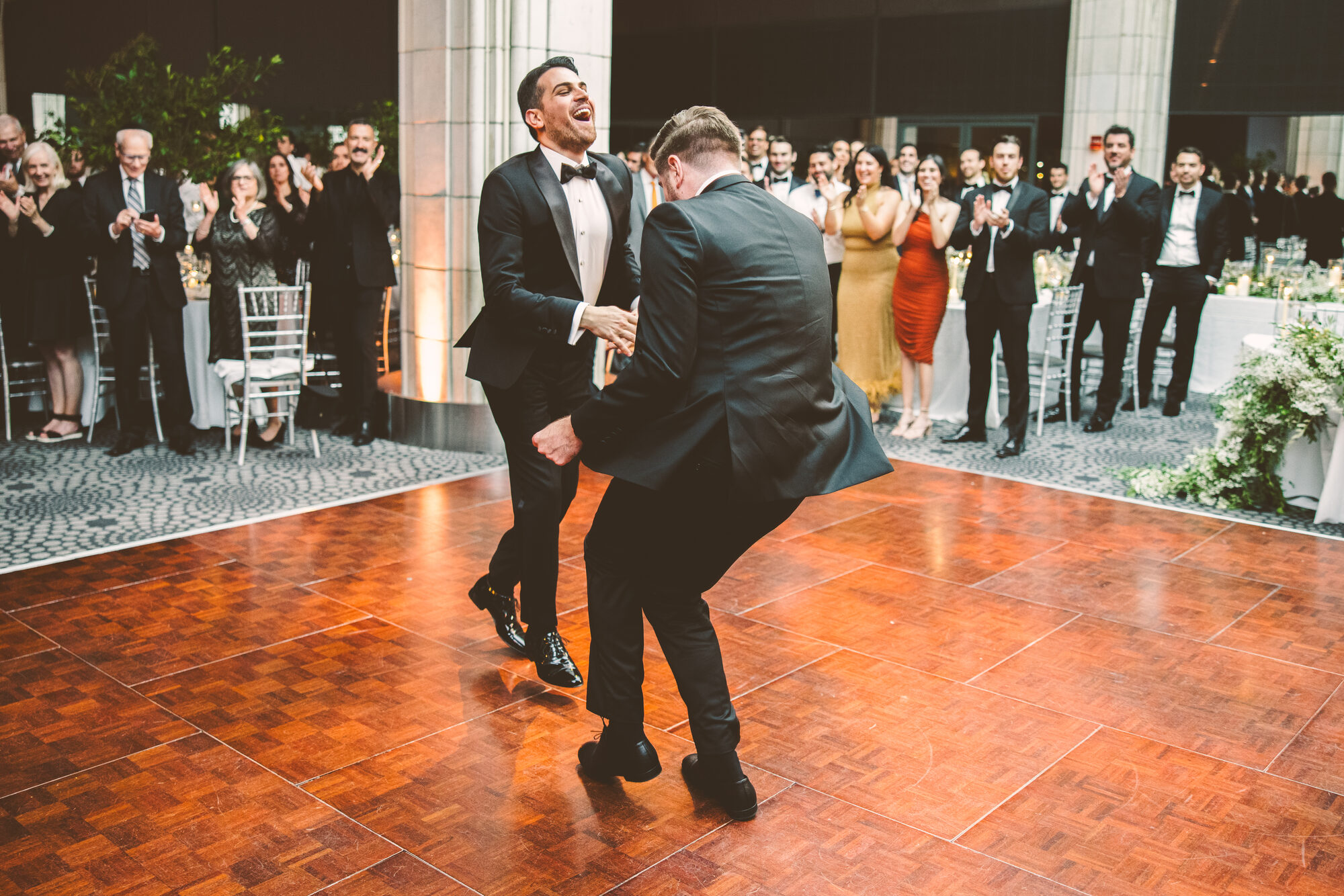
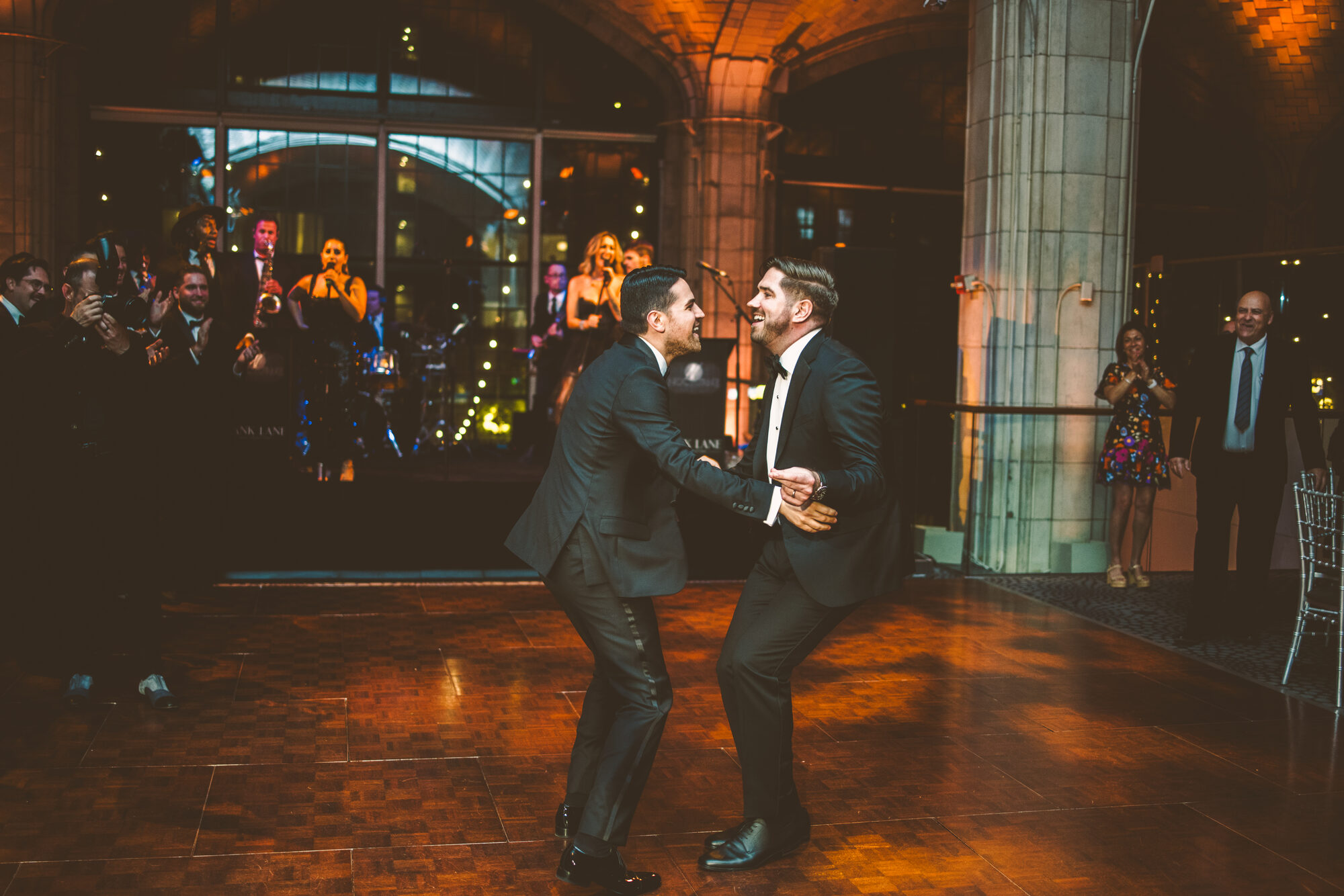
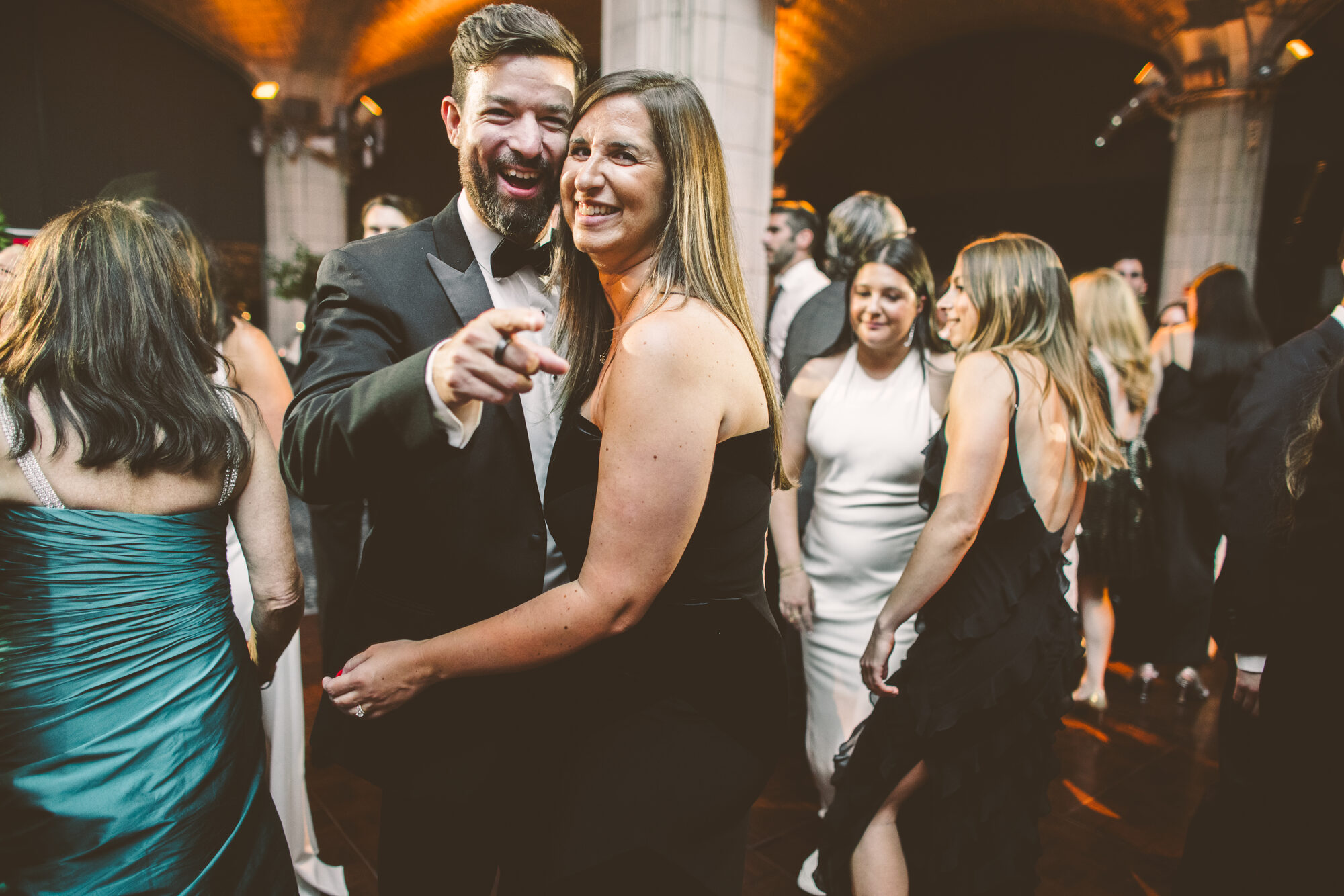
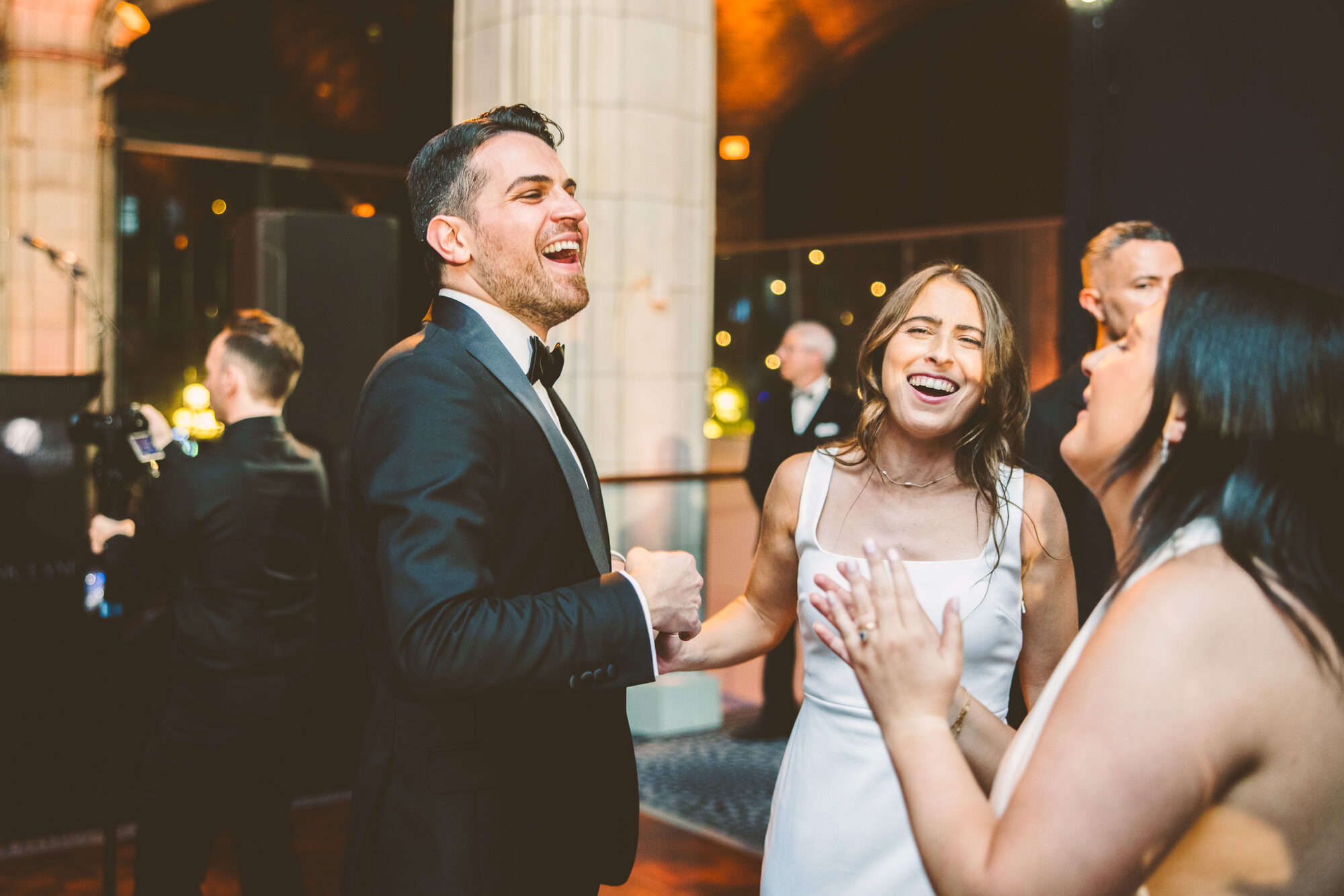
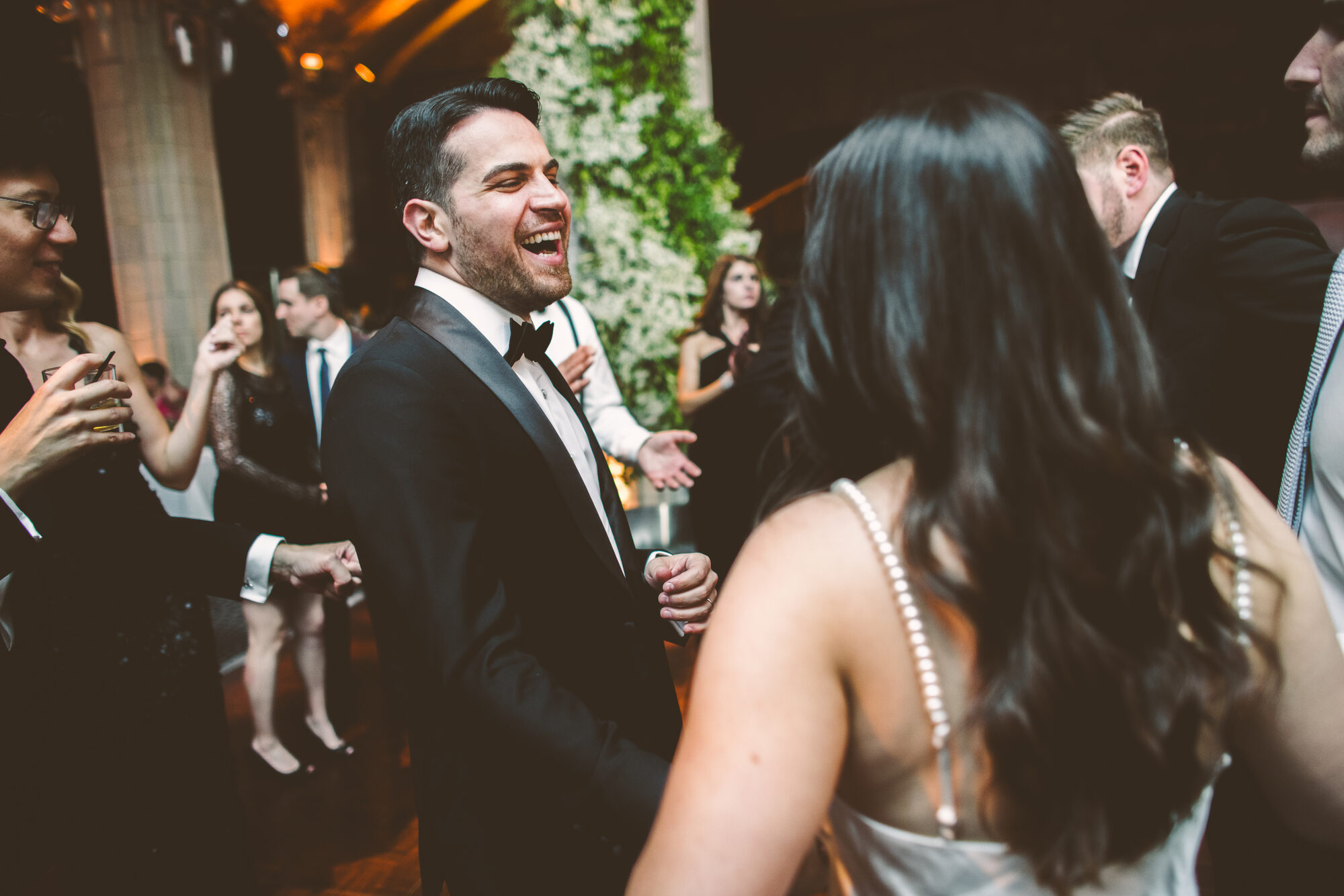
Instead of a traditional first dance to open the reception, Nick and Max came in with the whole wedding party and went straight into a group dance, unrehearsed. I have never seen a floor fill that fast. There was no polite clapping stretch. Their own dance together came later in the evening, once the party was already going, which is a better place for it than the first minute of the night.
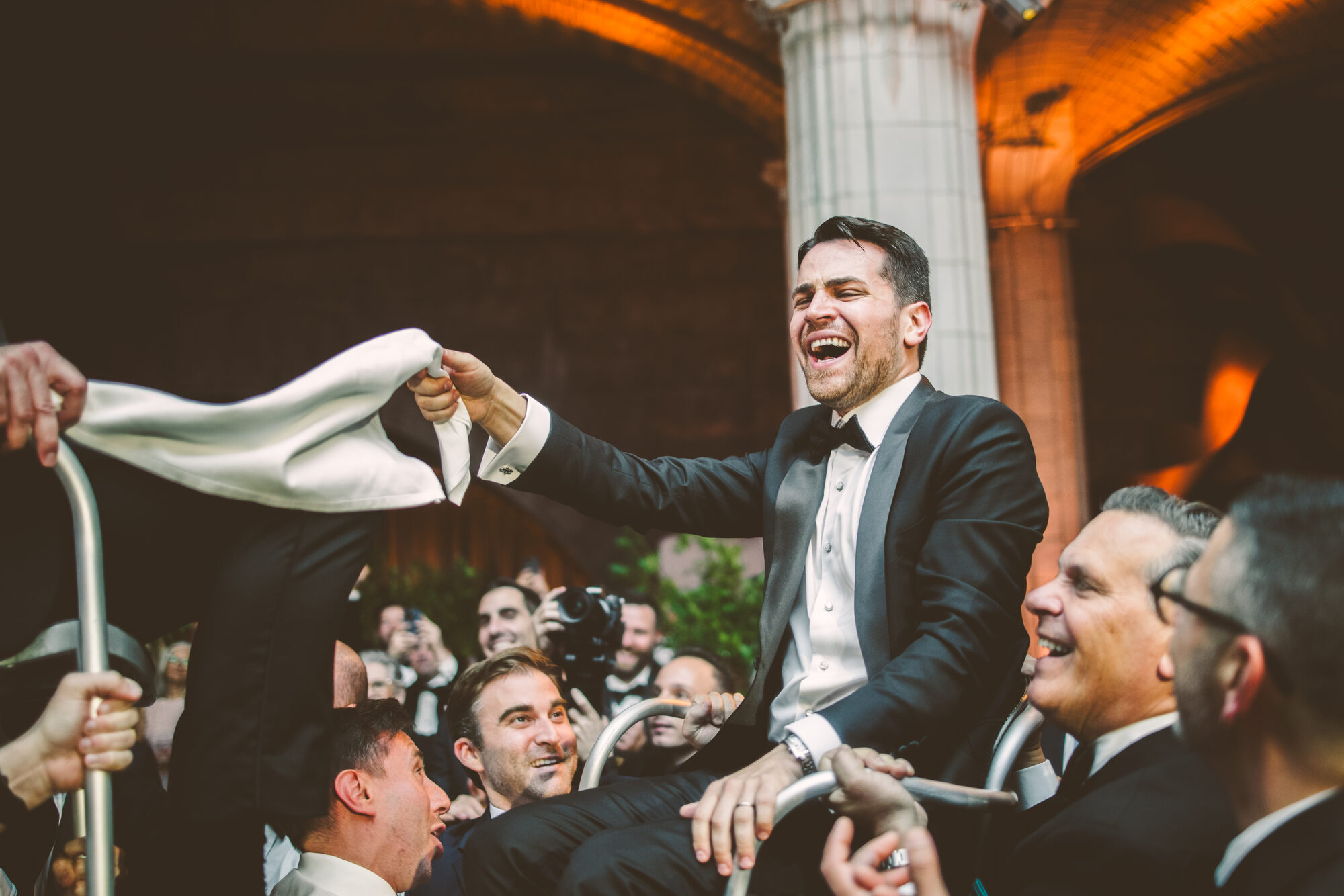
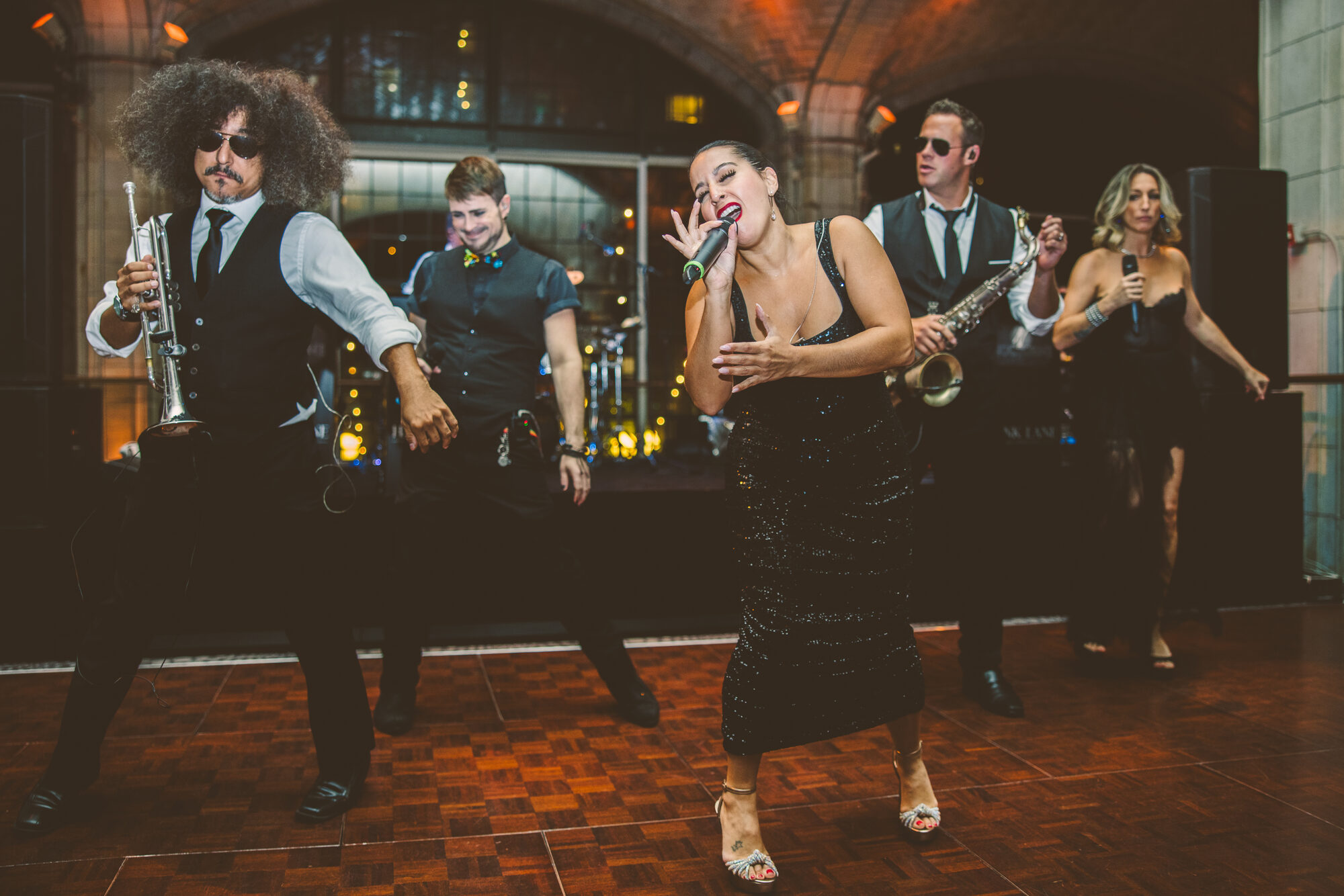
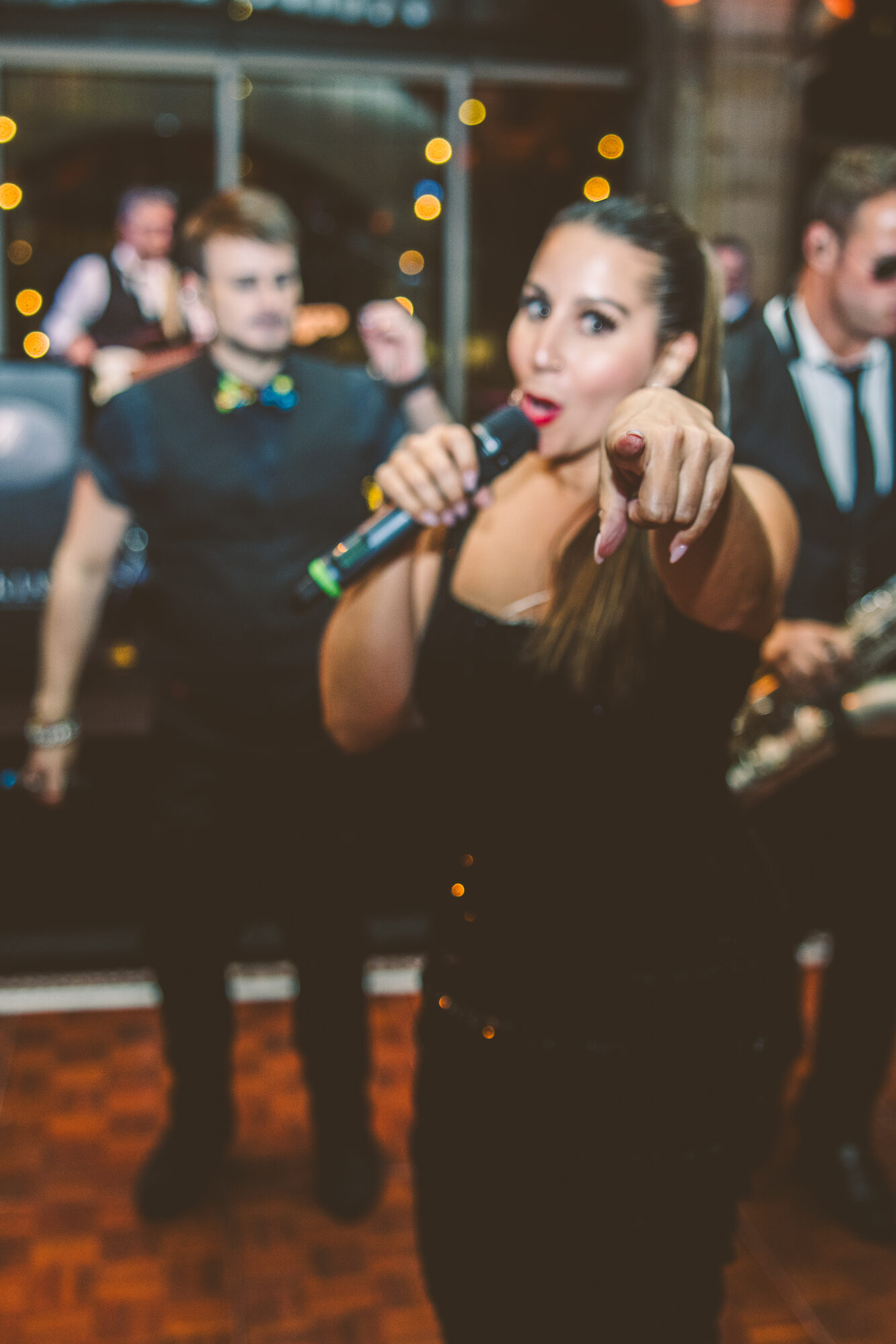
The hora came later and the chairs went up, which under a ceiling that high looks like nothing else. Hank Lane Music ran the night and they read it perfectly, holding tempo through the long stretches and pushing harder once the floor was full.









Dinner
Dinner is when you finally get to see who is sitting with who. People settle, the volume comes down, and the pictures change character. Grandparents holding court. Nick and Max at their own table for about four minutes before somebody pulled them away.


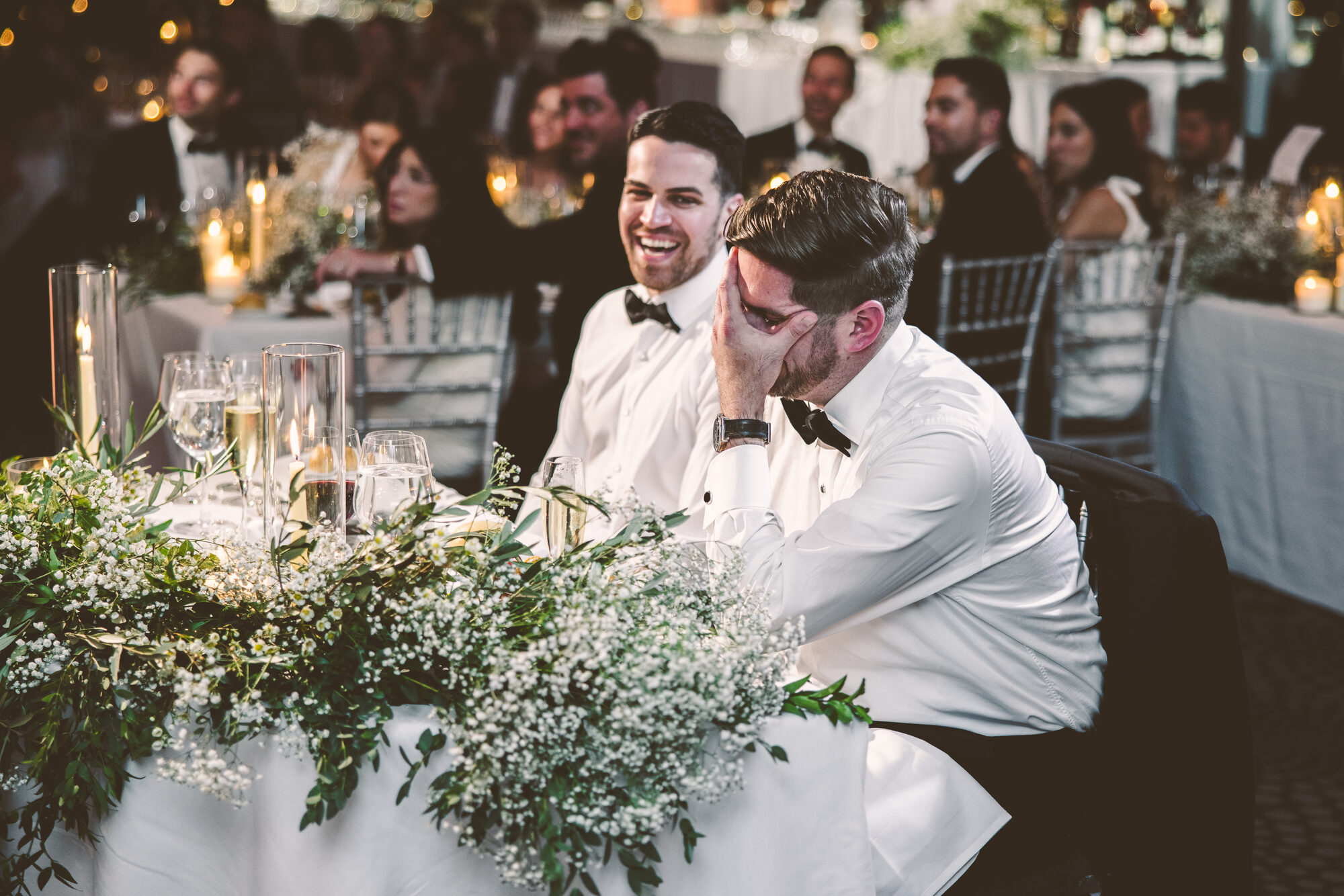
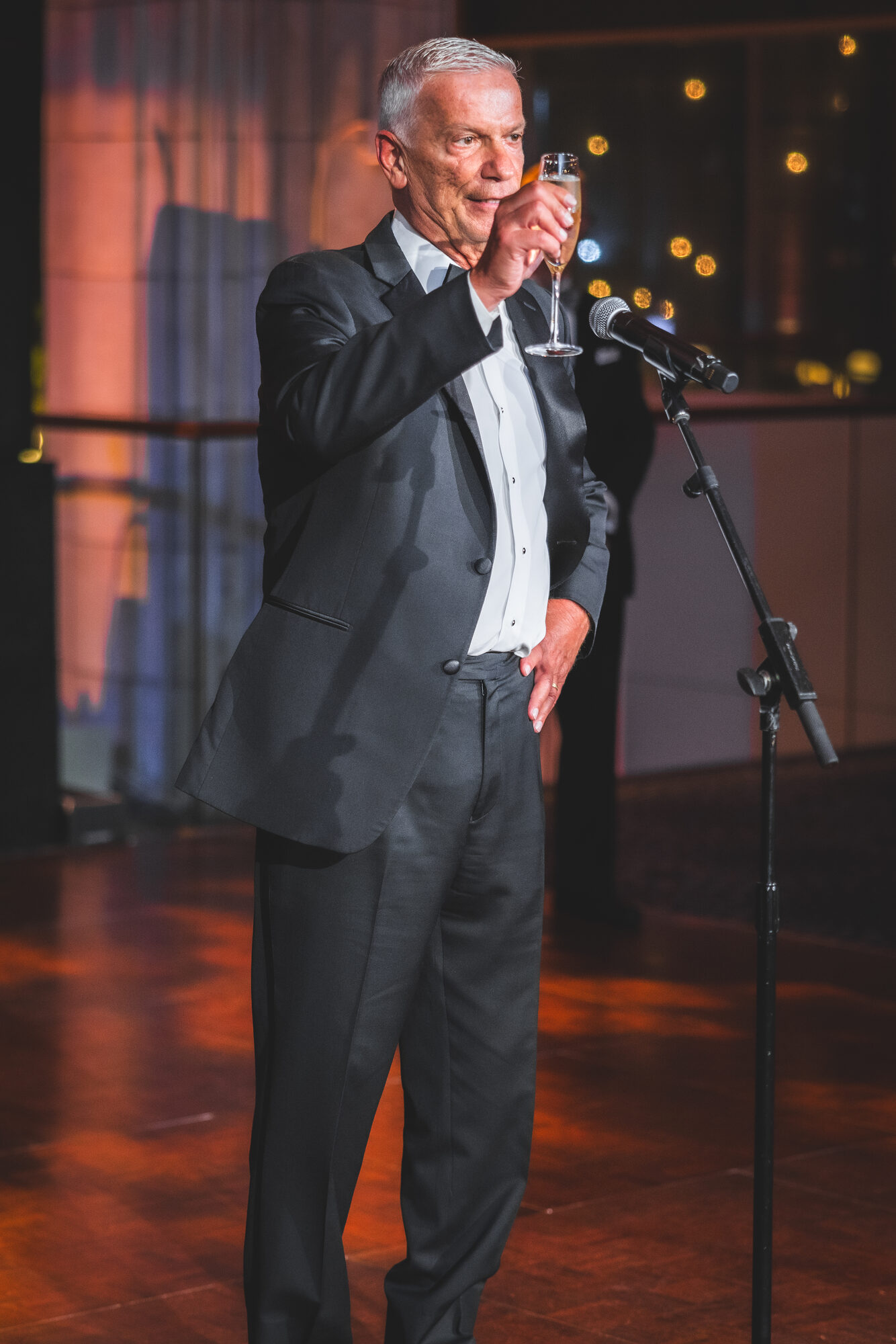
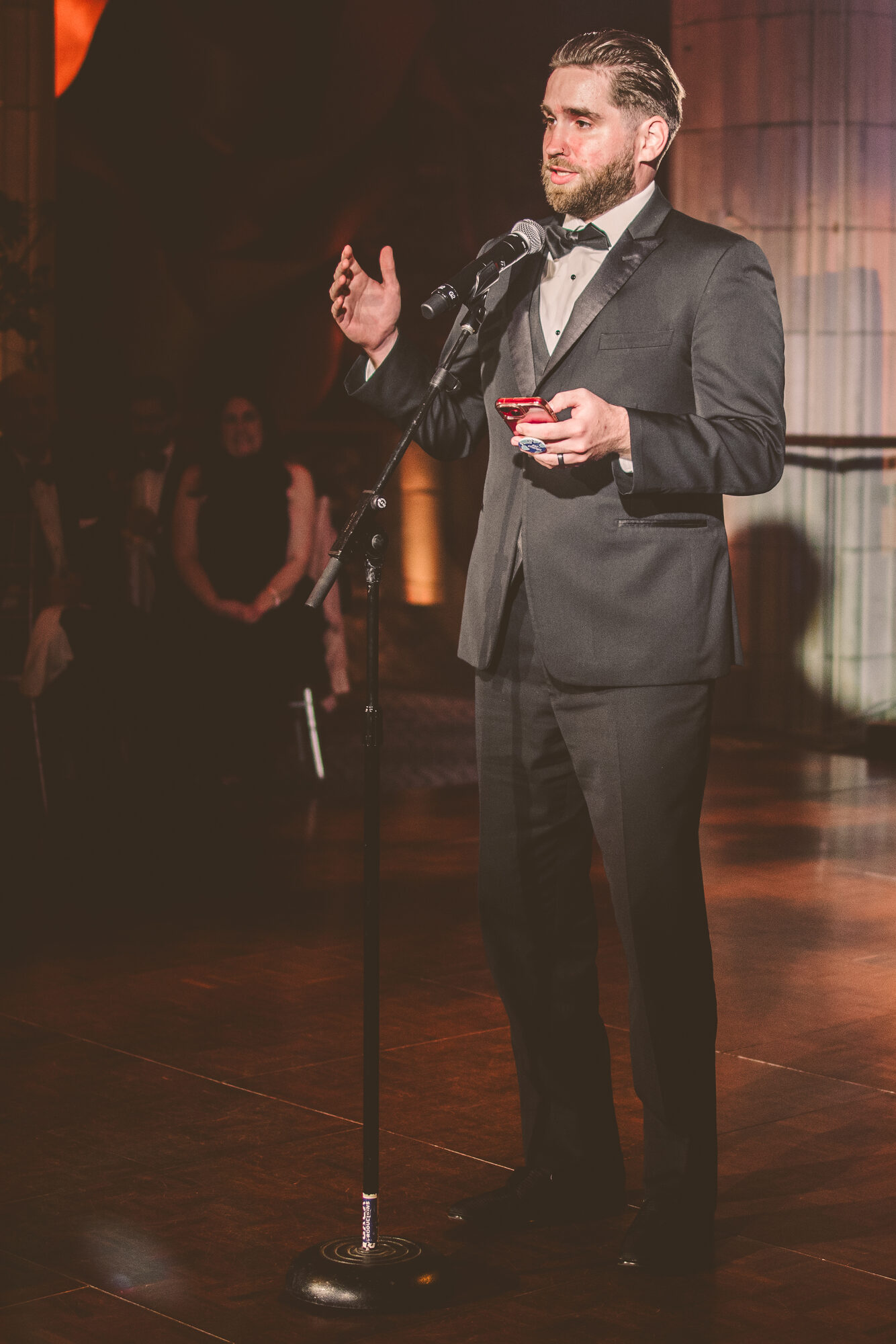
The toasts
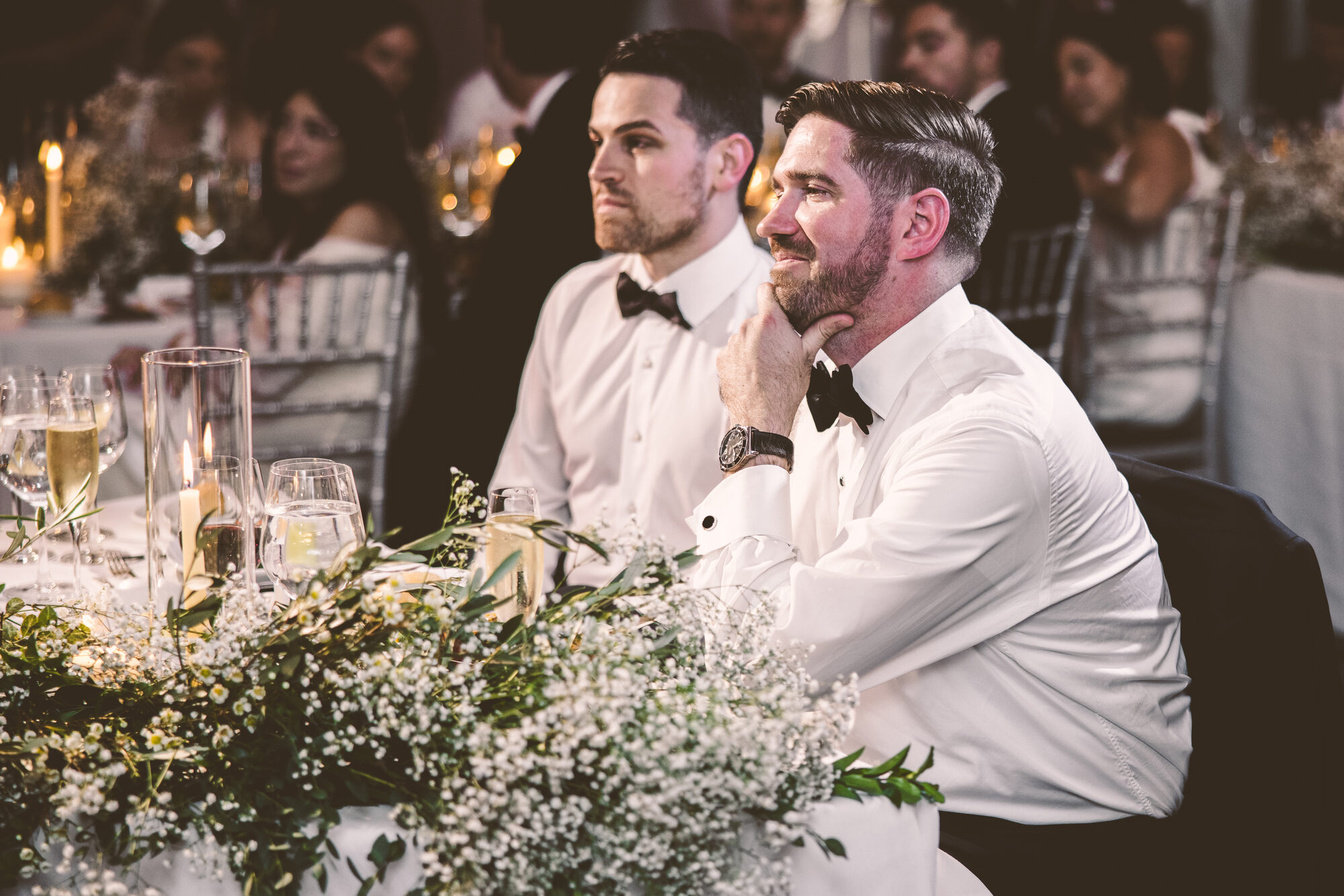
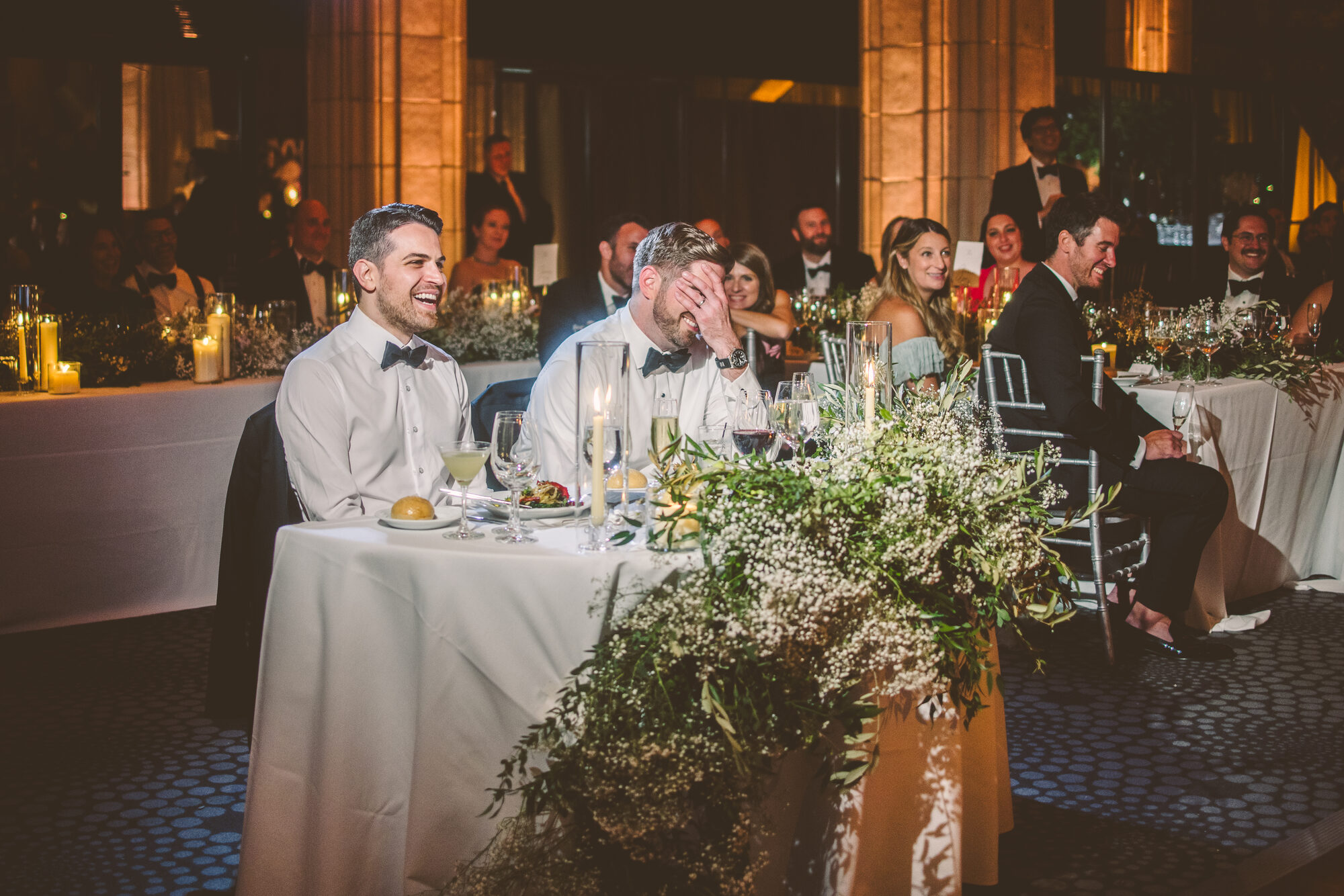
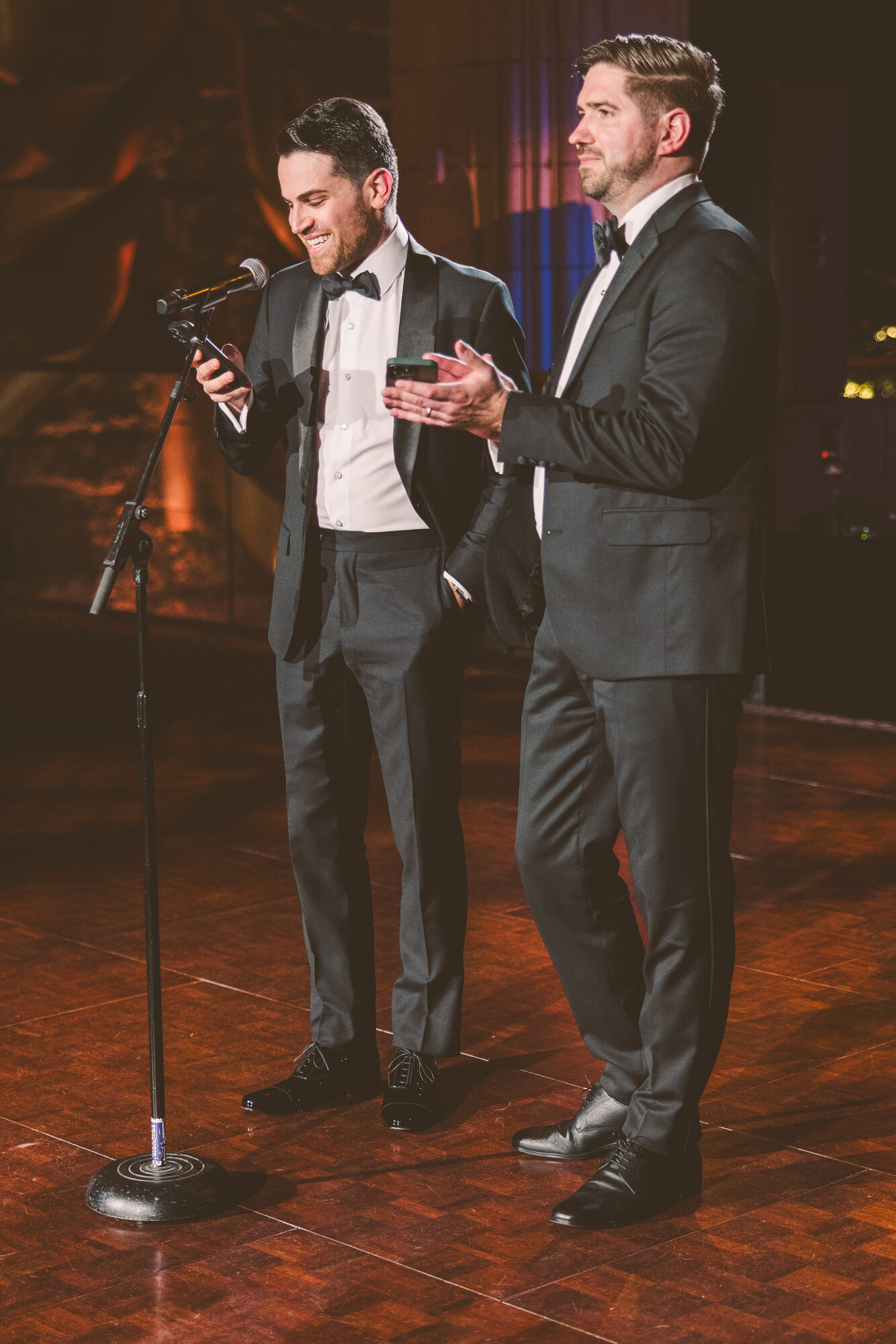
Parents, friends and siblings all took a turn. The acoustics on the top floor are generous enough that someone can speak without a microphone if they want to and still be heard at the back tables.
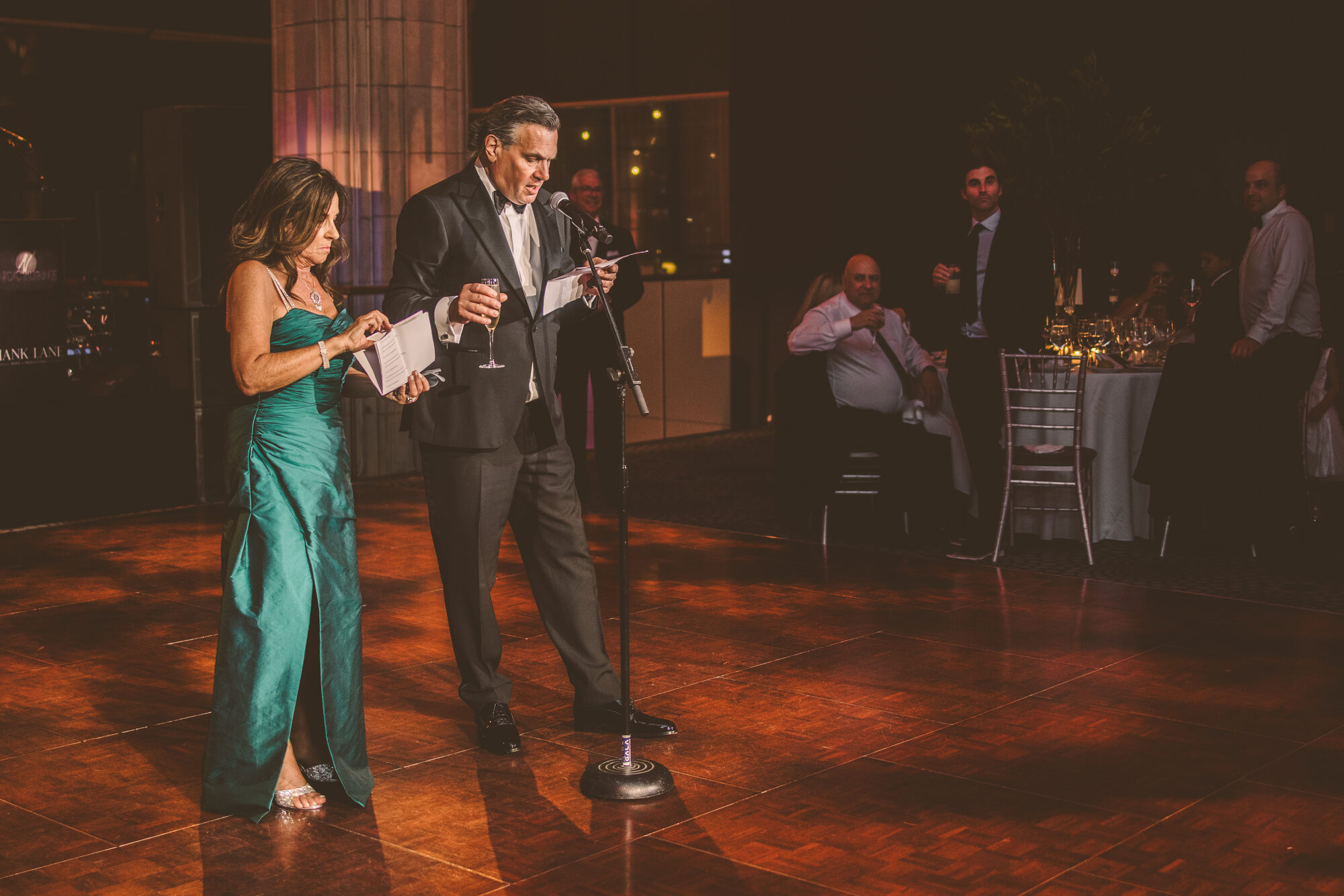


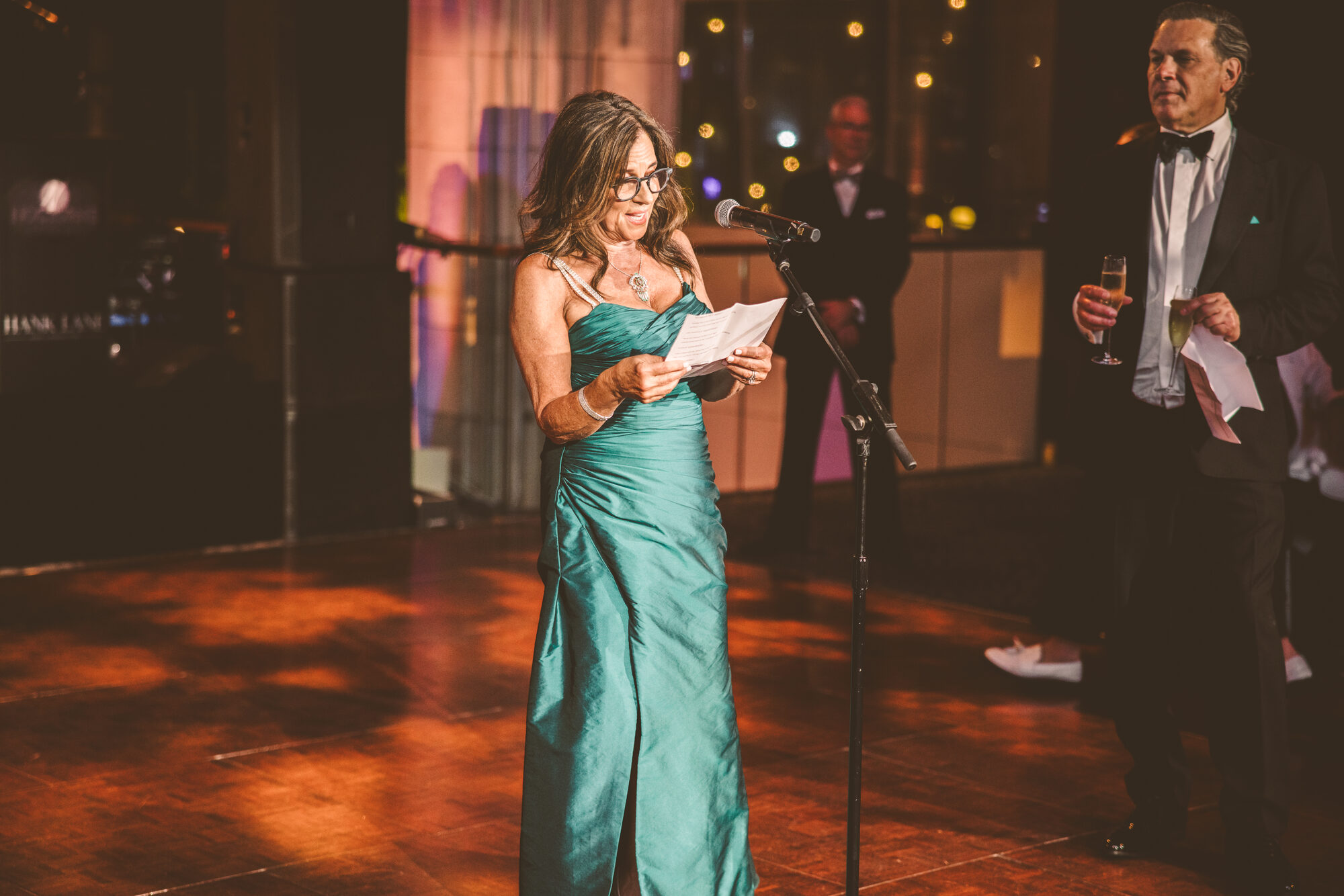

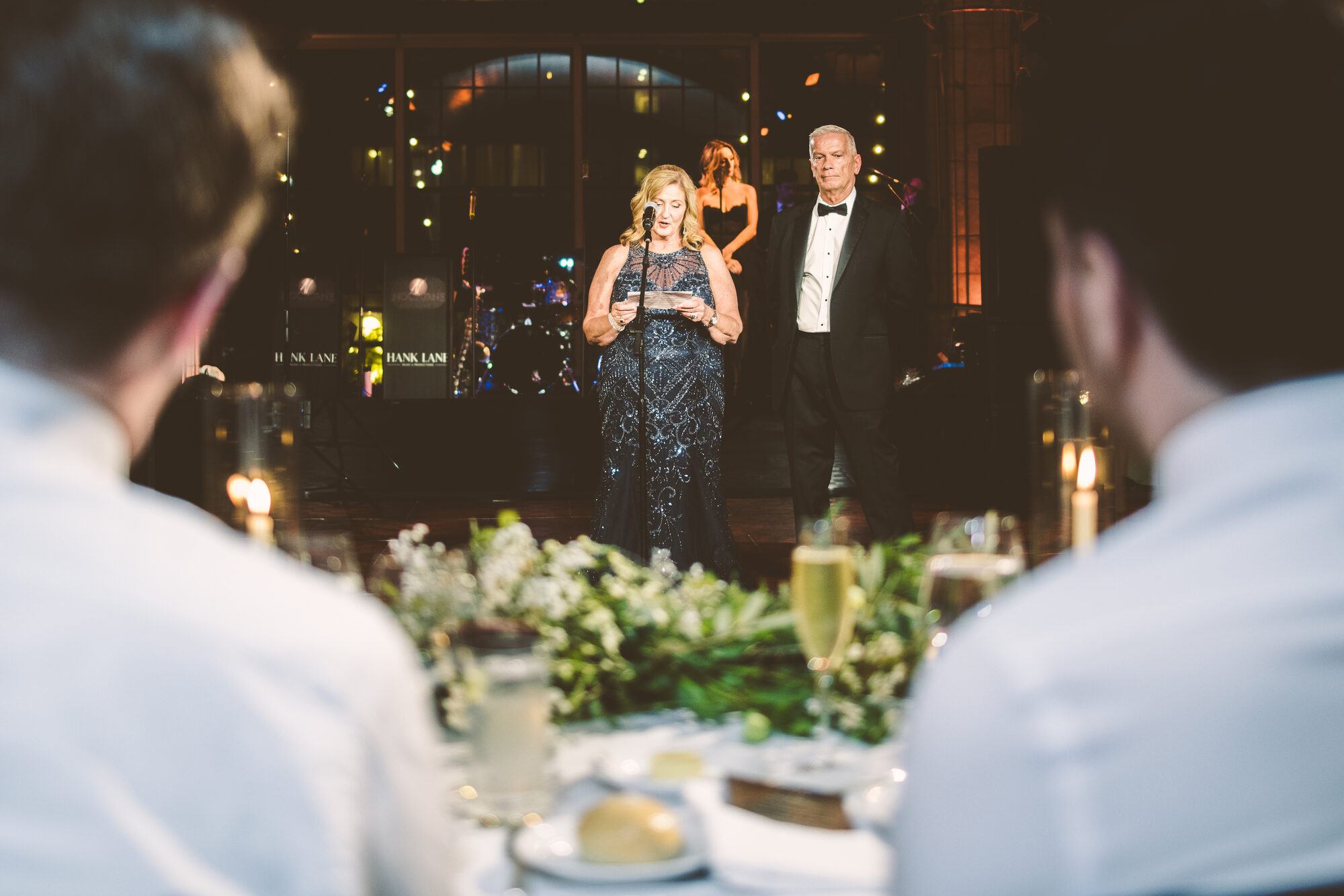



The last hour
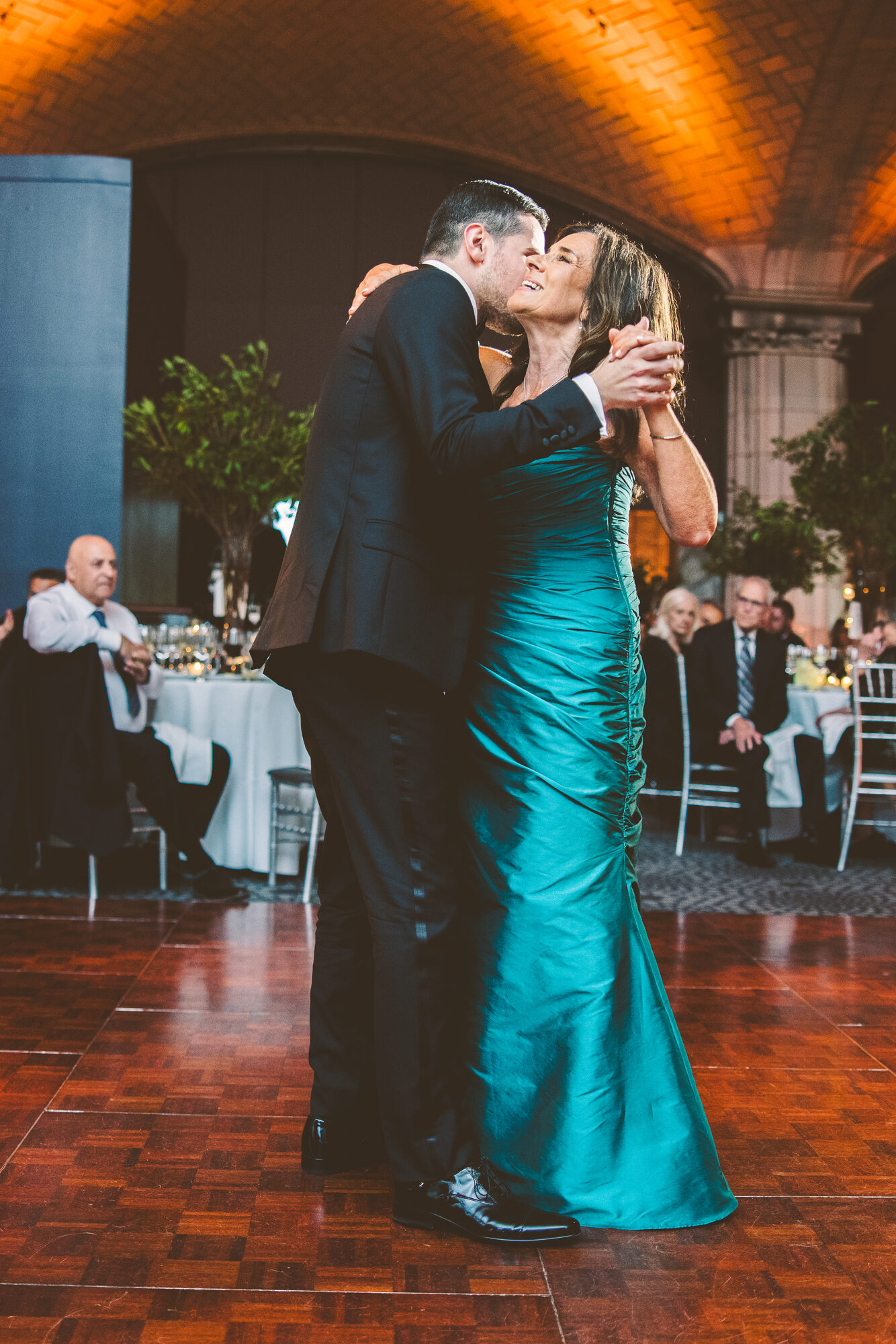
Parent dances, then the floor again, then the part of the night where the tuxedo jackets are gone and nobody is checking the time. Near the end the band brought Nick and Max up on stage to close it out, which is not something bands offer to everyone. You earn that by being on the floor all night, and they had been.
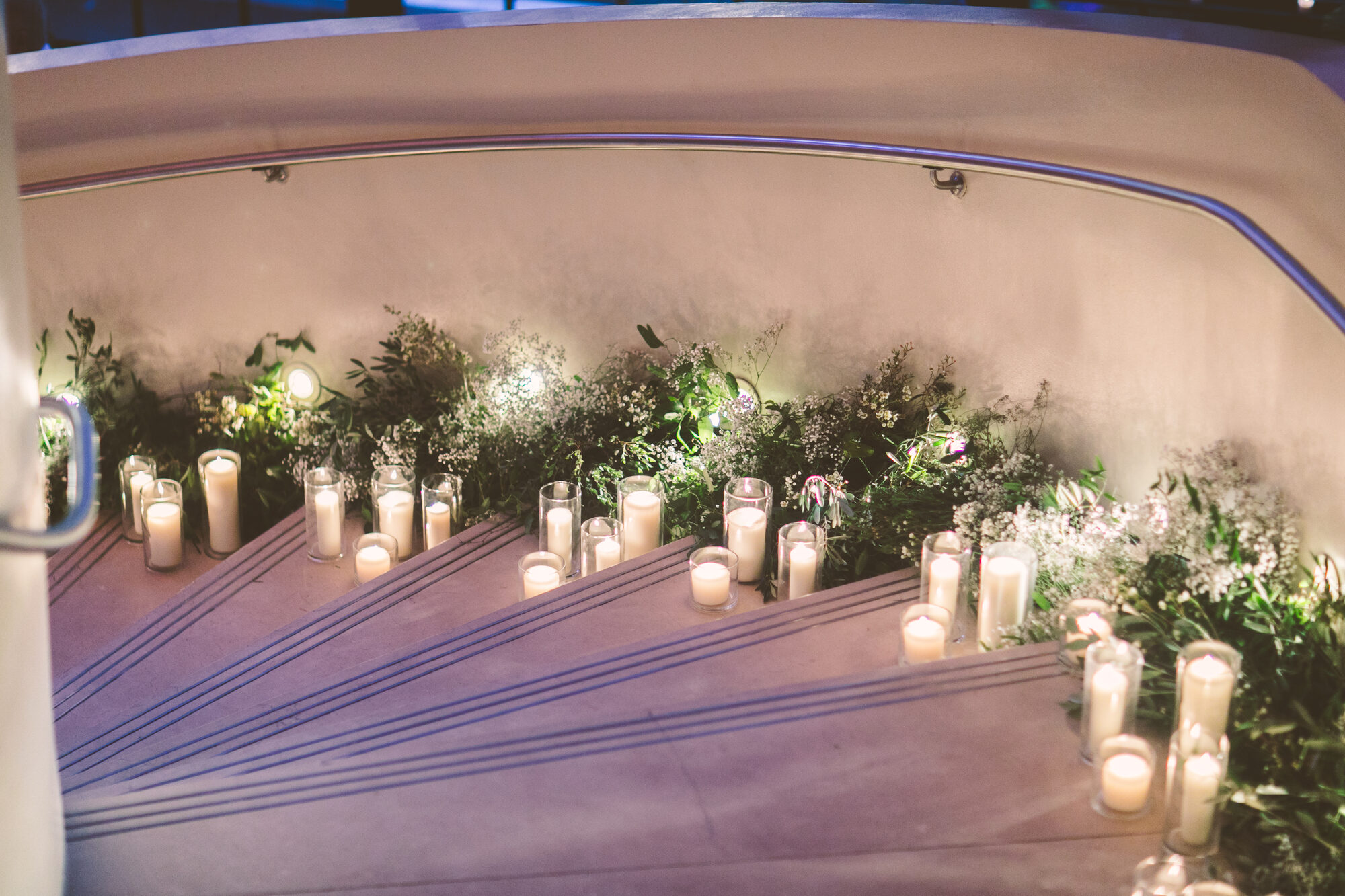
Partway through the night we stepped away to the candlelit staircase on another floor, well away from the party, which gave the two of them the quietest few minutes they had all evening. The reception was still going when we walked back up. There is also the front of the building from the sidewalk, lit up underneath the bridge.






What I would tell you about getting married at Guastavino’s
The garden is worth building time around. It is the most undersold part of the building and most couples do not plan for it. Even fifteen minutes out there late in the evening is worth scheduling.
Protect the window when the ceremony space is still empty. Between the setup finishing and the doors opening there is usually about twenty minutes when that space is the finest portrait setting in New York City, and it is worth building the timeline around rather than hoping it survives.
Think about when the first dance happens, not only whether you have one. Opening with the whole wedding party and keeping their own dance for later in the evening gave Nick and Max a reception that started at full volume and a quieter moment together once everyone had settled in.
Their own advice, when Junebug asked them, was this: start as early as you can, be clear about your vision, and spend the evening together so you have shared memories. The last part is the one people get wrong. Couples get pulled in twelve directions at their own reception. These two kept finding each other on the dance floor all night, and you can see it in the pictures.
Guastavino’s wedding questions, answered
Does Guastavino’s have outdoor space?
Yes. There is a private garden, and the venue lists outdoor space among its features. For a building of this size in midtown east, private outdoor space is unusual, and it is the part of the venue I would build time around. It gives you somewhere to take the two of you at night, and it gives guests somewhere to step out to and catch their breath between dinner and the second half of the dancing.
Where do you take wedding portraits near Guastavino’s?
Two of our favorites are about a block away: Riverview Terrace and Sutton Square, which give you the river, the bridge and quiet residential streets without anyone getting back into a car. The garden at the venue is closer still and the easiest thing to work into a timeline. Inside, the ceremony space before guests are seated and the candlelit staircase later in the evening give you the tile vaults as a backdrop. Once you are at the venue you are not going to leave and come back, so the walkable options matter far more than anything you would drive to.
Can you have both the ceremony and the reception at Guastavino’s?
Yes, and whether you do depends on the kind of wedding you are having. Jewish weddings almost always hold both the ceremony and the reception at the venue, which is what Nick and Max did, married under a greenery chuppah at one end of the main space. Christian weddings more often have the ceremony at a church first and come to the venue afterward. Either way the venue handles ceremonies on site, and the turnover from ceremony to dinner happens faster than you would expect for a space that size.
Who handles the catering at Guastavino’s?
Catering is in house, with kosher and Indian catering the listed exceptions where an outside caterer is permitted. In my experience the food is a real strength of this venue rather than something you tolerate for the sake of the setting. Cocktail hour in particular was excellent, and guests noticed, which is the only review that matters.
Is Guastavino’s comfortable for a winter wedding?
It is. The reception floor sits on the second level, away from the exterior wall, so no table is parked next to glass and nobody spends the night in a coat. I have photographed there across seasons and comfort has never been the story. The guest facilities are well kept, which guests notice more than people expect.
What are the acoustics like at Guastavino’s?
The acoustics on the top floor are the pleasant surprise of this building. The tile vaults carry sound rather than scatter it, so someone giving a toast can speak without a microphone and still be heard at the back tables, and a full band fills the space without anyone having to shout over it. The sound is run by the venue’s AV company on equipment built for that ceiling, which is a large part of why it works.
More Guastavino’s weddings
If you are planning a wedding here, the full Guastavino’s wedding venue guide covers the building in more depth. For a Jewish wedding at Guastavino’s, with the chuppah, the hora and the ketubah signing, Jen and Zach is the one to read. There is also Alex and Zach and Anna and Dean, or you can browse other wedding venues in NYC. I work throughout the city as a NYC wedding photographer, and in South Florida and beyond.
The team
Photography Julian Ribinik Studios @julianribinikstudios
Venue Guastavino’s @guastavinosnyc
Floral Design Ol’Thorn @ol.thorn
Live Music Hank Lane Music @hanklanemusic
Videography Fiore Films @fiorefilms
Photo Booth Social Glam Booth
AV and Event Support Gala Productions @galaproductionsnyc
For couples considering both teams, our NYC wedding photography and videography guide explains how JRS coordinates still photography, cinema positions, sound, and the wedding timeline.
