Kinneret and Gordon: An Ohel Yaacob Wedding in Deal, New Jersey
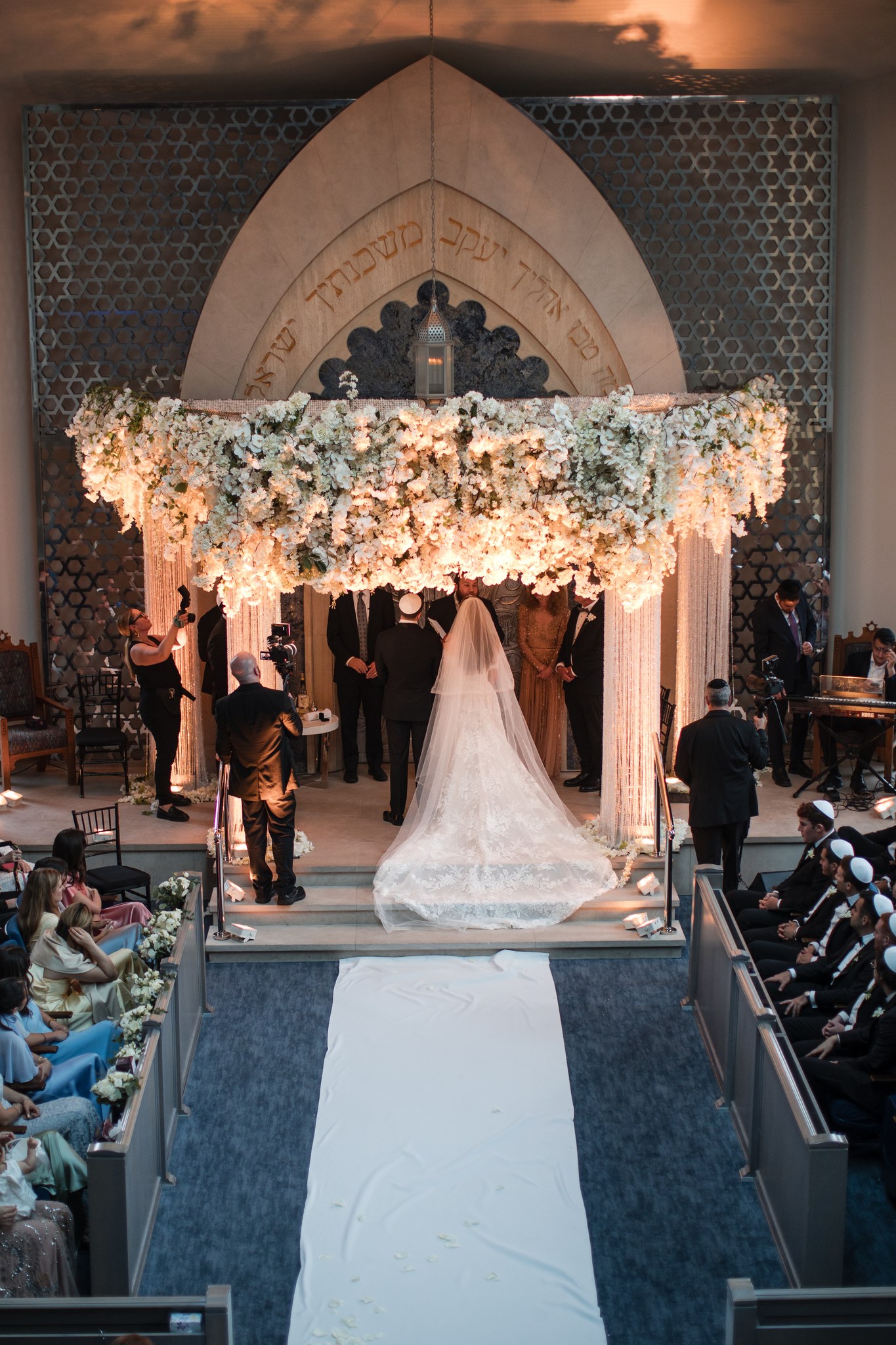
Ohel Yaacob Congregation, known locally as the Lawrence Avenue Shul, sits a few blocks off the water in Deal, New Jersey, and on the morning of June 12 it was still quiet. By late afternoon the sanctuary held about two hundred people, a white runner ran the length of the aisle, and a canopy of white orchids and hydrangea had been built over the ark itself. Kinneret and Gordon were married underneath it.
What a synagogue like this one gives you is a single building that can hold an entire day. The ketubah was signed in the library, down the hall from where the women gathered around Kinneret. The ceremony happened in the sanctuary. The reception happened upstairs in a room with windows on three sides, and when the dancing started nobody had to get in a car. That continuity is rarer than it sounds, and it is the reason the day never lost its momentum.
Here is how Kinneret and Gordon’s Ohel Yaacob wedding came together.
Getting ready at the Wave Resort in Long Branch
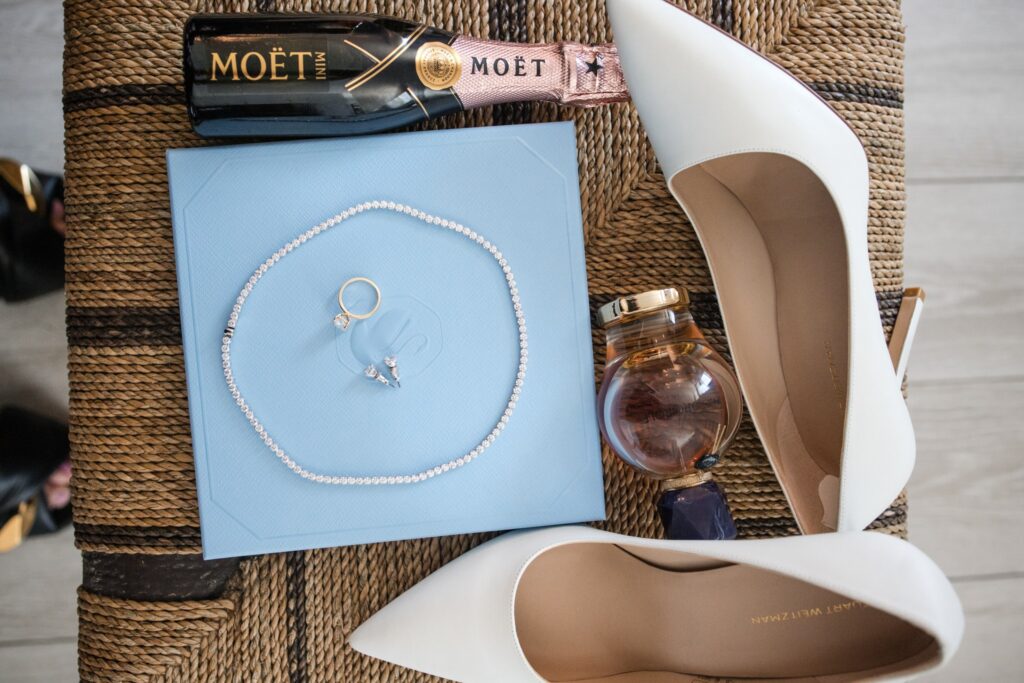
Kinneret got ready at the Wave Resort in Long Branch, in a room on the fourth floor with the Atlantic filling the window. The gown hung against the light for most of the morning before anyone touched it. On the table were the things that get photographed once and then disappear into the day: the shoes, a strand of pearls, a small blue box, a bottle of Moet nobody opened until much later.


She spent part of the morning writing. There was a note for Gordon, handwritten, folded, and sent down before either of them saw each other. We photographed it on the desk next to the hotel stationery. We do not know what it said and did not ask.


The gown is FLORA Bridal, off the shoulder, with a lace train long enough that it took two people to move it through a doorway. Once it was on, she walked out onto the balcony, and the train went out behind her across the concrete with the boardwalk and the ocean underneath.


The groom’s side, and a first look in the lobby
Gordon was downstairs with his groomsmen, the only one of them already dressed, working through the part of the morning where nothing needs doing and everyone is early. We pulled him out of that and put him at the far end of the lobby with his back turned.

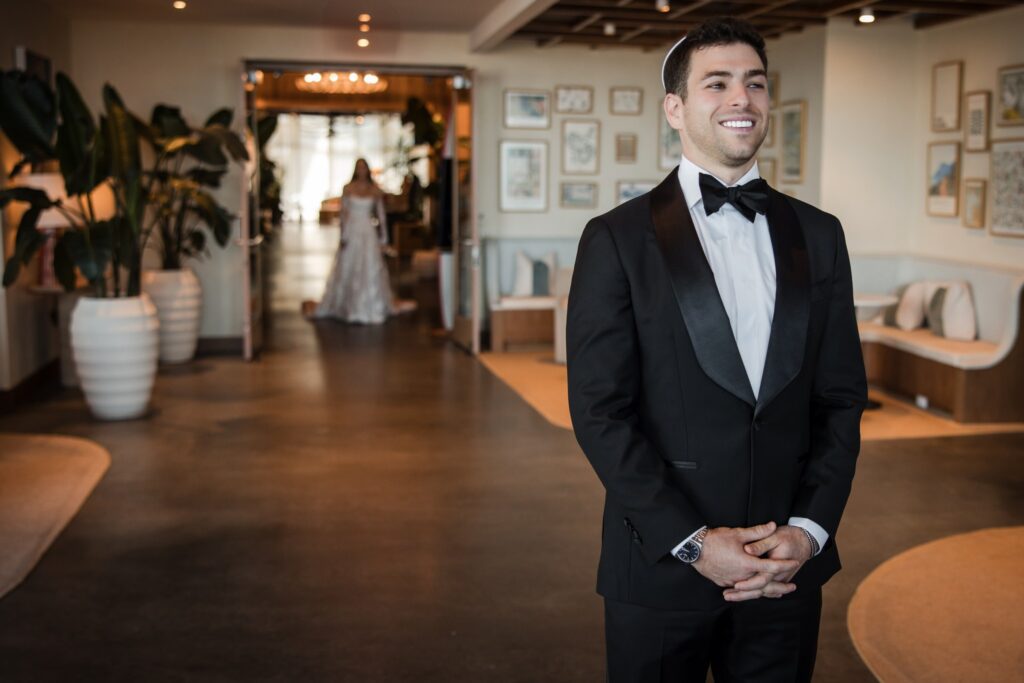
She came down the length of the room behind him. He waited, and then he turned around.


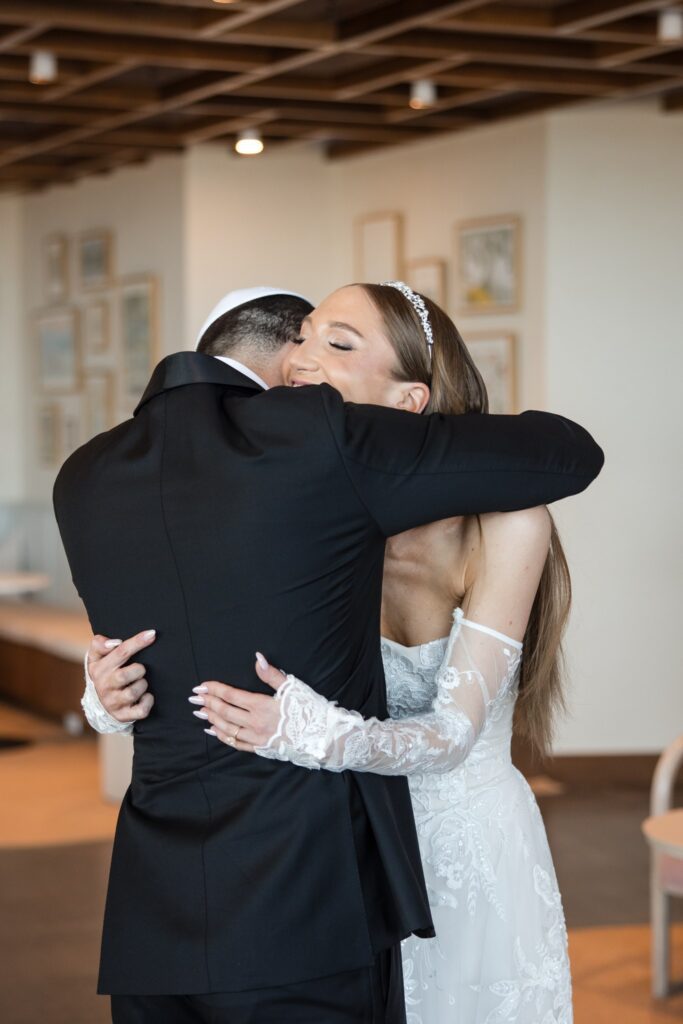
Portraits in the lobby and out on the boardwalk
The Wave has a round mirror in the lobby that we have used before and will use again. The light there is soft and comes from two directions, and the train has room to lie flat. We worked that corner for a few minutes, then took them outside.
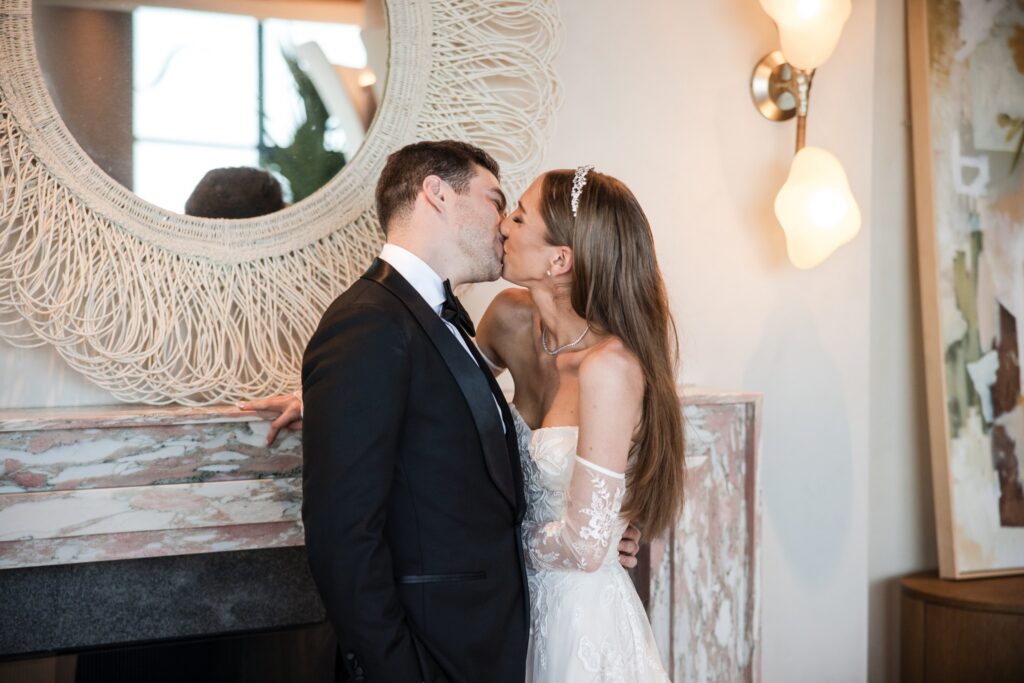

Out on the boards there was wind, which there always is, and the veil and the train both took it. That is not a problem to solve. It is the reason to shoot on a boardwalk at all.

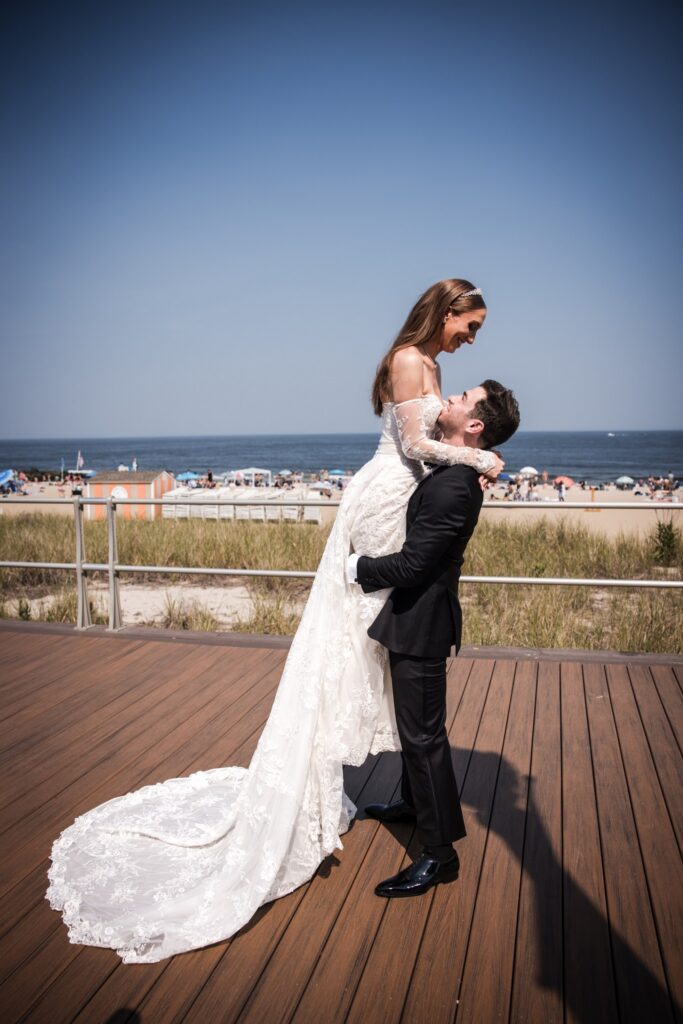
Then the train got gathered up, folded into a white G-Wagon, and driven fifteen minutes down the coast.
Ohel Yaacob Congregation · Deal, New Jersey
Tell me about your weddingNew York, South Florida and beyond


Arriving at Ohel Yaacob, and the chuppah over the ark
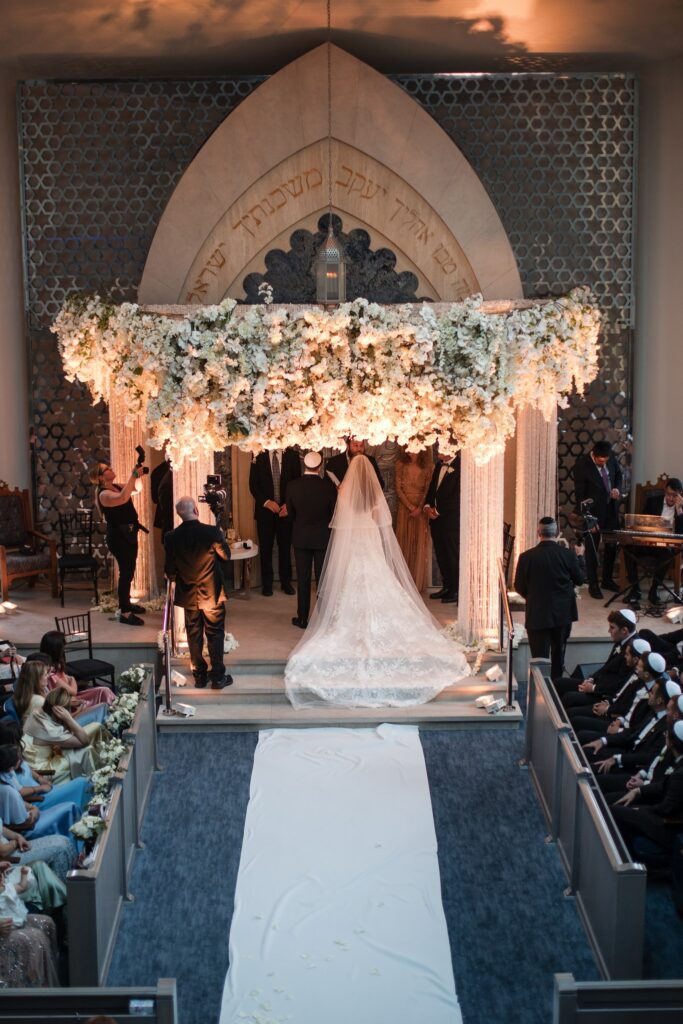
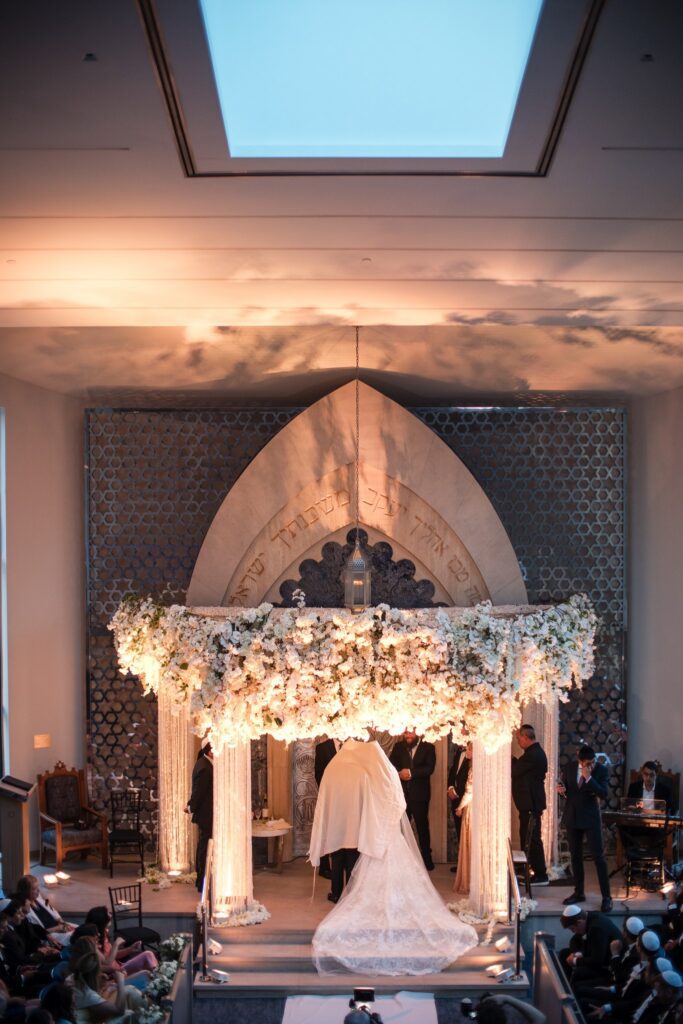
Anna’s Flowers & Gifts built the chuppah directly over the heichal, the ark that holds the Torah scrolls, so that the couple stood in front of the carved doors rather than in front of a rented frame. The canopy was solid white, orchid and hydrangea and garden rose packed tight enough that you could not see through it, and the four supports were hung with strands of crystal that reached the floor.


The palette for the whole day was black and white. No color anywhere except the flowers, which were also white. Kinneret and Gordon planned the wedding themselves, working with Jessica Esses, and the restraint in it is the most obvious thing about the design.
Signing the ketubah
The ketubah was signed in the shul’s library, at a long wood table with the bookshelves behind it. Gordon sat at the head. The rabbi filled in the document, the witnesses signed, and a tray of maamoul went around the table twice. Curtis Music Entertainment had a violinist and a clarinetist working the room, and every few minutes somebody raised a glass and the whole table answered.
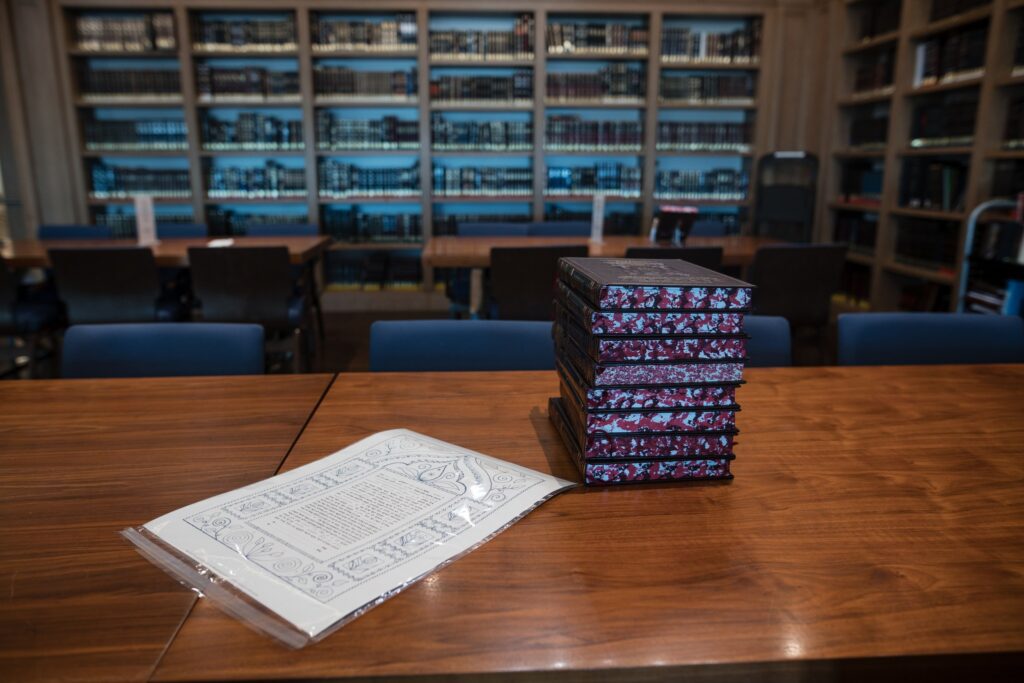


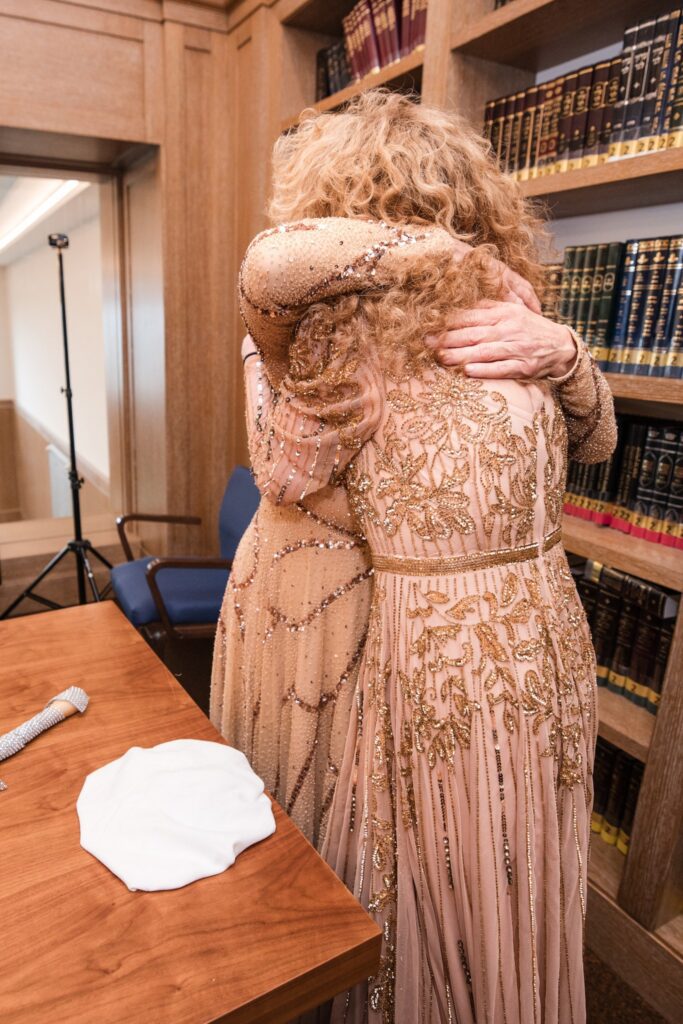
Breaking the plate
On a napkin at the end of the table sat a white plate and a wooden gavel. Breaking the plate is an Ashkenazi custom, done here by the mothers.


The women’s room, and the badeken
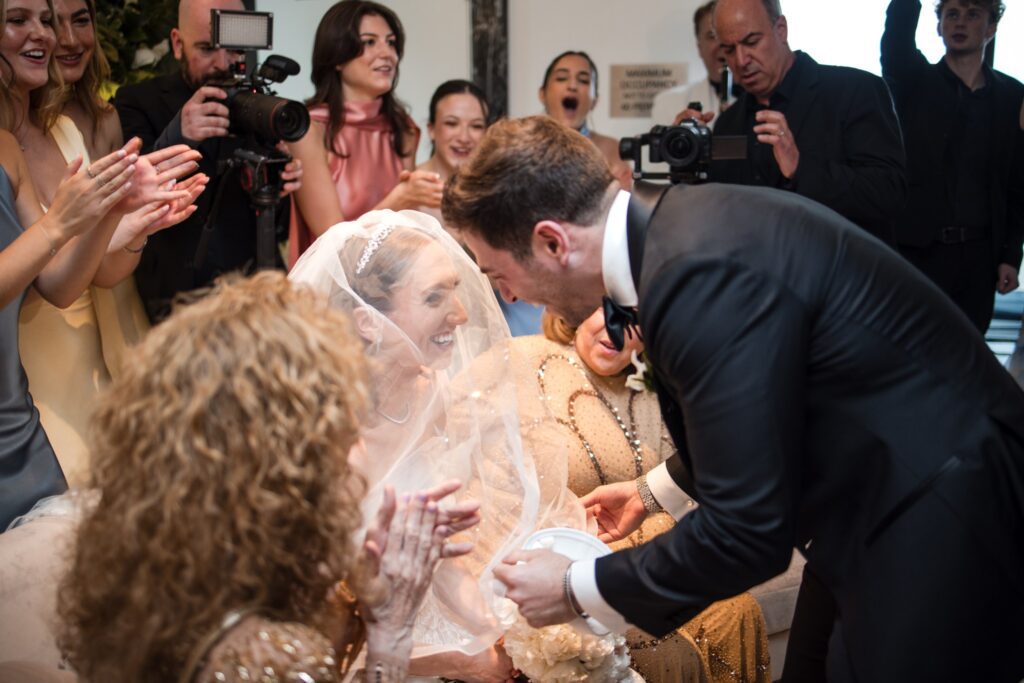
Upstairs, Kinneret was seated against a wall of white flowers while the women of both families came to her in a line that did not stop for close to half an hour. A clarinetist in a white dinner jacket walked in ahead of her mother and grandmother and played them across the room.


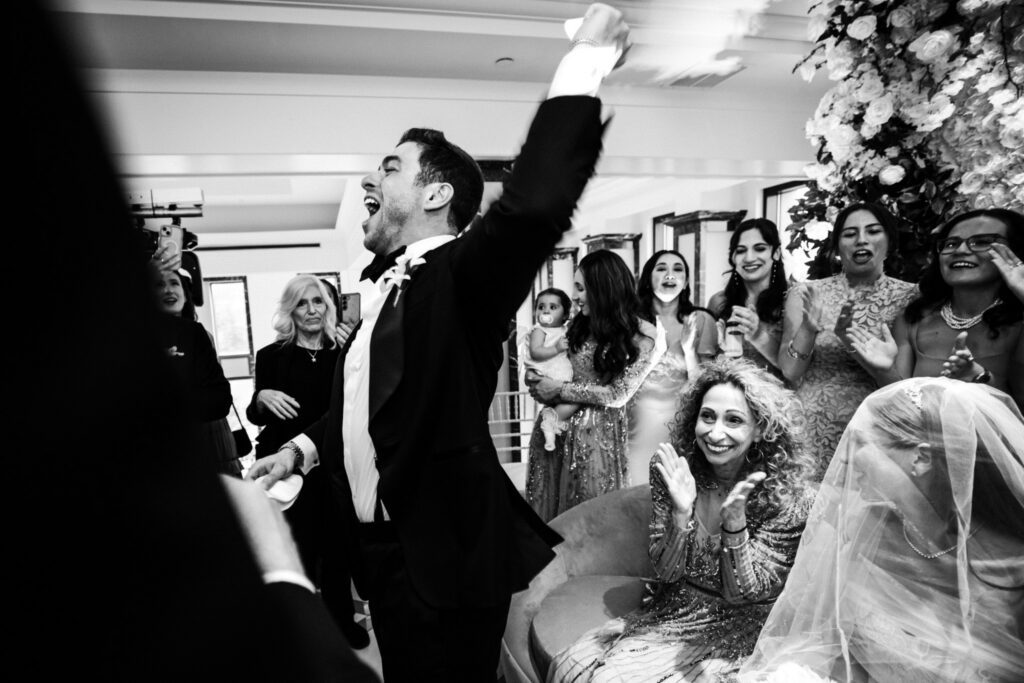
Then the men came for the badeken. You hear them before you see them, a corridor’s worth of singing and a few of them fully off the ground, and Gordon arrived in the middle of it. He came to the chair, said something to her that nobody else got, and brought the veil down over her face.


The processional
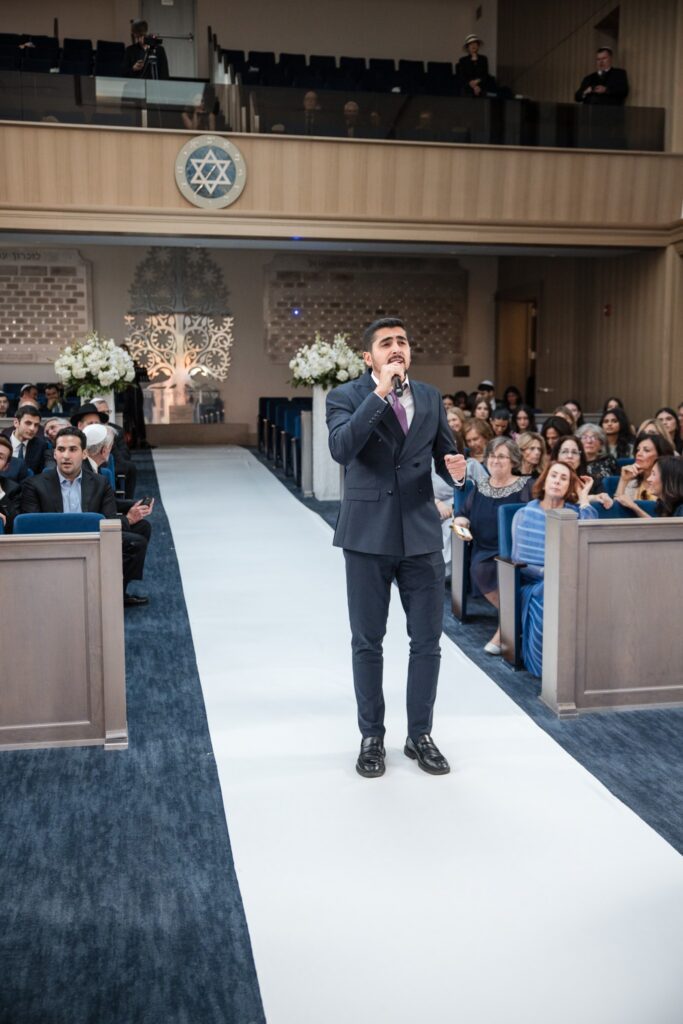
The sanctuary at Ohel Yaacob has deep blue seating and a pale stone wall behind the ark, and with a white runner down the center aisle the room reads almost entirely in two tones. The cantor walked the aisle first with a handheld mic, and the room went with him.
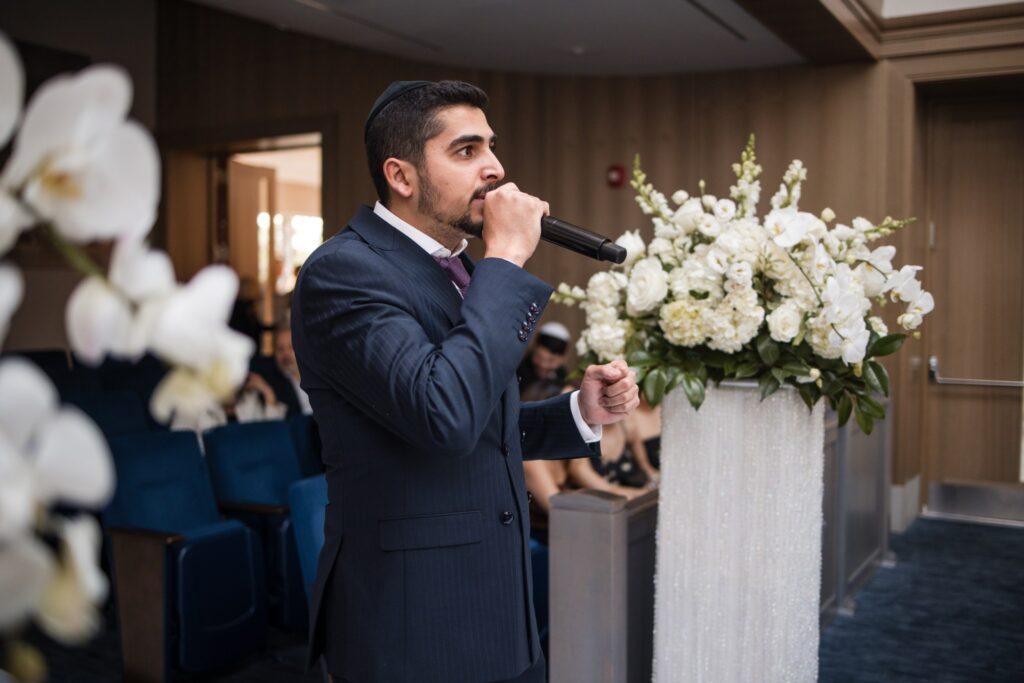
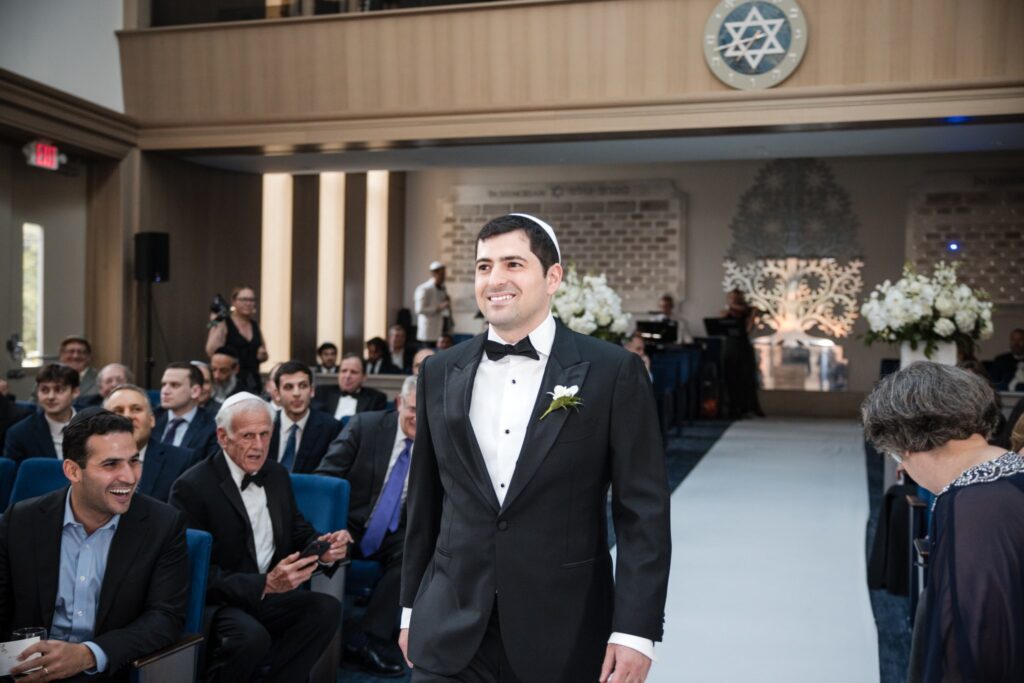
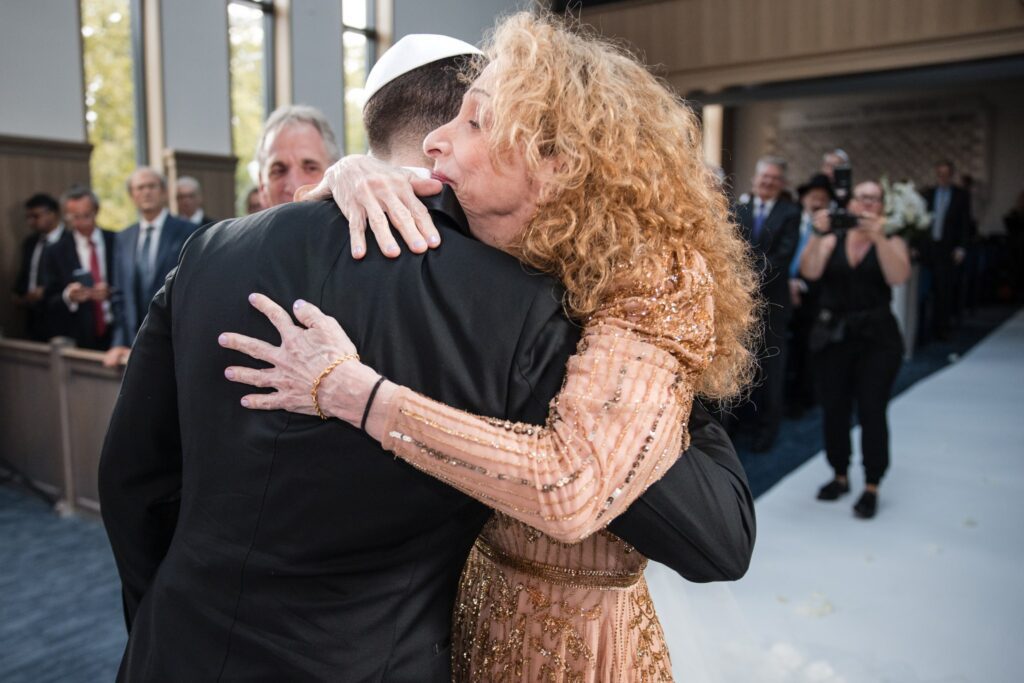
Then family, walking in two by two. Then the grandparents. Then Gordon with his mother.


Kinneret came last, between both her parents, with the veil down and the train running most of the length of the aisle behind her. From the balcony it is one long white line through a blue room.


Under the chuppah
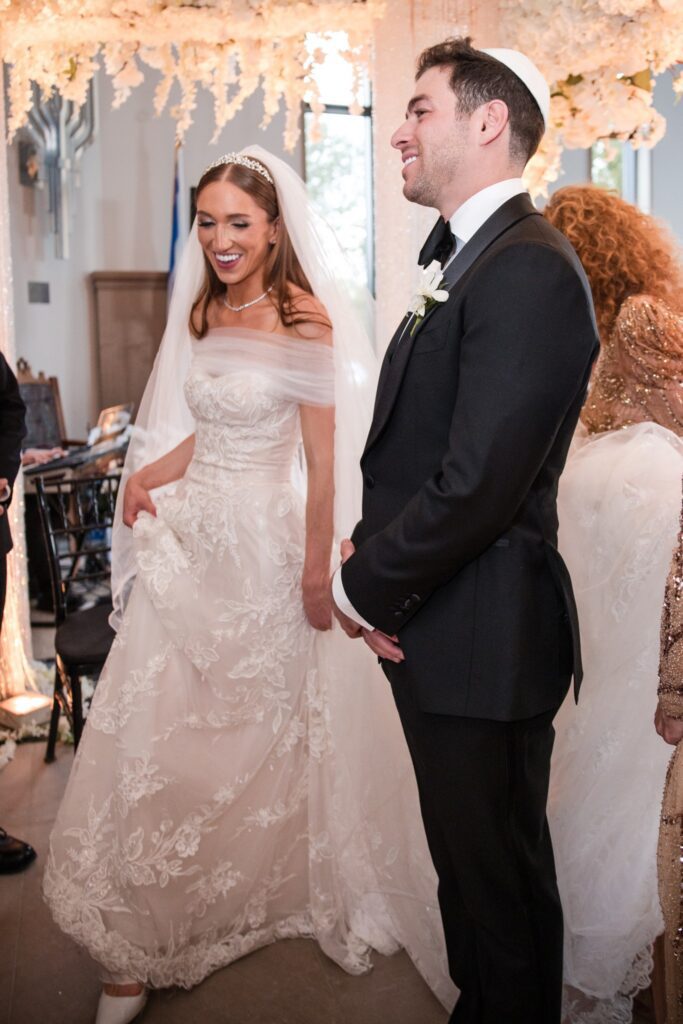
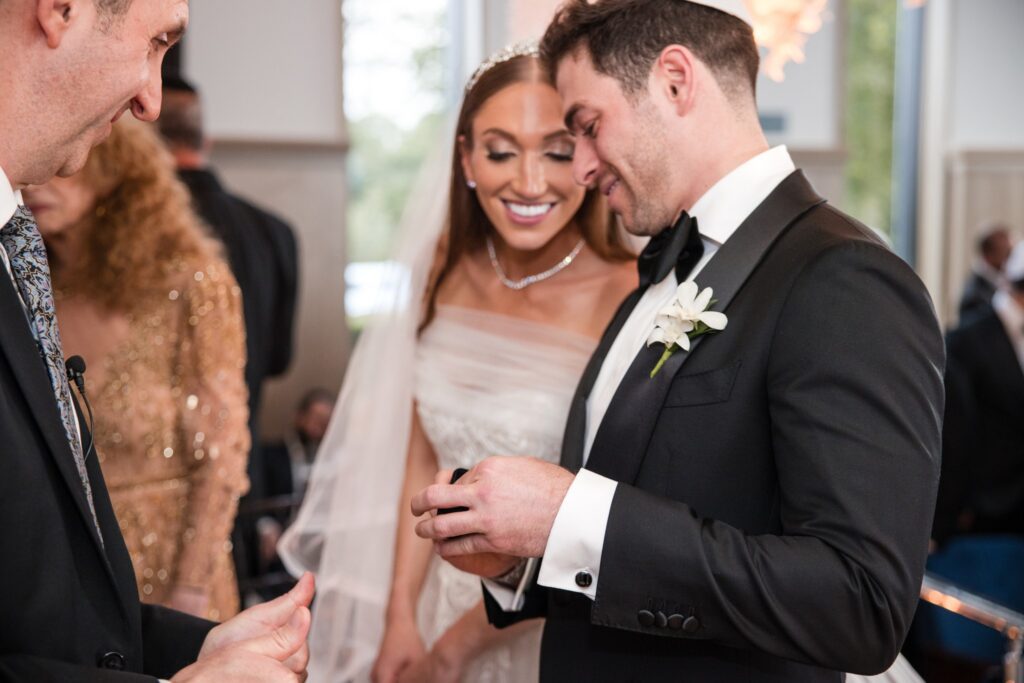
The Loverly feature on this wedding described it as a merging of Ashkenazi and Syrian traditions, and the ceremony is where you can actually watch that happen. The badeken and the plate are Ashkenazi customs. Sephardic weddings do not have a veiling ceremony at all. But partway through the ceremony Gordon’s tallit was drawn up over both their heads, and the two of them stood under it together, which is the Sephardic form. In a Sephardic ceremony the couple shelter under the groom’s prayer shawl rather than standing under the canopy alone.
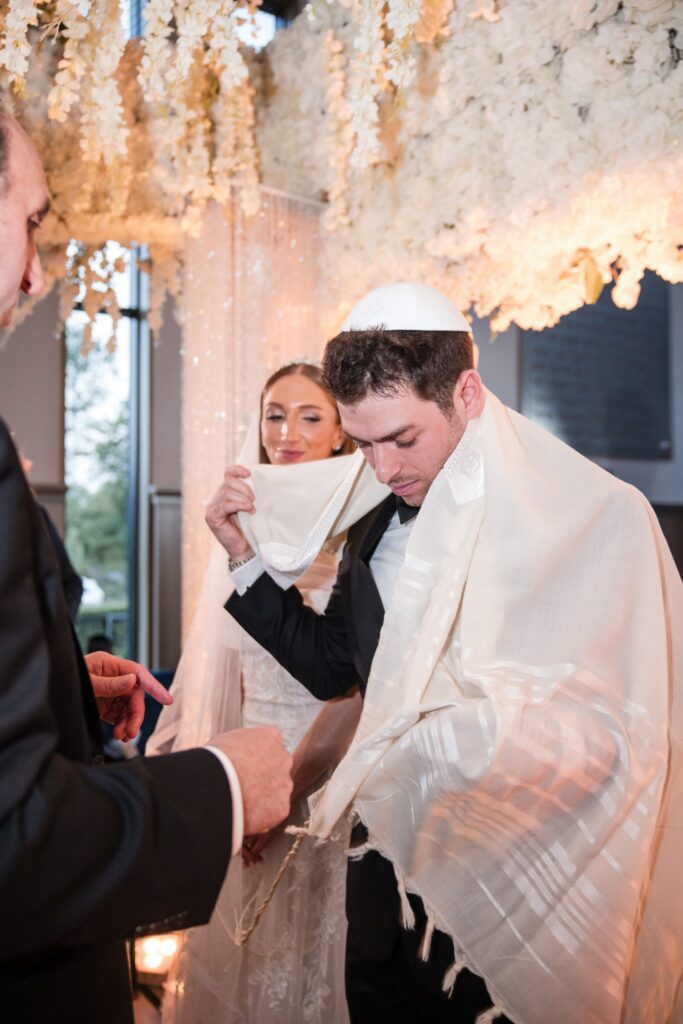

Her veil stayed down through the wine, which is the Ashkenazi pattern again. Two traditions running inside one ceremony, in a Syrian congregation.


The glass, and a recessional that turned into a mob
The glass went under Gordon’s heel and the room came apart. He got to his mother first. Then about forty men closed around him and the aisle stopped being an aisle.

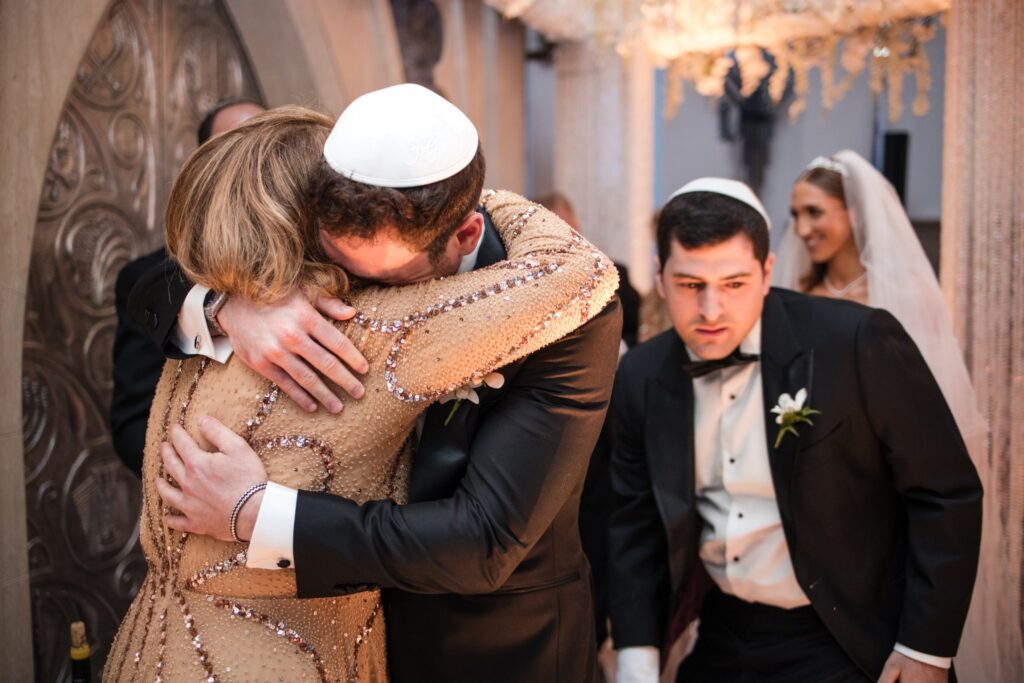
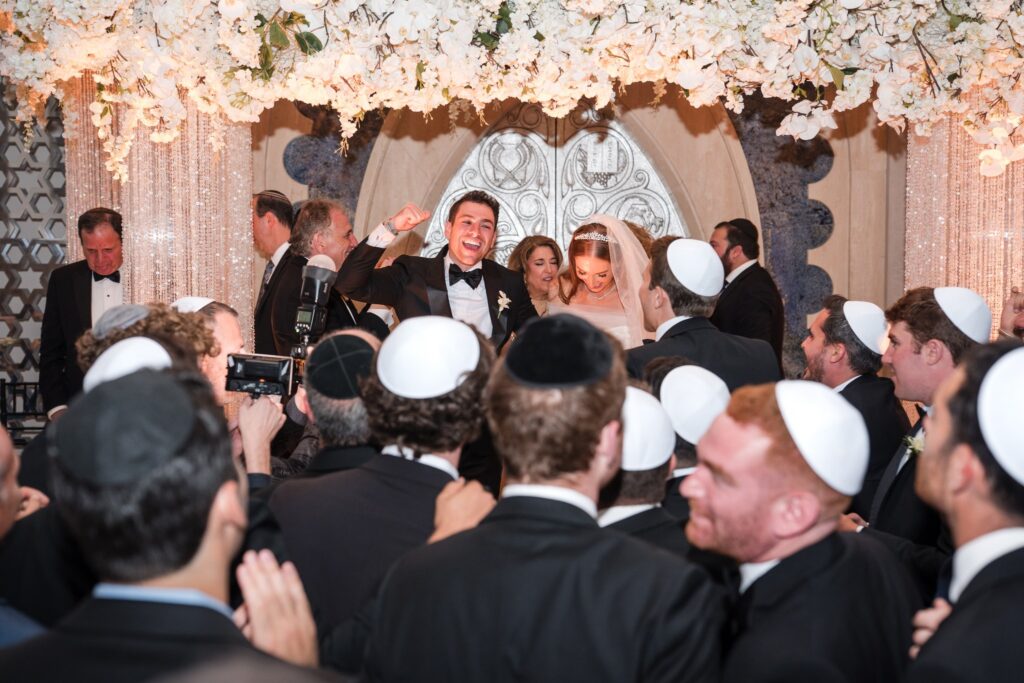
They came out through the middle of it with both arms up. The last frame of the sequence is the two of them alone in an elevator, still shouting, doors closing.


The room upstairs
Long tables, white linen, black chiavari chairs, black cut-crystal glassware at every place, gold flatware, and low white florals running the length of the table between tall tapers. The kippot were monogrammed K&G. Hayat Caterers plated the first course before the doors opened, which is why the room photographs the way it does in these frames, full and finished and completely empty.


The dessert display
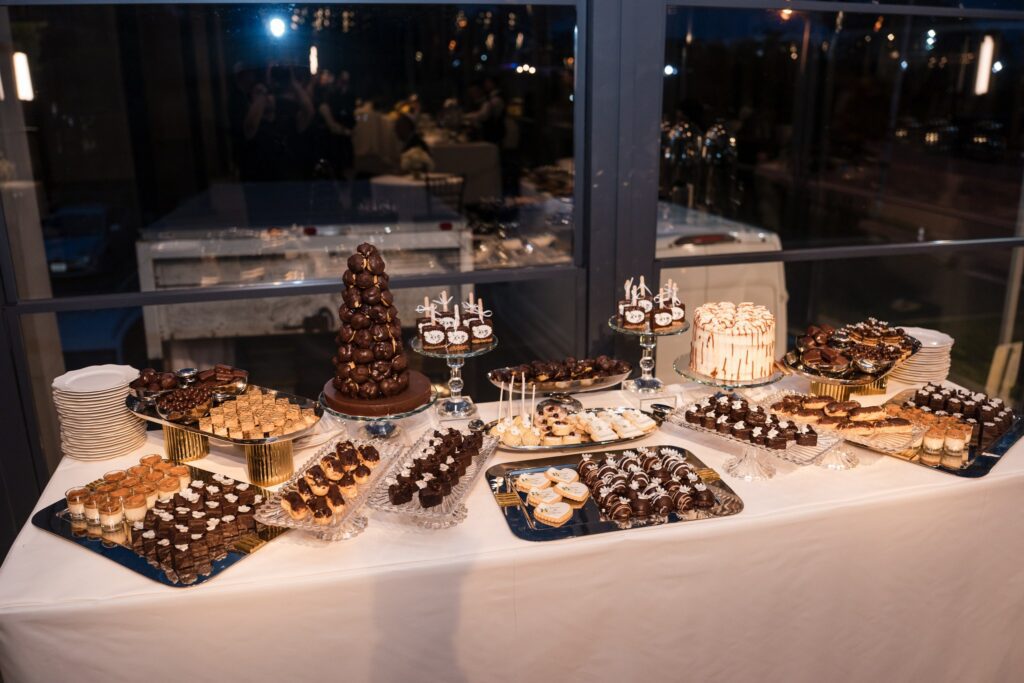
The dessert table ran along the window wall and was, by a wide margin, the single largest piece of design in the room. Croquembouche, cupcakes, cookies, mousse cups, baklava, maamoul, a whole shelf of things in white. It was set before dinner and it did not survive the night.


The first dance, the hora, and the rest of it
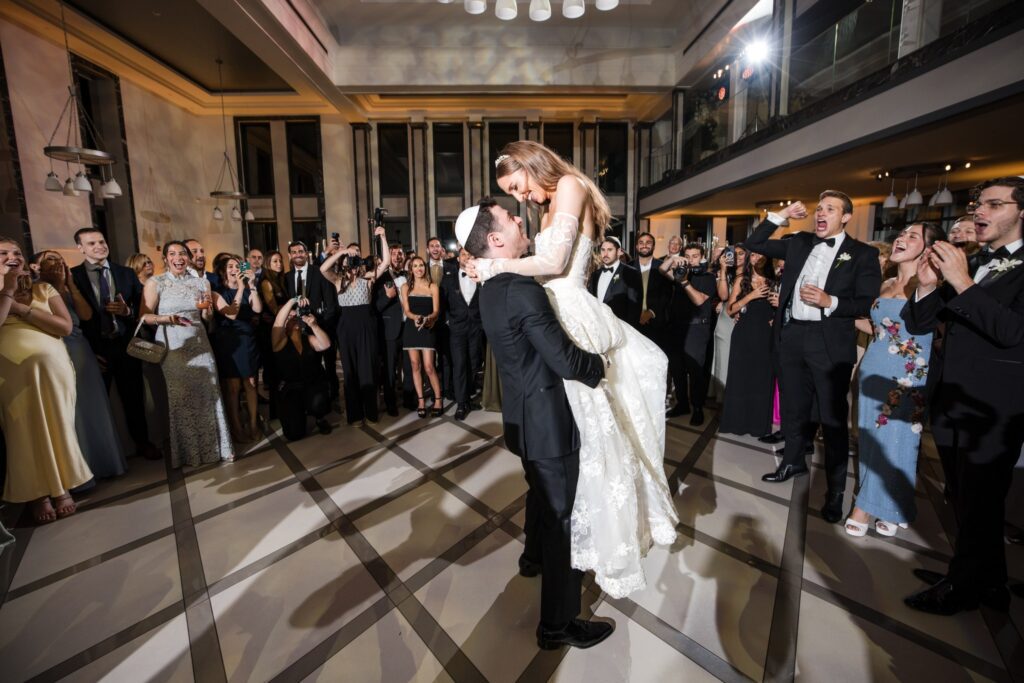
They came into the room and went straight into the first dance on a checkerboard floor with the whole party standing around the edge of it. He lifted her twice.


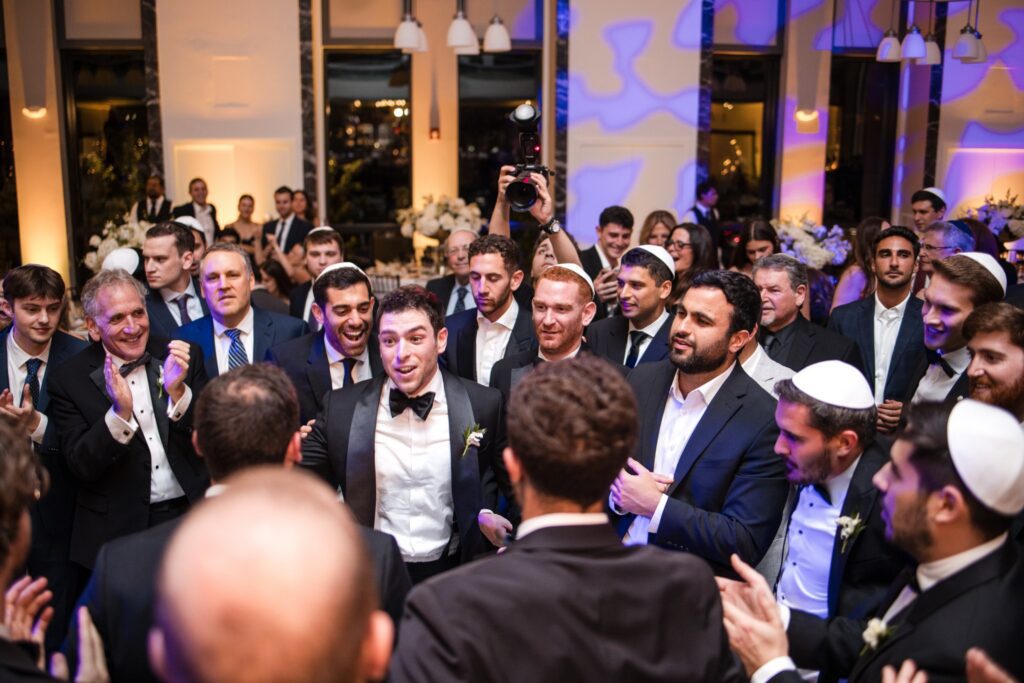
Then DJ Meyer Kassin took the room and it did not sit down again. The men’s circle went first, then the chairs, both of them up over the crowd holding opposite ends of a napkin, and the floor stayed at that level for hours.




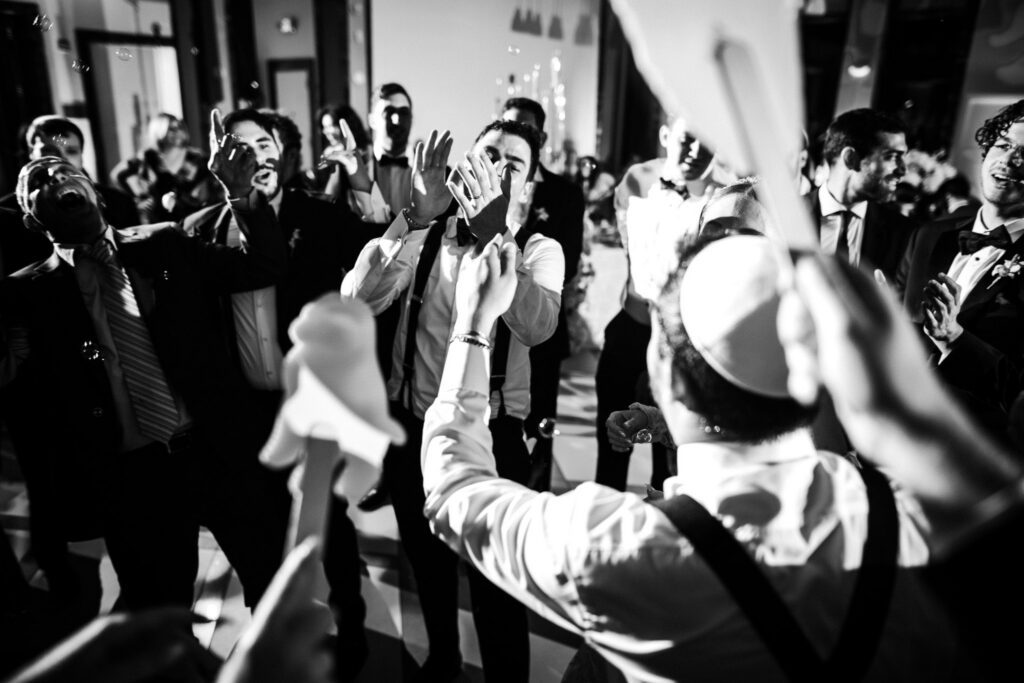
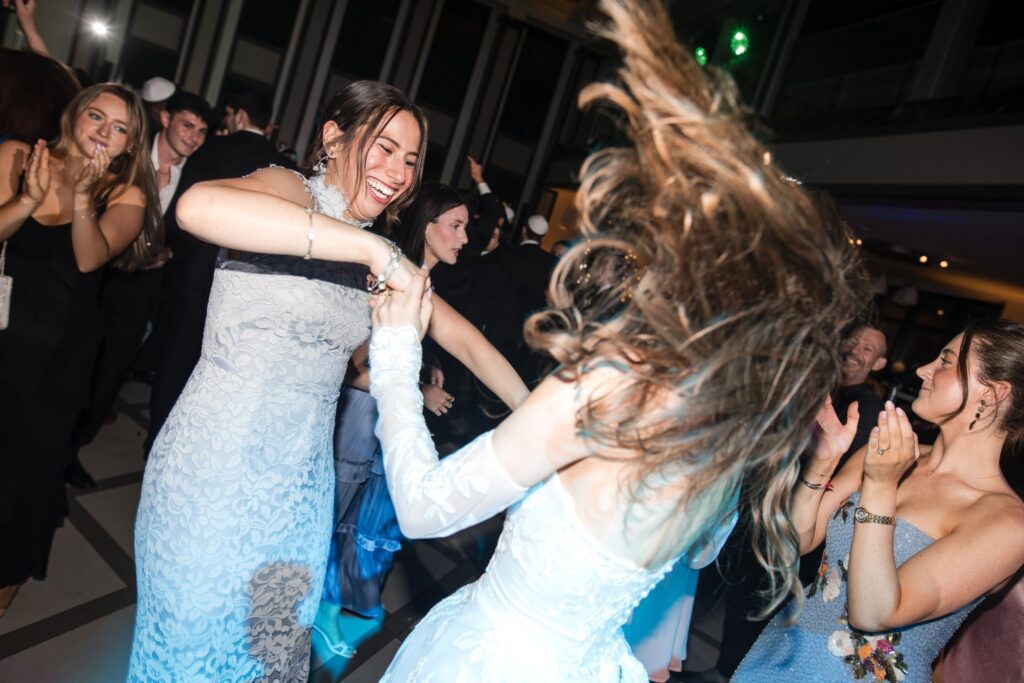
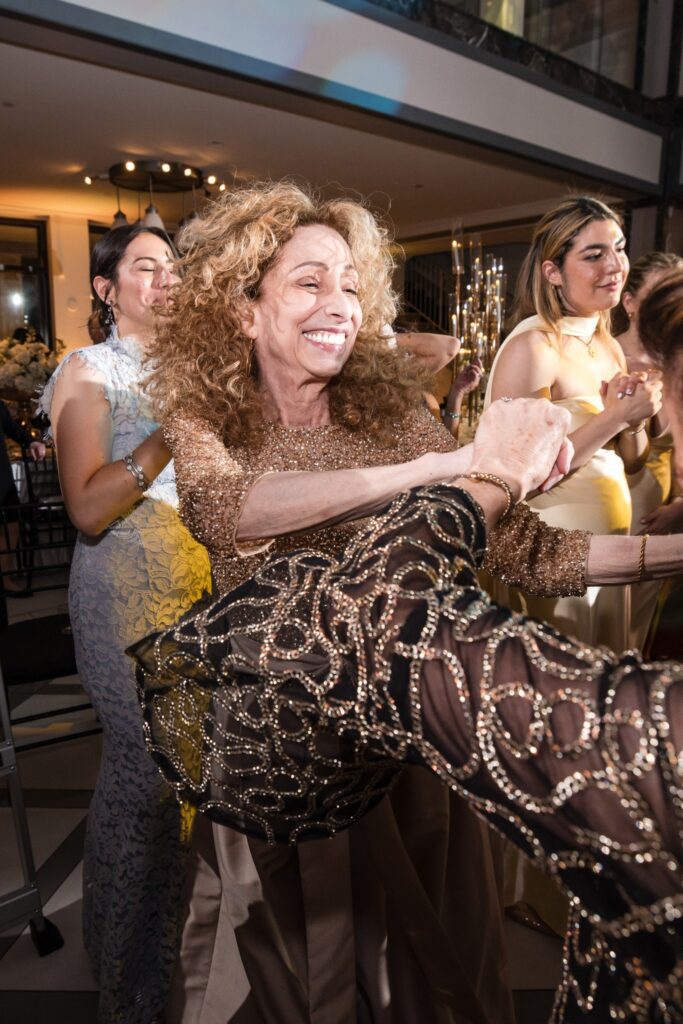
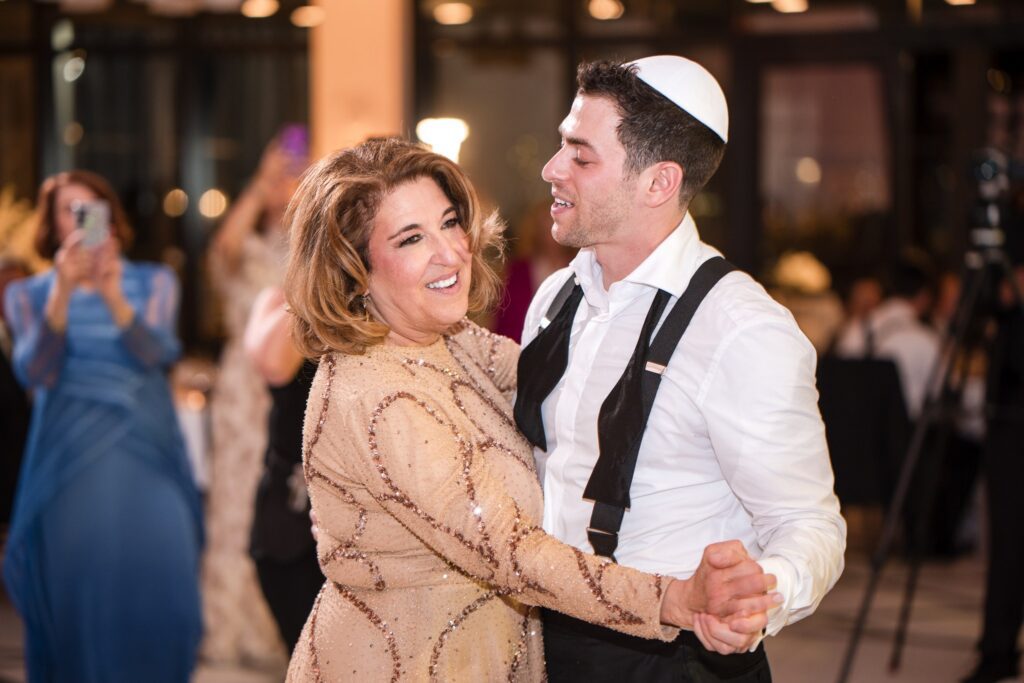
Gordon danced with his mother, the floor cleared for the two of them and the room watching from the tables.
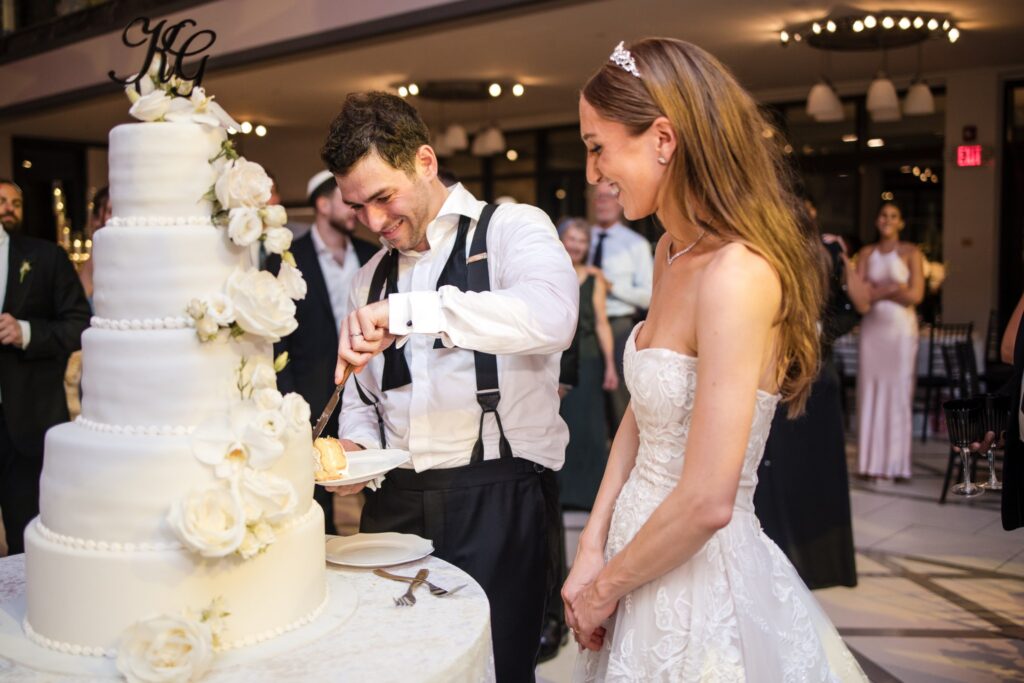
Kinneret changed into a hot pink dress somewhere around midnight and the two of them came back through the doors into a second party.


Planning your own Ohel Yaacob wedding?
A few things worth knowing about this building.
- The sanctuary is bright, and the reception room is brighter. Windows on three sides upstairs means your late-afternoon reception photographs in daylight. If you want a dark, candlelit reception look, push your timeline later than you think you need to.
- Building the chuppah over the ark is worth the coordination. It puts the carved doors of the heichal behind you in every ceremony frame instead of a rented frame against a wall. It takes longer to install. Ask your florist early.
- Everything is in one building, so build in more time, not less. The temptation with a single-venue wedding is to compress the schedule because nobody is traveling. The ketubah signing, the women’s room and the badeken all ran long here, in the good way. Leave them room.
- Get your prep somewhere with real windows. The Wave Resort is fifteen minutes up the coast and offers an ocean-facing room, a lobby, and a boardwalk. That is three completely different backdrops before you have even arrived at the shul.
If you are planning an Ohel Yaacob wedding, or a wedding anywhere along this stretch of the Jersey Shore, we would like to hear about it. Reach out here.
For more on the customs in this post, see our guide to everything you need to know about Jewish wedding traditions.
Planning a wedding at Ohel Yaacob
See if your date is openWeddings photographed in New York, South Florida and beyond
Frequently Asked Questions
Where is Ohel Yaacob Congregation?
Ohel Yaacob Congregation is in Deal, New Jersey, on the Monmouth County shore. It is known locally as the Lawrence Avenue Shul. It is one of the main Syrian Jewish congregations in Deal, along with the Synagogue of Deal and the Edmond Safra Synagogue.
Can you hold both the ceremony and the reception at Ohel Yaacob?
Yes. An Ohel Yaacob wedding can run start to finish in one building, and theirs did: the ketubah signing in the library, the ceremony in the sanctuary, and the reception in the room upstairs. Guests did not travel between the ceremony and the party.
What is the difference between an Ashkenazi and a Sephardic wedding ceremony?
Several customs differ. The badeken, where the groom veils the bride before the ceremony, is Ashkenazi; Sephardic weddings do not include it. Circling the groom is also Ashkenazi. In a Sephardic ceremony the couple stand together under the groom’s tallit rather than under the canopy alone, and the bride’s veil is generally lifted at the ring exchange. Many families combine both, as Kinneret and Gordon did.
How many guests does the sanctuary at Ohel Yaacob hold?
This wedding had about two hundred guests seated in the sanctuary with room to spare, including a balcony level. For an exact capacity, contact the congregation directly.
Where do couples get ready for a Deal, New Jersey wedding?
Kinneret got ready at the Wave Resort in Long Branch, about fifteen minutes north in Pier Village. It offers ocean-facing rooms, a lobby that works for a first look, and direct boardwalk access for portraits.
Vendor Team
- Ceremony and reception venue: Ohel Yaacob Congregation, Deal, New Jersey · @ohelyaacobcongregation
- Photography: Julian Ribinik Studios
- Planning: Jessica Esses
- Getting ready: Wave Resort, Long Branch
- Gown: FLORA Bridal · @_houseofflora_
- Florals: Anna’s Flowers & Gifts · @annasflowersandgift
- Catering: Hayat Caterers
- Video: Creative Image Productions · @creativeimagepro
- Music: Curtis Music Entertainment
- DJ: DJ Meyer Kassin
- Suiting: Suit Supply
- Bridal dresser and attendant: Rena Vesely