
Green and architectural
Central Park, Fort Tryon Park, Prospect Park, and Brooklyn Botanic Garden.
The best place for NYC engagement photos is not automatically the most famous location. It is the place that matches how you spend time together, gives us the right light at the right hour, and lets the session move without losing half of it in traffic. Central Park, DUMBO, the West Village, Soho, Grand Central, and the New York Public Library all create very different photographs. The useful question is not simply where to go. It is what you want the photographs to feel like.
After photographing couples across New York since 2007, we plan engagement sessions around three practical decisions: visual character, crowd level, and travel time. This guide from our NYC wedding photography team compares the strongest locations, shows which places combine naturally, and explains what to expect before you choose.
Reviewed by Julian Ribinik in August 2026. Location and permit guidance is linked to the responsible agency or property wherever a special rule applies.
NYC engagement photography guide
Use the guide as a decision tool. Compare the atmosphere, light, crowd level, permissions, and travel time before deciding which part of New York belongs in your session.
Central Park, Fort Tryon Park, Prospect Park, and Brooklyn Botanic Garden.
West Village, East Village, Soho, Tribeca, and the Lower East Side.
DUMBO, Brooklyn Heights, South Street Seaport, Roosevelt Island, and Williamsburg.
The library exterior, Grand Central, Financial District, Rockefeller Center, and private rooftops.
Central Park: Greenery, architecture, and four-season variety. Best early or late. Keep the route compact and expect weekend crowds.
DUMBO: Bridge views, cobblestone, and waterfront. Sunrise is best. Pair it with Brooklyn Heights.
West Village: Brownstones, stoops, and neighborhood character. Pair it with Washington Square Park.
Soho: Cast-iron architecture and graphic streets. Start early to avoid delivery traffic and hard midday light.
New York Public Library exterior: Formal city architecture. Pair it with Bryant Park, with current access checked first.
Grand Central: Interior scale and immediate New York atmosphere. Use off-peak hours and secure any required permission in advance.
South Street Seaport: Historic streets, water, and Financial District contrast. Late afternoon works well.
Brooklyn Heights: Promenade, brownstones, and skyline. Pair it with DUMBO and allow walking time.
East Village: Street energy and personal neighborhood stories. Continue from late afternoon into evening.
Fort Tryon Park: Stone architecture, gardens, and quieter greenery. Treat it as one self-contained route.
Start with the environment you actually enjoy. If you spend weekends walking downtown, a polished Central Park session may feel less personal than the West Village, Soho, or the East Village. If you want photographs with immediate New York scale, choose architecture and skyline rather than trying to force several unrelated neighborhoods into one session.
Then decide how much variety you need. One well-planned neighborhood often produces more useful photographs than three locations connected by car. A change from a quiet street to a busier avenue, waterfront, café, or bar can create a second visual chapter without turning the session into a transportation project.
Finally, choose timing before clothing. Morning light and empty streets can make DUMBO or Soho possible. Evening light can make a waterfront or rooftop feel completely different. The time of day determines the photographs more than an outfit board does.
Location 1
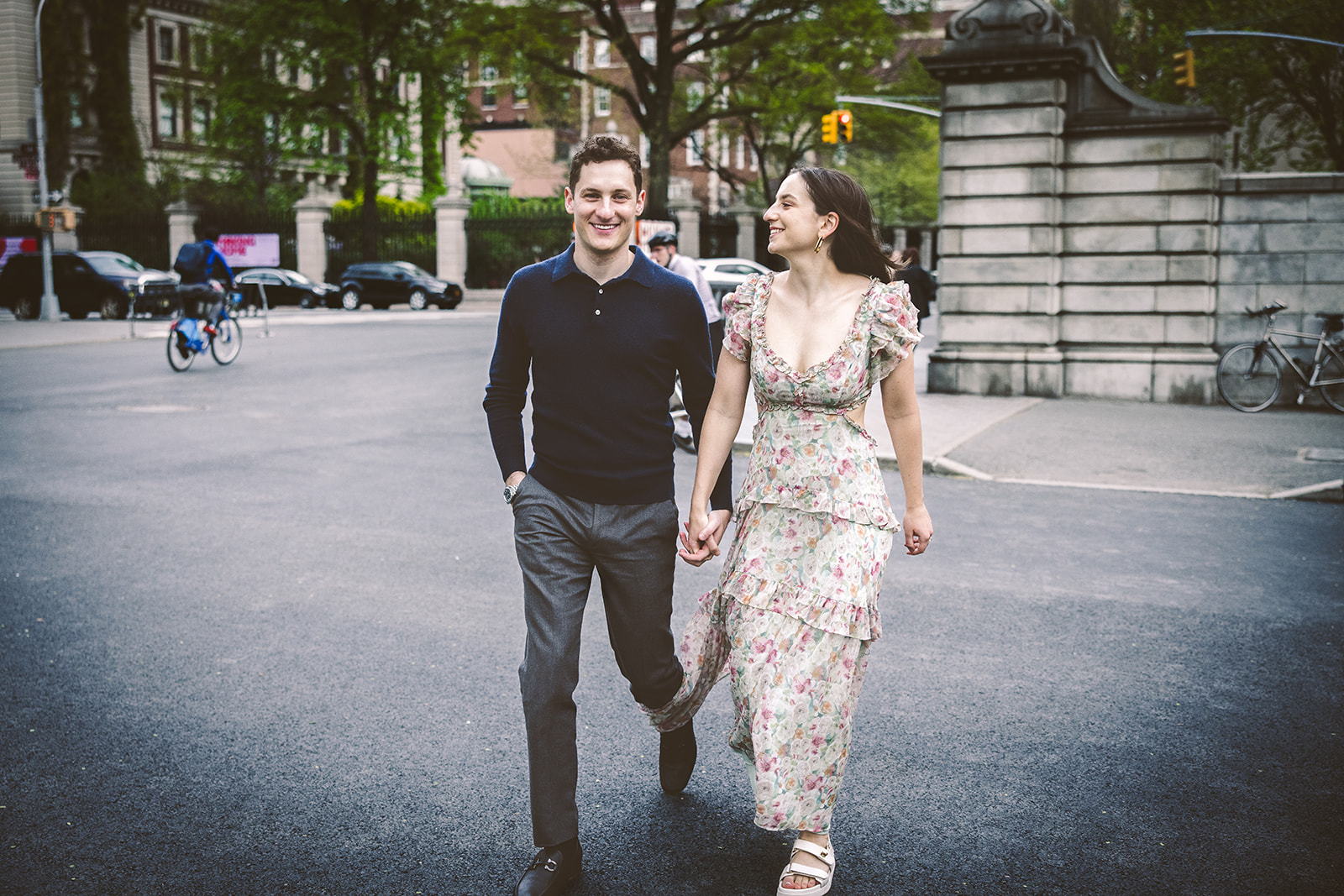
Central Park is not one location. Bethesda Terrace, Bow Bridge, the Mall, Conservatory Water, Gapstow Bridge, and the quieter northern paths each create a different session. The mistake is trying to photograph all of them. We choose a compact route based on season, light, footwear, and whether the couple wants architecture, greenery, skyline, or a mix.
For a location-by-location route through Bethesda Terrace, Bow Bridge, the Mall, the Lake, and the Reservoir, use our Central Park engagement photos guide.
Central Park’s photography guidance says visitors using handheld equipment or a tripod generally do not need a photography permit in the main park. The Conservatory Garden is different: its current rules require a permit for professional or staged portrait sessions. Larger productions and equipment beyond a simple handheld setup follow a separate review process, so we confirm the exact route and equipment before the date.
Location 2
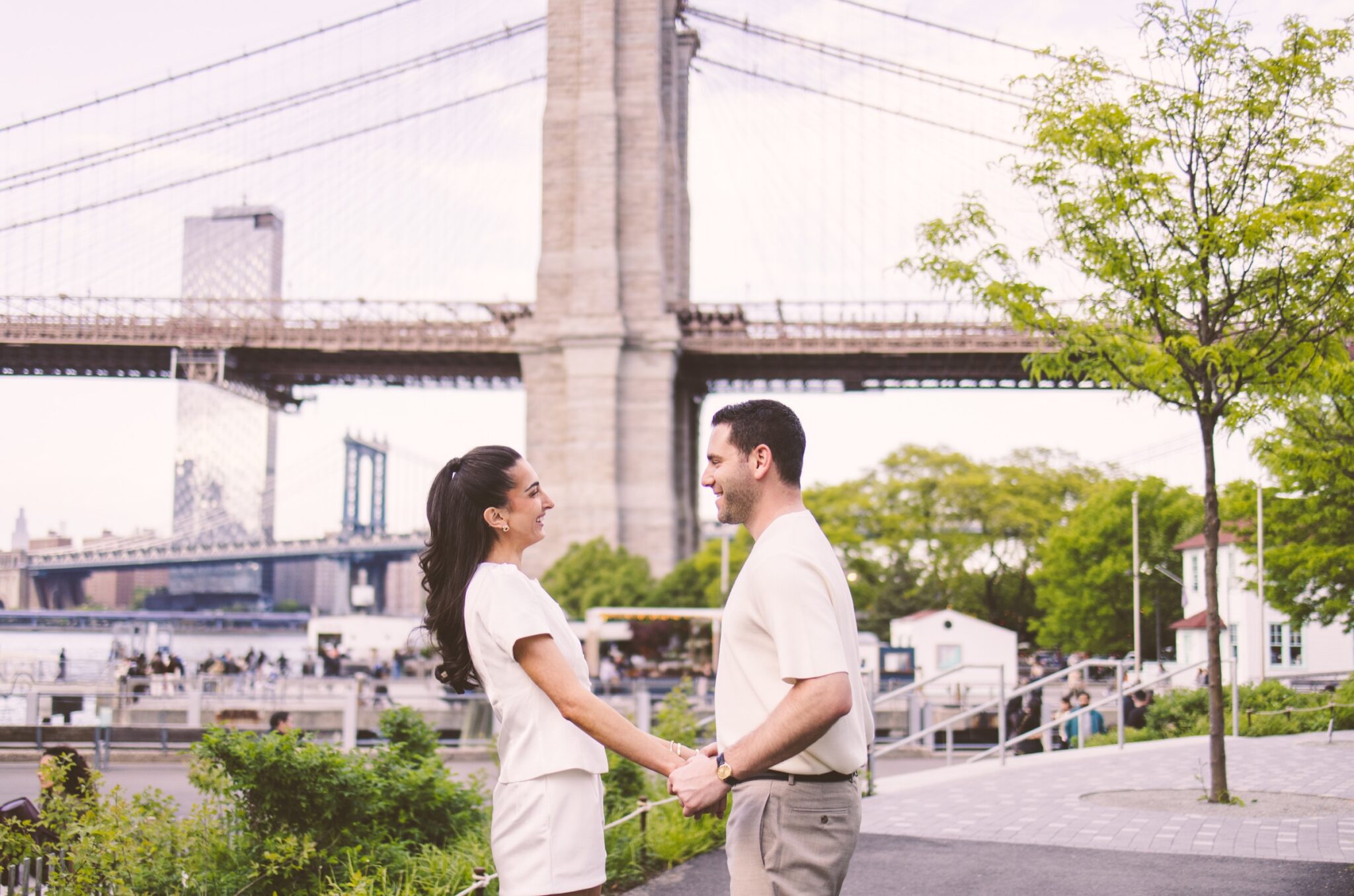
DUMBO works best before the streets fill. The Manhattan Bridge view is only one frame. Cobblestone streets, warehouse walls, the waterfront, Jane's Carousel area, and the edges of Brooklyn Bridge Park provide enough contrast for a complete session when the route is planned tightly. Our DUMBO engagement photo guide compares three practical routes, timing, permits, and Brooklyn Heights options.
Location 3
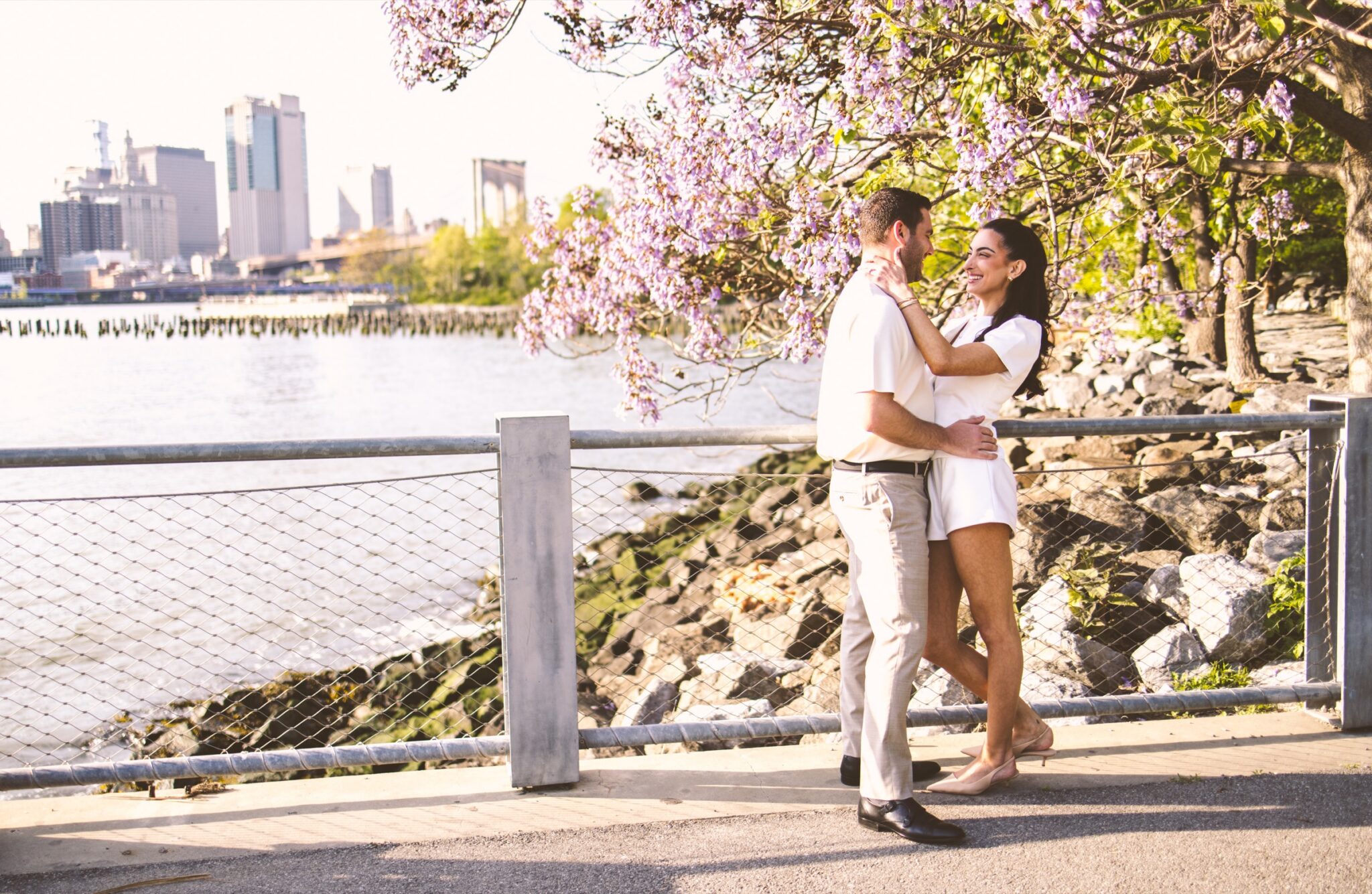
Choose Brooklyn Bridge Park when water, skyline, and open space matter more than the classic Washington Street frame. It pairs naturally with DUMBO, but the session should allow time for walking rather than treating every stop as a separate destination.
The park's current photography rule says non-commercial wedding or engagement photography does not require a permit for groups of 20 or fewer using handheld equipment. Commercial use, larger groups, or more equipment can change that answer, including when a photographer plans to publish the photographs to promote a business. We verify the intended use with the park rather than treating every engagement session alike.
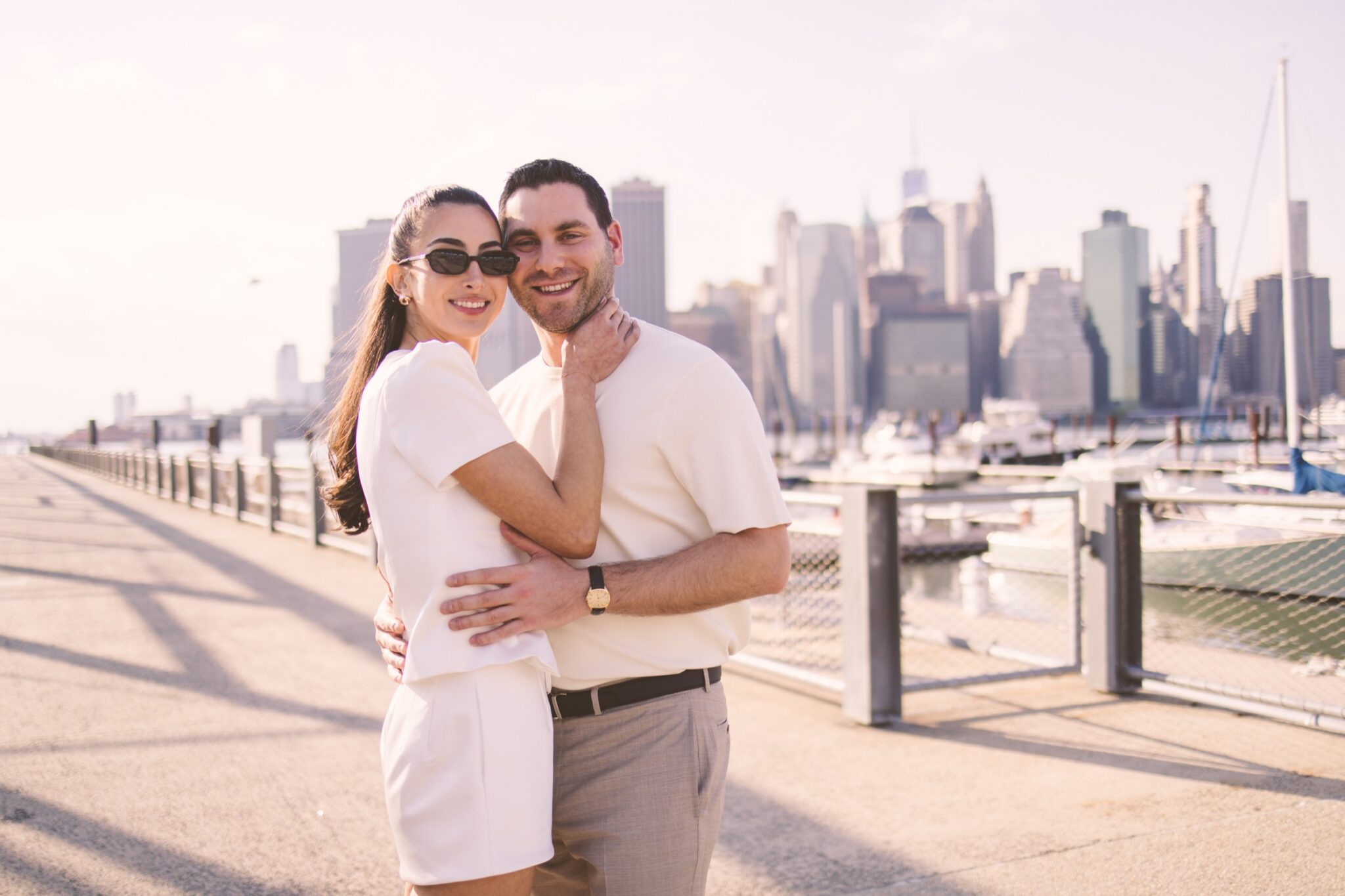
Location 4
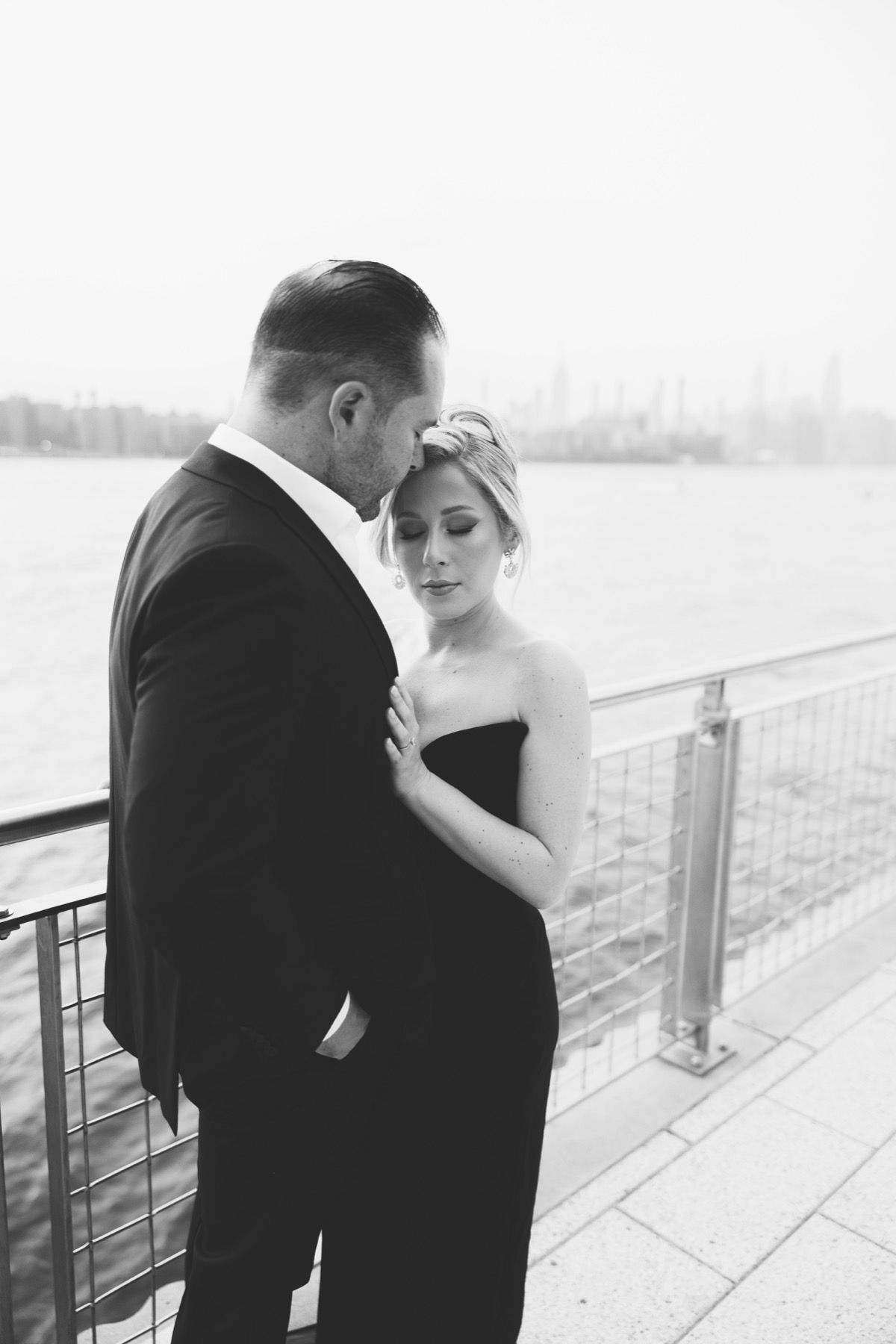
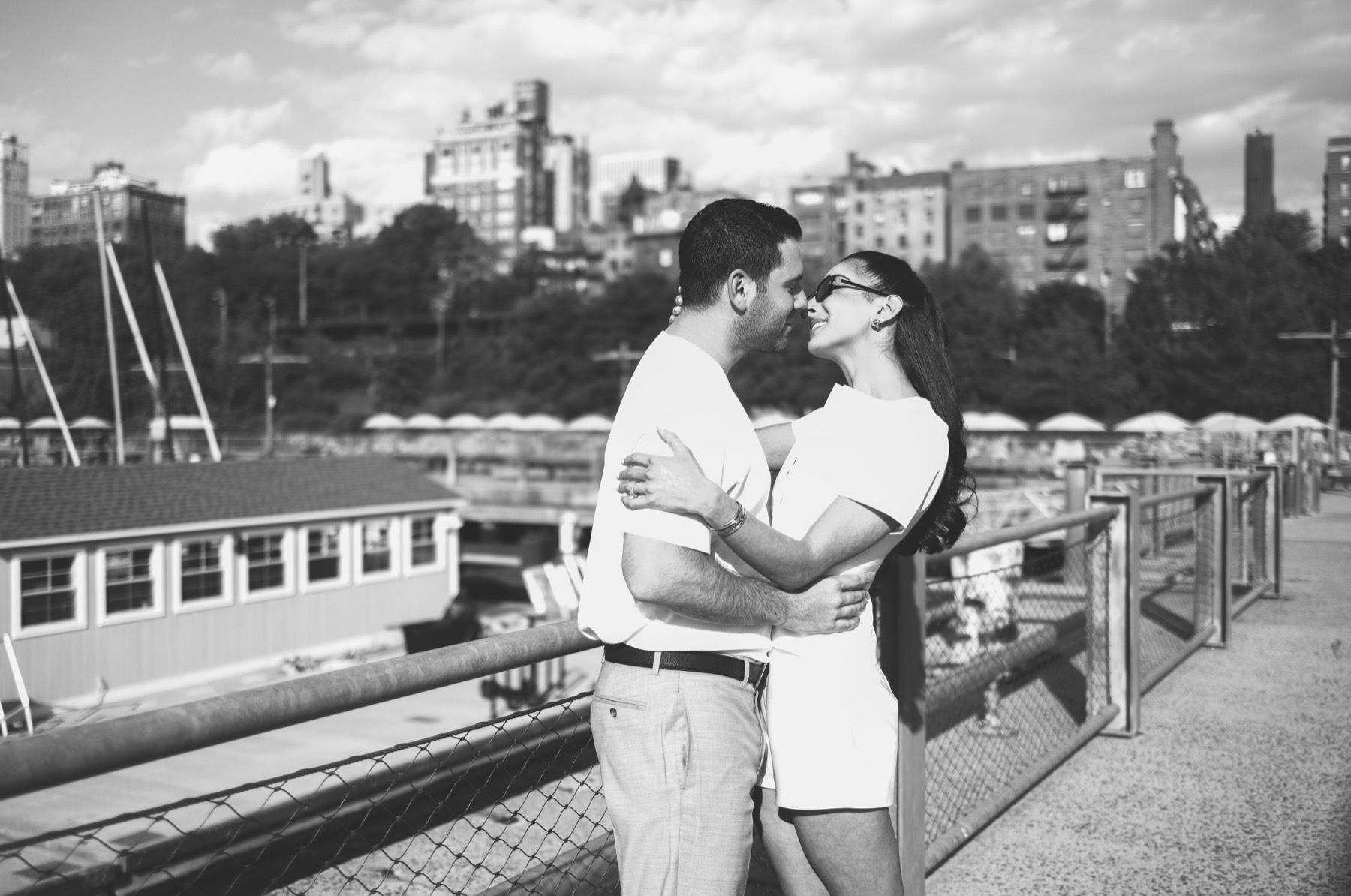
The promenade gives a clean Manhattan skyline, while the nearby residential streets bring brownstones and quieter frames. It is a stronger choice than DUMBO for couples who want Brooklyn to feel lived-in rather than iconic.

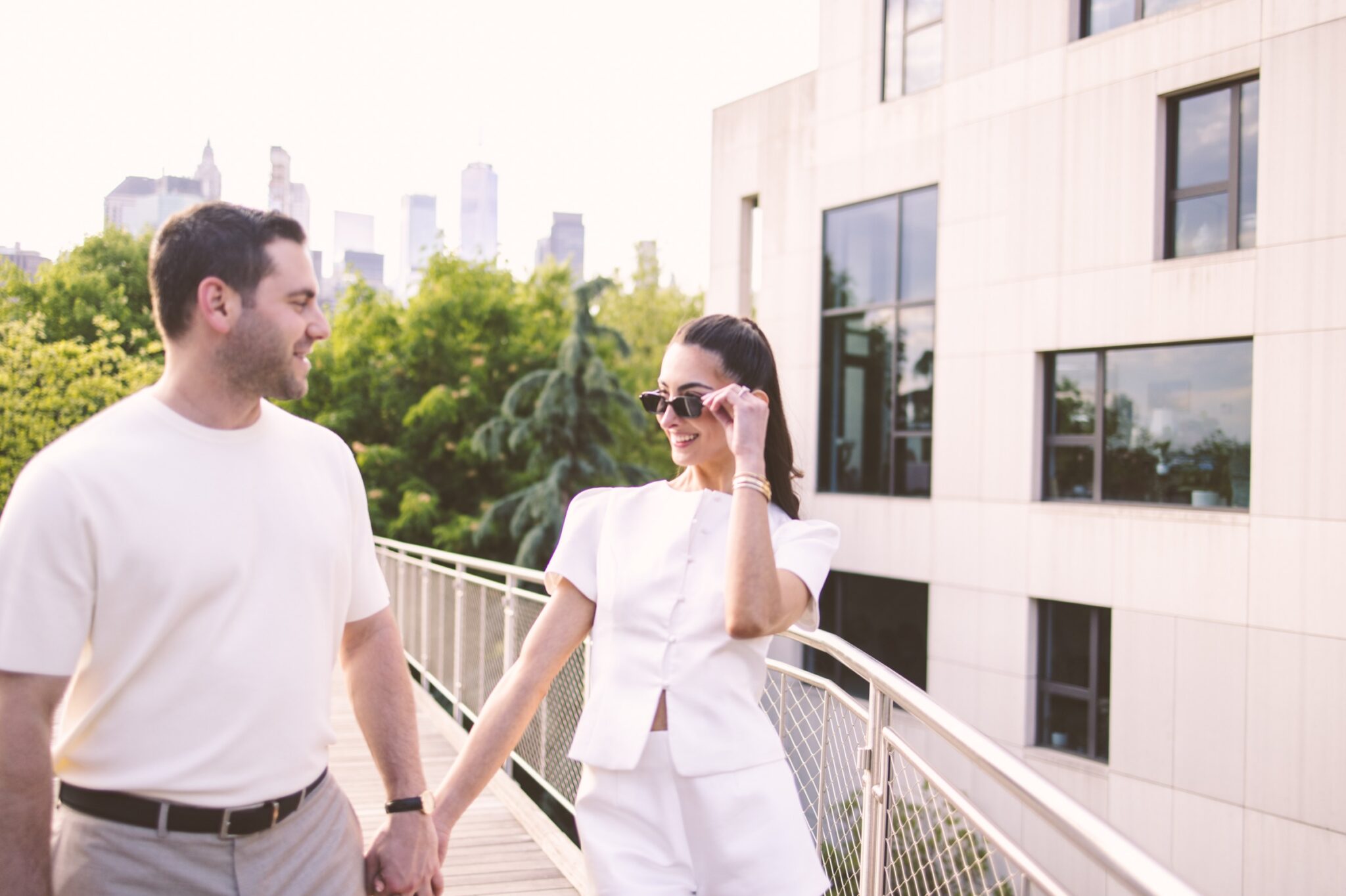
Location 5
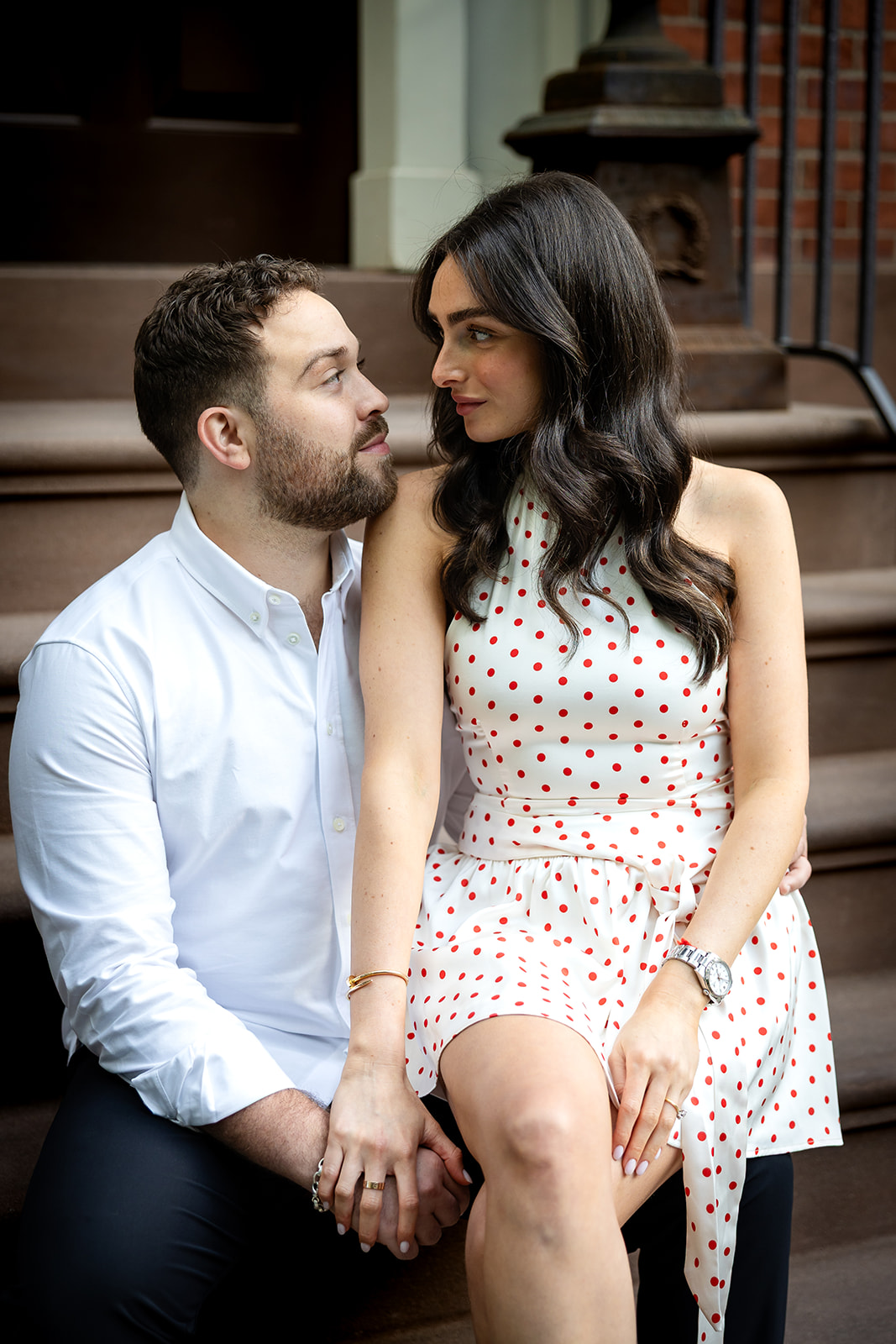
The West Village gives us stoops, tree-lined blocks, small storefronts, and corners that feel recognizably Manhattan without relying on a monument. It works particularly well for couples who want movement, conversation, and a session that feels like a neighborhood walk. Our West Village engagement photos guide compares routes, timing, permits, and rainy-day planning in detail.
Location 6
The arch creates immediate location context, but the surrounding streets often make the better photographs. We use the park as one chapter of a Greenwich Village route rather than spending the entire session inside it.
Location 7
Washington Mews can add cobblestone and small-scale architecture near Washington Square Park. Access is not guaranteed, so it should be treated as an optional stop rather than the entire plan.
Location 8
Soho is strongest early, when the cast-iron façades and broad streets are visible before traffic takes over. It supports both clean architectural portraits and less formal street photographs within a few blocks.
Our SoHo and Tribeca engagement photos guide compares the neighborhoods, efficient routes, timing, permissions, and waterfront planning in detail.
Location 9
Tribeca offers wider streets, masonry, loading doors, and a calmer architectural scale than Soho. It is useful when a couple wants downtown texture without the most photographed corners.
Location 10
The Stephen A. Schwarzman Building exterior creates formal steps, stone, columns, and strong city geometry. Seasonal displays, private events, and pedestrian traffic can change access, so we always build a nearby alternative into the route. This recommendation is for the public exterior only. NYPL states that formal wedding photography inside the building is reserved for couples hosting their wedding there, and formal photography requests require advance review.
Location 11
Bryant Park works as a short second setting beside the library rather than a destination that needs an entire session. Trees, café tables, surrounding towers, and seasonal changes give quick variety.
Location 12
Grand Central gives interior scale, movement, and a setting that cannot be mistaken for another city. It is busiest when commuters need it most, so timing and current photography rules must be checked before the session. Grand Central currently requires a permit for professional equipment or commercial photography. It explicitly treats engagement images as commercial when a photographer uses them on a website or social media to promote the business. This is therefore a planned, permission-dependent location, not a casual rain backup.
Location 13
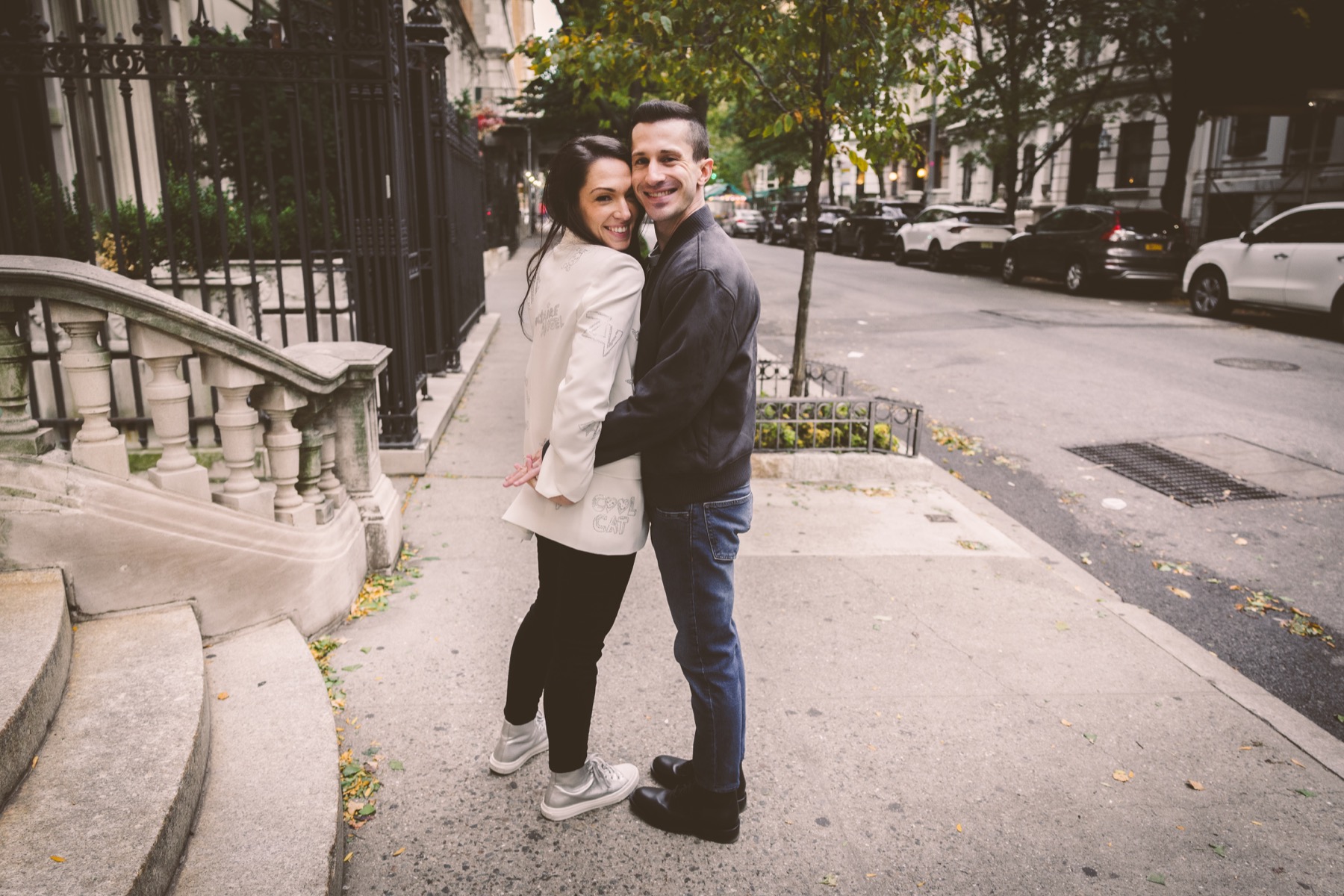
The Upper East Side offers brownstones, limestone façades, neighborhood restaurants, and easy transitions toward Central Park. It is strongest when the route is built around streets and places the couple actually uses rather than treated as a generic park entrance.
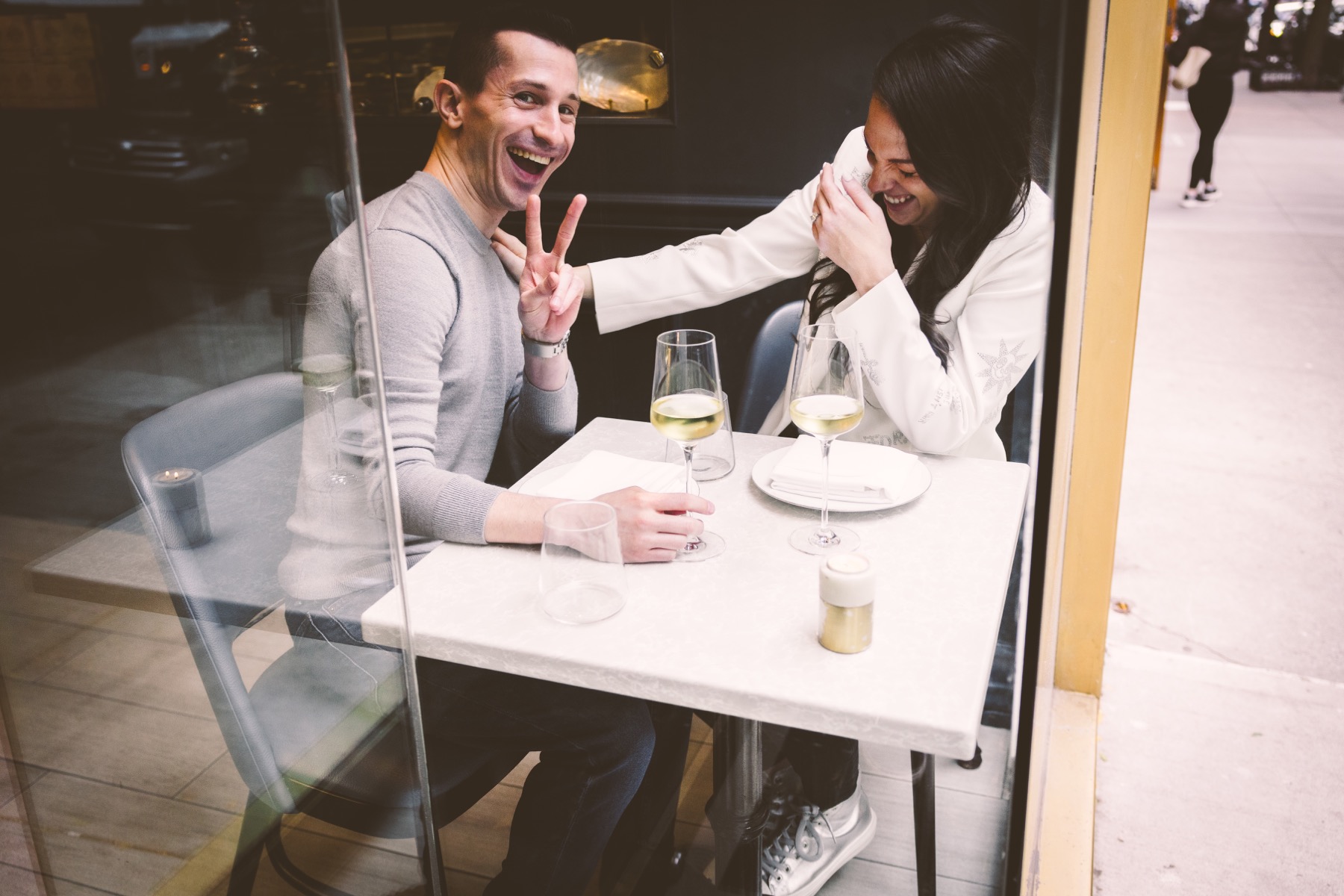
Location 14
The Financial District combines narrow stone streets, modern towers, and strong directional light. It suits couples who want formal clothing, architectural scale, and a quieter weekend route.
Location 15
The Seaport brings historic façades, cobblestone, waterfront light, and a clear view toward the bridges. It pairs naturally with the Financial District without requiring a car.
Location 16
The East Village works when the session should feel personal, energetic, and slightly unpredictable. A meaningful bar, restaurant, record shop, or block can matter more than a famous background.
Location 17
Choose the Lower East Side for fire escapes, storefronts, murals, and evening street light. It is strongest when connected to a real place in the couple's story rather than used as generic city texture.
Location 18
The High Line combines planting, elevated city views, and modern architecture. Crowd levels can dominate the experience, so an early session or a short planned section works better than attempting the entire park.
Location 19
The streets around the Meatpacking District bring cobblestone, brick, glass, and nightlife within a compact area. It can follow a short High Line section and continue into evening light.
Location 20
Rockefeller Center is strongest when the architecture, Fifth Avenue energy, or seasonal decorations are part of the story. Crowd patterns change dramatically throughout the year, especially during the holidays.
Location 21
A private rooftop can create skyline photographs without fighting a public observation deck. Access, wind, building rules, and available time matter more than height. We only recommend this when the couple has legitimate access or the property has approved the session. Our NYC rooftop engagement photo guide explains access types, written permission, observation-deck rules, timing, and weather backups.
Location 22
Roosevelt Island offers river views, open paths, modern architecture, and a different angle on Manhattan. The tram can become part of the experience, but travel and waiting time must be included in the plan.
Location 23
Governors Island provides skyline, historic buildings, open lawns, and distance from city traffic. Ferry schedules make it a self-contained session rather than a quick add-on. The Trust has a formal film and photography application, and site fees depend on the proposed shoot. We confirm whether the planned session requires approval before recommending a date.
Location 24
Prospect Park gives Brooklyn couples a large natural setting with fewer visual associations than Central Park. It is best planned as one compact route based on the season.
Location 25
The garden offers controlled seasonal color and formal landscape design. Brooklyn Botanic Garden requires a permit for professional portrait and engagement photography. Its current special-occasion sessions are scheduled during business hours, limited to 60 minutes, and do not allow indoor photographs. Because policies, fees, and what is blooming can change, we confirm the date directly with the Garden before building the session around it.
Location 26
This area combines East River views, modern landscaping, industrial references, and the Manhattan skyline. It works well for couples who want contemporary Brooklyn rather than brownstones or bridges.
Location 27
Fort Tryon provides gardens, stone paths, river views, and a quieter pace. It is a strong single-location choice when the couple wants a setting that does not feel like Midtown or downtown.
Location 28
Riverside Park offers river light, tree-lined paths, and neighborhood calm along the Upper West Side. It is useful for couples who want greenery without the scale and crowds of Central Park.
Location 29
Snug Harbor combines gardens, brick architecture, columns, and quieter grounds. Because of the travel time, it should be treated as the session rather than paired with Manhattan.
Location 30
Coney Island gives color, boardwalk, beach, amusement architecture, and a deliberately playful atmosphere. It works when the couple wants the location to be part of the story, not simply a background.
Location 31
The most personal NYC engagement photographs may begin somewhere private or familiar. A hotel suite, apartment, neighborhood bar, restaurant, or place from the first date creates context that no public landmark can reproduce. Permission and guest privacy should be arranged before the session.
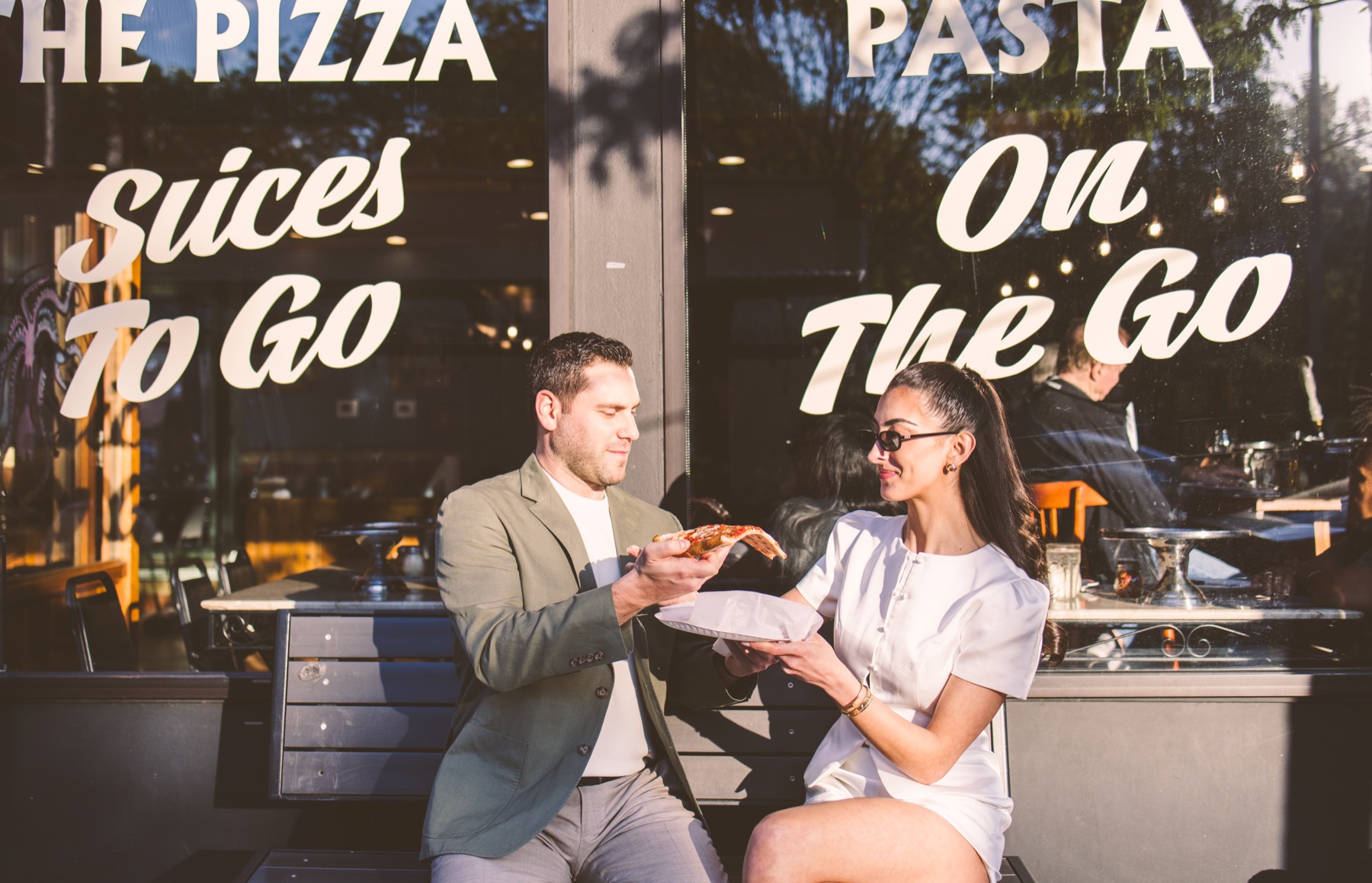
DUMBO and Brooklyn Heights for bridge views, waterfront, and brownstones.
West Village and Washington Square Park for neighborhood streets and one iconic frame.
New York Public Library exterior and Grand Central for formal Manhattan architecture.
Soho and Tribeca for cast iron, masonry, and downtown street photographs.
Financial District and South Street Seaport for stone streets, towers, water, and bridge views.
Choose clothing that fits the location and still allows movement. Formal clothing works well against Manhattan architecture, while a neighborhood session can support something less structured. Shoes matter because most sessions involve far more walking than couples expect. Bring a practical second pair if the planned shoes are not comfortable on cobblestone, park paths, or subway stairs.
Avoid making both outfits compete for attention. Texture, tailoring, and movement tend to photograph better than matching colors. The goal is not to look coordinated with New York. It is to look like yourselves inside it.
Sunrise is useful for DUMBO, Soho, the Brooklyn Bridge area, and other locations where crowds can remove the very architecture you came to photograph. Late afternoon gives softer directional light and can continue into blue hour or city lights. Midday can work in narrow streets or interiors, but it is rarely the default choice for open parks and waterfronts.
Season matters too. Spring flowers, summer heat, fall color, winter wind, and holiday crowds all change the route. We plan for the actual date rather than recycling one location schedule throughout the year.
Rain does not automatically cancel a session, but it changes the plan. Covered streets, hotel interiors with permission, a meaningful bar or restaurant, and short outdoor sections between showers can create a stronger story than forcing a park route. Grand Central is not an automatic rain backup because professional and business-promotional photography requires advance permission. A real indoor backup must be approved and accessible. A lobby that looked open online is not a plan. Use our rainy-day and indoor NYC engagement guide to compare permitted landmarks, private interiors, outdoor rain routes, and rescheduling decisions.
The best location depends on the desired feeling, time of day, season, crowd tolerance, and how much walking the couple wants. Central Park, DUMBO, West Village, Soho, the library area, and South Street Seaport are strong starting points because each supports a complete route.
One focused neighborhood can often be photographed well in 60 to 90 minutes. Two nearby settings generally need 90 minutes to two hours. Adding distant locations can turn photography time into travel time. Our NYC pre-wedding photoshoot guide explains how a more fully styled session differs from a standard engagement session.
Yes, when the locations connect naturally. DUMBO with Brooklyn Heights or the library with Grand Central is far more efficient than combining Central Park and downtown in a short session.
Early morning is best for locations where crowds are the main problem. Late afternoon into evening works for flattering directional light, waterfront sunsets, blue hour, and city lights.
Rules vary by property, equipment, group size, intended image use, and whether the space is public or privately managed. Handheld photography in ordinary NYC park areas may not require a permit, while Grand Central, Brooklyn Botanic Garden, the Central Park Conservatory Garden, and formal interior sessions can have their own requirements. We check the responsible property's current first-party rules for the planned route instead of relying on a generic citywide answer.
We decide whether to embrace the weather, adjust the route, use an approved indoor alternative, or reschedule. The right choice depends on the severity of the weather and the visual goal of the session.
Wear clothing that feels like you, suits the location, and allows you to walk comfortably. Tailoring, texture, and movement matter more than matching colors. Bring practical shoes for moving between setups.
Yes. Blue hour, building lights, traffic, and storefronts can create a strong second chapter after an earlier session. Night photography works best when it is planned around a specific area rather than added casually at the end.
Usually, if the location allows dogs and someone can help when the dog is not in a frame. Build the route around the dog's comfort, crowds, temperature, and transportation.
Book once you know the season and how the photographs will be used. Save-the-date deadlines, travel, hair and makeup, seasonal color, and restricted locations may require more planning than the session itself.
Clothing should work with the route, weather, and amount of walking. Use our guide to what to wear for NYC engagement photos to coordinate formality, shoes, layers, and a possible second outfit.
If you want two distinct settings, use our two-location NYC engagement session guide to compare practical pairings, travel time, outfit changes, sunset sequencing, and routes we would avoid.
The location should help tell the story, not become the entire story. Tell us how you spend time together, what part of New York feels like yours, and what you want the photographs to feel like. We will build the route around that.
Choose the hour after choosing the location. Our guide to the best time for NYC engagement photos compares sunrise, late afternoon, blue hour, crowds, seasons, and building shadows.
Planning an engagement session in New York
Engagement and wedding photography in New York, South Florida and beyond

