
JCP Downtown’s annual benefit filled Tribeca 360° with the kind of energy that comes from a community celebrating its own. The evening moved from a bright cocktail hour into dinner, honoree tributes, speeches, and a spirited live auction, all inside one of Lower Manhattan’s most recognizable event spaces.
The benefit honored Stacy and Jonathan Pollack and raised support for JCP Downtown, the Jewish Community Project serving Lower Manhattan. Our job was to preserve both sides of the story: the scale and polish of the room, and the personal relationships that gave the evening meaning.
Complete nonprofit event photography should show what guests experienced, who made the night matter, and how the program advanced the organization’s mission. That means photographing design, arrivals, conversations, honorees, speakers, reactions, fundraising, and the moments between the formal moments.
Tribeca 360° as a gala setting
Tribeca 360° sits inside a converted printing press building on Desbrosses Street. Its open floor plan, tall windows, and broad city views let an event shift naturally from daylight cocktails to an evening program without moving guests to another venue.
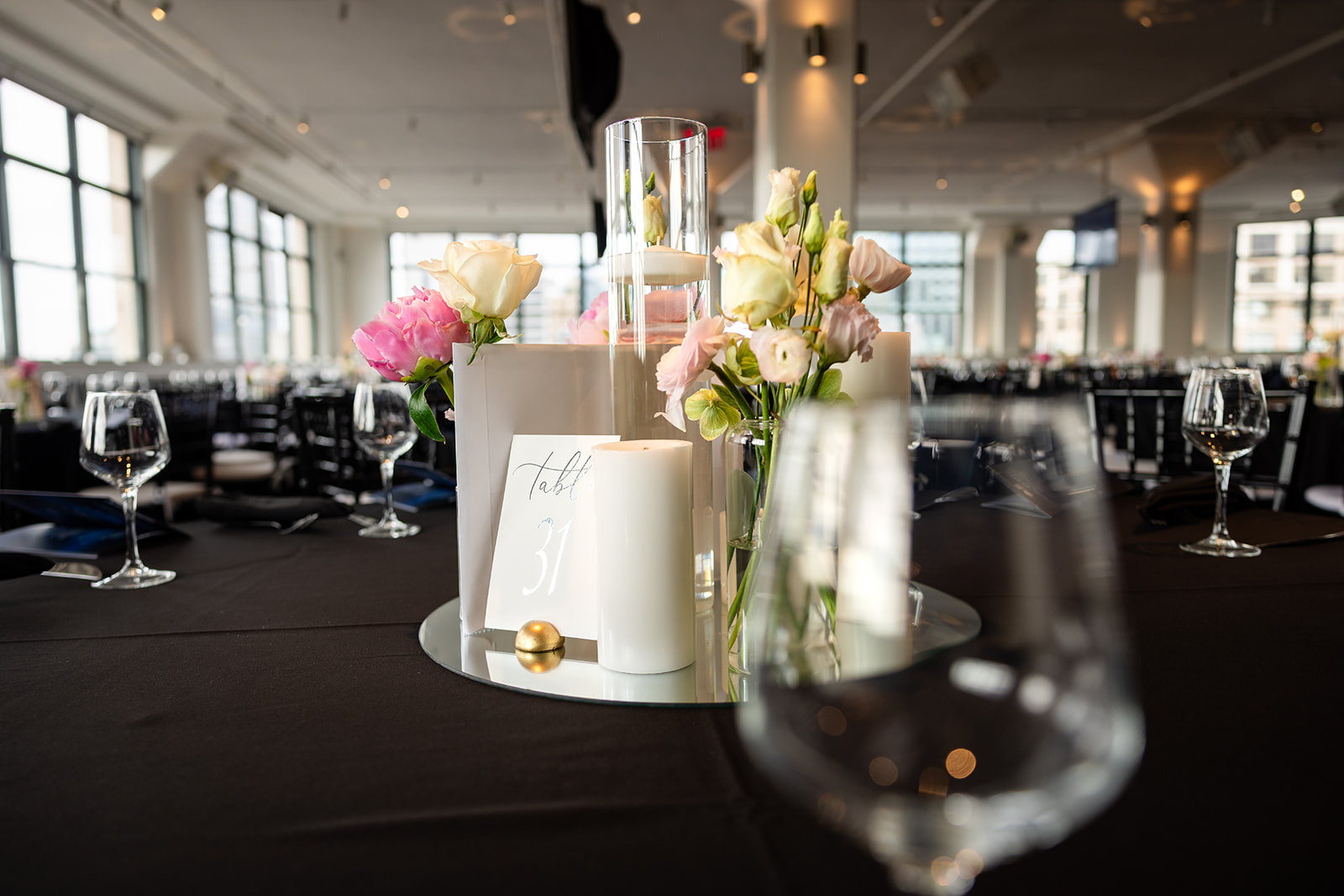
For this benefit, black linens created a strong visual base for soft pink and ivory flowers, candlelight, clear glass, and JCP’s blue event materials. The contrast kept the room modern while the small floral groupings made each table feel warm and conversational.
We photographed the room before guests entered because these quiet frames explain the event’s visual language. Wide photographs establish scale. Tighter photographs preserve the decisions that guests may notice only subconsciously: table numbers, menu cards, glassware, florals, candles, and the placement of screens throughout the room.


A cocktail hour built around connection
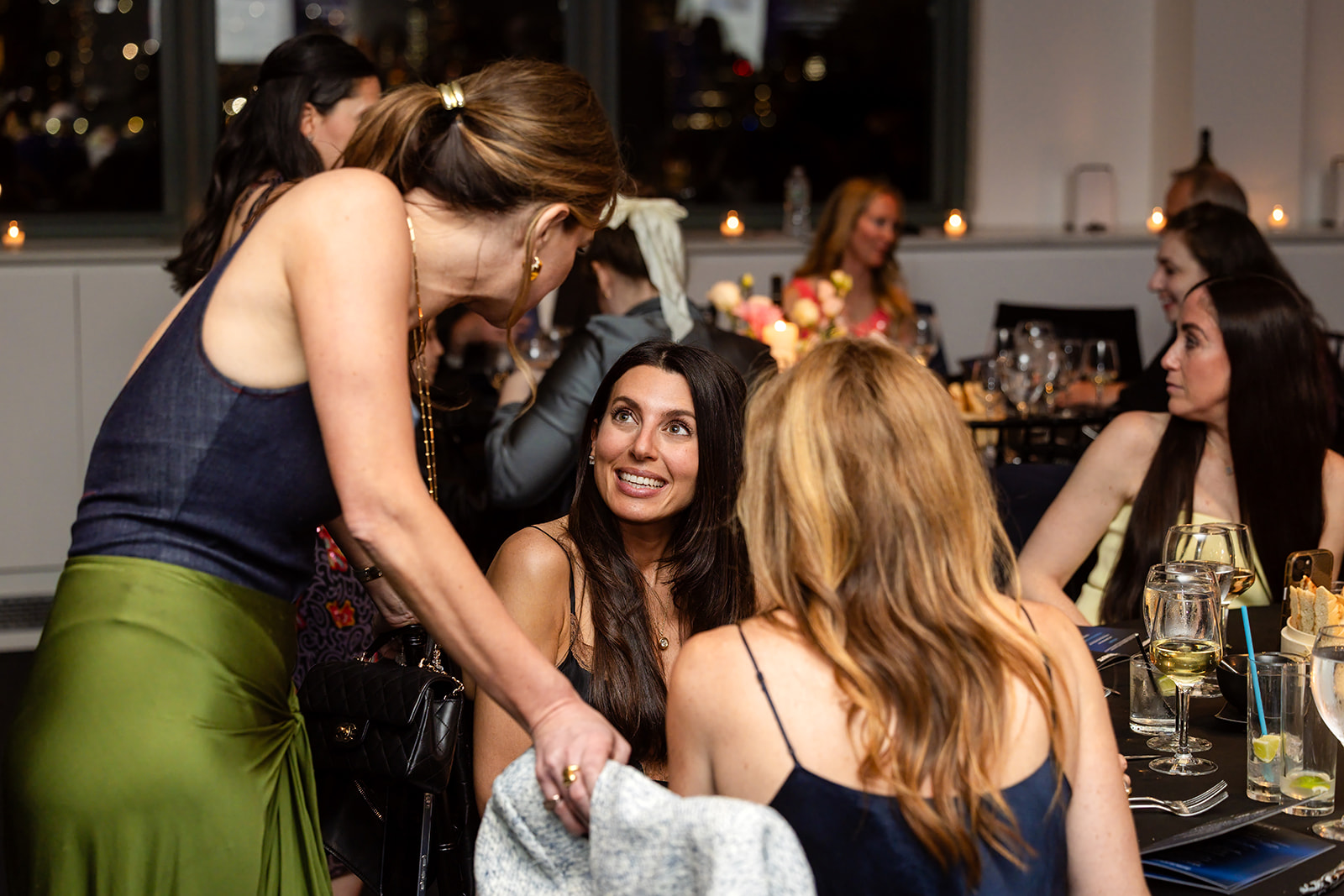
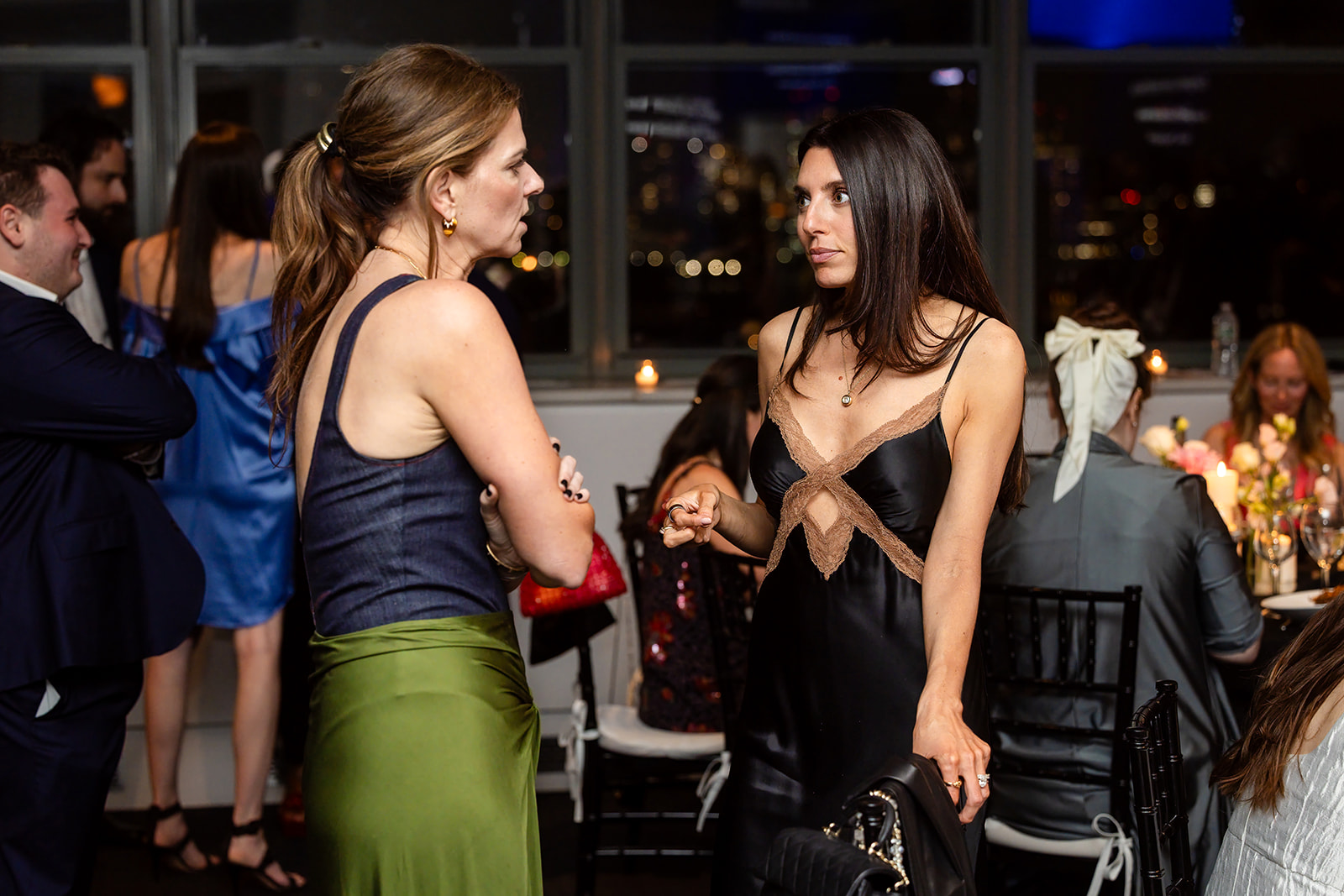
The room changed as soon as the doors opened. JCP’s community arrived ready to see one another, and the cocktail hour quickly became a sequence of hugs, introductions, group portraits, and conversations moving across the windows.
This is where event photography has to stay social without becoming intrusive. We keep enough distance for a conversation to remain natural, then move closer when the expression becomes the frame. A complete gallery needs both the broad view of a busy reception and the smaller gestures that reveal how people know one another.


Honoree tributes, speeches, and a live auction
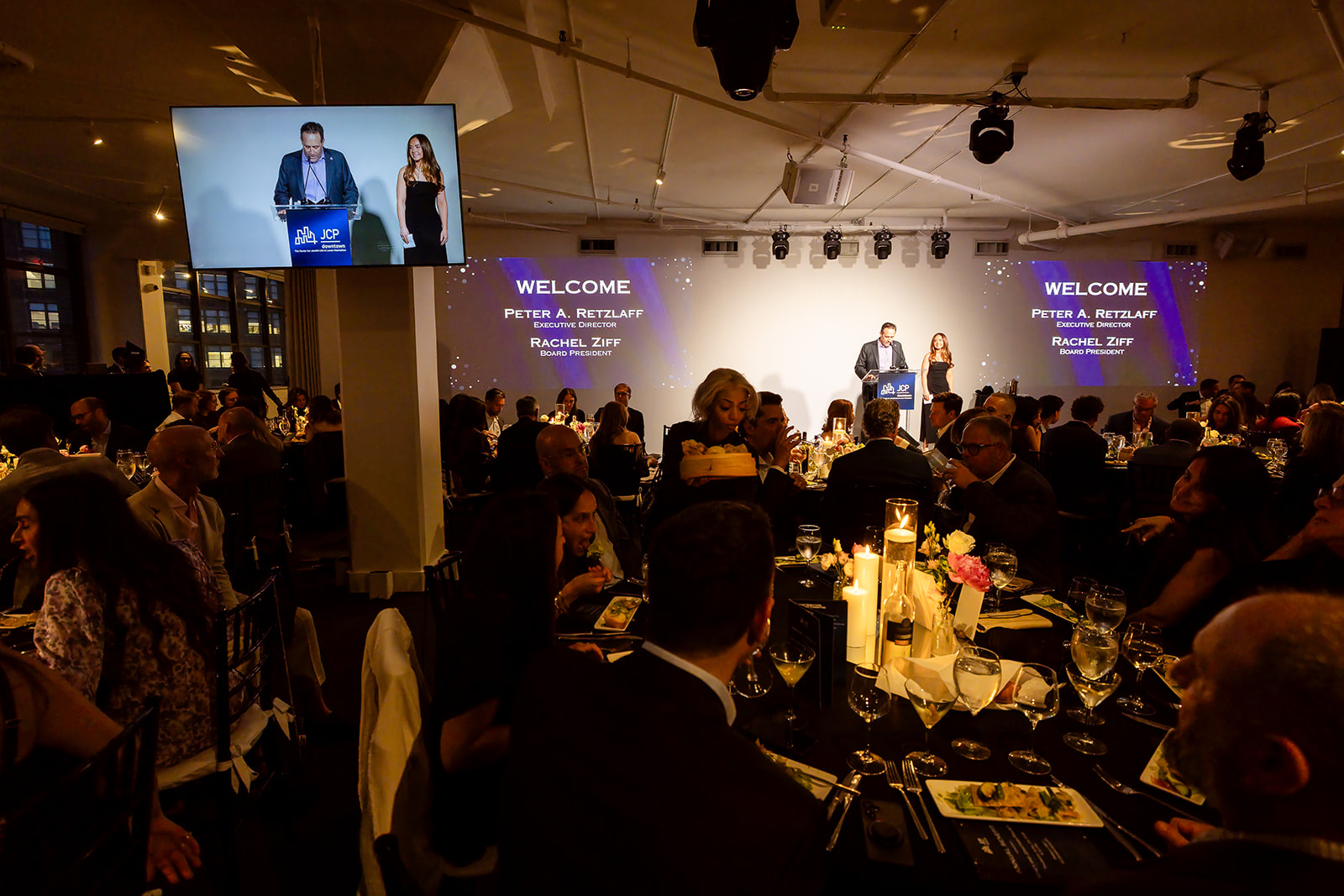
Once guests were seated, the visual challenge changed. The program honored Stacy and Jonathan Pollack while speakers reflected on JCP’s role in building an inclusive, pluralistic Jewish community downtown. The room needed to feel attentive, not static.
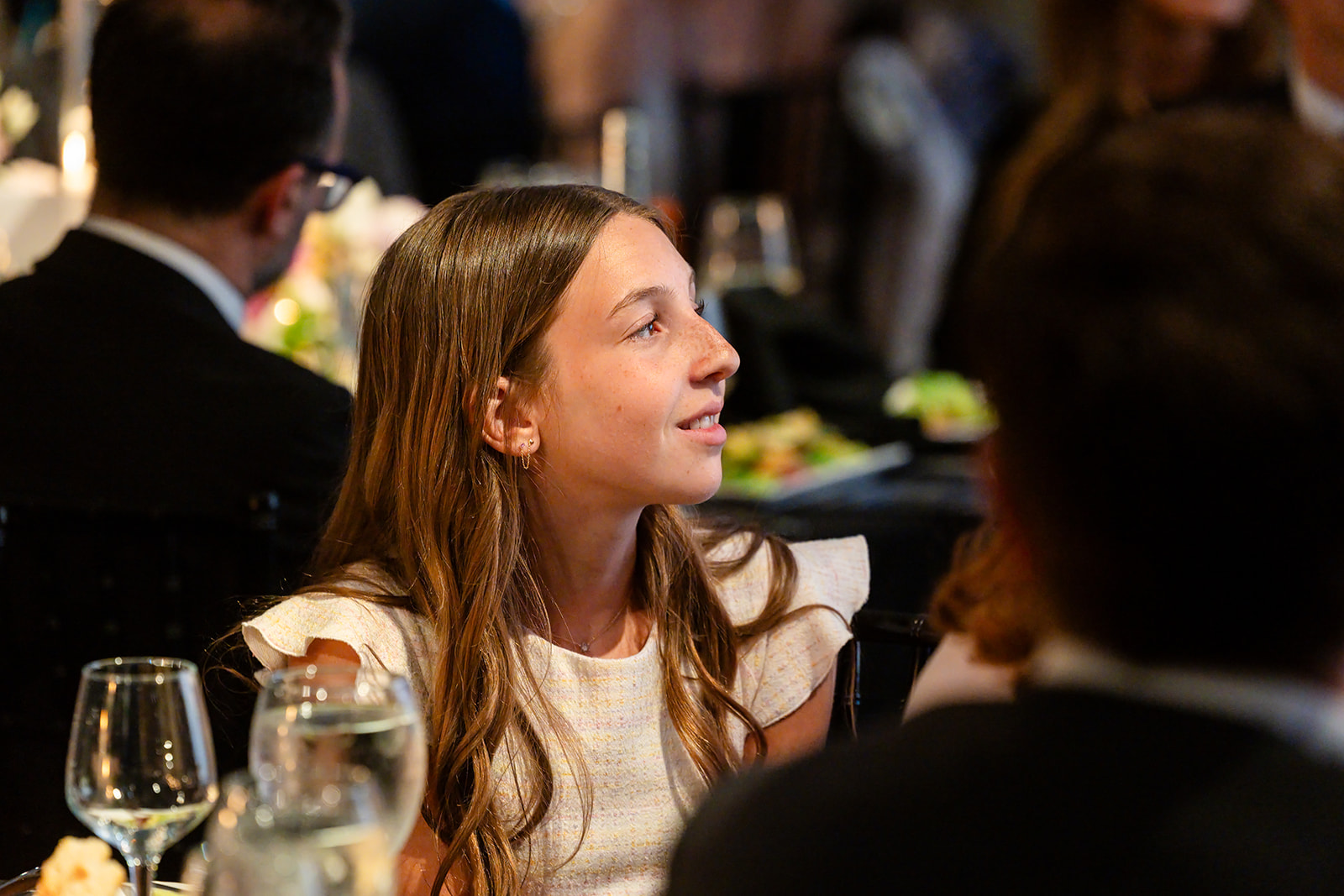
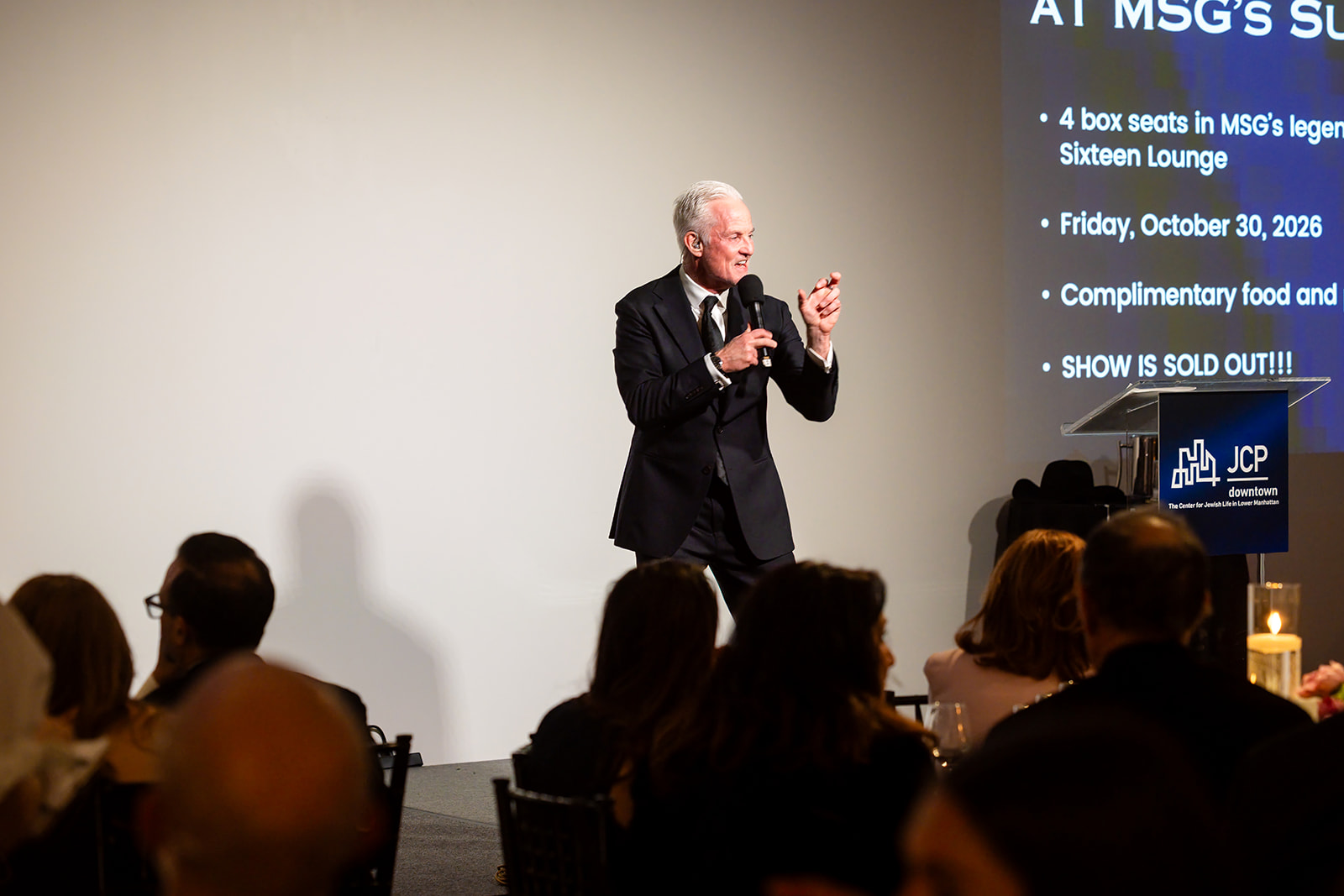
We worked between the stage and the tables, photographing speakers cleanly against the event graphics, then turning back toward the audience for laughter, applause, and quiet reactions. Those audience photographs connect a speech to the people receiving it.
The live auction raised the pace again. The auctioneer moved quickly, bids came from around the room, and the screens supplied context for each lot. We photographed the performance on stage, the projected items, and the audience participation that turned fundraising into shared entertainment.






What complete nonprofit event photography preserves
A benefit gallery has more than one audience. The organization needs photographs for donors, annual reports, press, social media, future invitations, sponsorship outreach, and institutional history. Honorees and guests also want photographs that feel personal rather than purely promotional.
That is why we photograph in layers. Establishing images show the venue and attendance. Brand photographs document signage and screens. Portraits identify community leaders and honorees. Candids show connection. Program coverage records the mission in action. Together, those layers become a useful archive rather than a folder of isolated highlights.
For more examples of event coverage, see the Highstyle Rentals gala, Pure Barre at SUMMIT, and Nicole + Felicia at Kleinfeld.
Tribeca 360 event photography FAQ
What should a nonprofit benefit photography timeline include?
Allow time for the completed room, sponsor and brand details, leadership portraits, guest arrivals, cocktail hour, the full stage program, honoree reactions, fundraising, and closing photographs.
Why photograph the room before guests arrive?
The empty-room photographs preserve the design, table layout, florals, signage, screens, and venue scale before coats, bags, and service activity change the scene.
How do you photograph speeches without distracting guests?
We establish clean positions before the program begins, work quietly between the stage and audience, and avoid unnecessary movement during emotional remarks.
What images are most useful after a fundraising gala?
Organizations usually need a balanced set of honorees, donors, speakers, sponsor branding, venue views, audience reactions, fundraising action, and natural community moments.
Organization and event: JCP Downtown Annual Benefit
Honorees: Stacy and Jonathan Pollack
Venue: Tribeca 360°, part of Apogee Events
Photography: Julian Ribinik Studios
Additional production partners were not listed in the gallery or on the organization’s published event page, so they have not been guessed here.
Tell us what you’re planning.
Share your venue, program, and photography priorities. We will show you how we would photograph the complete event, protect the guest experience, and build a useful visual archive for your organization.
Source note: Event purpose, honorees, program format, and venue were checked against JCP Downtown’s official event page. Venue ownership was checked against Apogee Events and Tribeca 360° materials.
