Pendry Natirar Wedding: Alyssa and Joe at The Mansion at Natirar
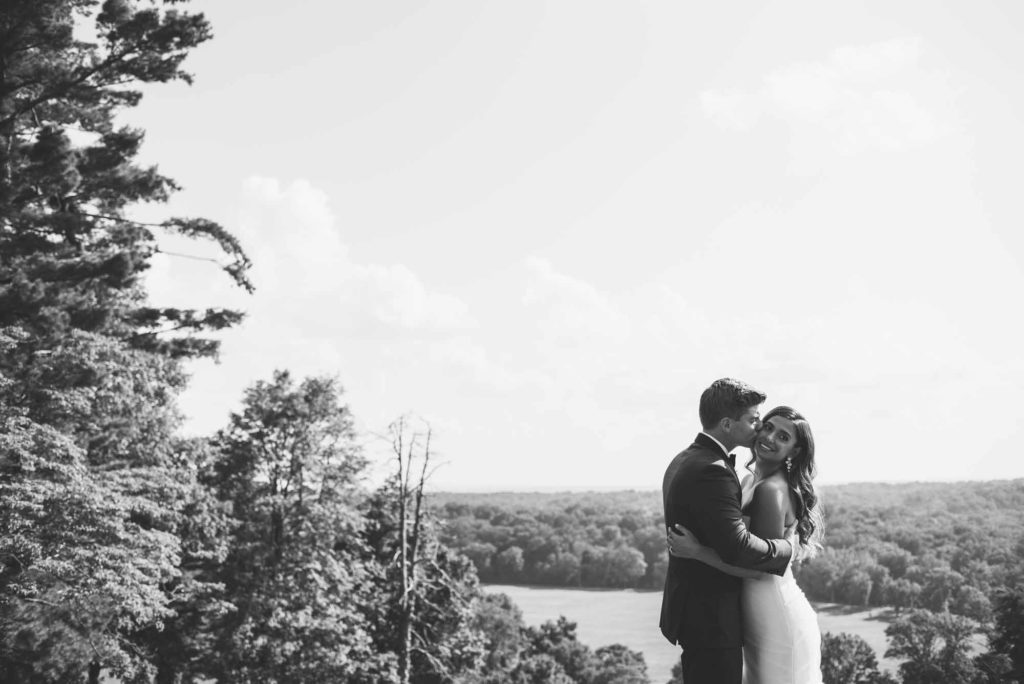
There is a moment at Natirar that I wait for at every wedding I shoot there. The couple turns to face each other under the arch, and behind them the ground just falls away into five hundred acres of Somerset County farmland with nothing man-made in the frame. No road. No neighbor. No parking lot hiding behind a hedge. Just hills.
Alyssa and Joe got that moment at half past six on an evening in August, and it is the reason I keep telling couples that this property does something almost no venue within an hour of Manhattan can do.
Their wedding was at Pendry Natirar, back when the estate still went by The Mansion at Natirar. Where I describe spaces below I have used the current Pendry names, so you can match them against a quote you are being given today.
Here is their whole day, and everything I have learned about photographing this estate.
How Alyssa and Joe met
They met in college and were friends first, which is usually the version that lasts. Somewhere near the end of school that changed, and by the time they got to Natirar they had been together seven years.
You can see it in the pictures. Seven years in, nobody is performing for the camera. There is a particular ease to couples who stopped being nervous around each other a long time ago, and it makes my job easier and the photographs better.
Their brief to me was traditional with a modern edge, and Natirar suits that exactly. The Mansion is historic, built in the early 1900s for Kate Macy Ladd, so the formality is real rather than staged. The estate changed hands over the years and Pendry reimagined the grounds under the Pendry Natirar name, which is why you will see it listed under two names. The old part is actually old. The rest is new and does not pretend otherwise.
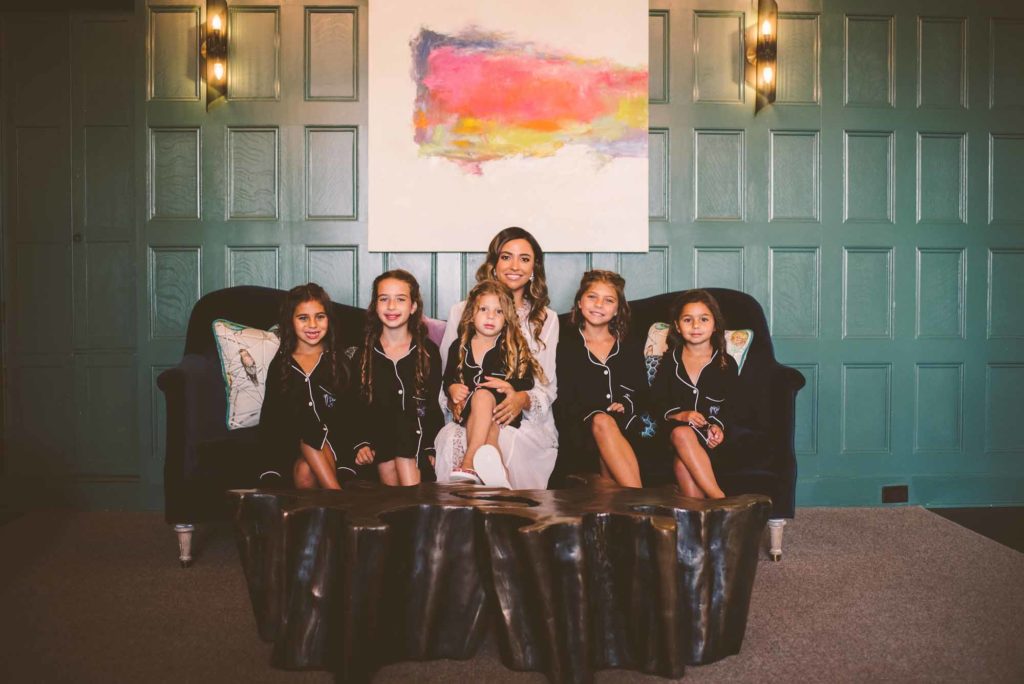
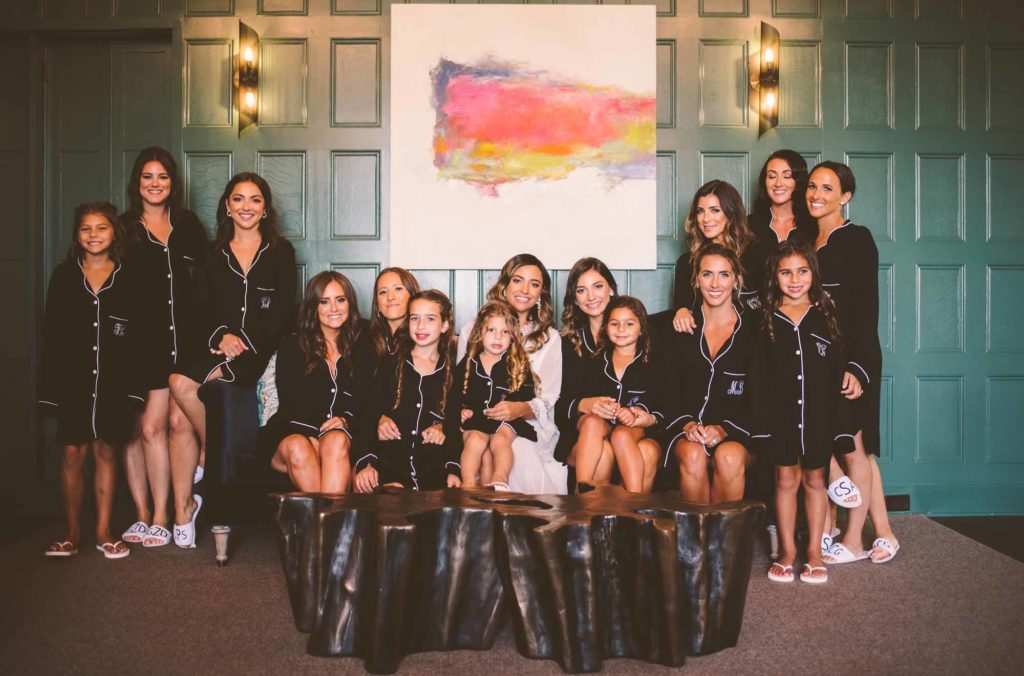
Getting ready in the mansion
Alyssa got ready inside the mansion, and this is the first advantage of the property that couples underestimate.
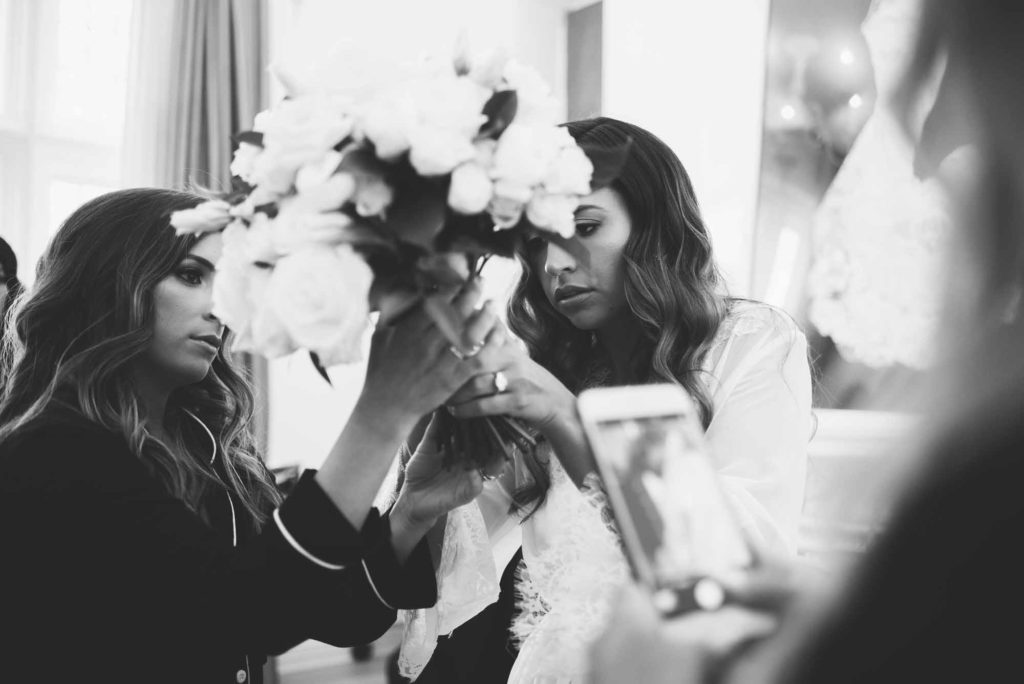
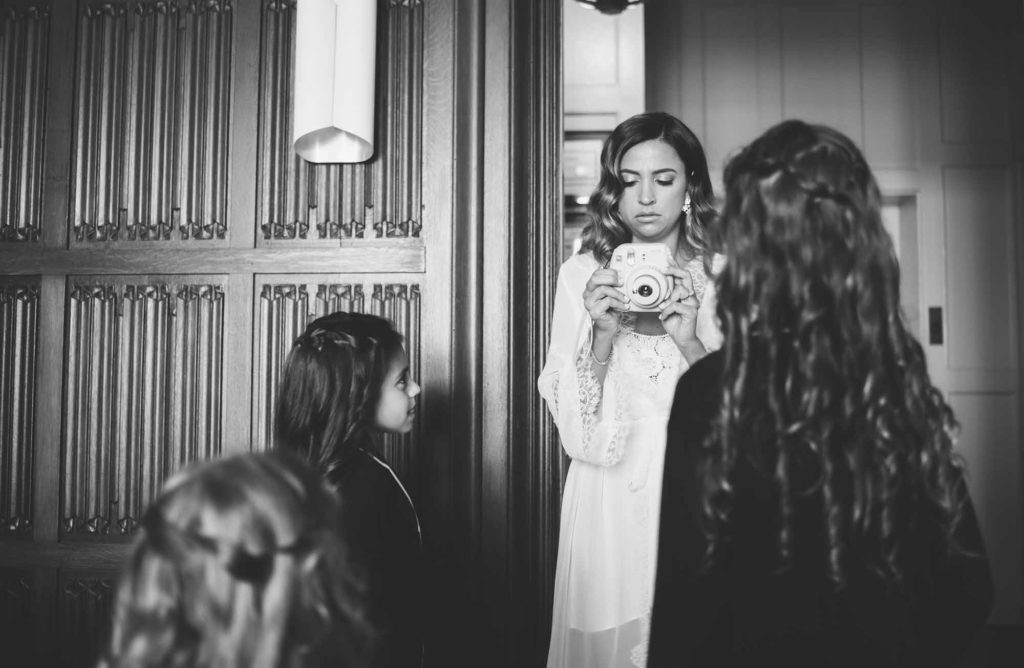
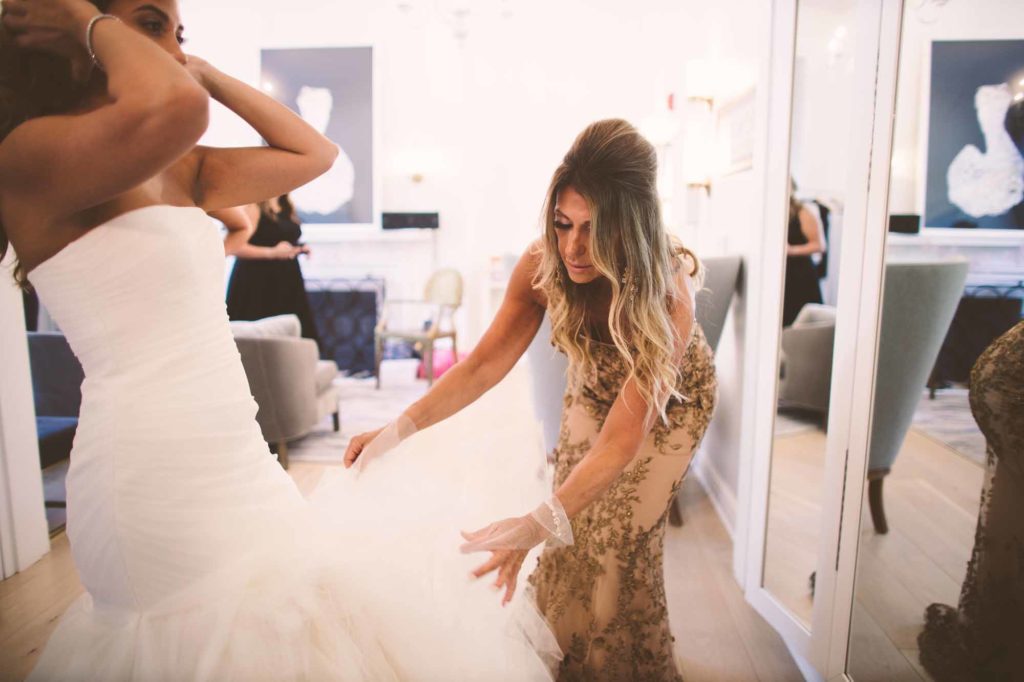
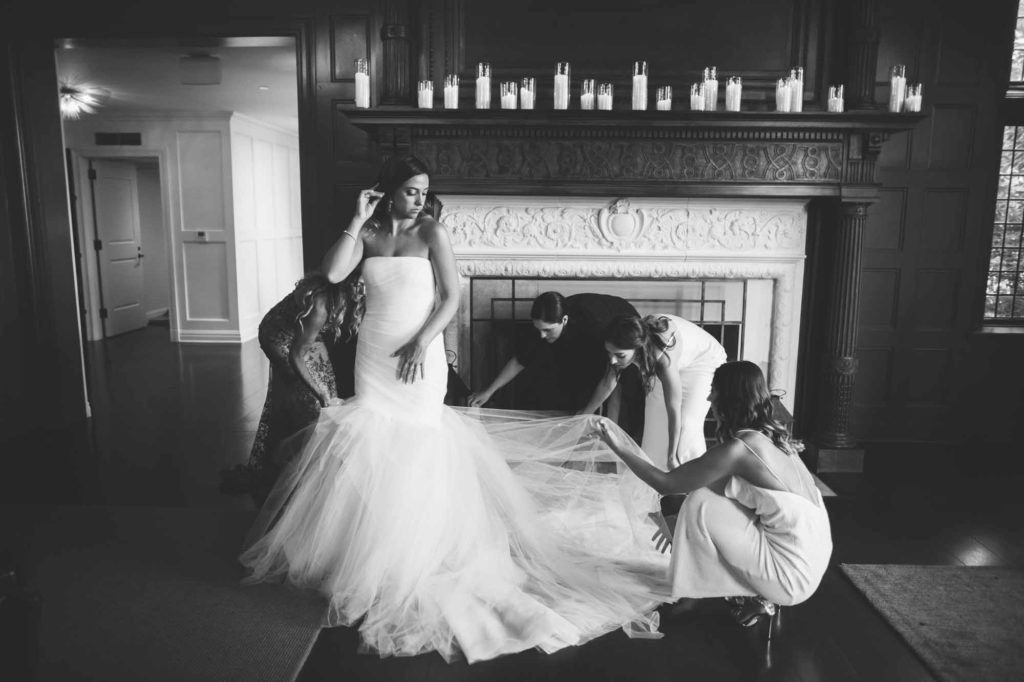
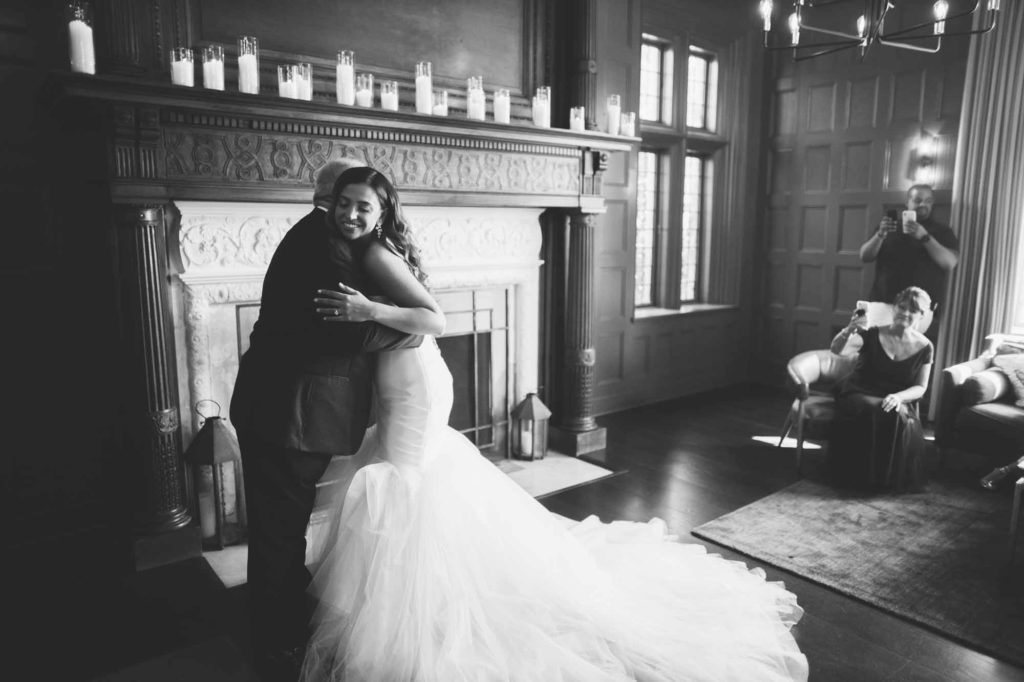
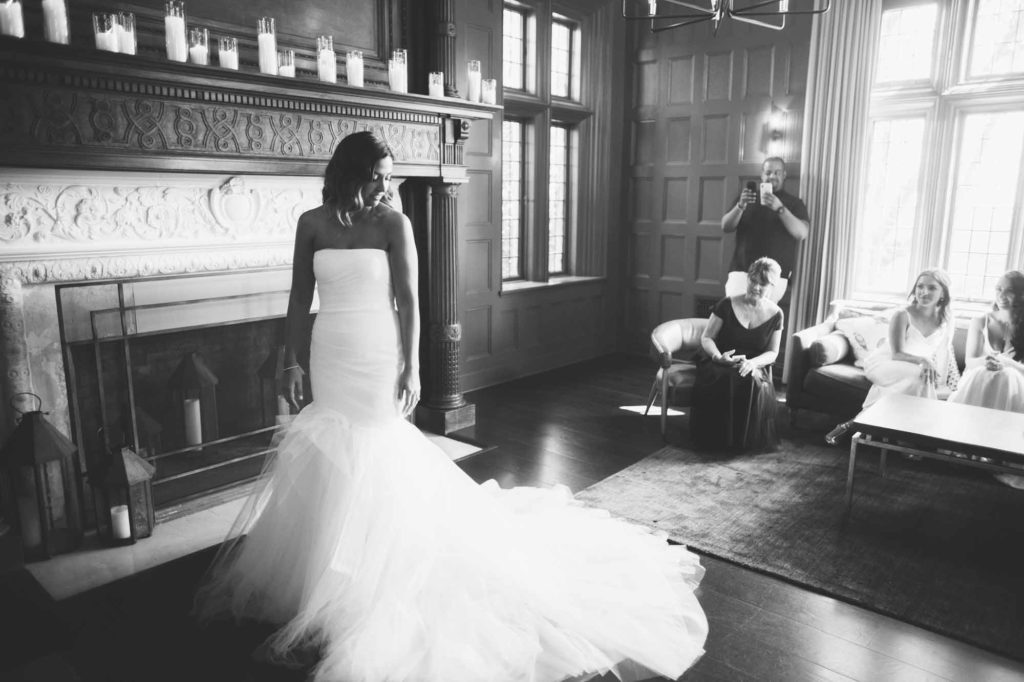
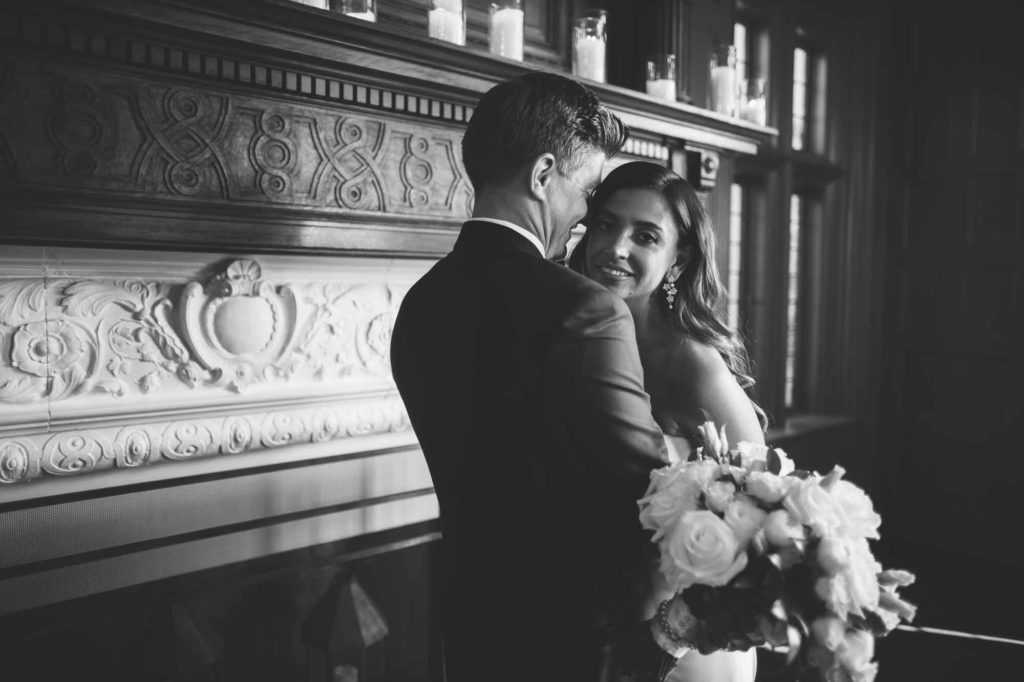
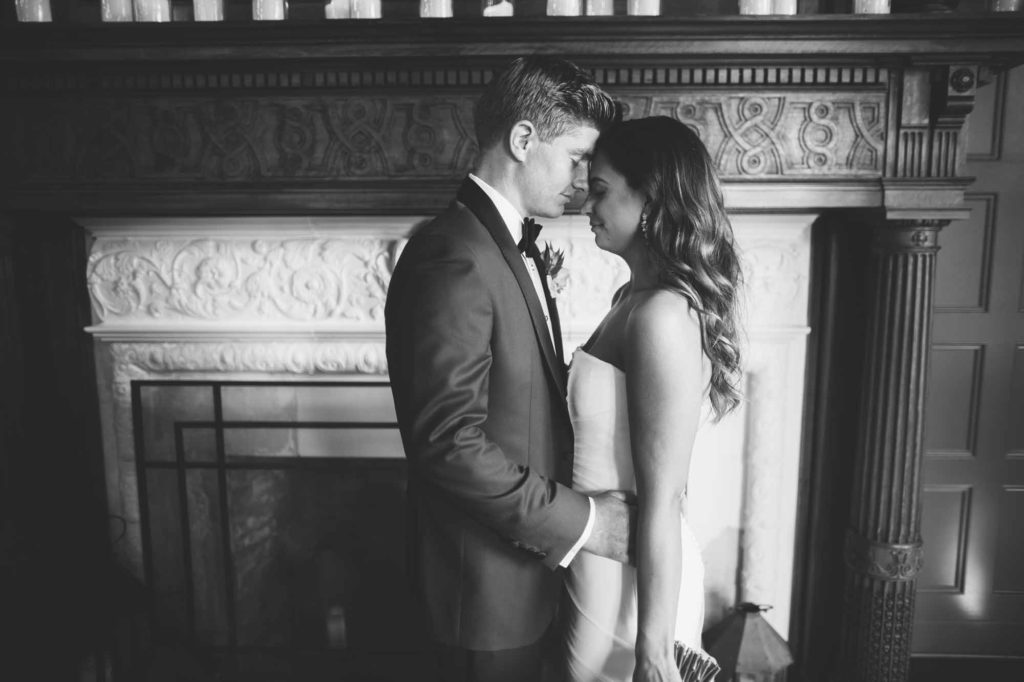
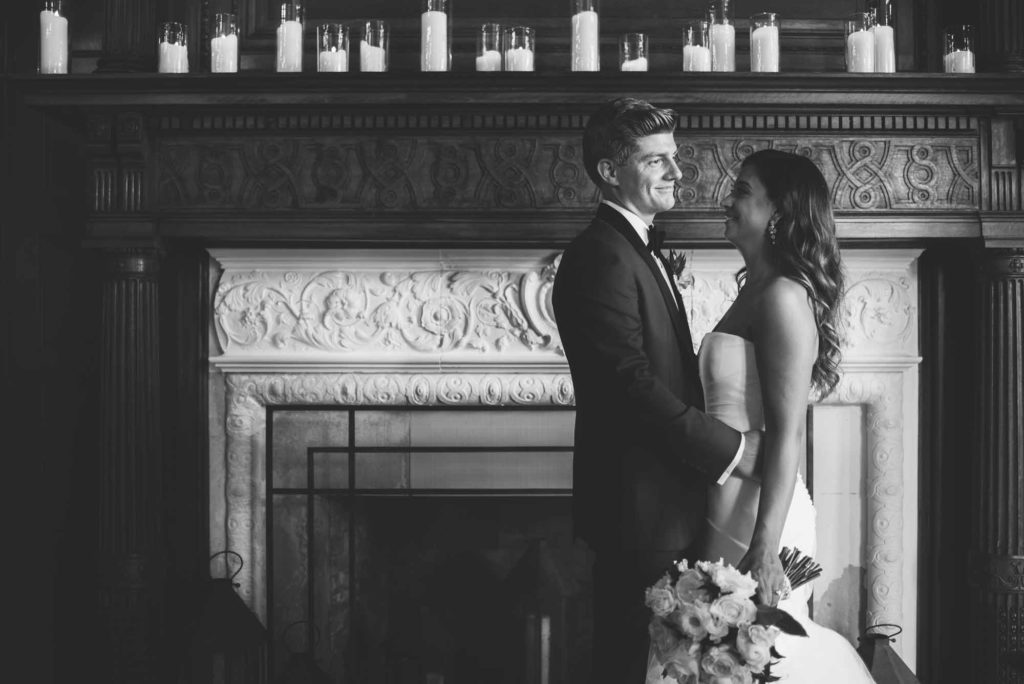
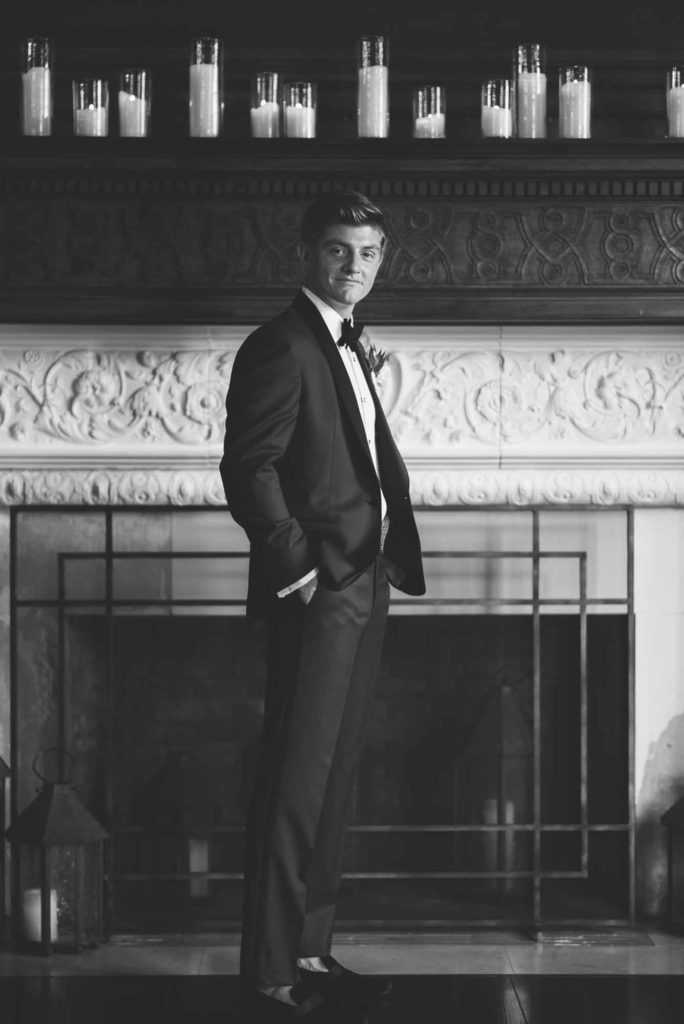
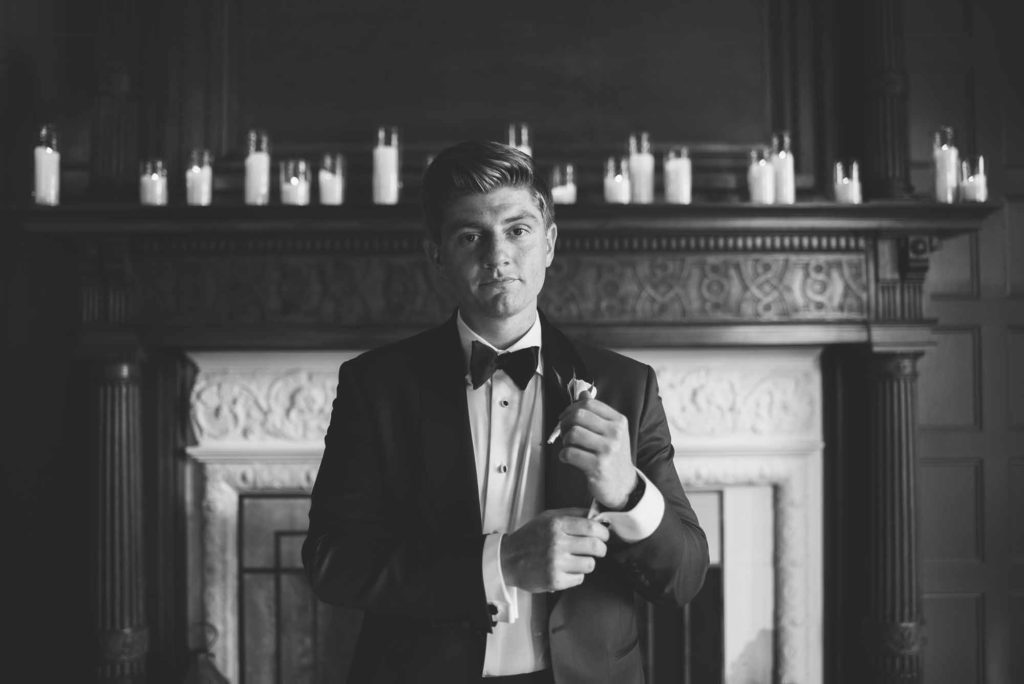
Most getting-ready photographs are made in hotel rooms, and hotel rooms are small, beige and lit from the ceiling. Natirar gives you carved stone fireplaces, dark paneled walls, tall windows and candles already on the mantel. I photographed her attendants fixing the tulle of the Vera Wang train in front of a fireplace that has been in that room for over a century.
The light is the other half of it. Those windows are large enough that on a bright day the whole room becomes a softbox. Almost nothing in the early part of Alyssa and Joe’s day needed a flash.
About the Vera Wang gown
The dress had a longer history than the wedding did.
In her early twenties, Alyssa went dress shopping with a friend. They tried a few places and ended up at Vera Wang, and she left knowing where she would be going when it was her own turn. Years later, when it was, she looked at a few stores and then went back.
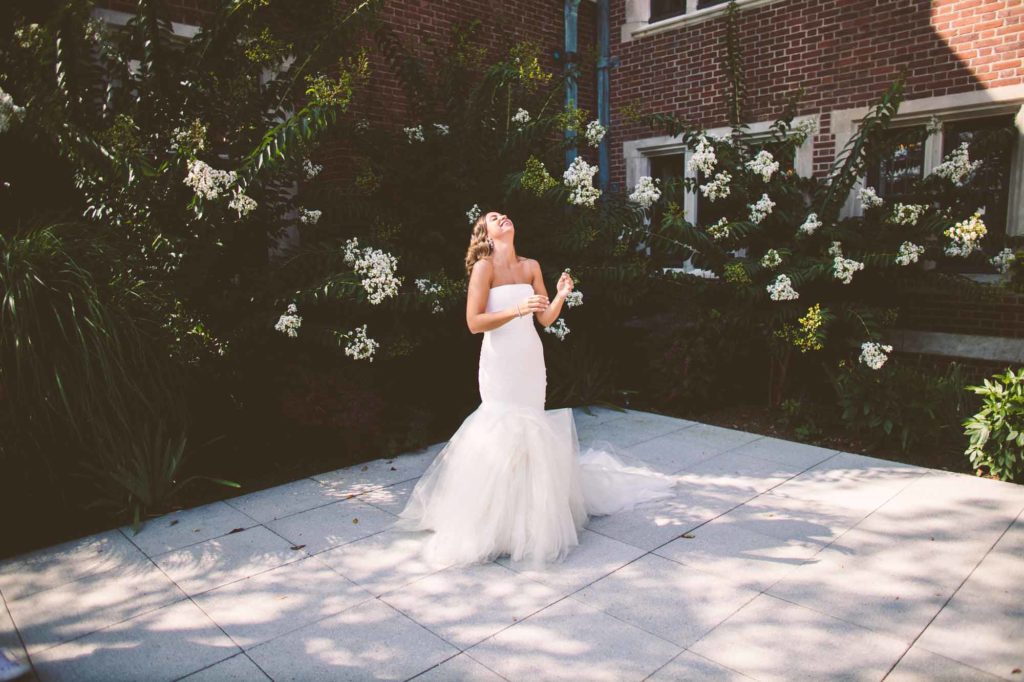
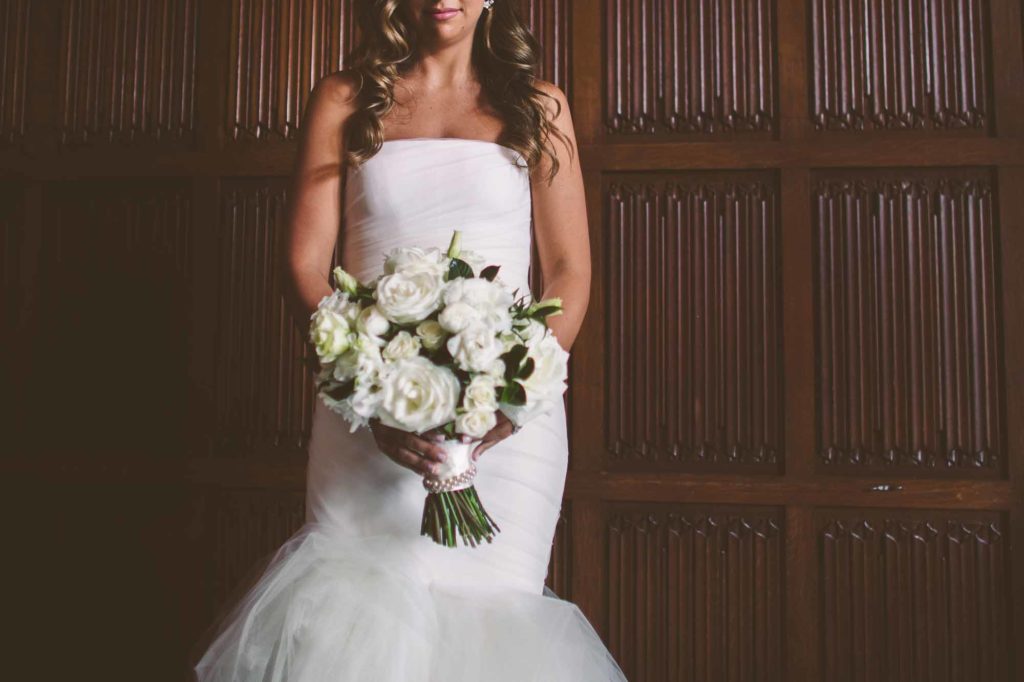
What she wanted was a gown that was not too much and not too little, and she found it. Strapless, fitted through the body, then breaking into tulle. It is a gown that moves, which matters more than couples expect, because a dress that moves gives me something to photograph in every frame where she walks, turns or dances.
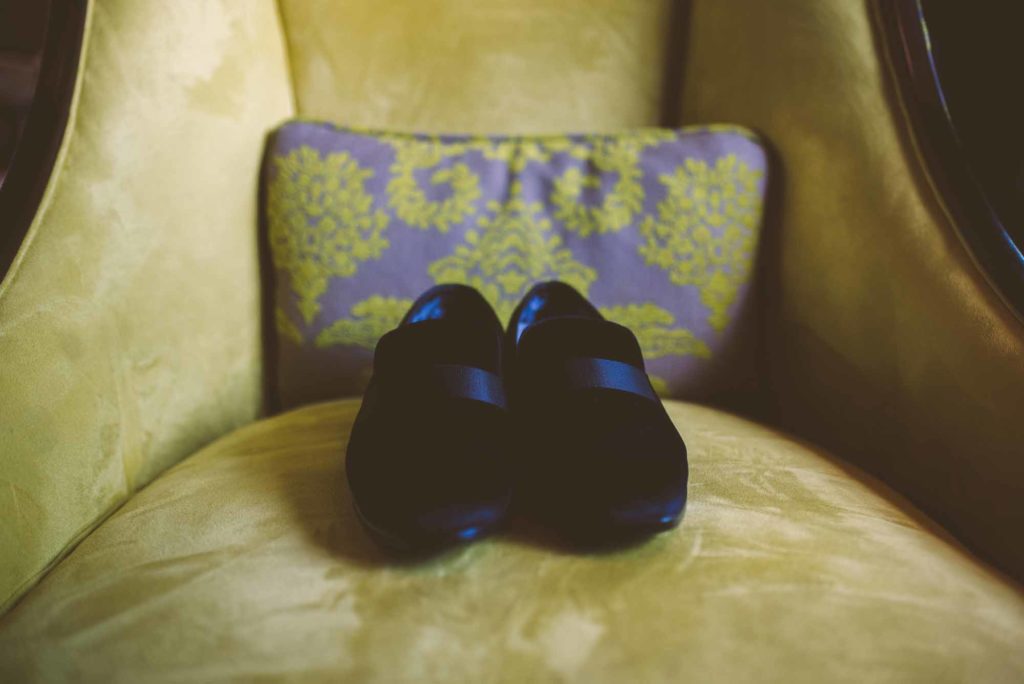
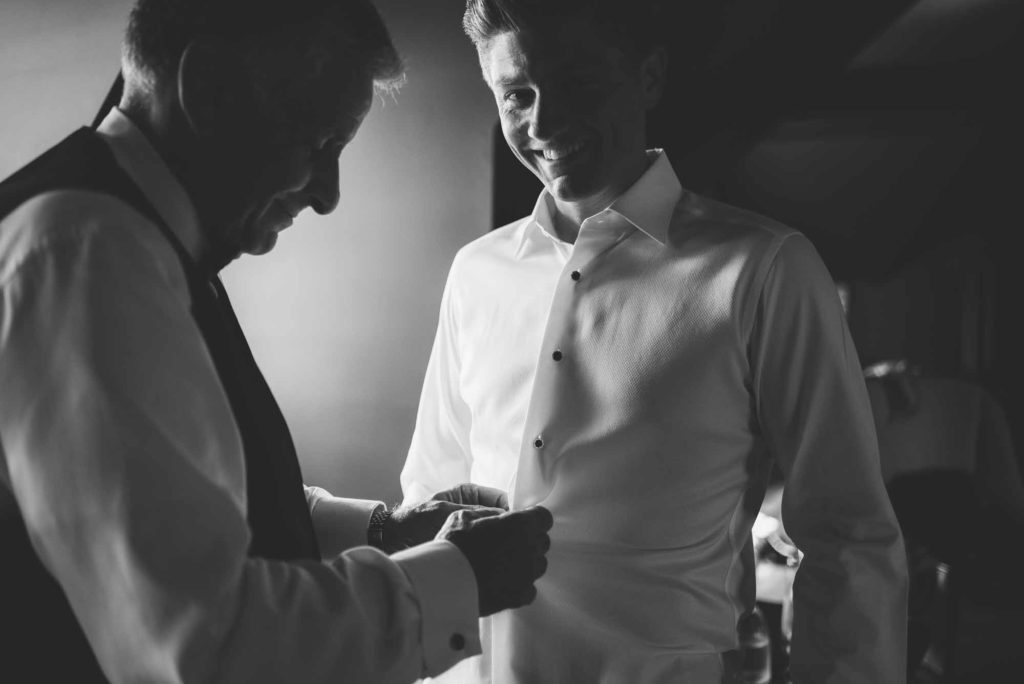
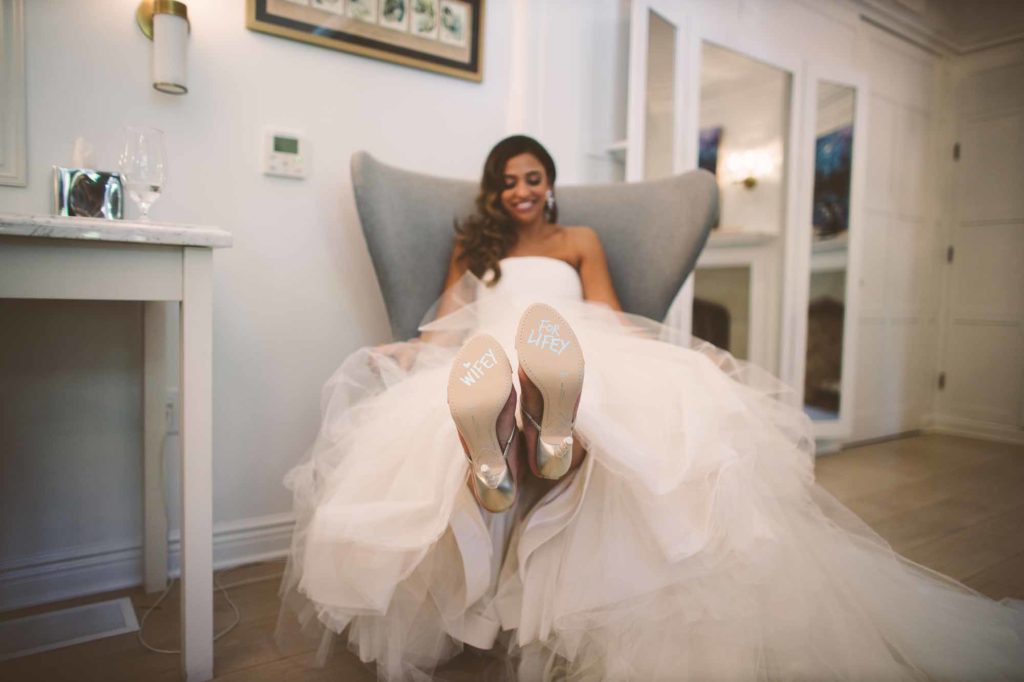
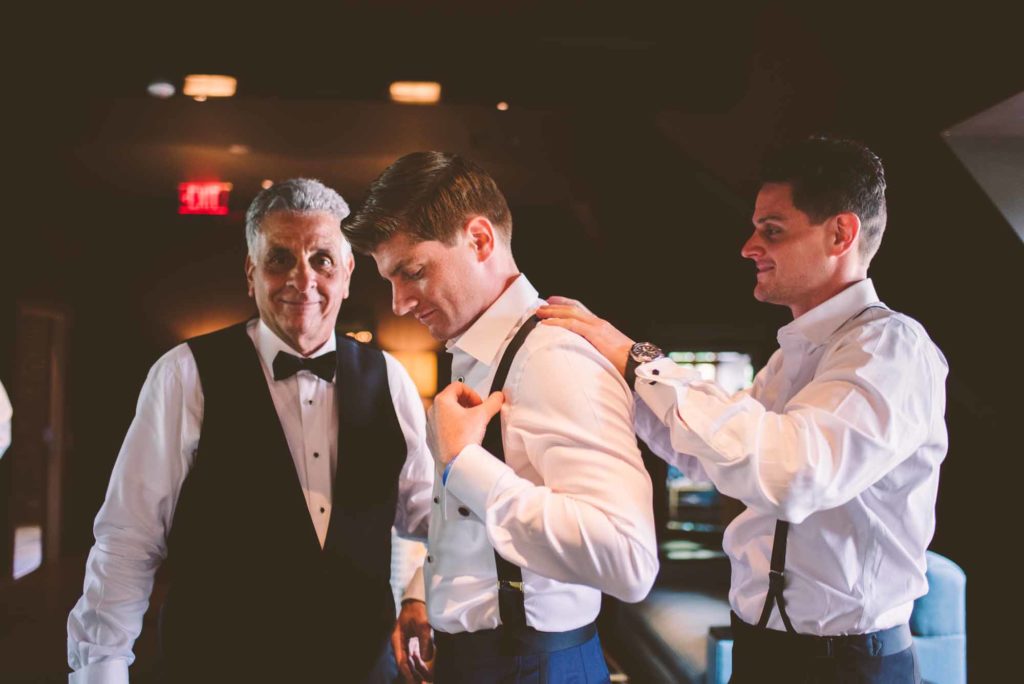
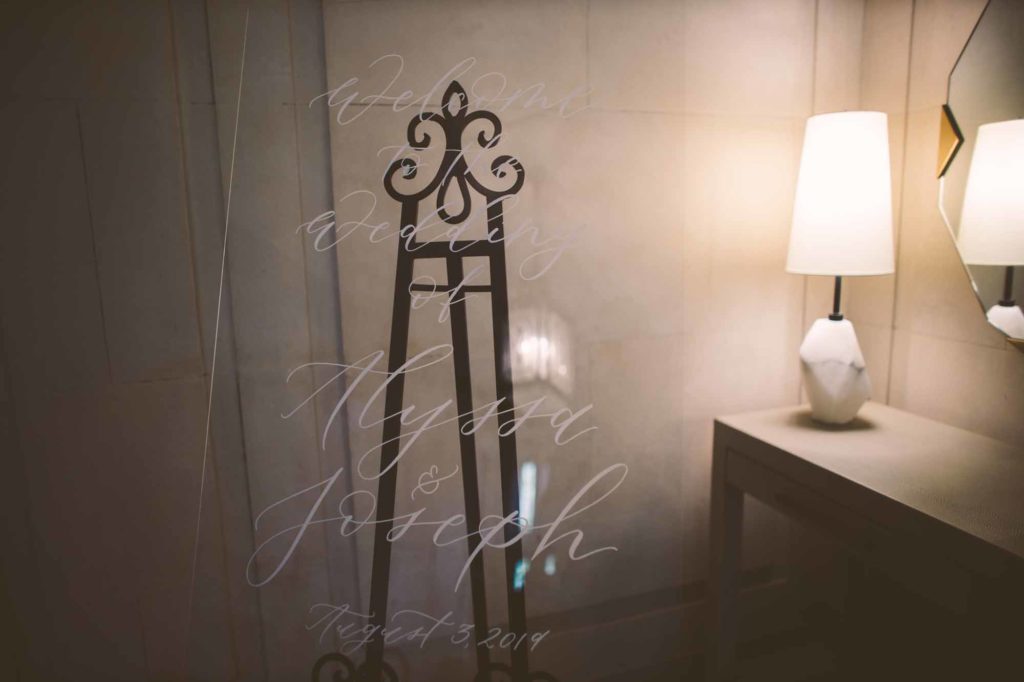
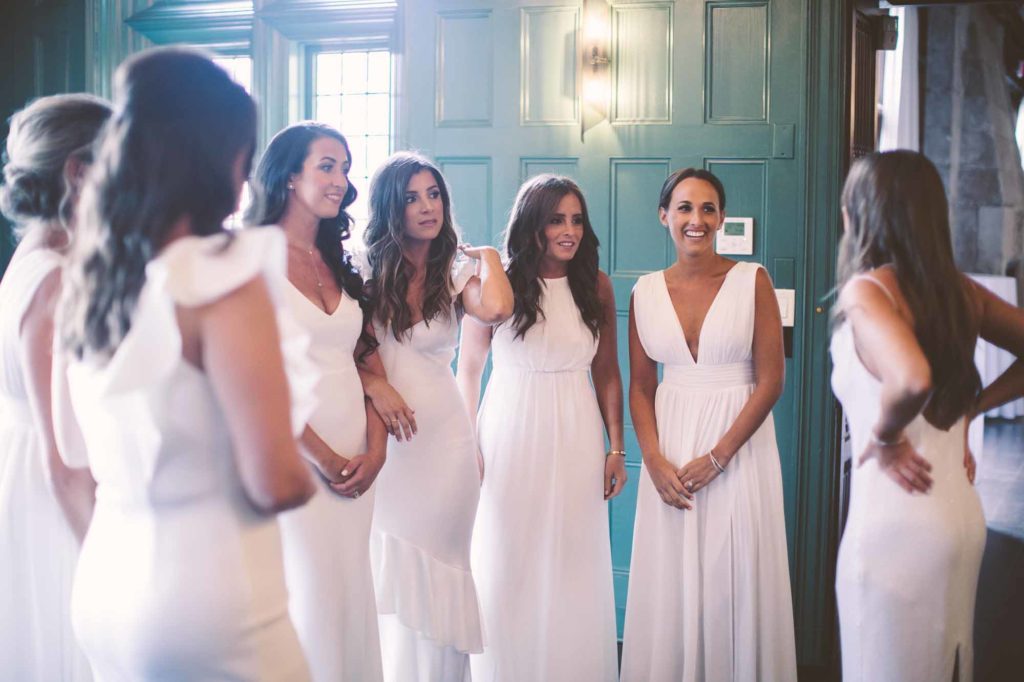
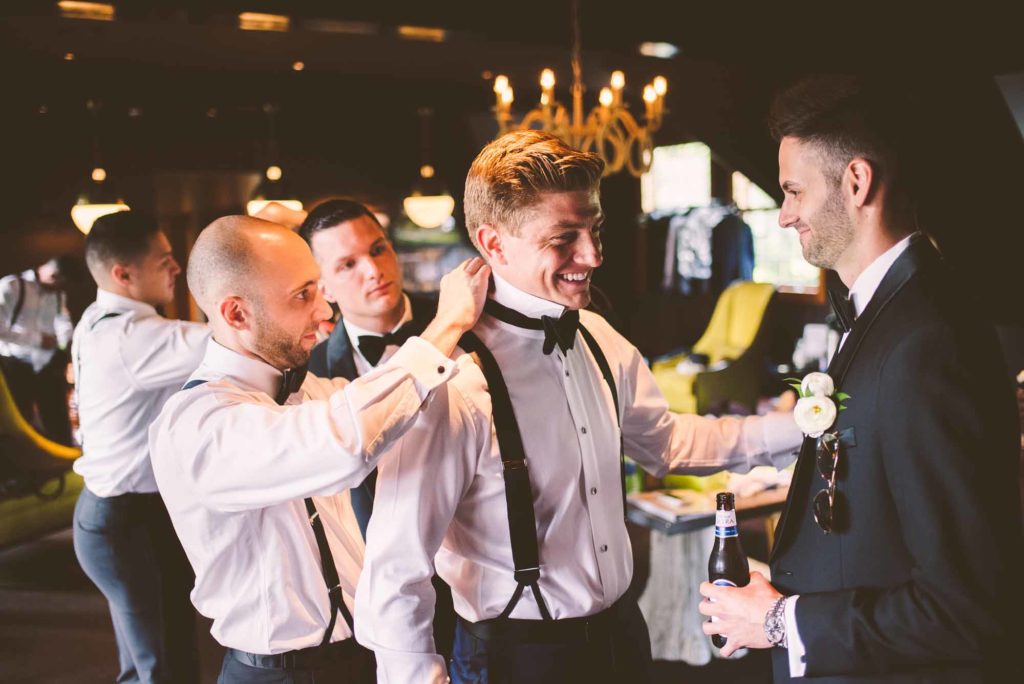
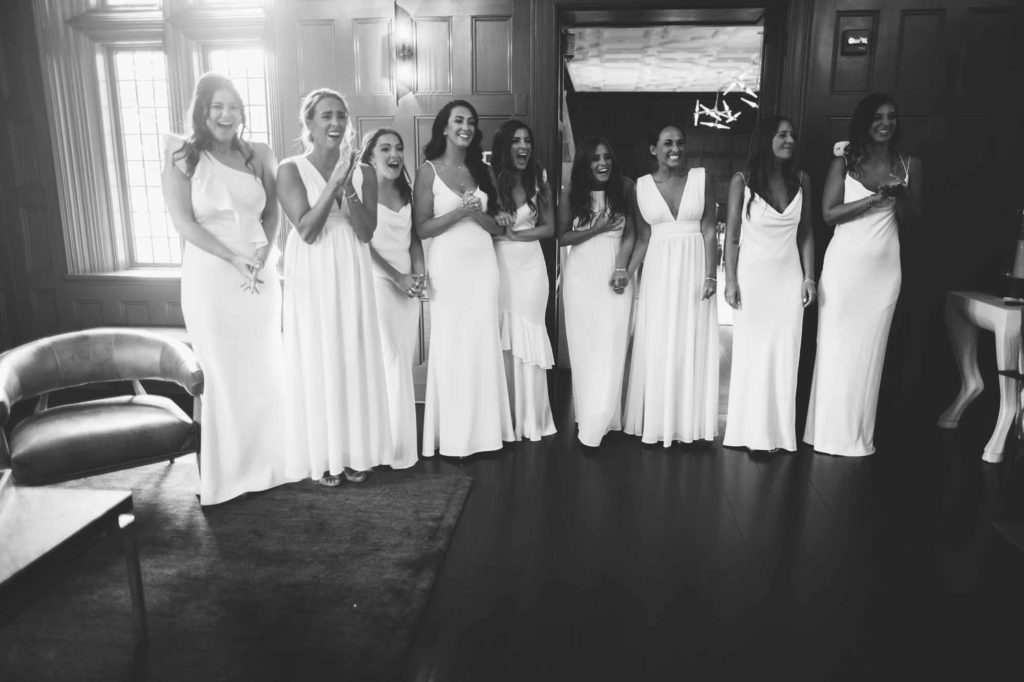
The two surprises before the first look
Veronica built two moments into the schedule that most timelines do not have, and they are the reason the getting-ready coverage from this wedding is stronger than usual.
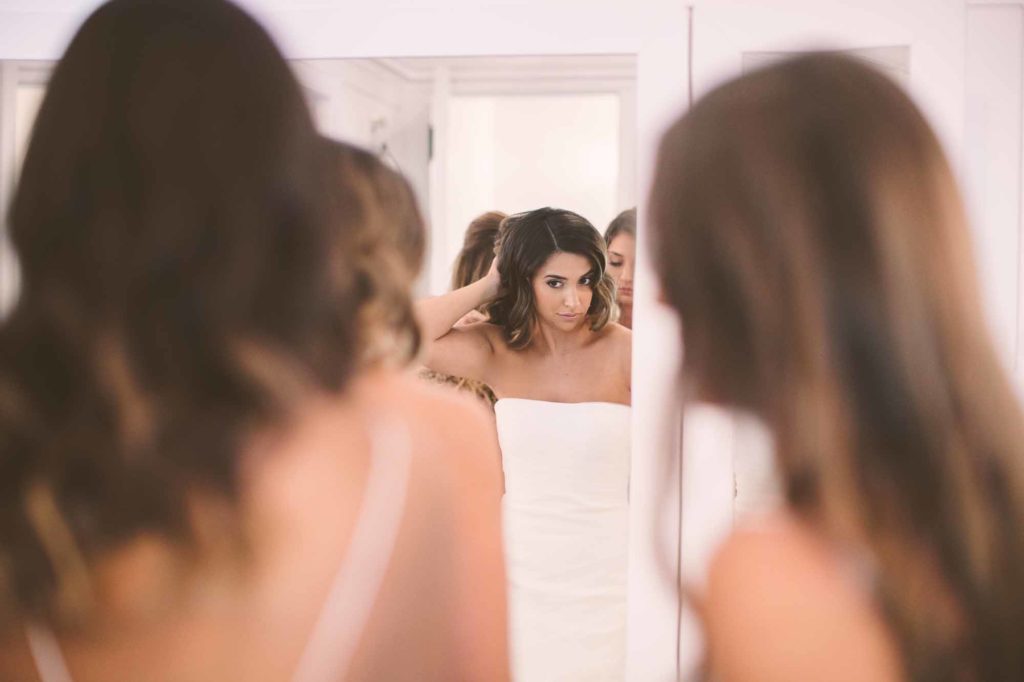
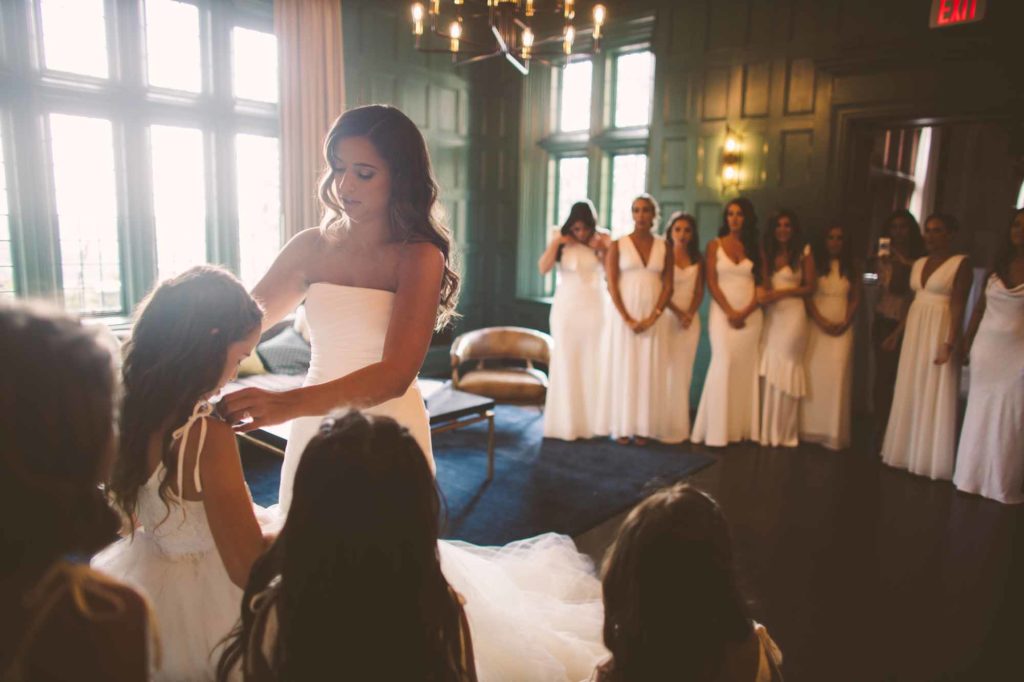
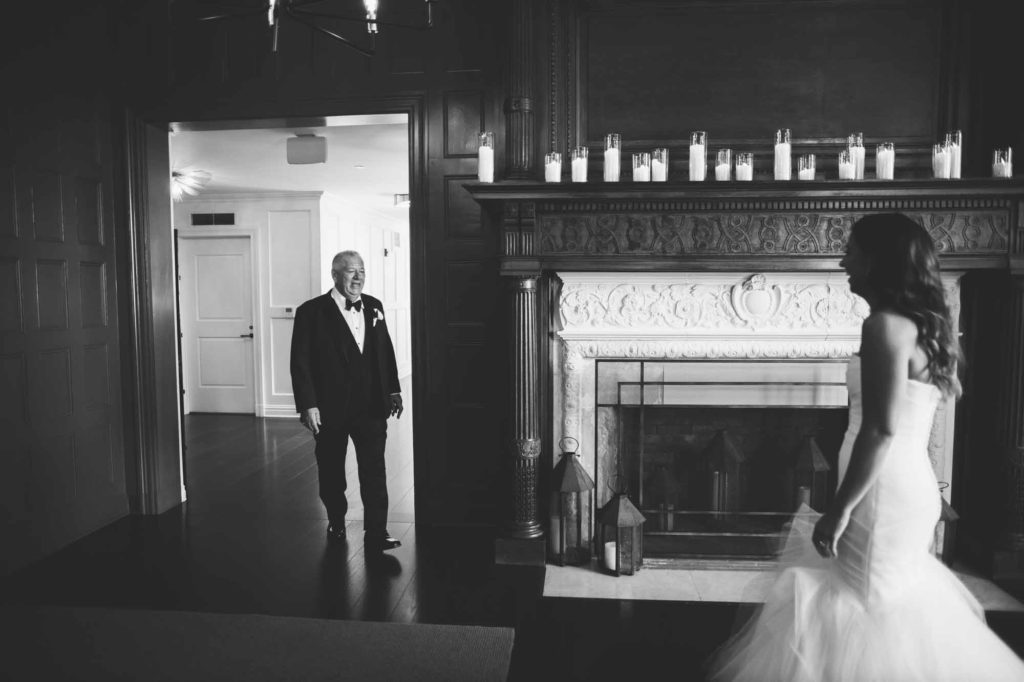
The first was with the bridesmaids. Alyssa got into the gown, then turned around to a room that had not yet seen her in it. The second, half an hour later, was her father. He came up to the Bridal Suite fully dressed and she was waiting.
Both were on the schedule, in writing, with a time next to them. That is what a planner is for. Nobody was improvising, so nobody was rushed, and I knew exactly where to stand for both.
If you take one thing from this timeline, take that. Two lines on a document bought two of the best frames of the day.
The paneled room
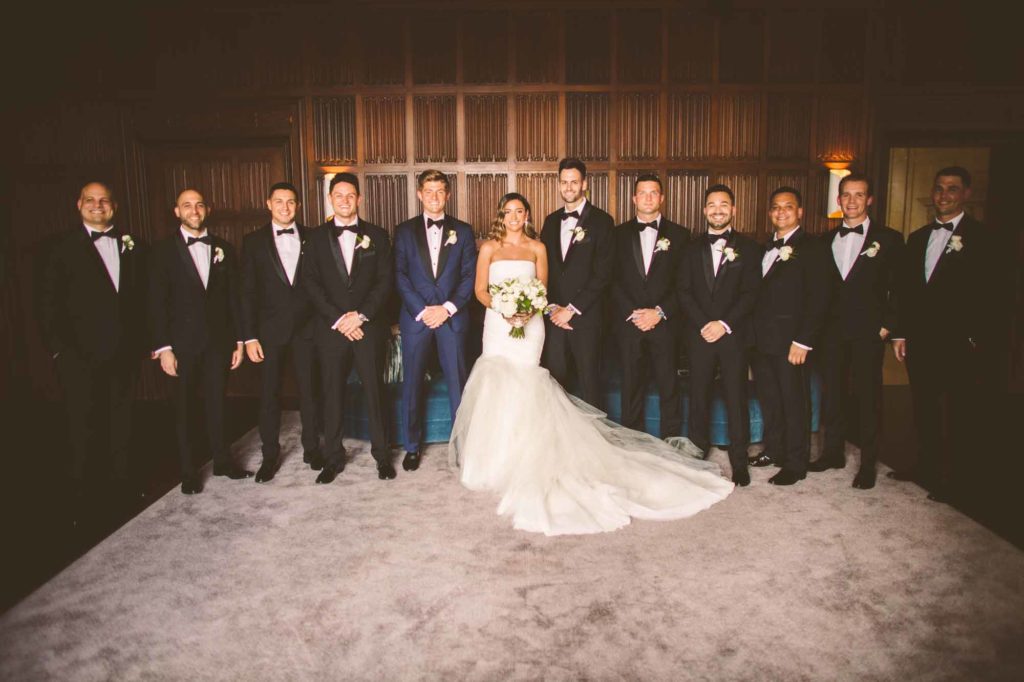
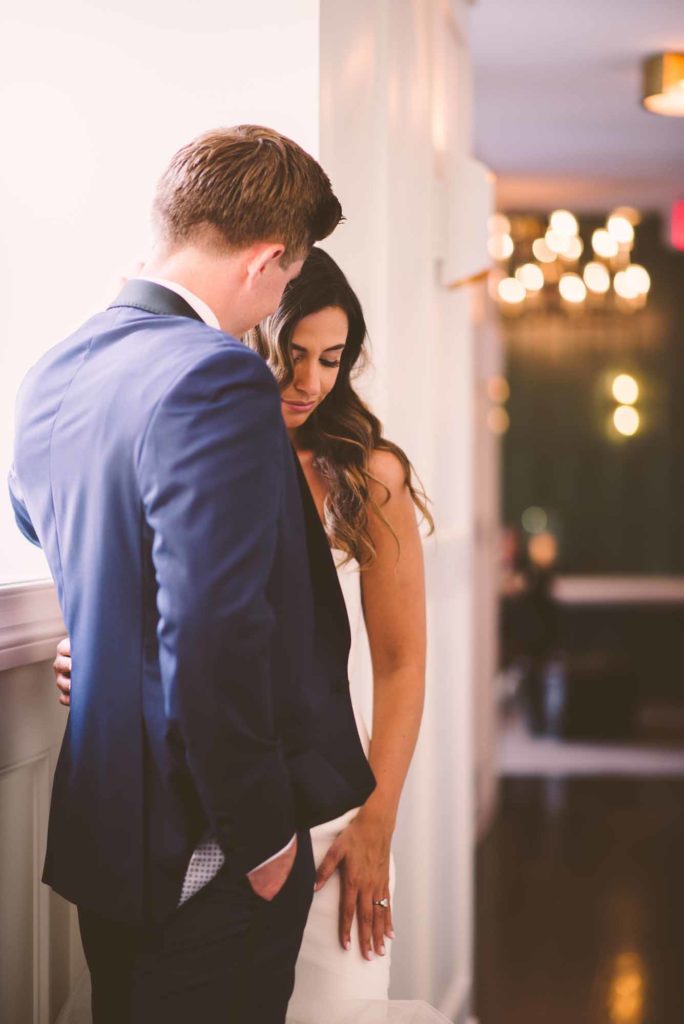
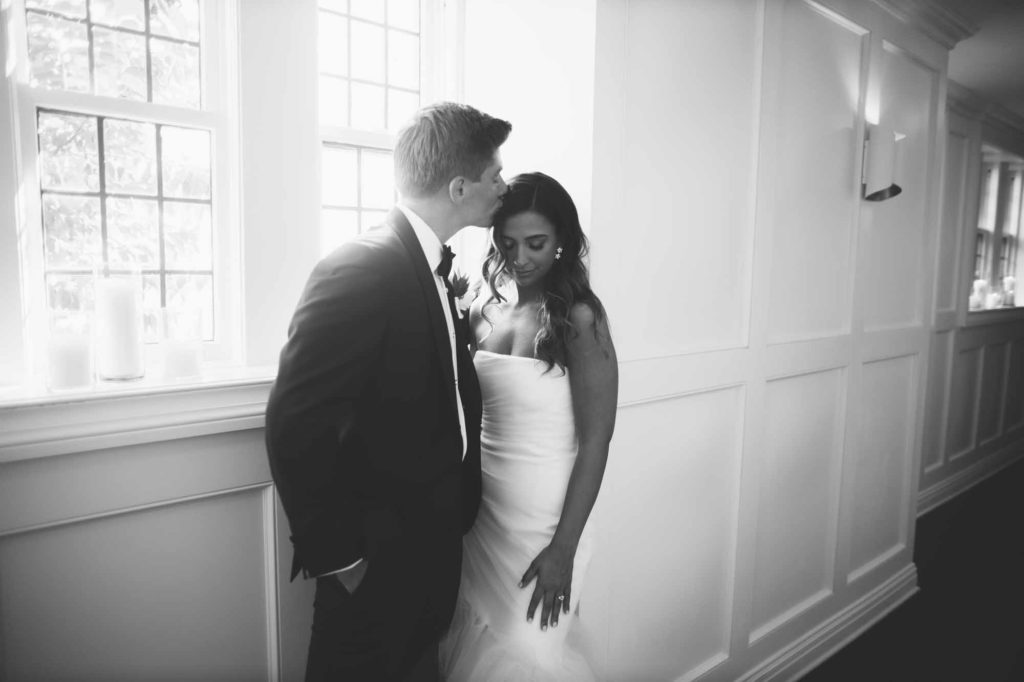
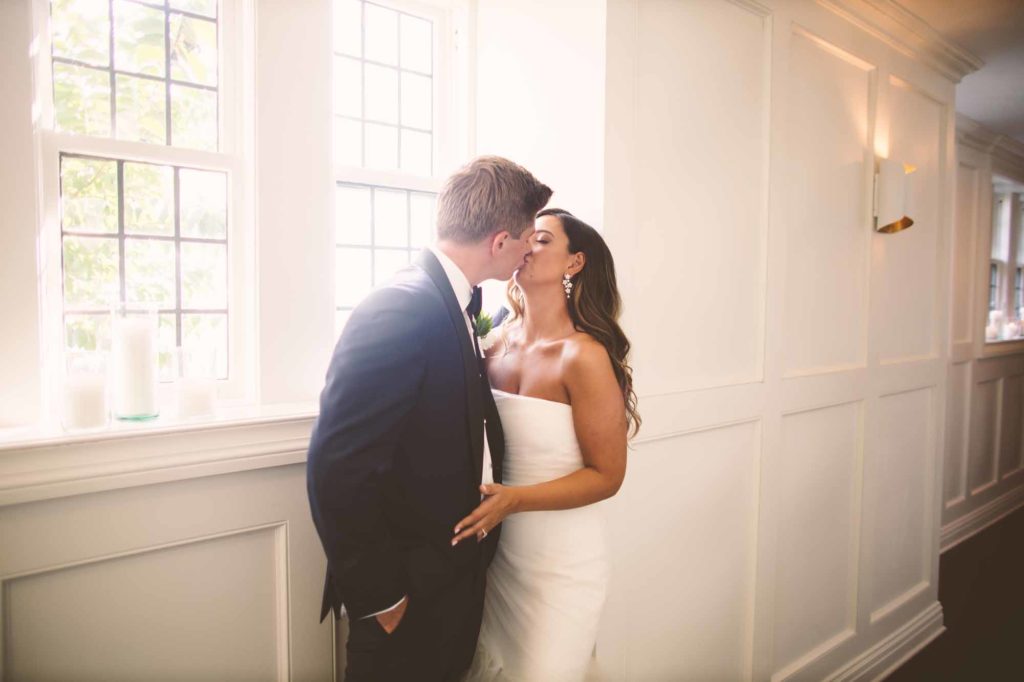
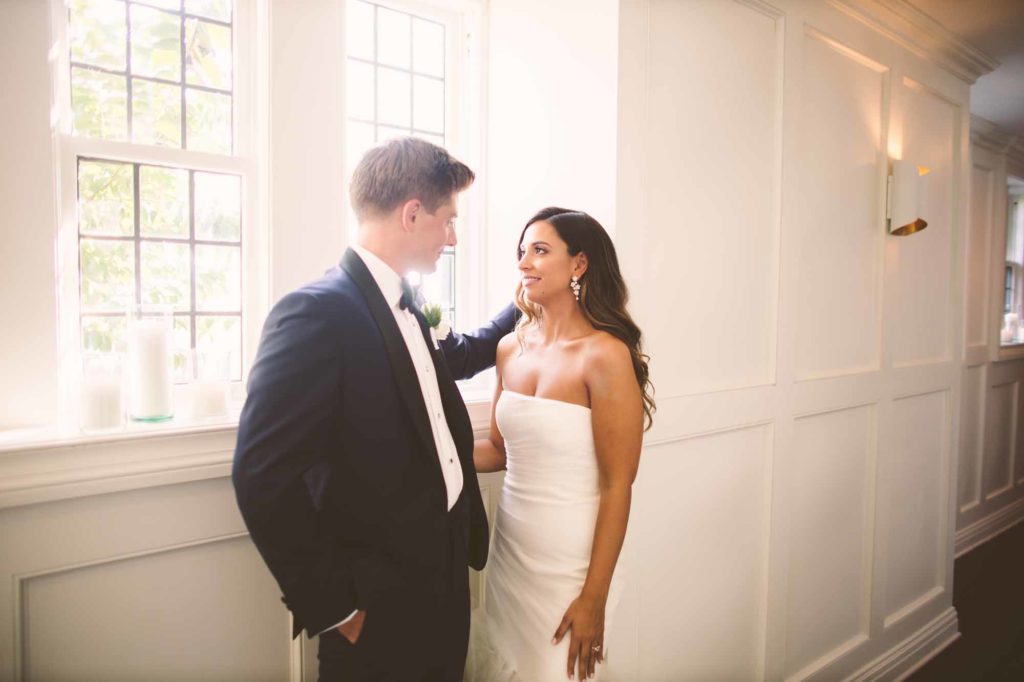
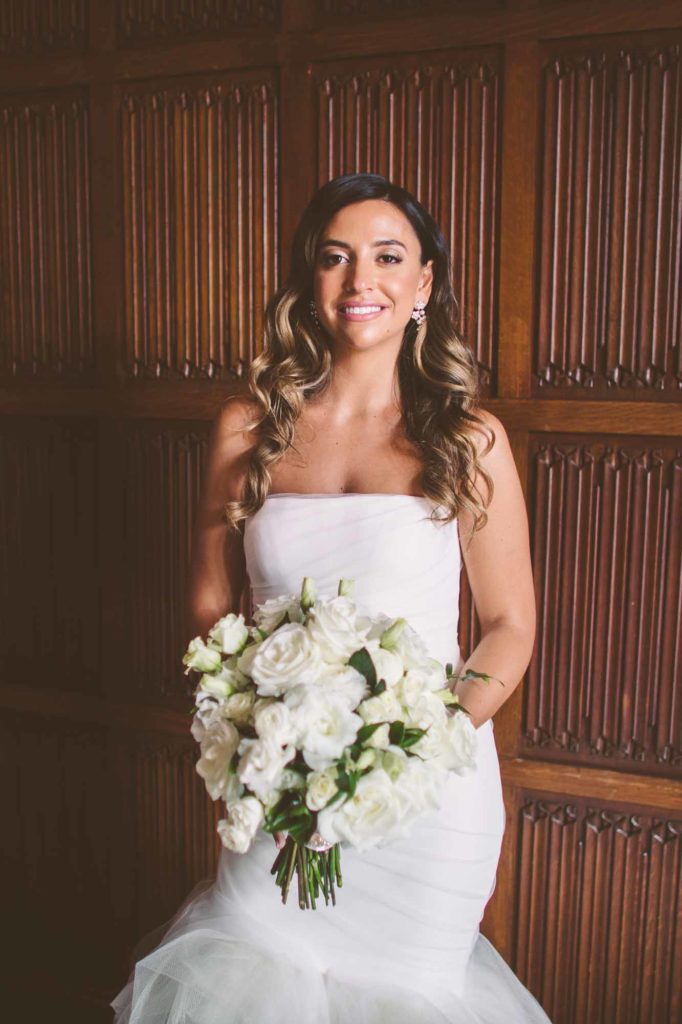
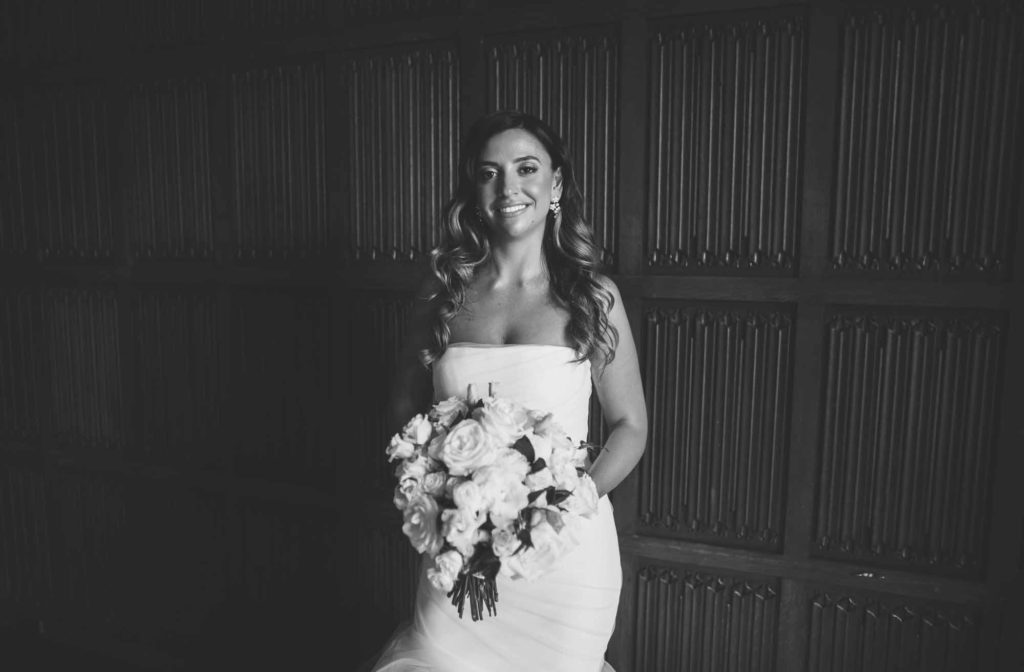
Before the ceremony I took Alyssa into one of the mansion’s paneled rooms on her own for a few minutes.
Dark carved wood on every wall, one window doing all the work, and a white rose bouquet against the gown. It is close to the simplest setup in photography: put someone in a dark room next to a good window and get out of the way. The house does the rest.
Every couple should build ten minutes into the schedule for this. Not for me. For the one photograph of themselves, alone, on that day, that they will actually hang. The group shots and the dancing frames tell the story of the event. This one is the portrait.
The first look
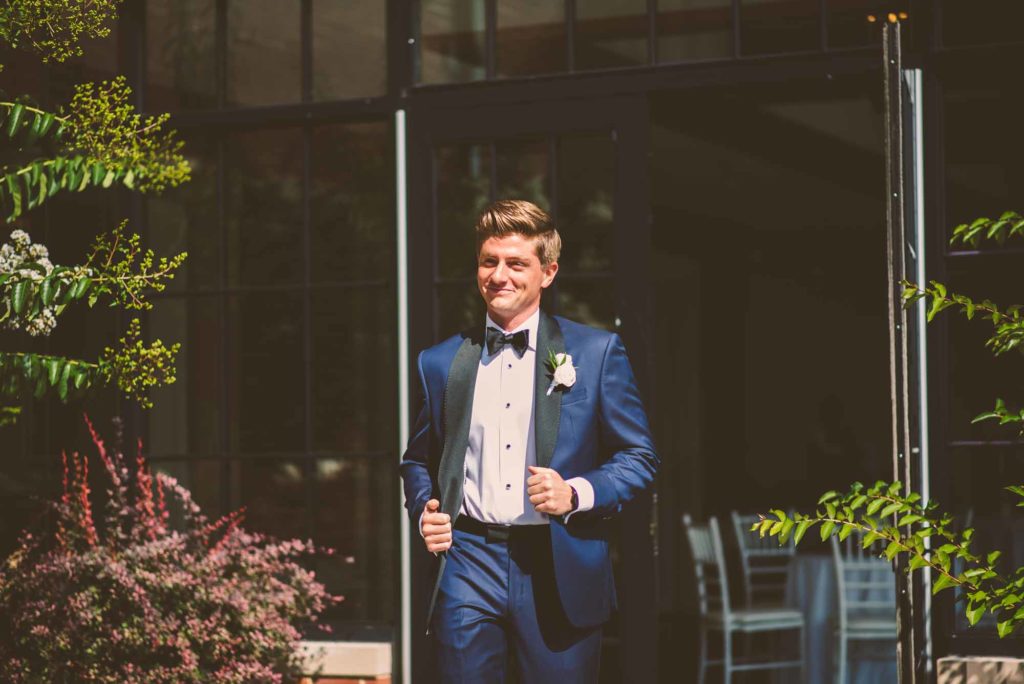
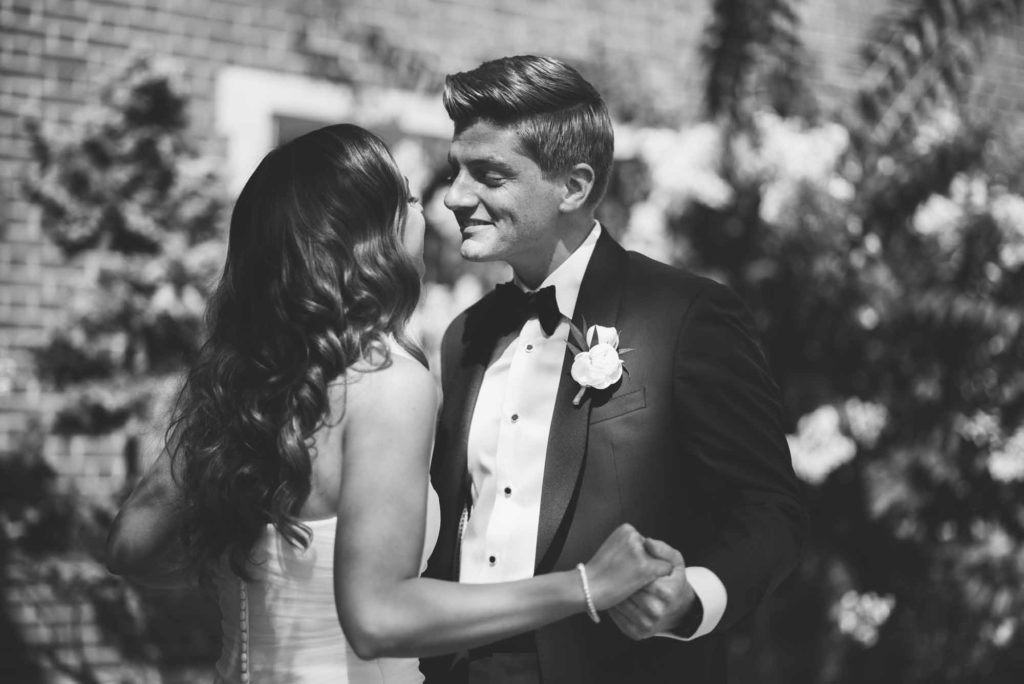
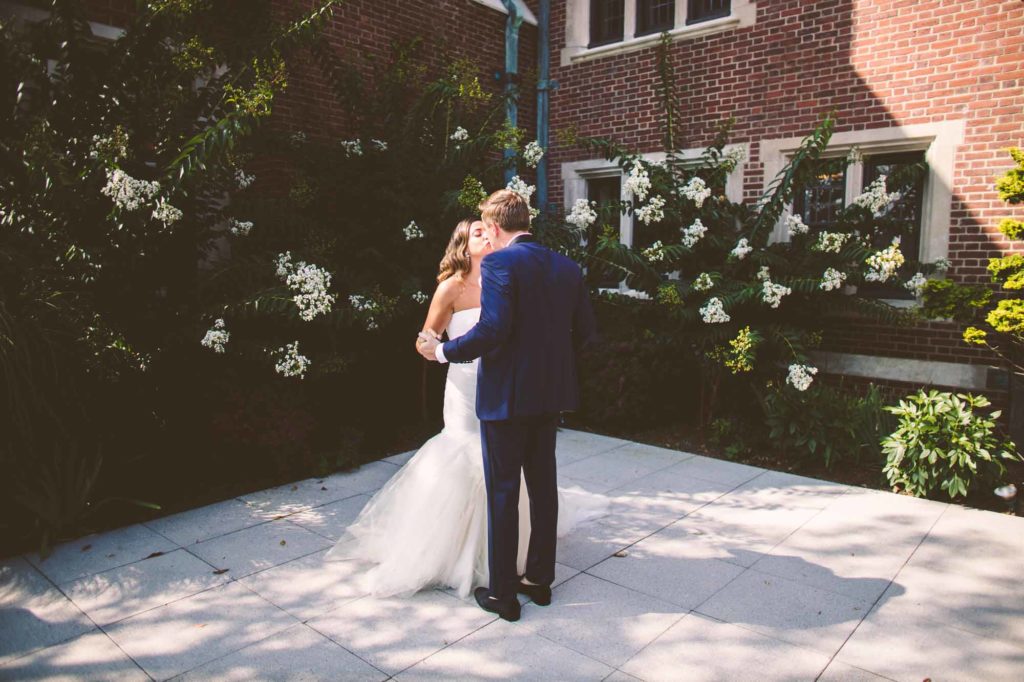
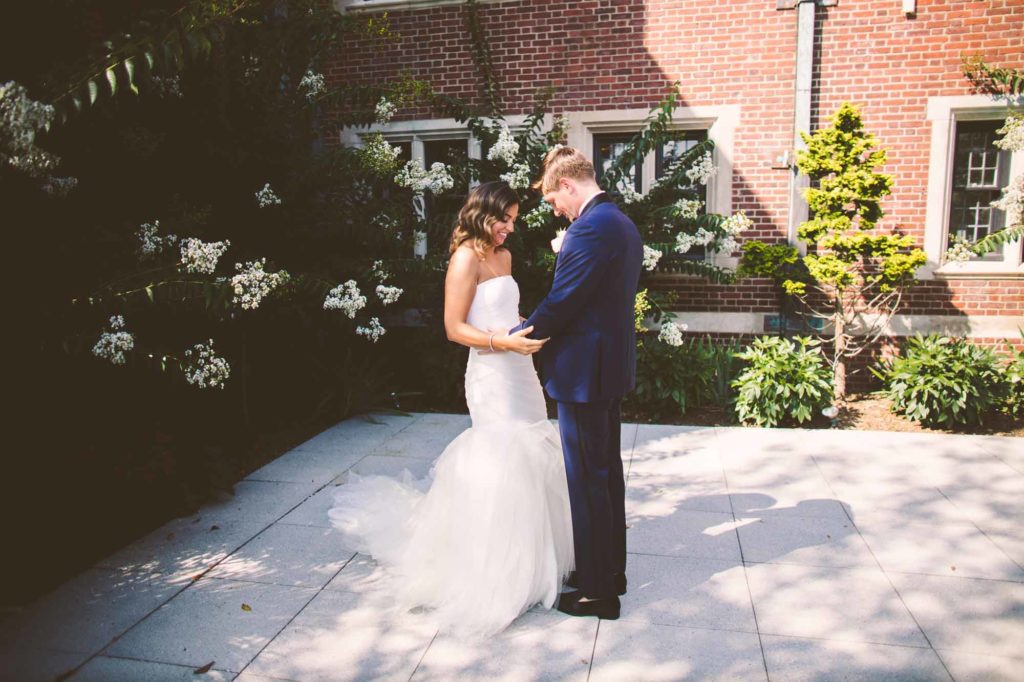
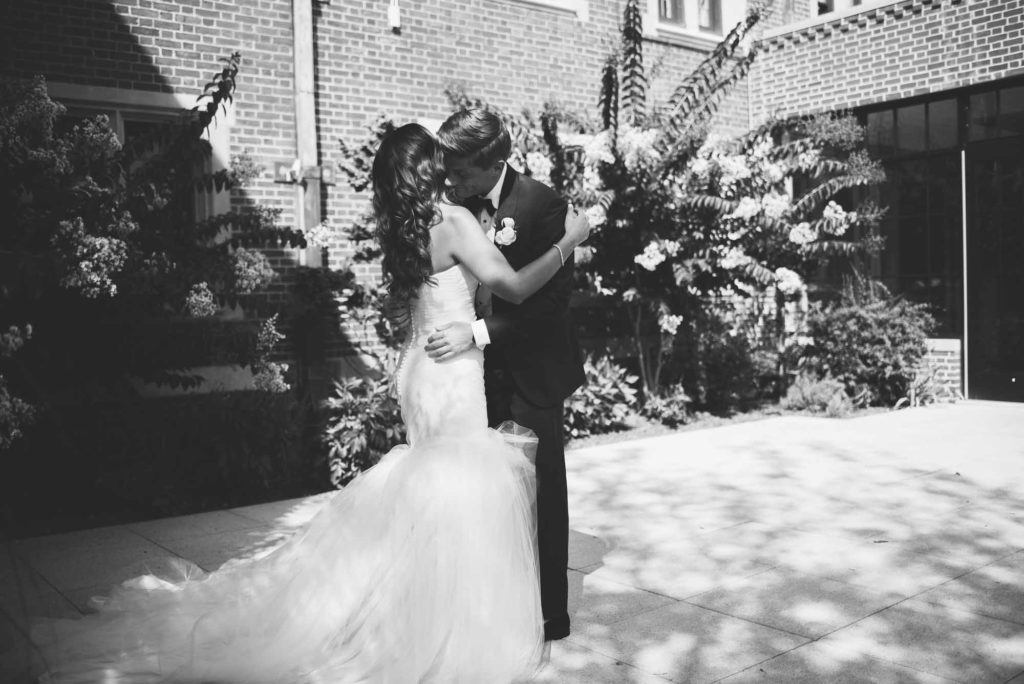
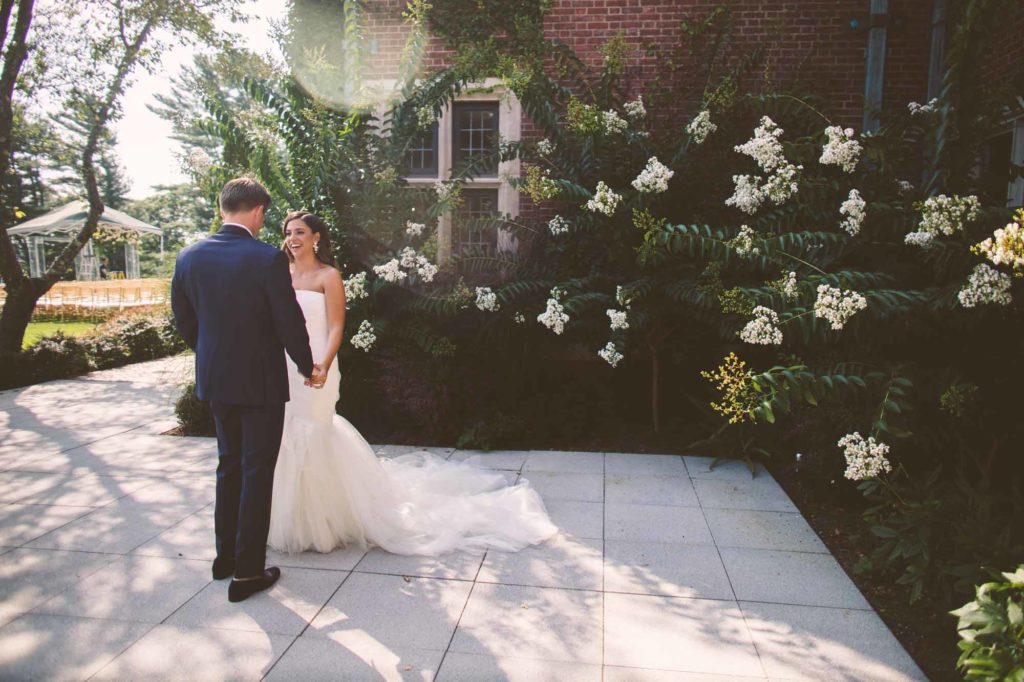
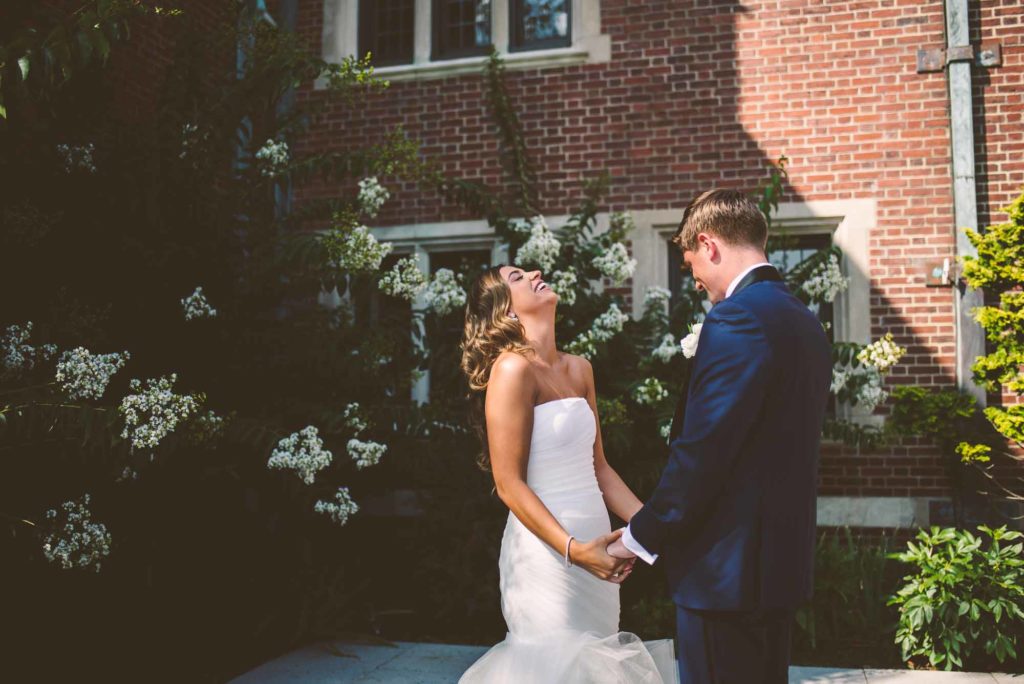
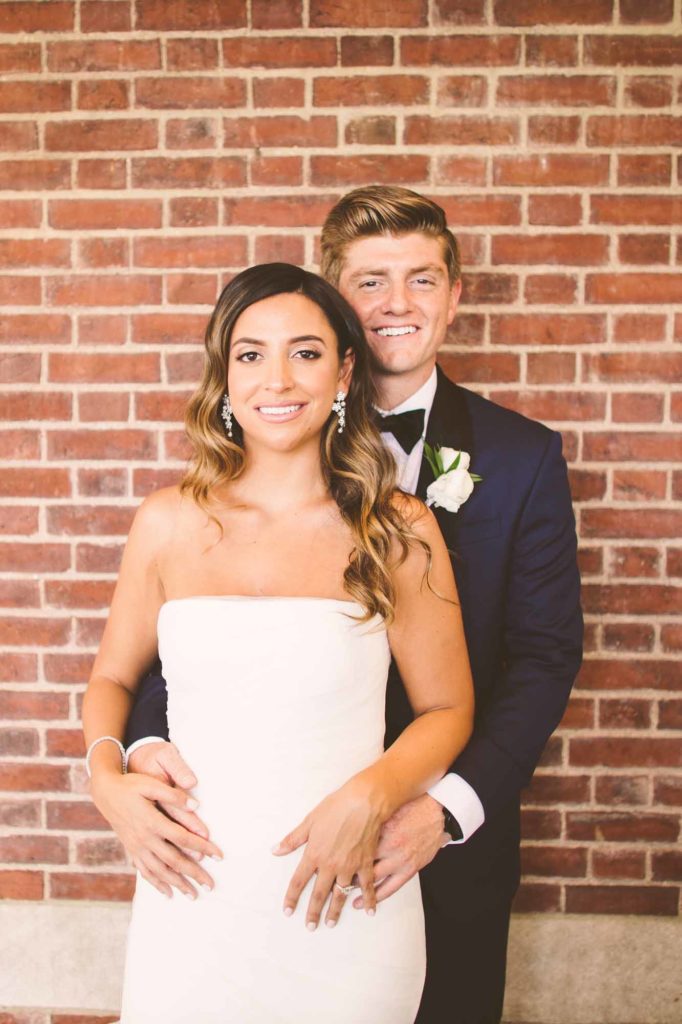
We did the first look outside, along the garden path by the mansion’s brick wall, where white blossoms were out against the brick and the conservatory sat just off frame.
I am not doctrinaire about first looks. Some couples want the aisle to be the first time and they are right to. But there is a practical argument at Natirar specifically, and it is about geography rather than sentiment. The estate is spread out. If you do all your portraits after the ceremony, you are asking your guests to wait while you walk the property, or you are asking me to work faster than the property deserves.
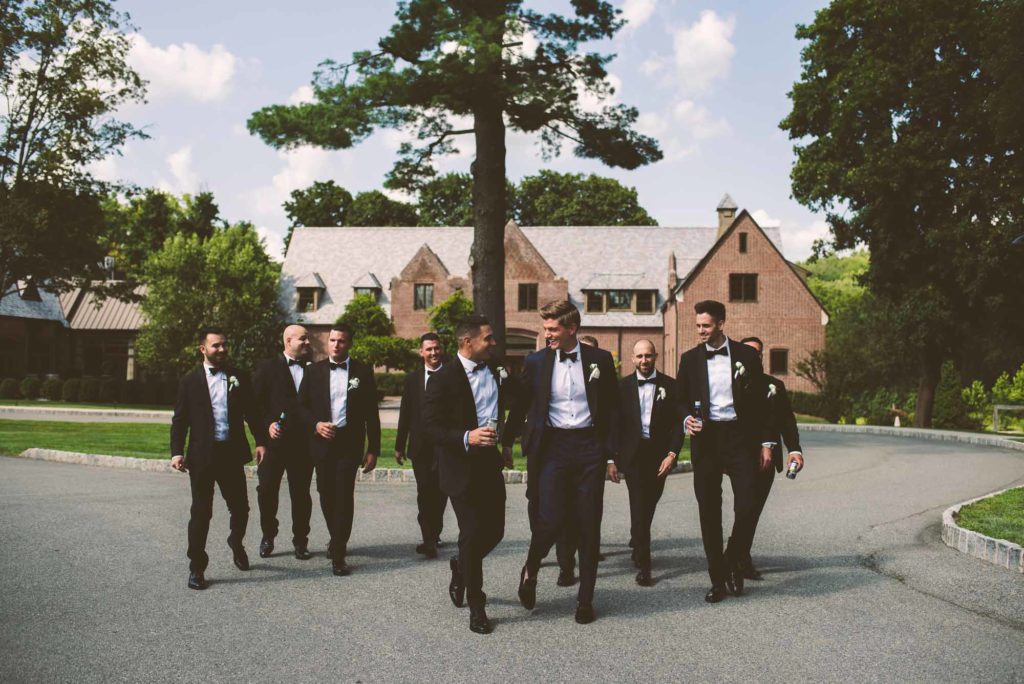
Alyssa and Joe did the first look at four o’clock, which left bridal party pictures at 4:15, their own portraits at 4:35 and all the family groups done by 5:45. By the time the ceremony started at 6:30 the formal photography was finished and neither of them had to think about a camera again.
Pendry Natirar Weddings
Inquire Now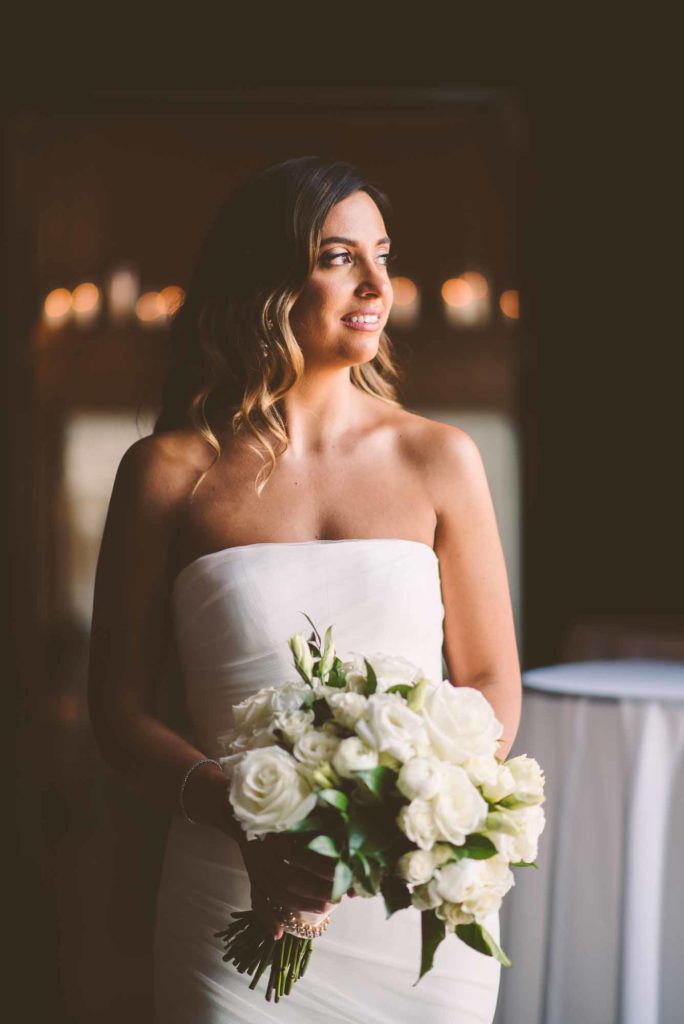
Walking in
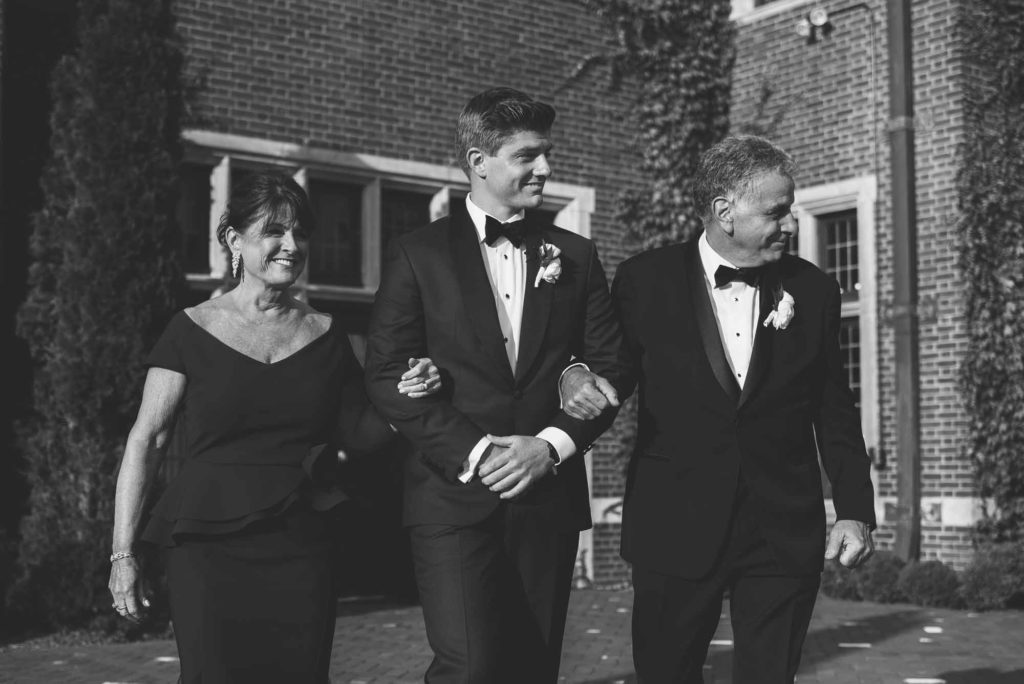
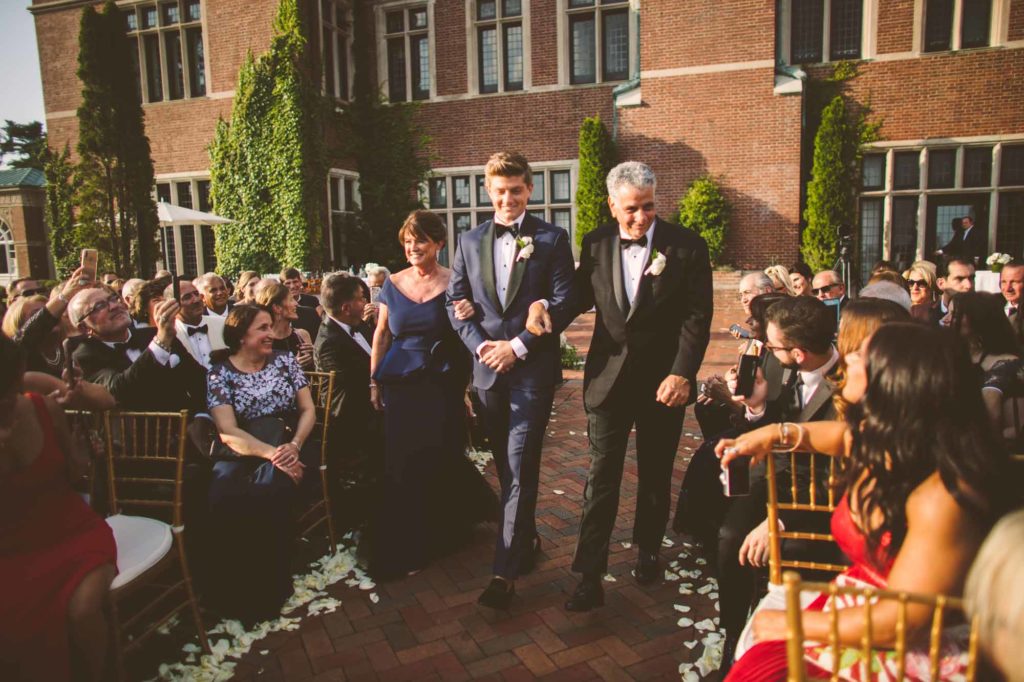
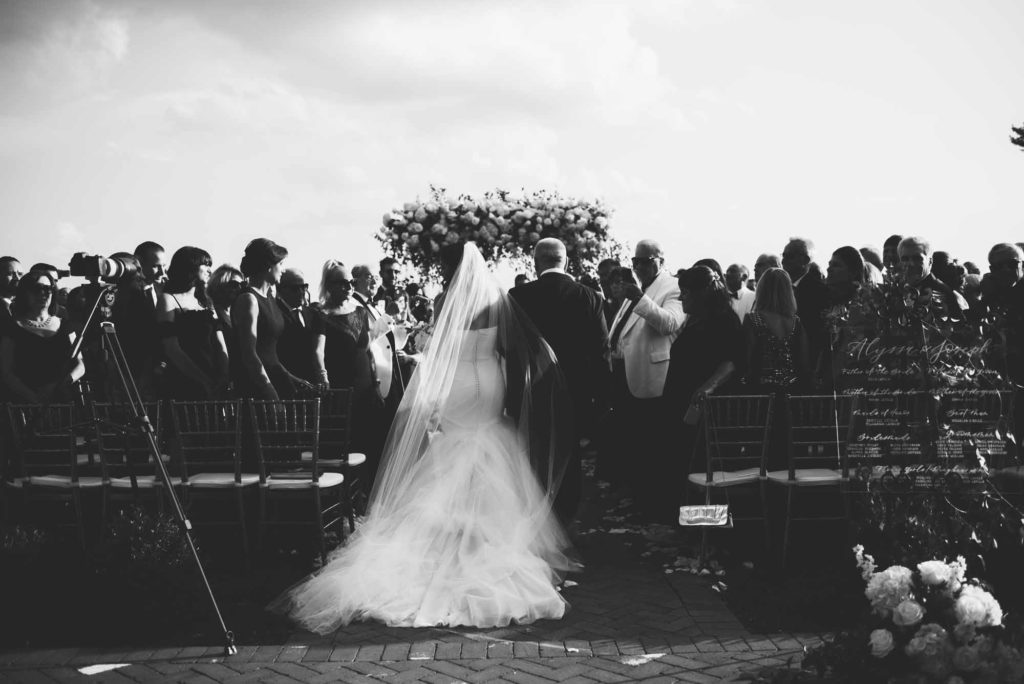
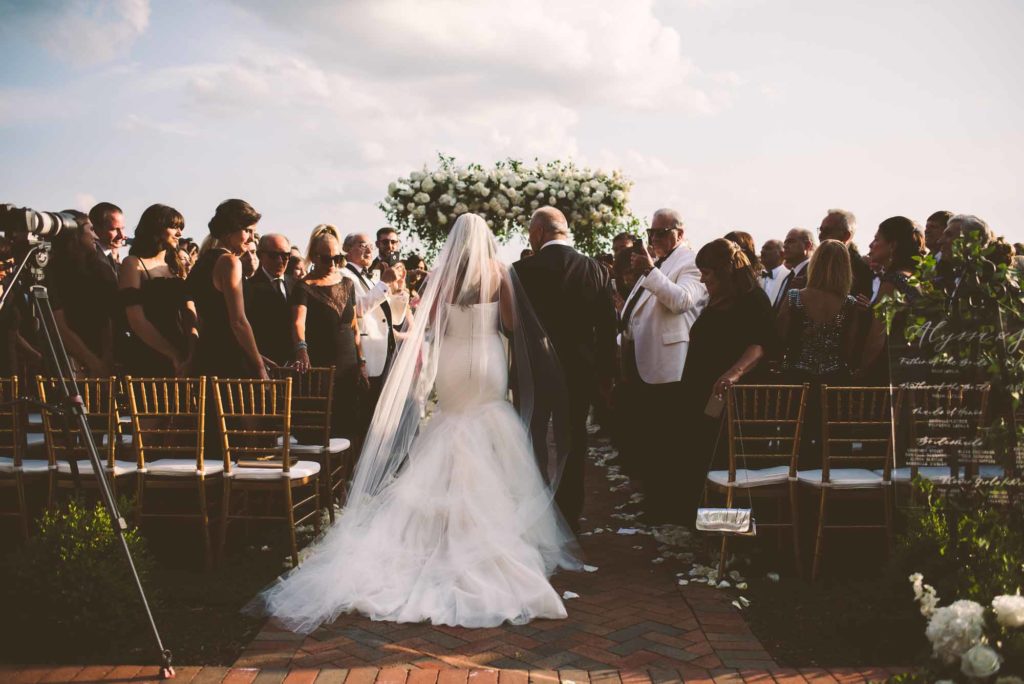
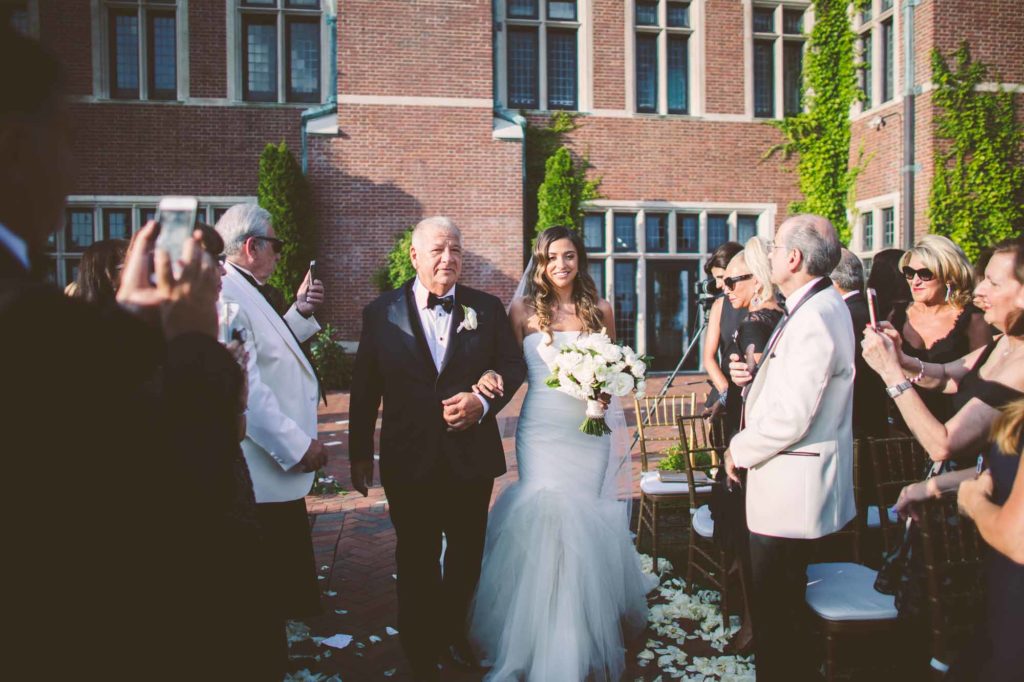
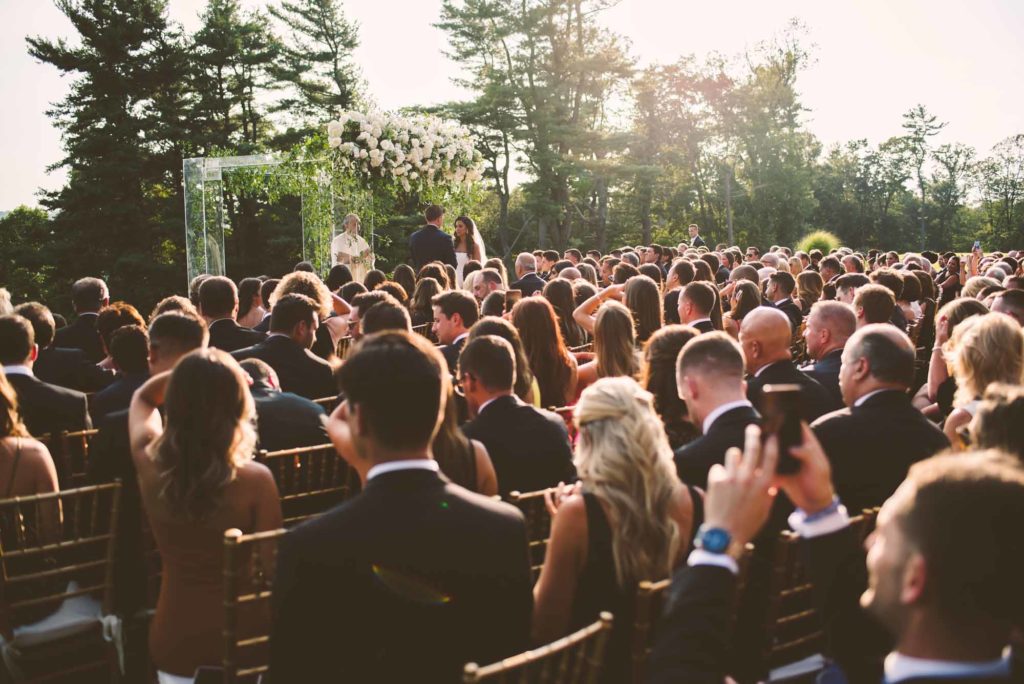
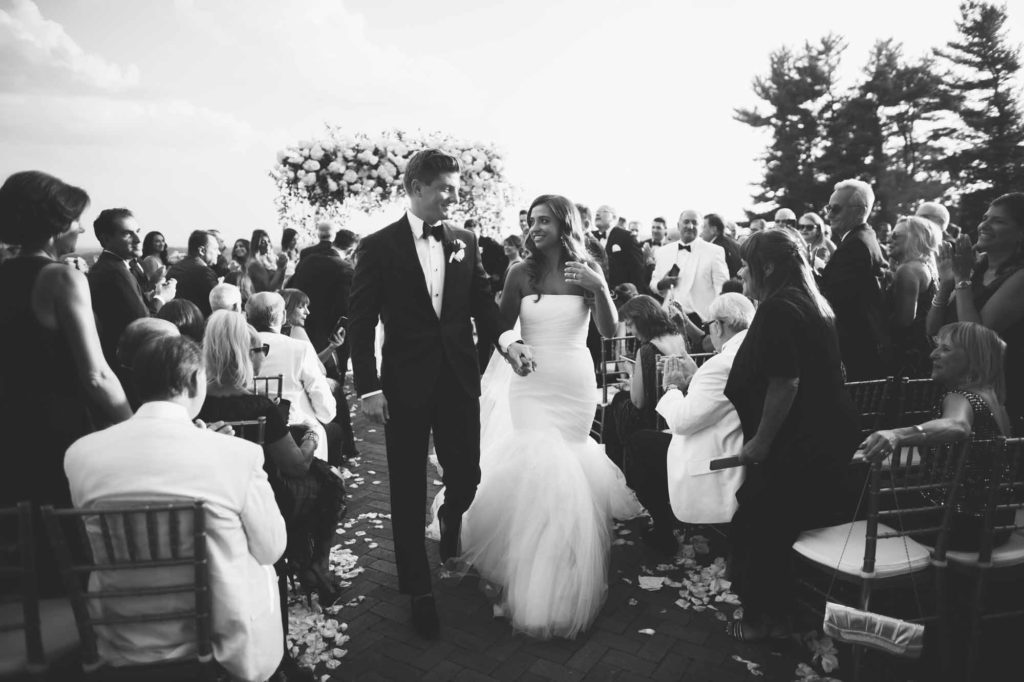
Alyssa came down the brick aisle on her father’s arm, veil running out behind her, and the guests all turned at once the way they always do.
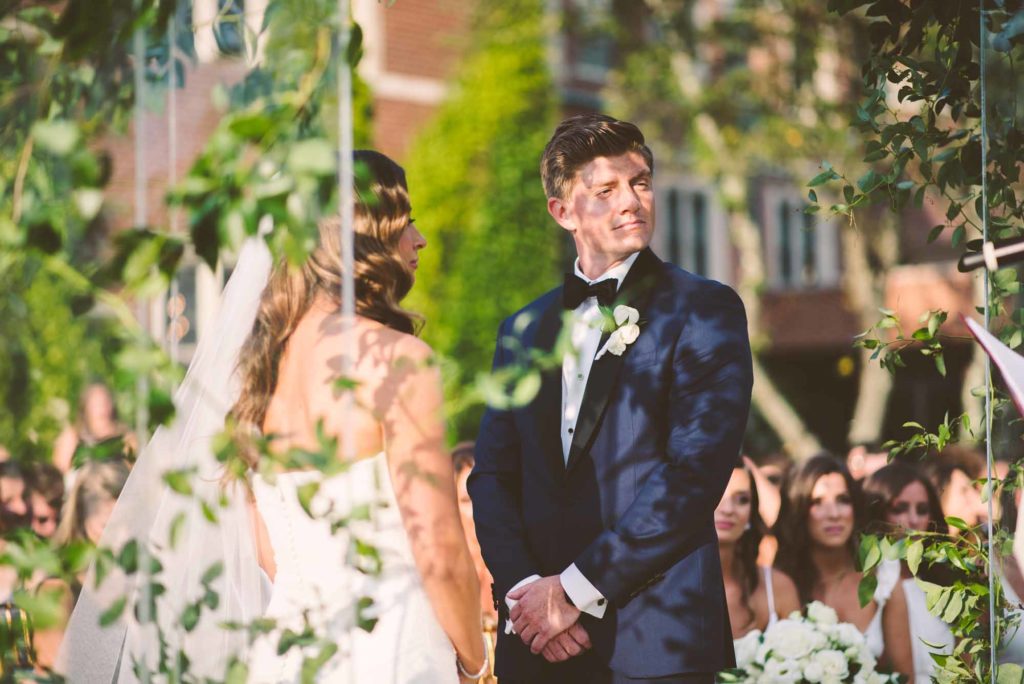
I shoot the processional from two positions and I will not compromise on either. One camera stays at the back, low, so the aisle and the arch and the hills stack up behind her as she walks. The second is up front, and it is not pointed at her at all. It is pointed at Joe.
The frame of a partner watching someone walk toward them is the one photograph from any ceremony that families come back to years later. It is worth more than every wide shot combined, and you only get one attempt at it.
Her father’s face on the way down was the other one. There was no performance in it.
The ceremony, and the view behind it
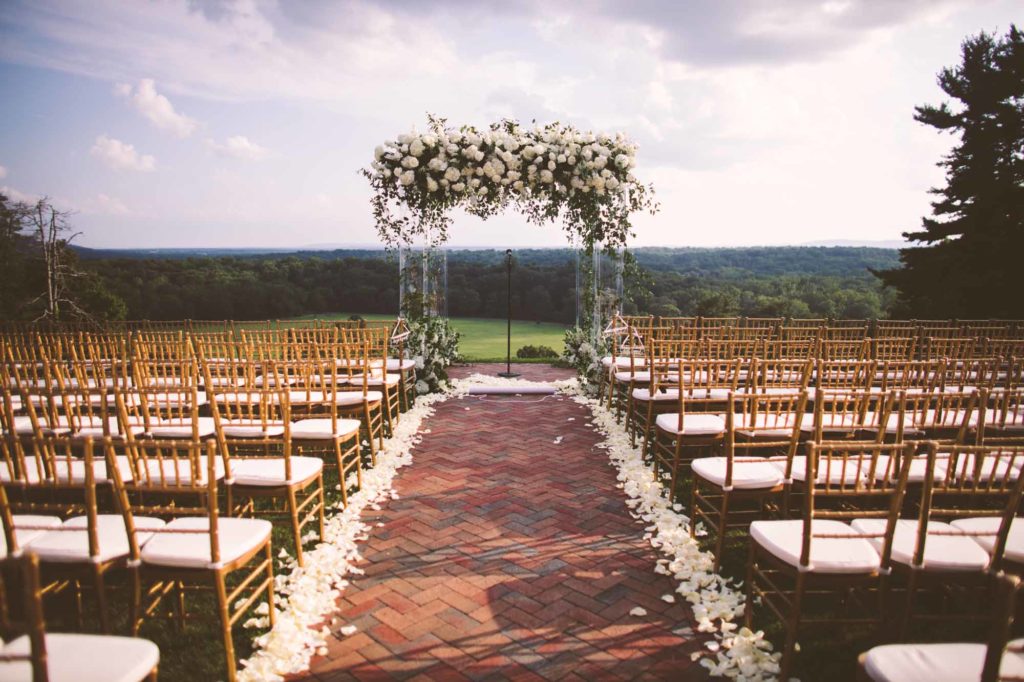
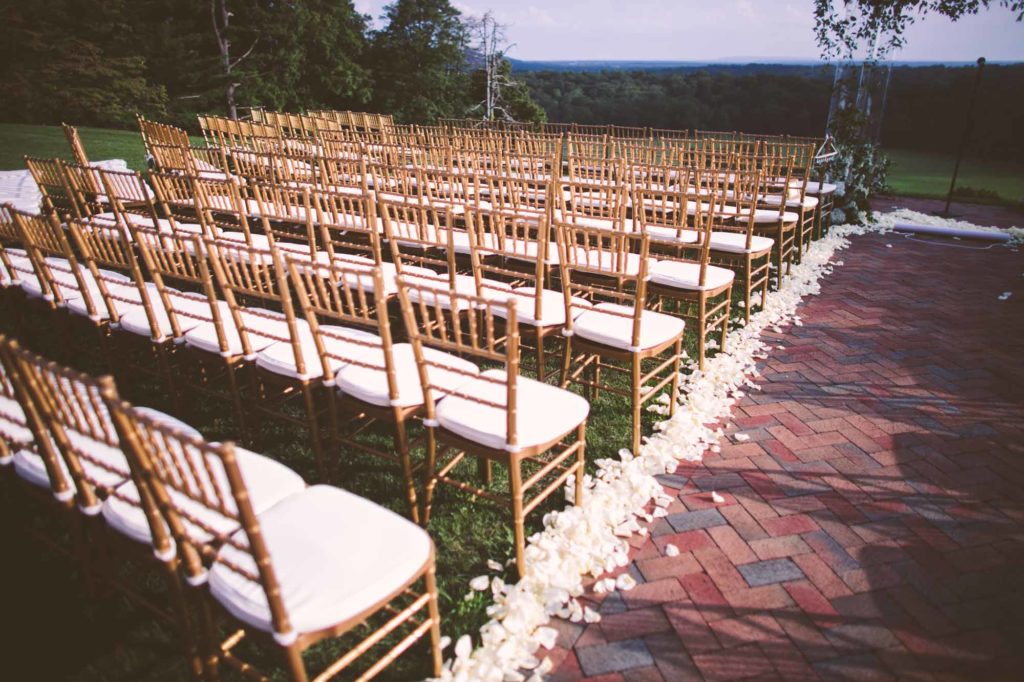
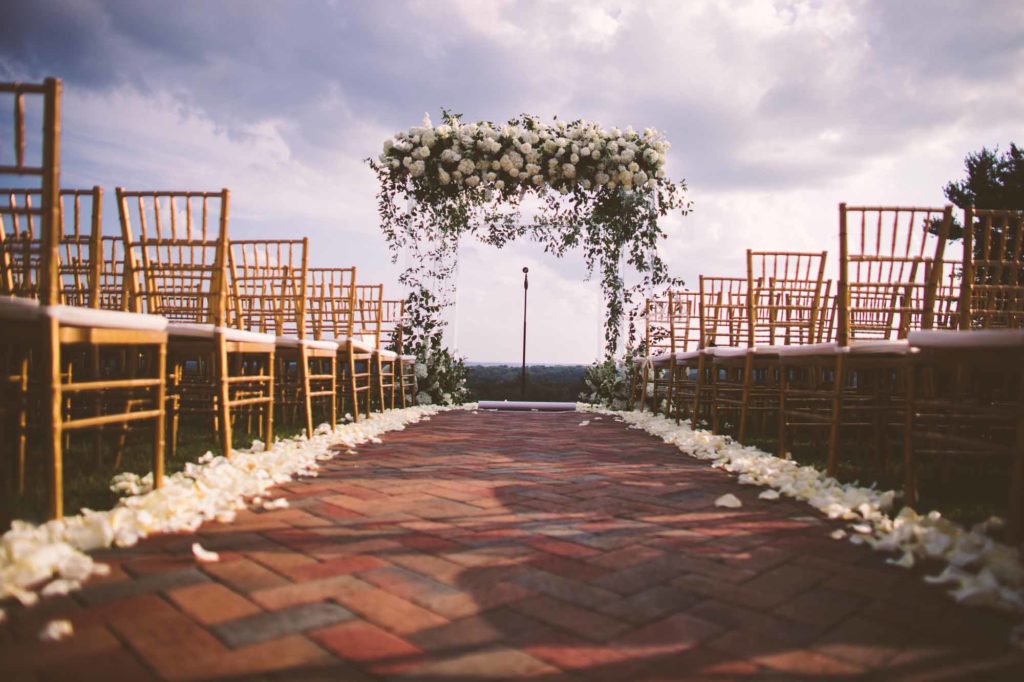
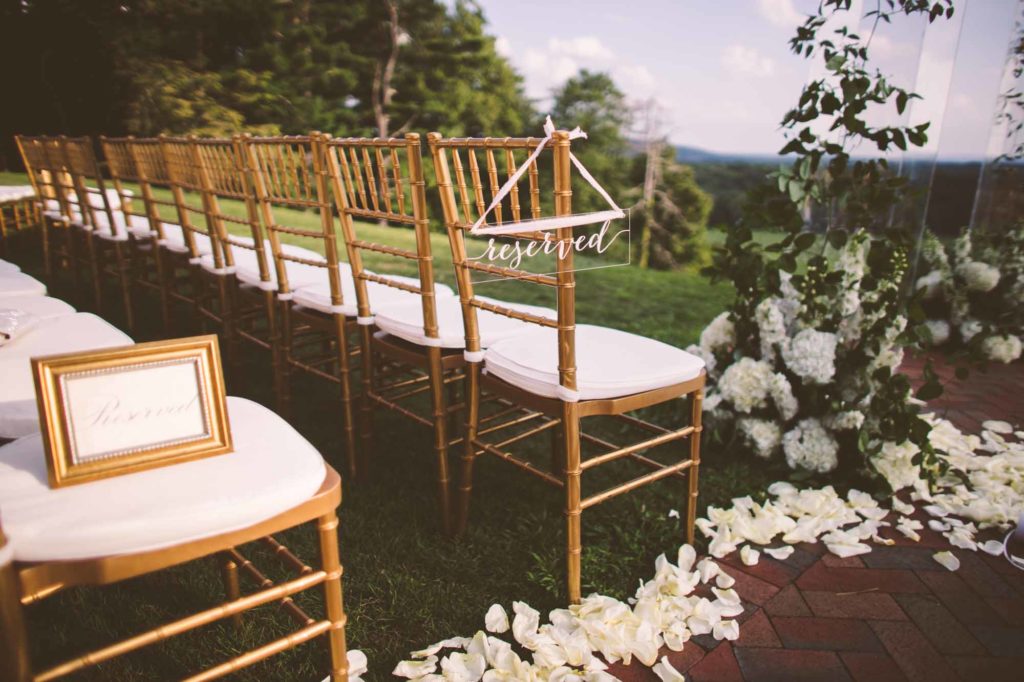
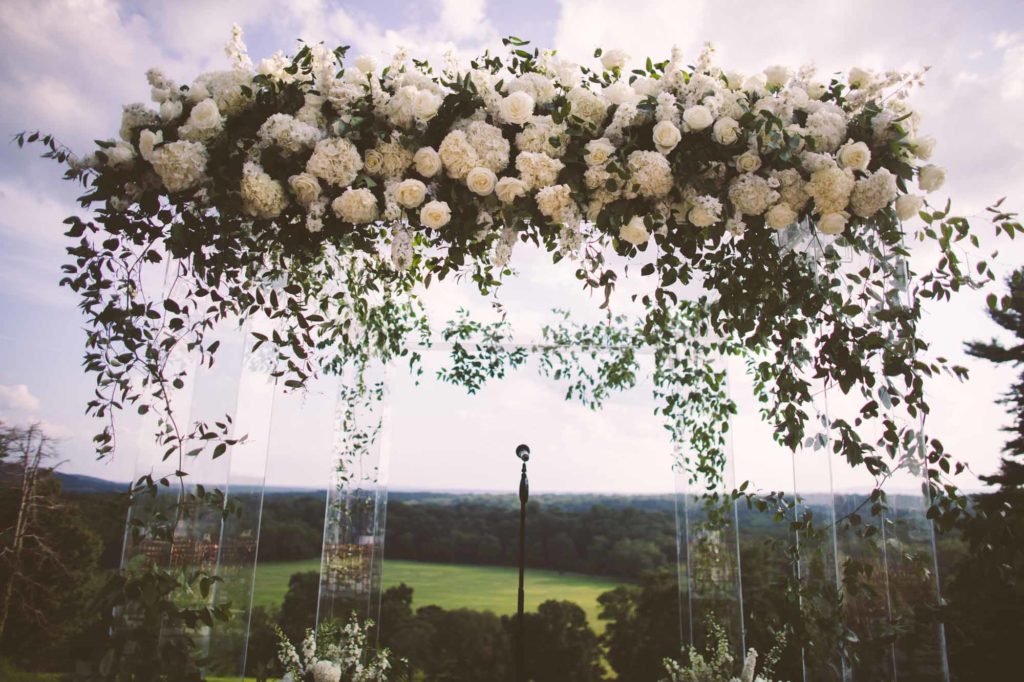
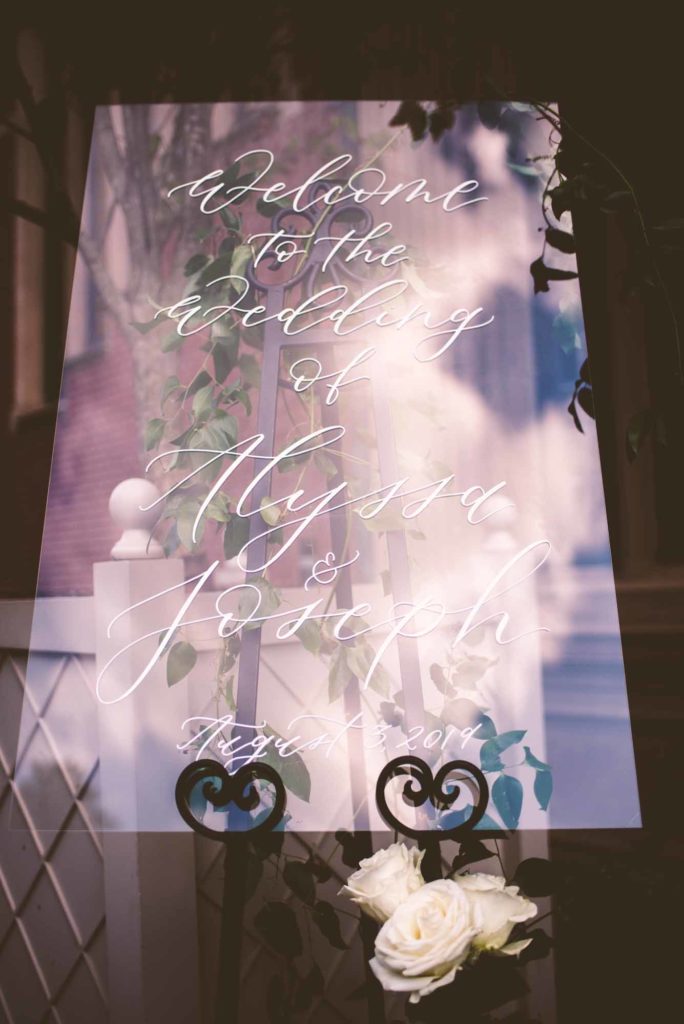
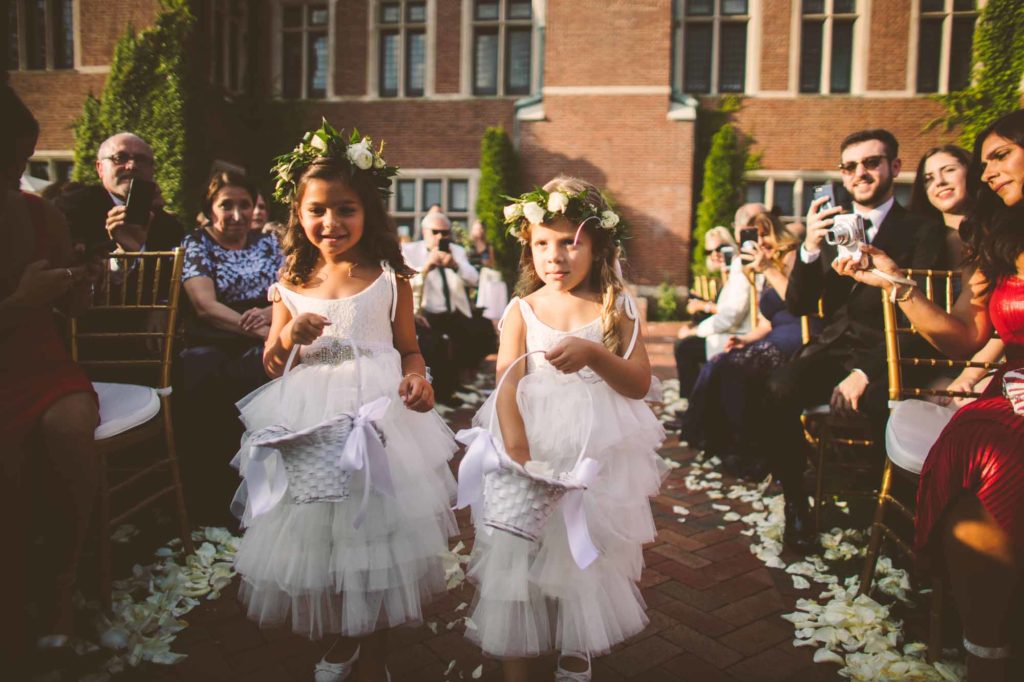
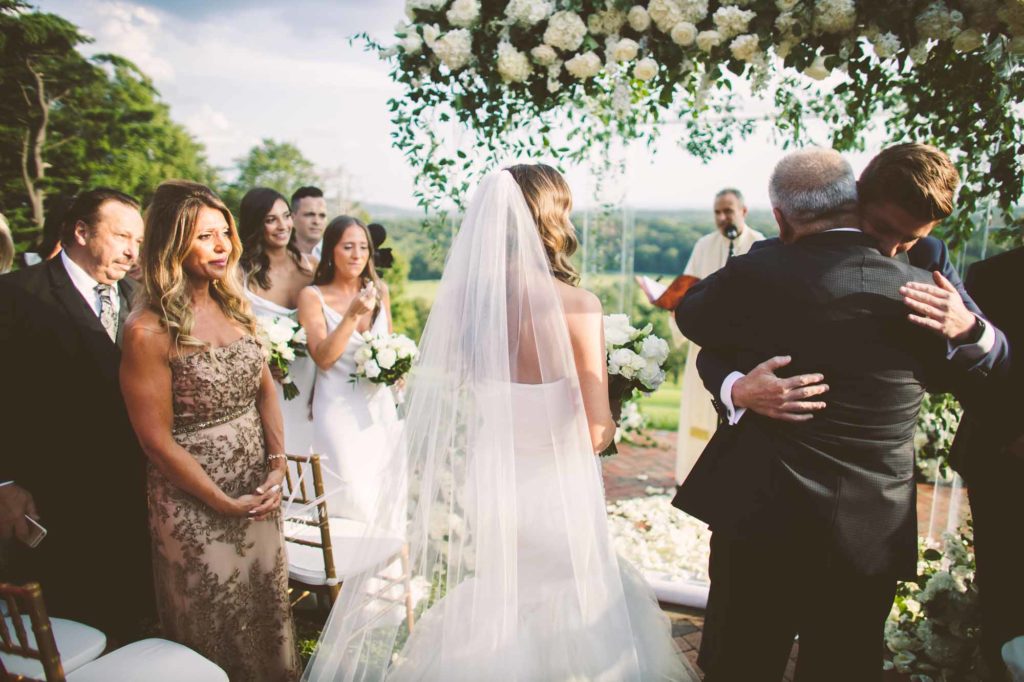
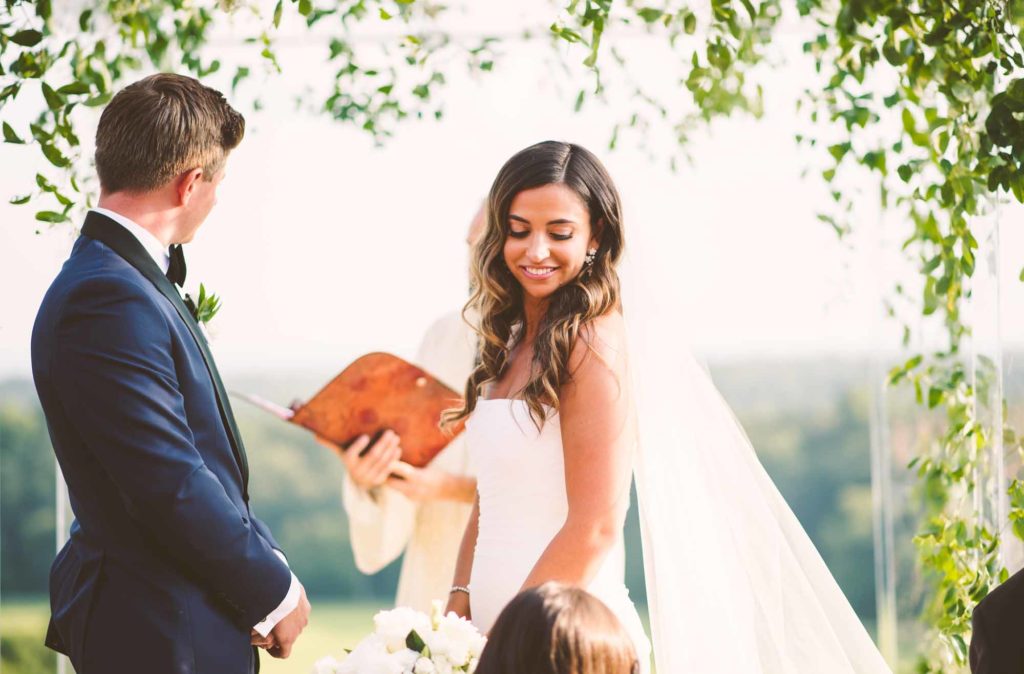
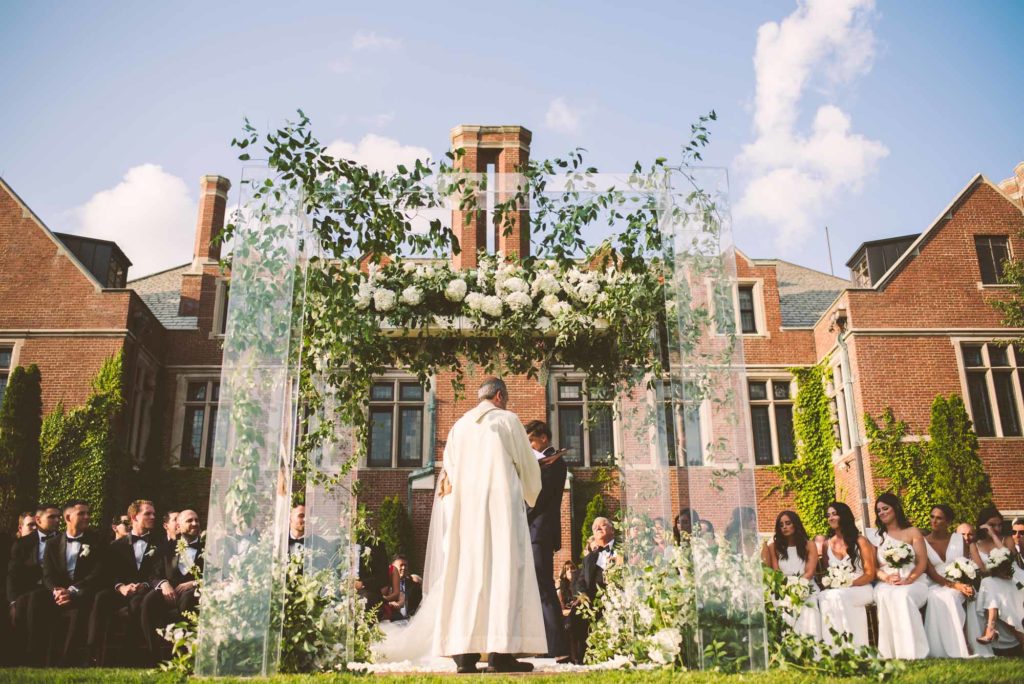
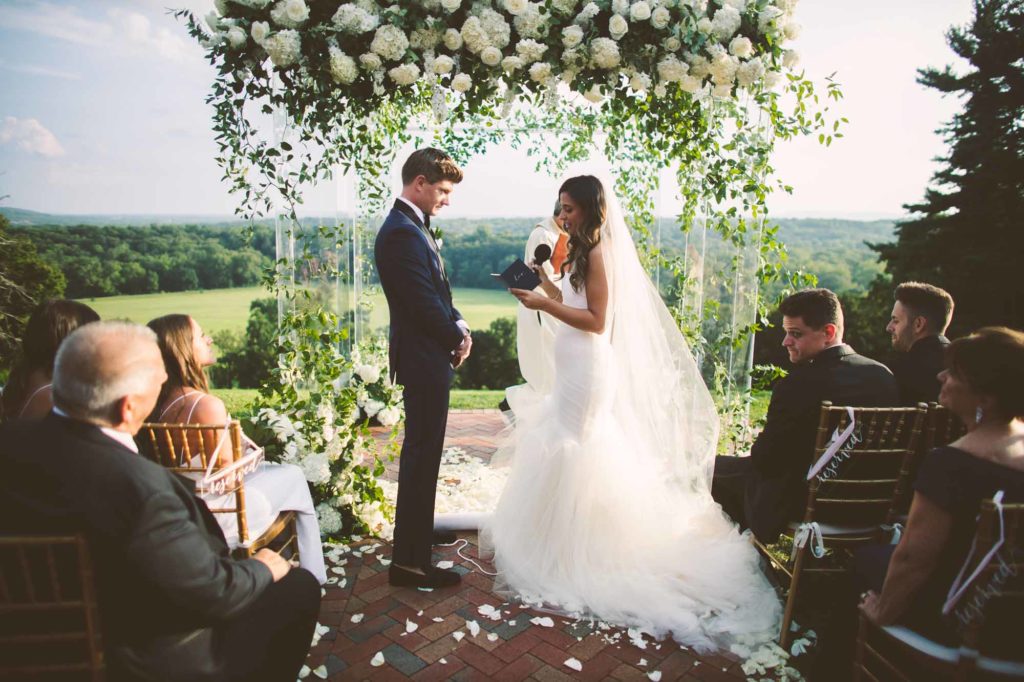
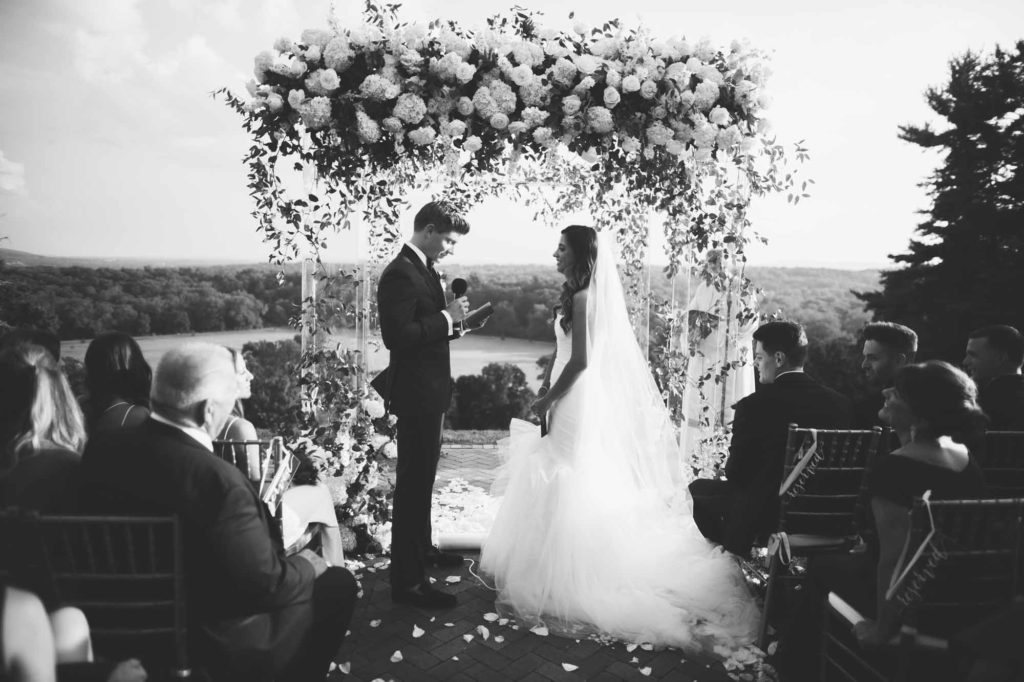
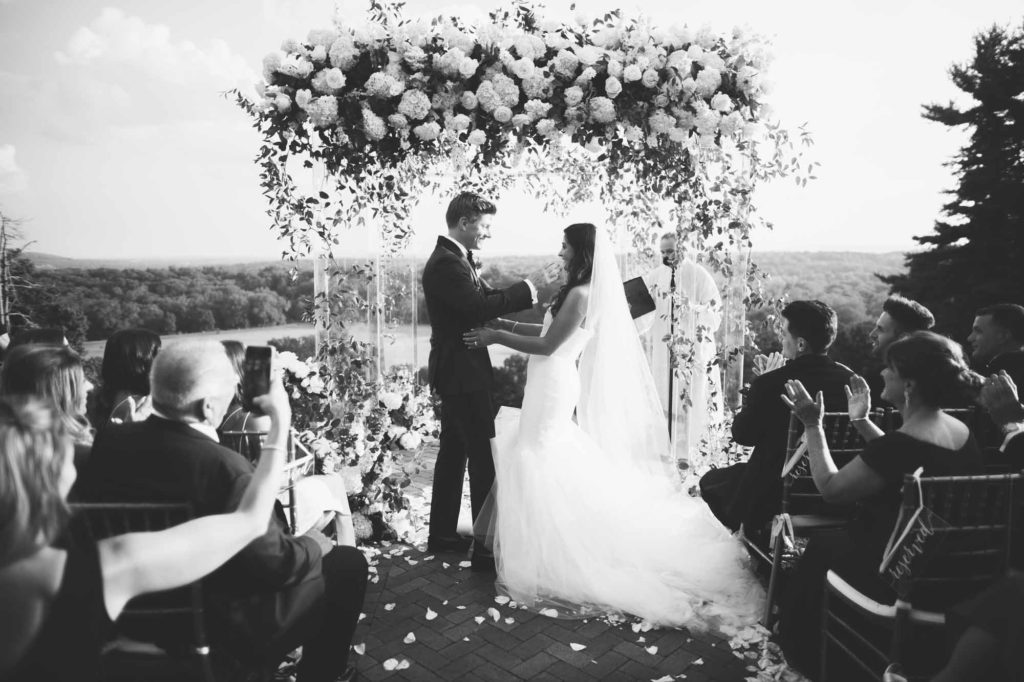
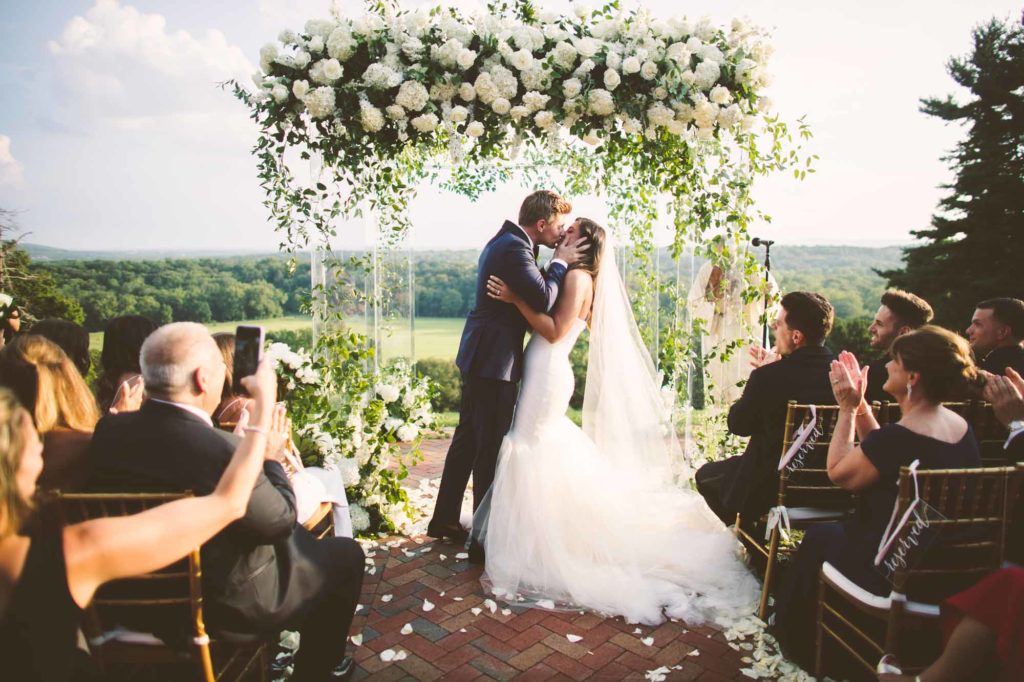
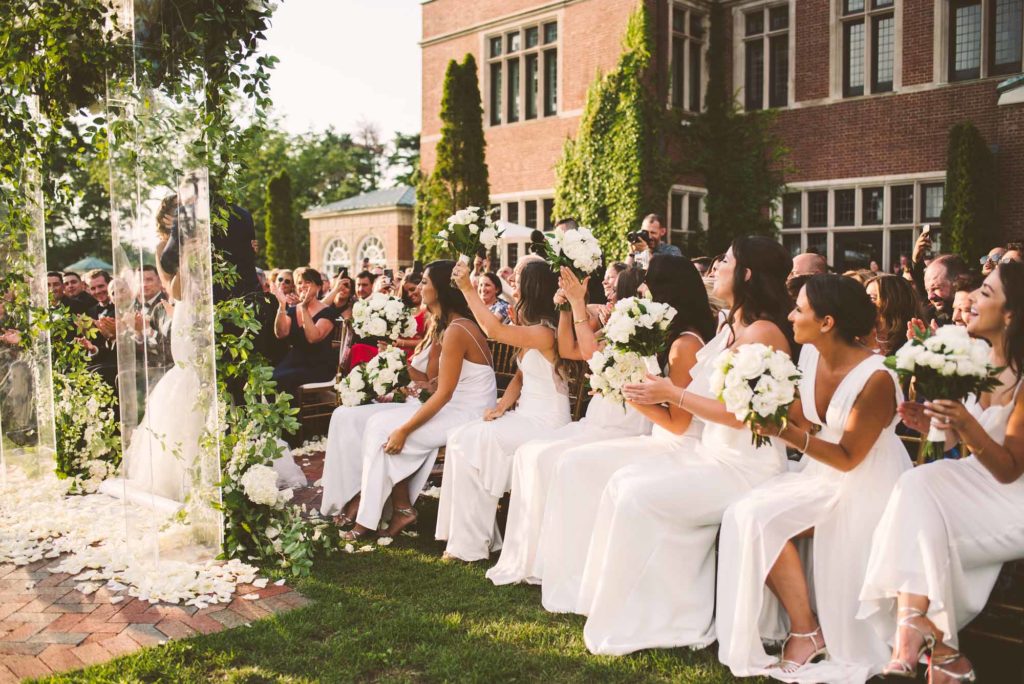
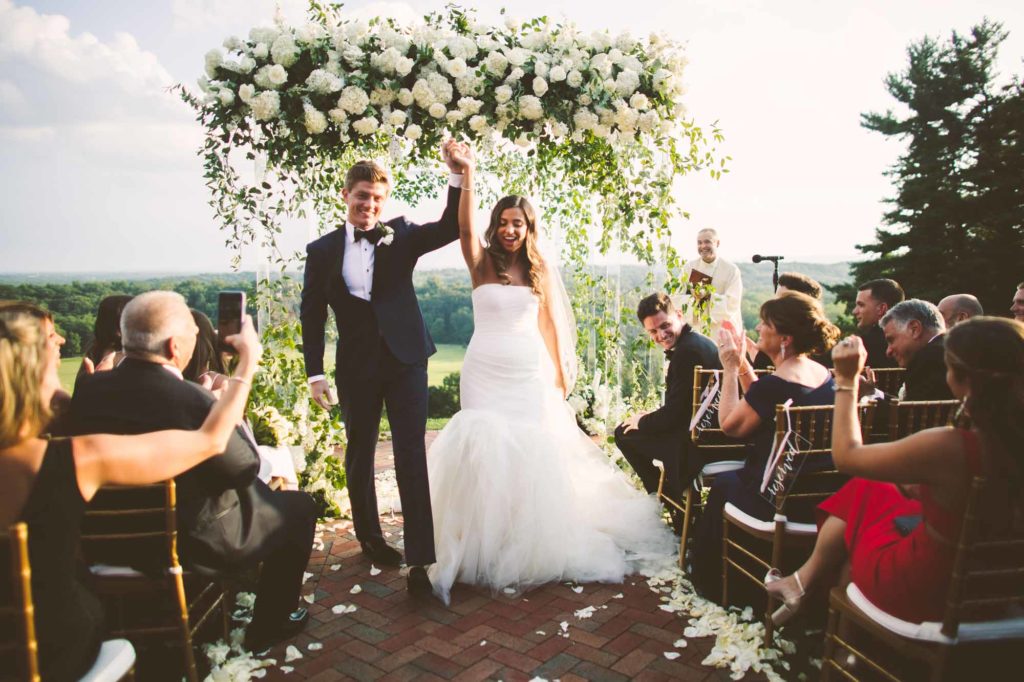
The ceremony began at half past six, outside on the terrace: brick underfoot, chiavari chairs, an arch of white hydrangea and greenery, and then the hills.
That start time is worth noting if you are building your own timeline. A 6:30 ceremony in early August puts the vows in falling light and leaves cocktail hour sitting right on the best of it.
I have photographed a lot of outdoor ceremonies in New Jersey. Most of them involve some quiet work to keep something out of the frame. At Natirar there is nothing to keep out. You can shoot straight down the aisle from the back and the background is farmland running to the horizon.
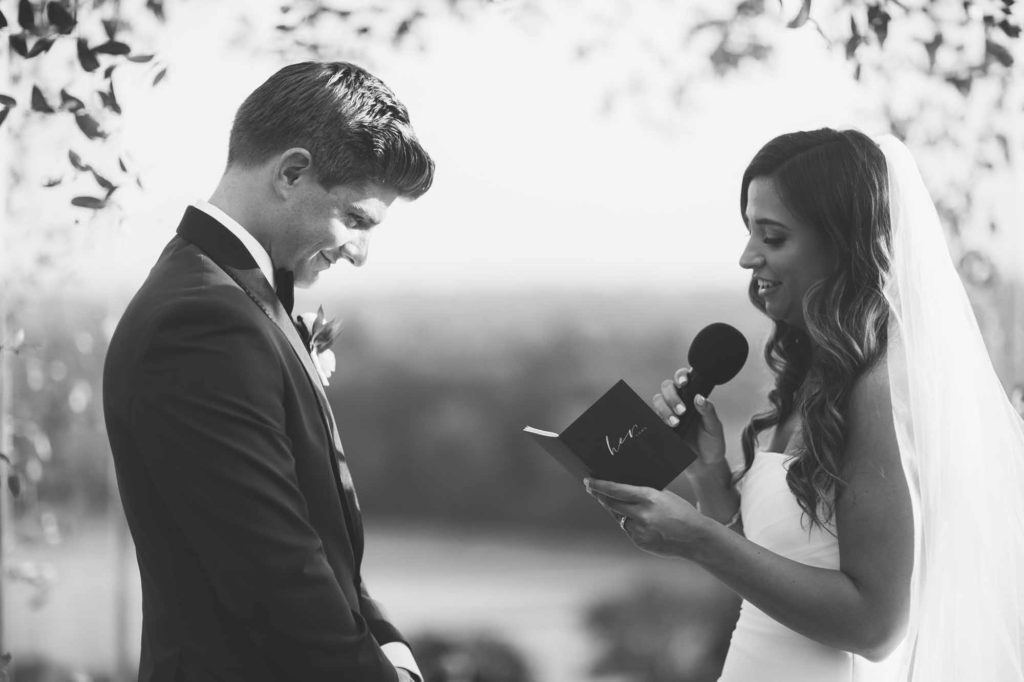
She read her vows from her phone, which is what everybody does now and which I think is completely fine. The pictures that matter from a ceremony are almost never the wide shots anyway.
One estate, four locations, and the walk between them
This is the part of Natirar that will shape your timeline more than anything else, and it is worth understanding before you build it.
The getting-ready rooms, the ceremony terrace, the cocktail area and the reception space are not stacked on top of each other. That separation is exactly why the day feels like it moves through chapters instead of sitting in one room with the lighting changed. It is one of the best things about the property.
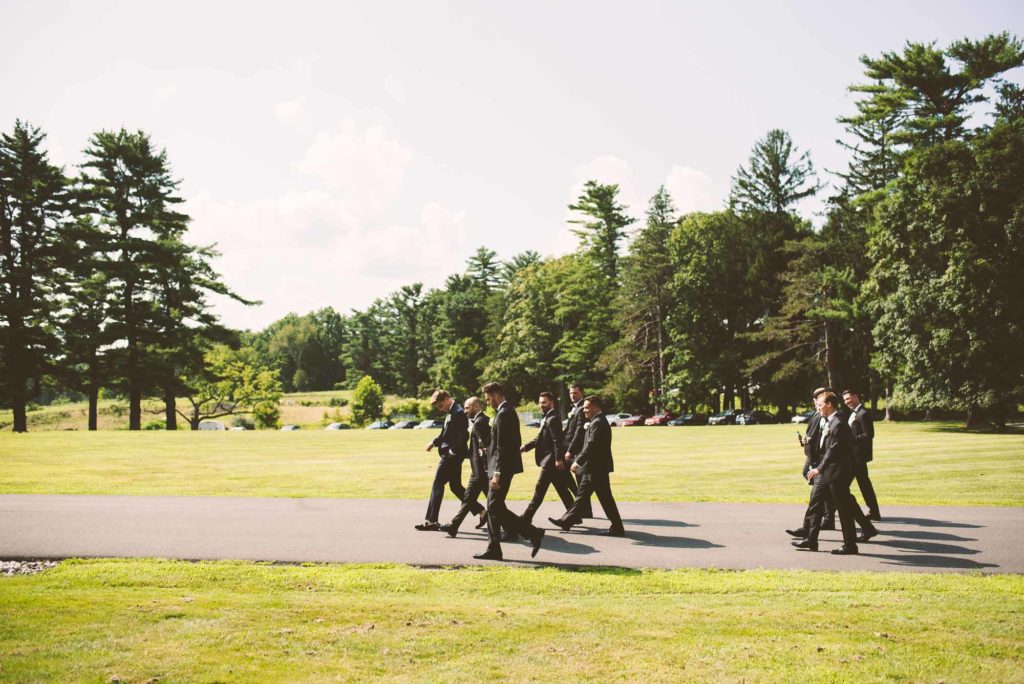
It also means people walk. Guests walk, the wedding party walks, and I walk, usually twice, because I am scouting ahead of where everyone is going.
What it costs you is time. What it buys you is variety. In one day at Natirar I photographed inside a paneled Edwardian interior, on a garden path, on an open terrace above farmland, in a candlelit dining room and out on a lawn at sunset. Most venues give you two of those.
Build the extra fifteen minutes into every transition. If you do, the walk becomes part of the day. If you do not, it becomes the thing that eats your portrait time.
Cocktail hour and the light
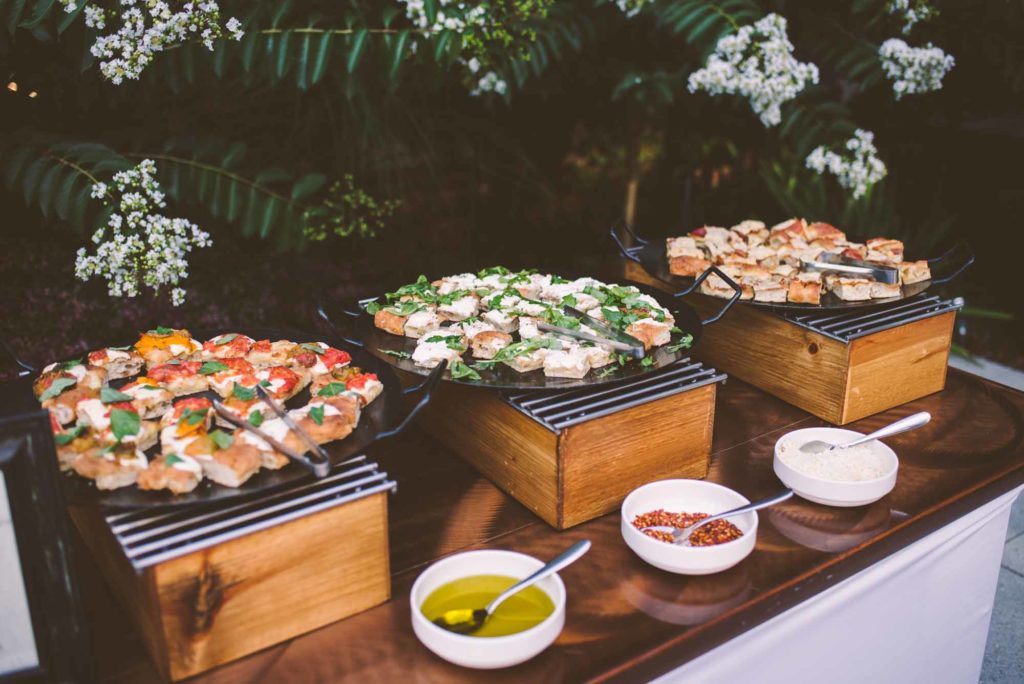
Cocktail hour is when I take couples back out, and at Natirar it is not negotiable if you want the good frames.
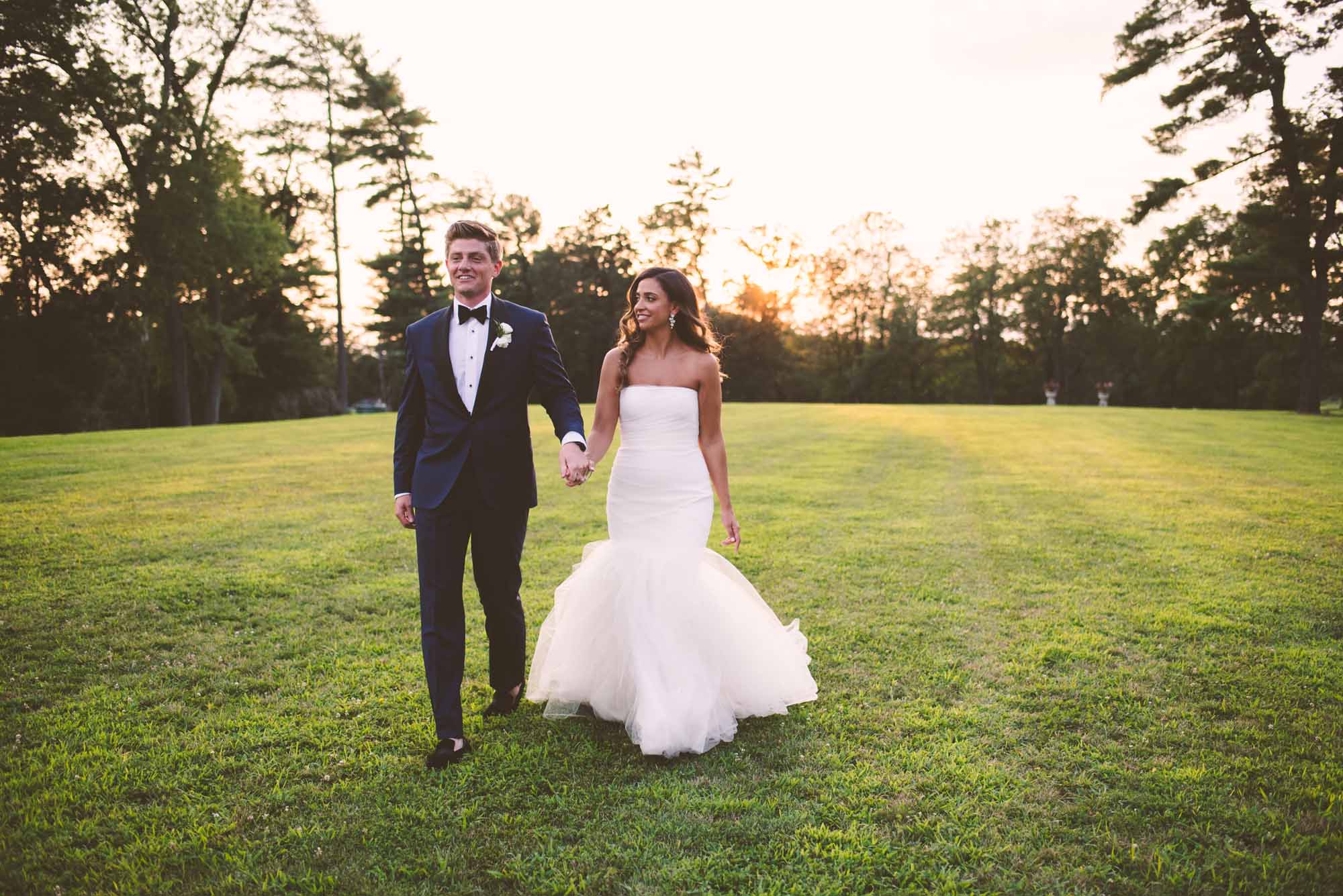
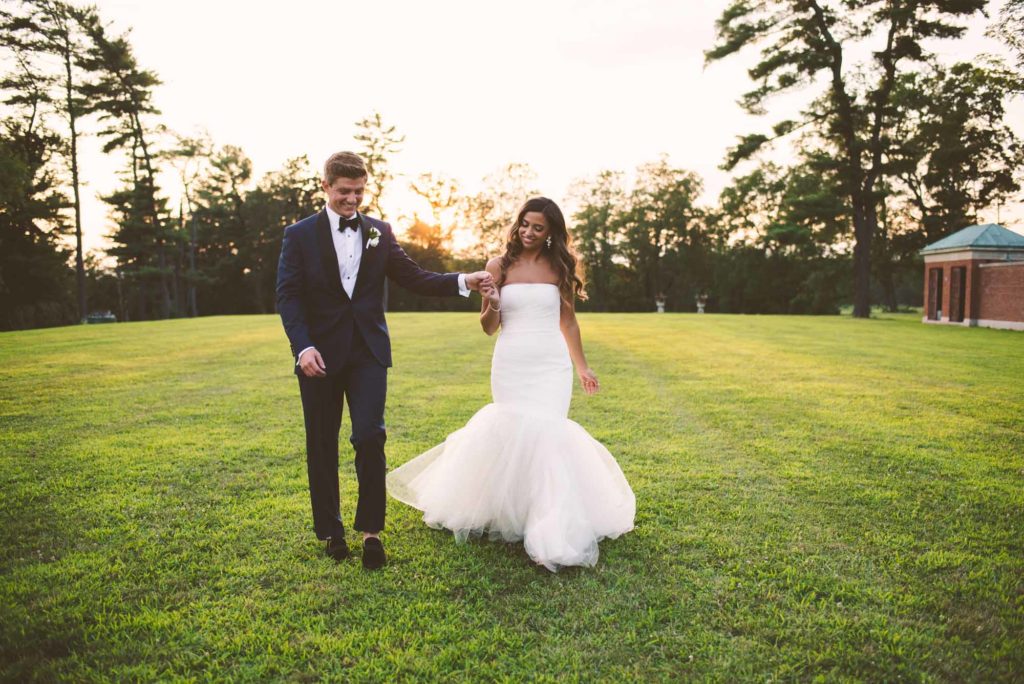
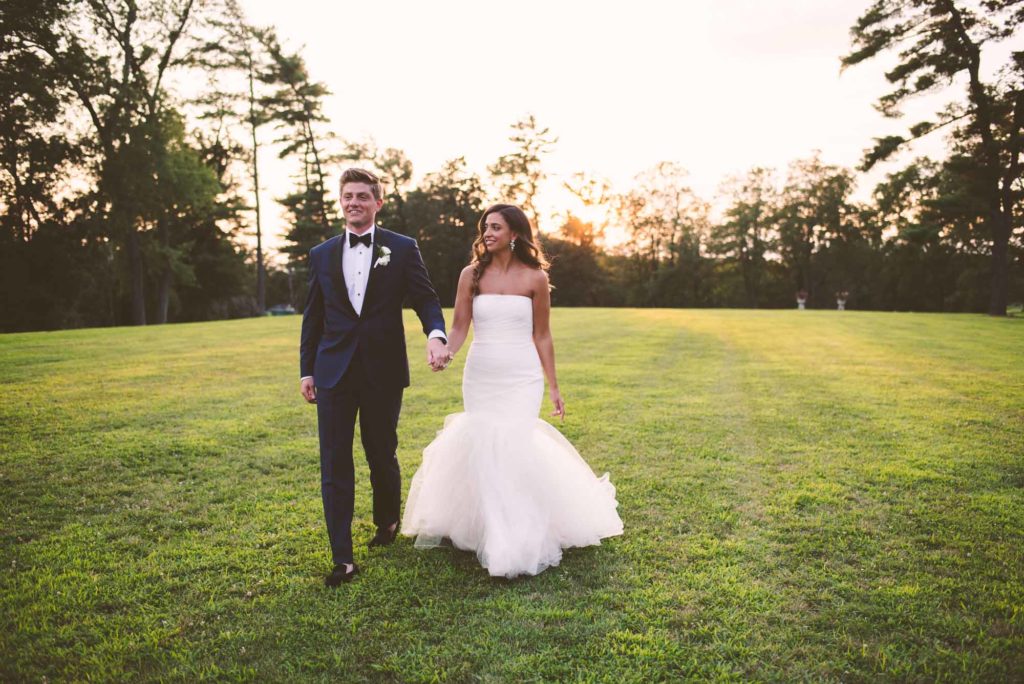
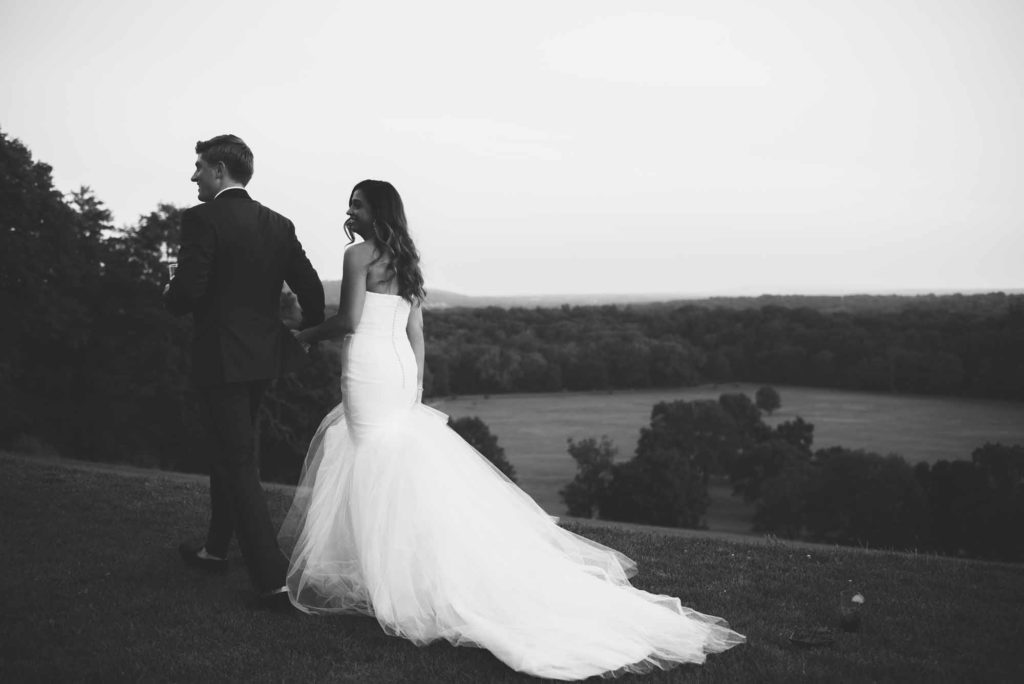
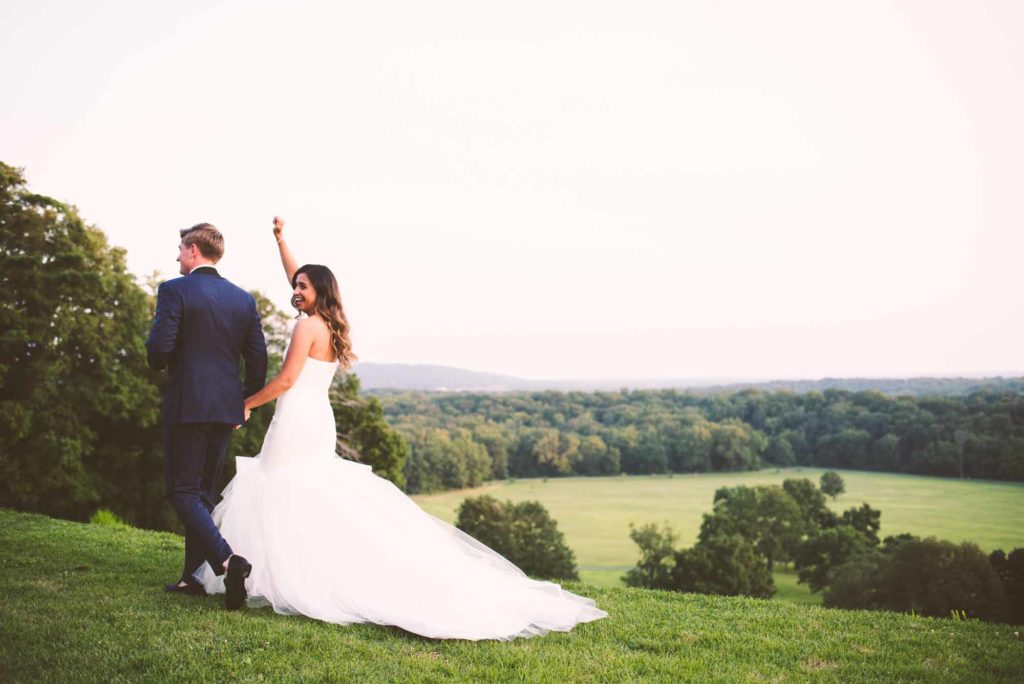
The lawn at Natirar runs west. In the last hour before sunset the light comes across the grass rather than down onto it, and everything it touches goes gold. It is the single best photographic asset the property has, and it lasts about forty minutes.
I walked Alyssa and Joe out onto the lawn with the tall pines behind them while their guests were still with the canapés. Those sunset frames, the two of them walking back toward the house holding hands, are the ones I would put in front of anyone considering this venue.
The reception
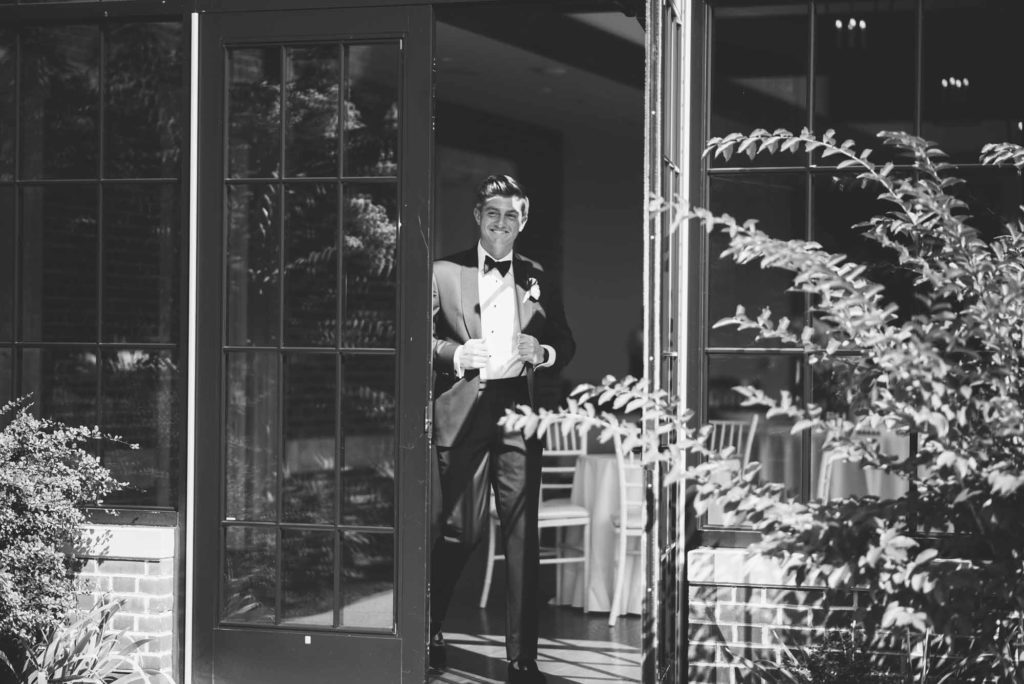
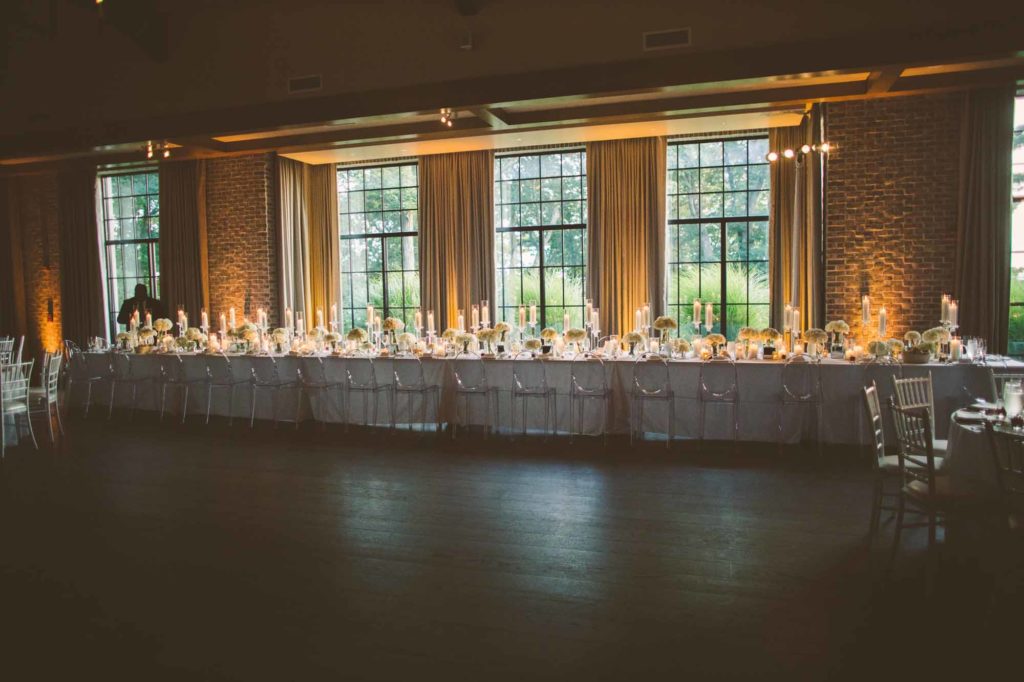
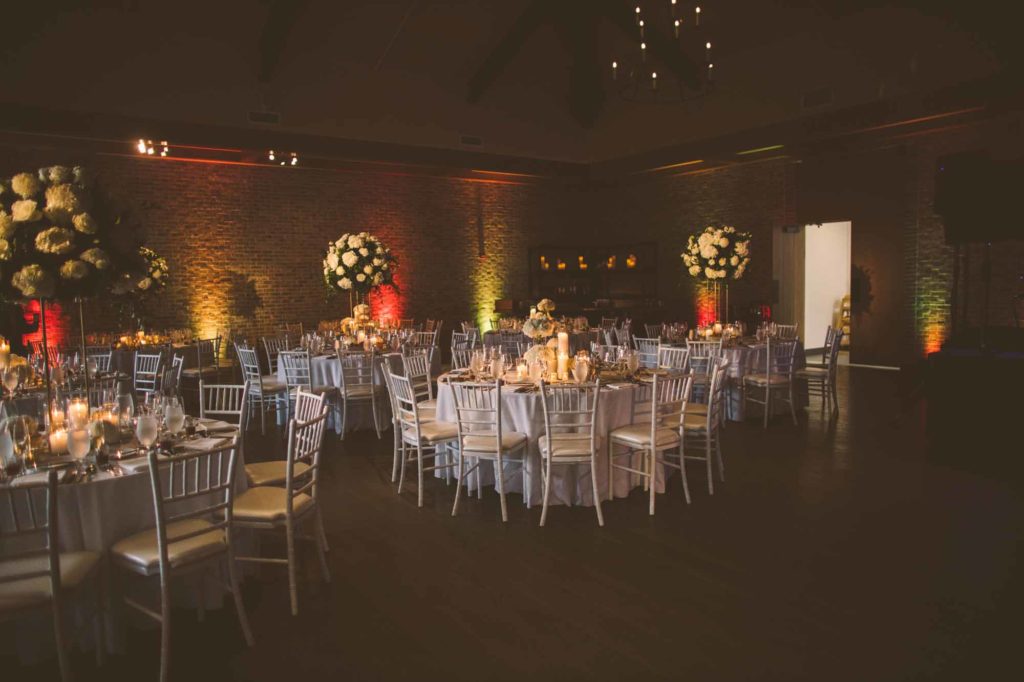
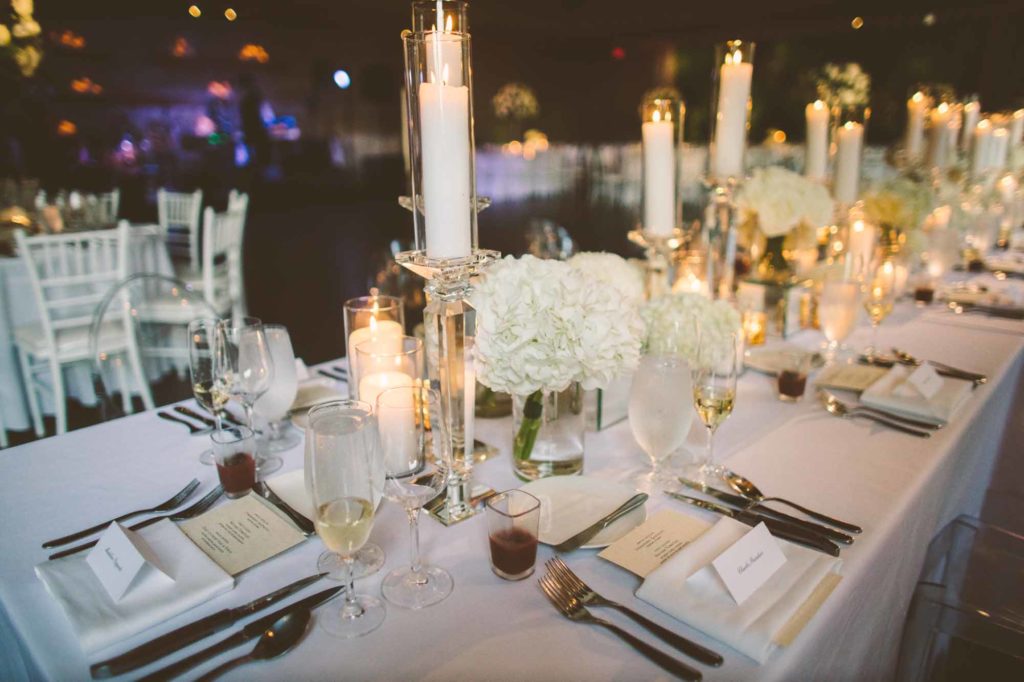
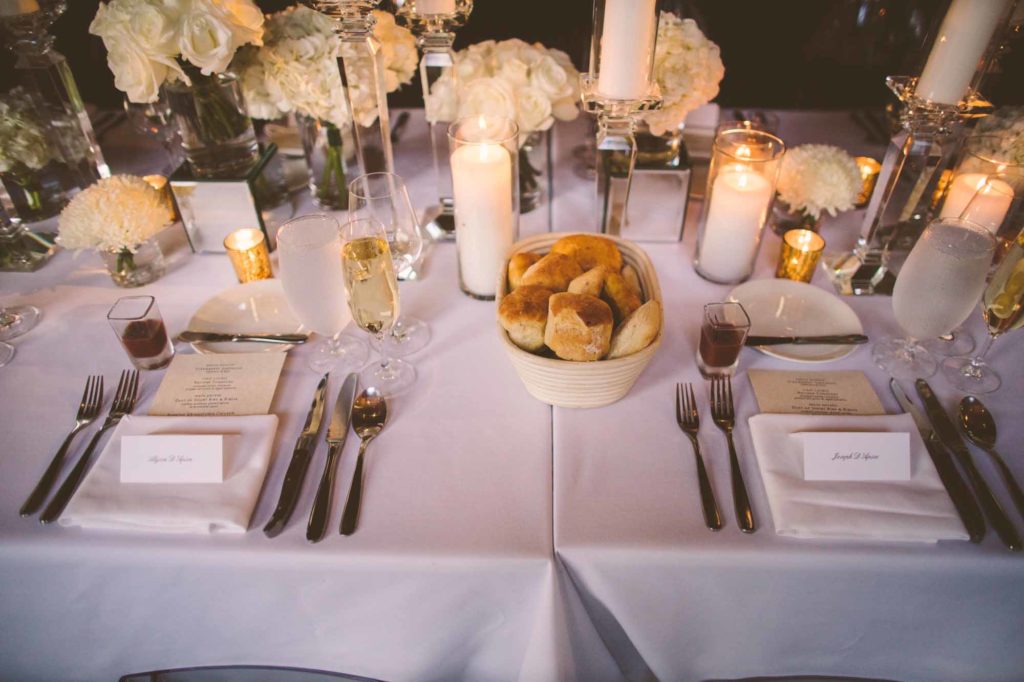
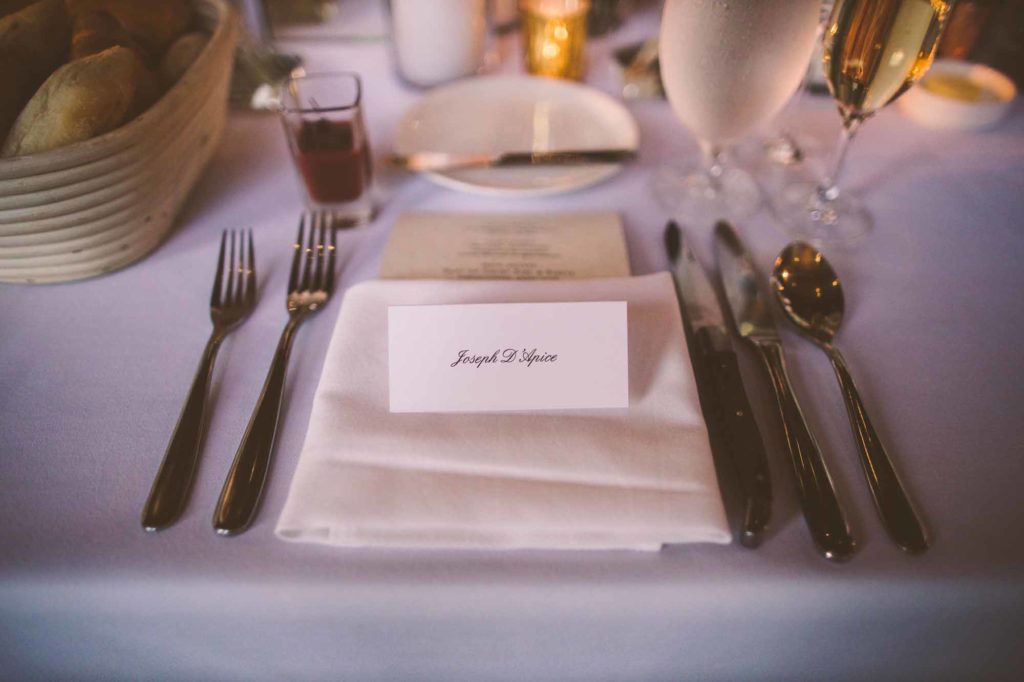
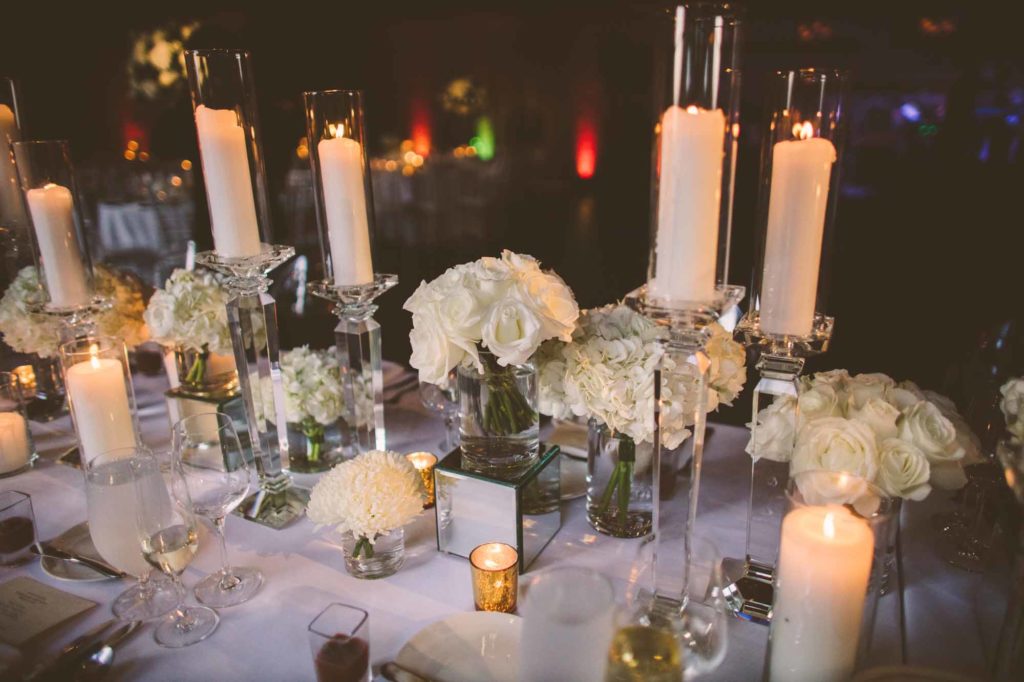
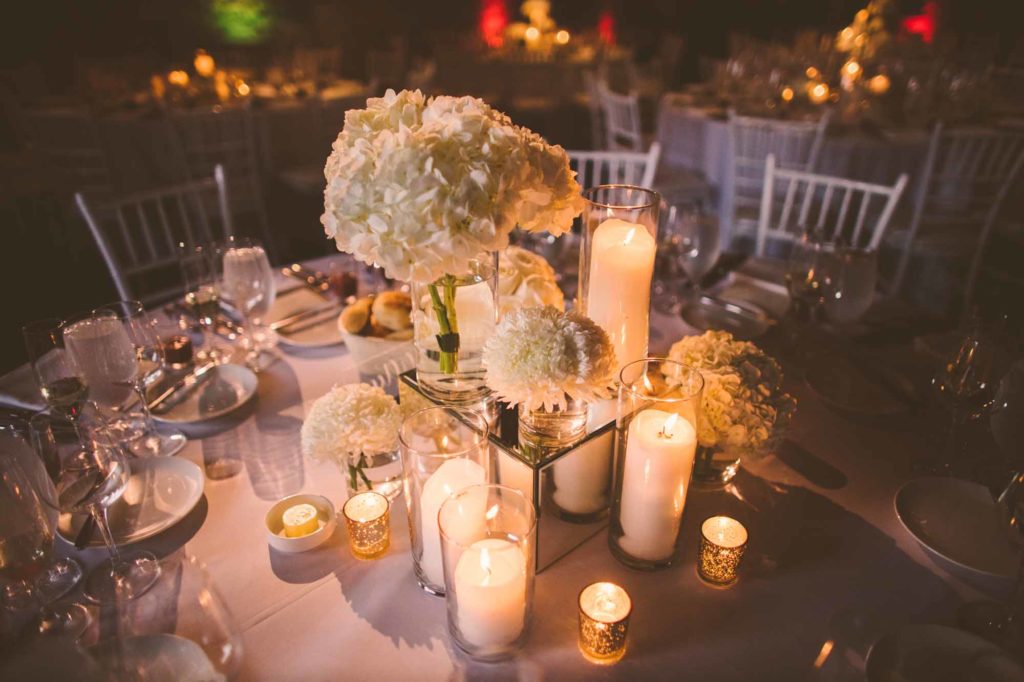
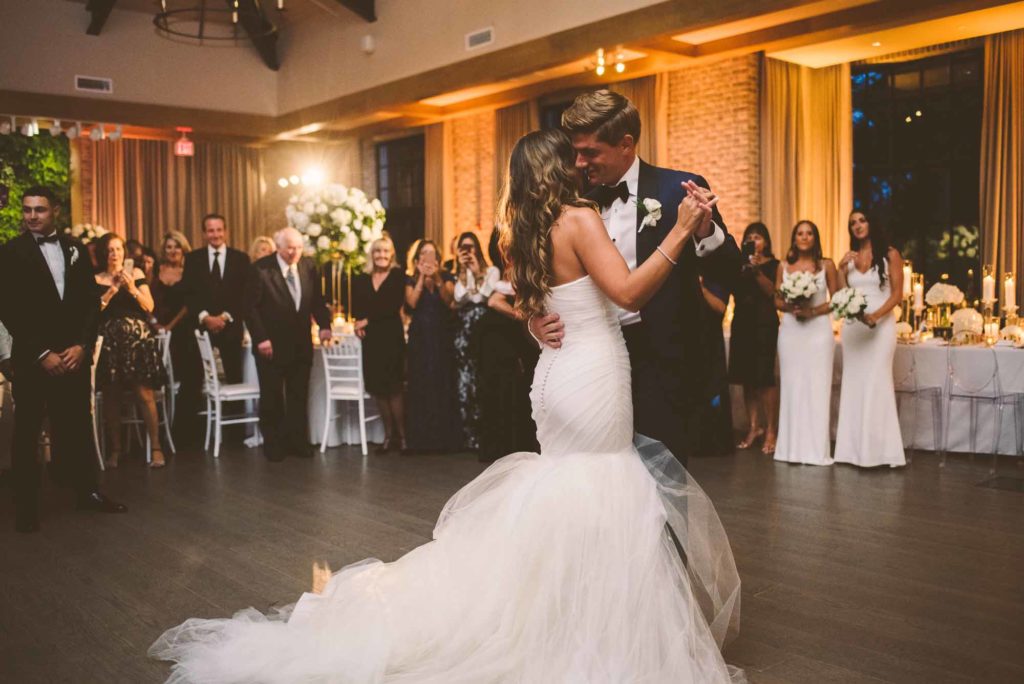
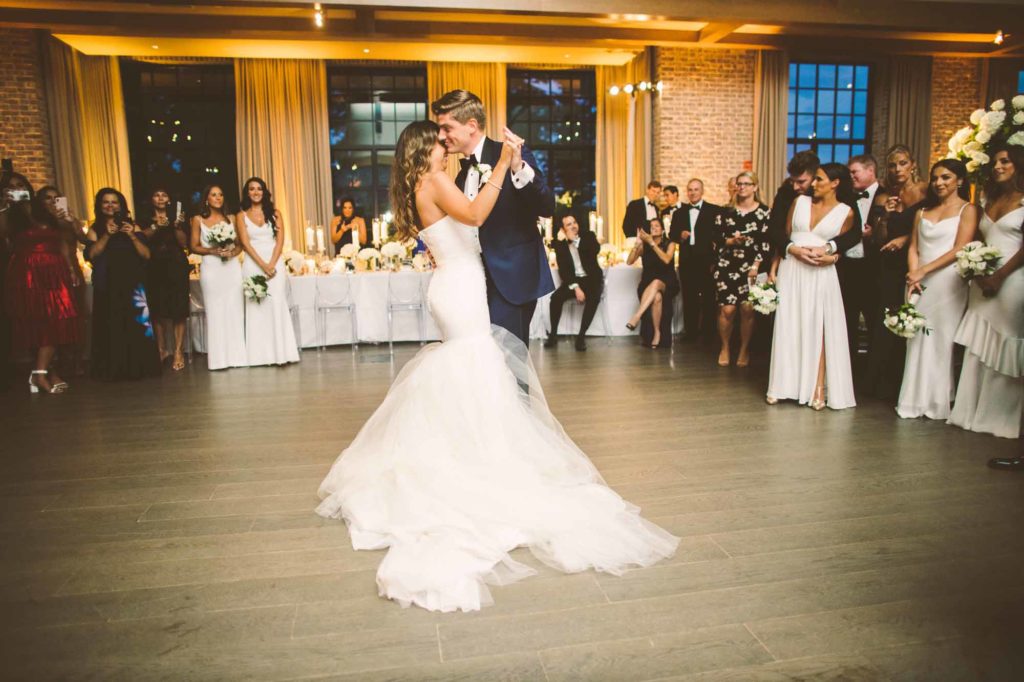
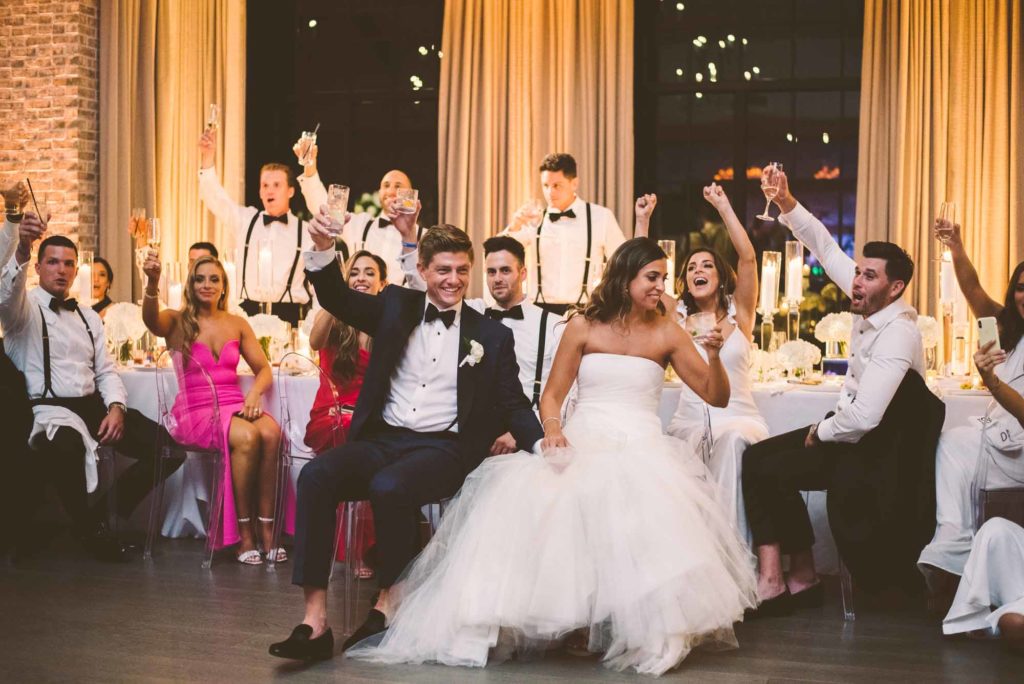
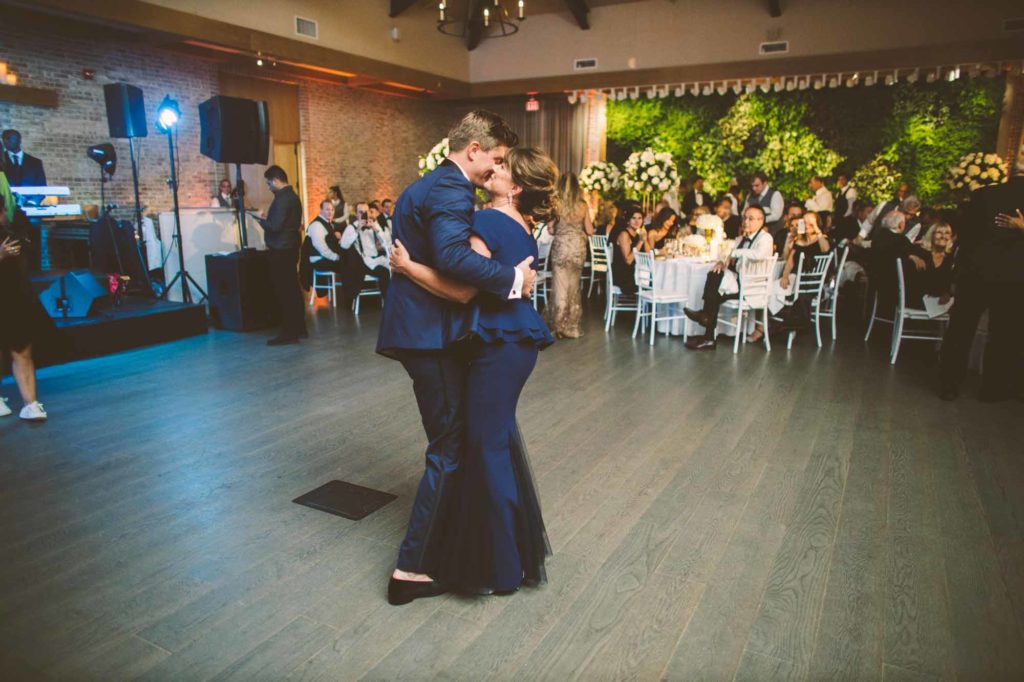
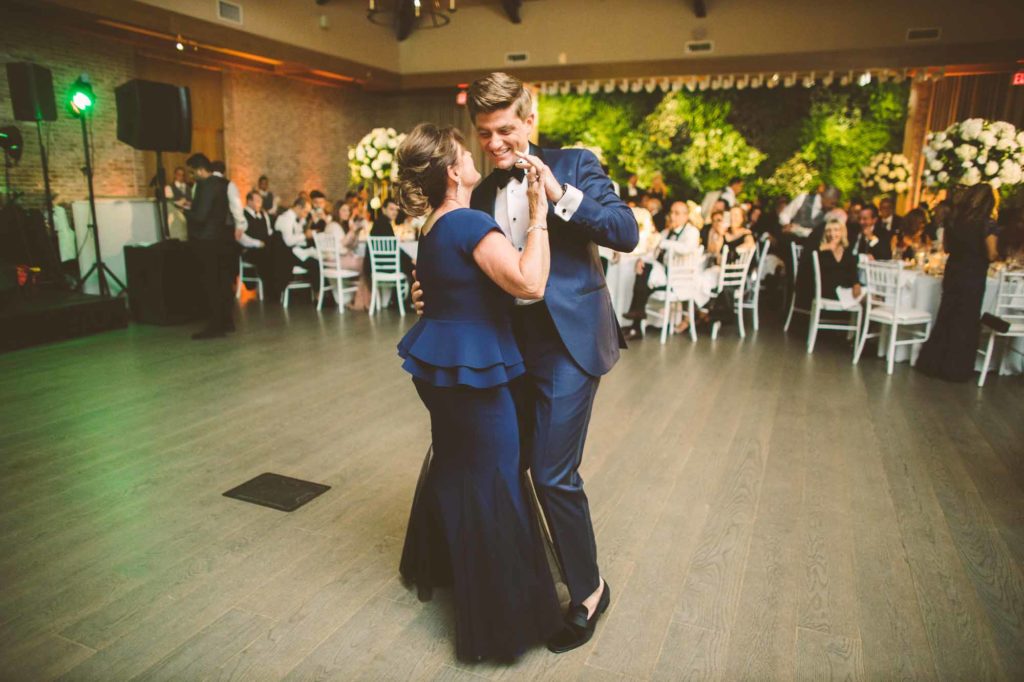
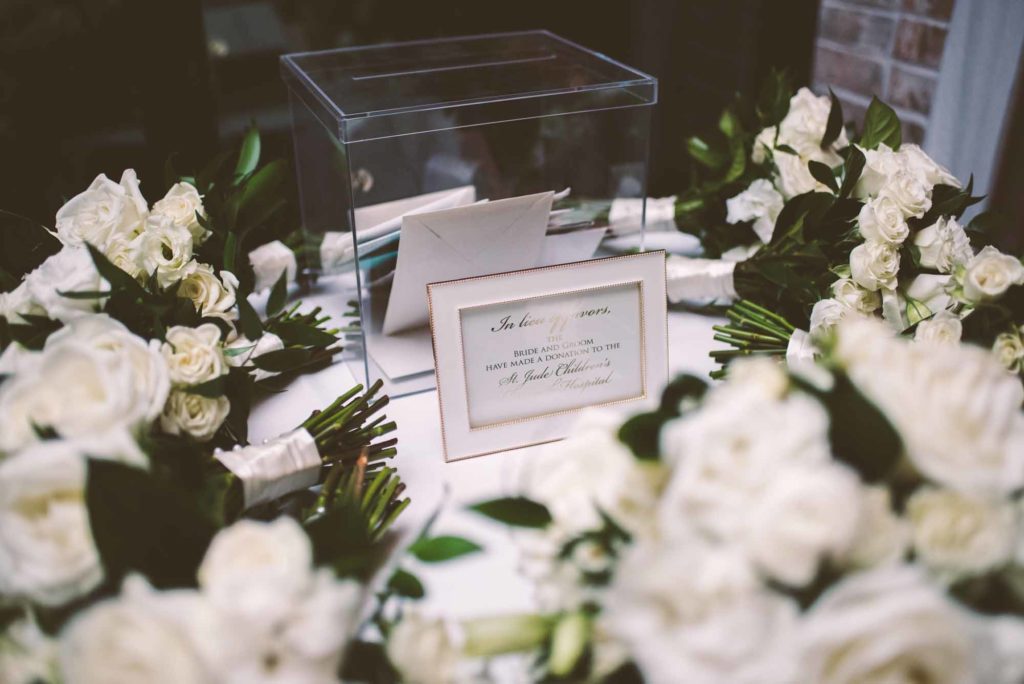
Dinner was inside, and the room is a completely different register from the terrace: dark ceiling, brick, warm uplighting, long tables under pillar candles and white roses.
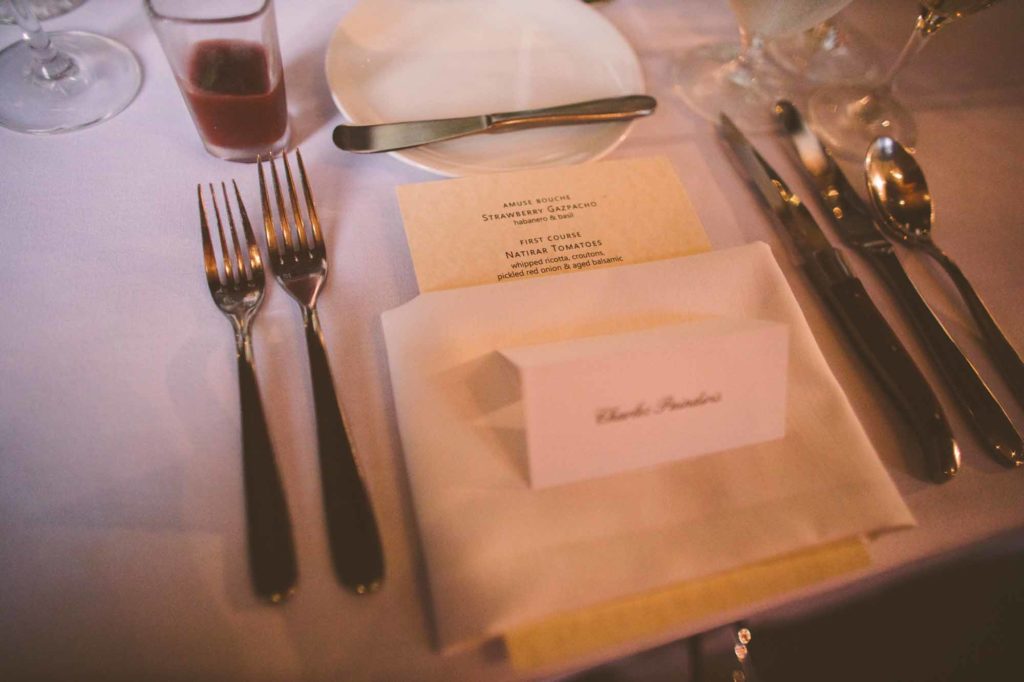
The detail frames from that room are some of my favorites from the whole wedding. Menu cards, gold votives, champagne caught mid-pour, a bread basket in the middle of a table that had been set with real care. Jardiniere Fine Flowers did the florals, and the restraint of it, mostly white and green, is why the candlelight works as well as it does.
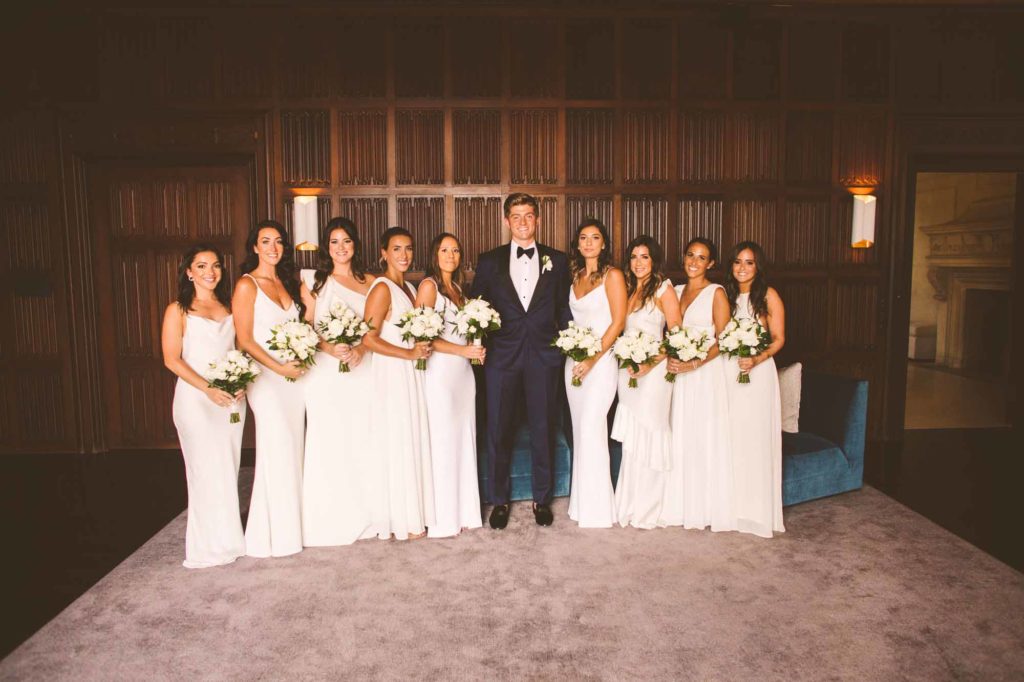
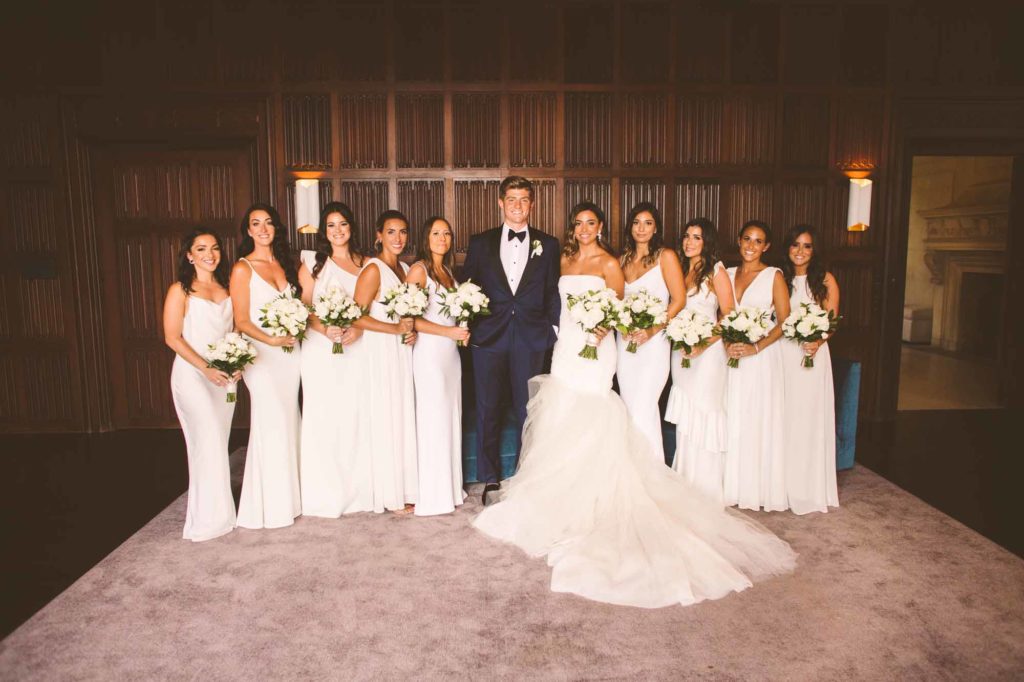
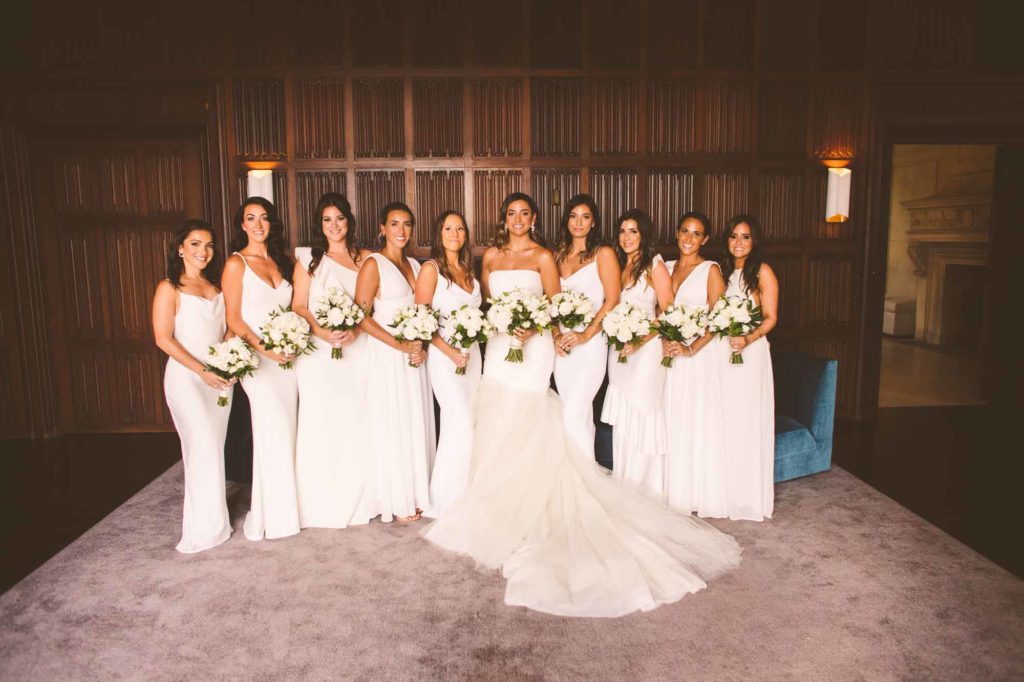
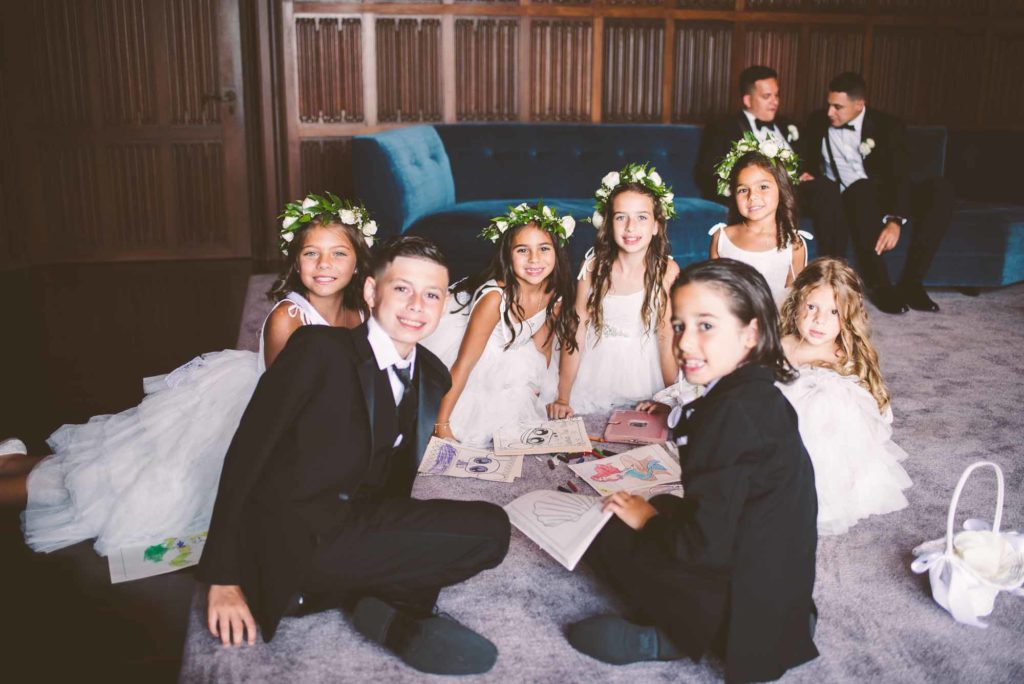
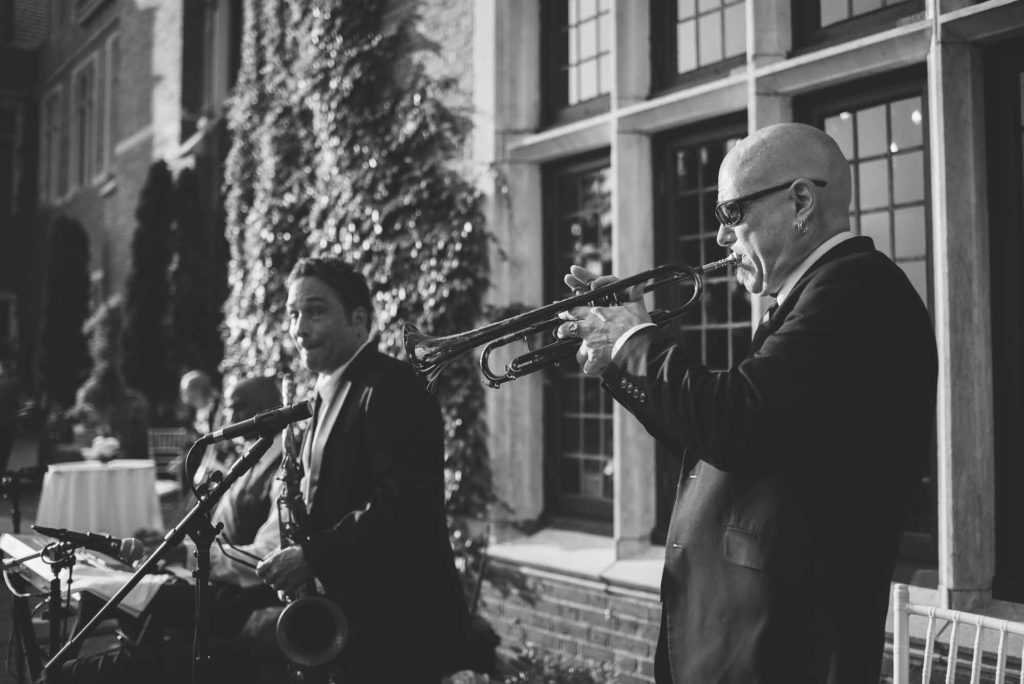
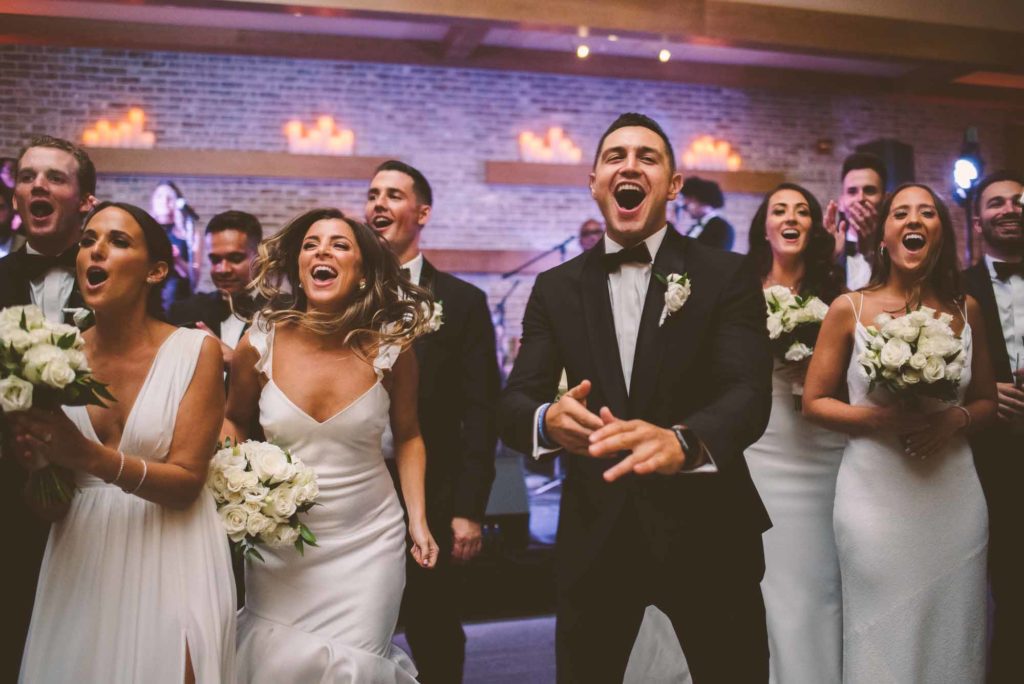
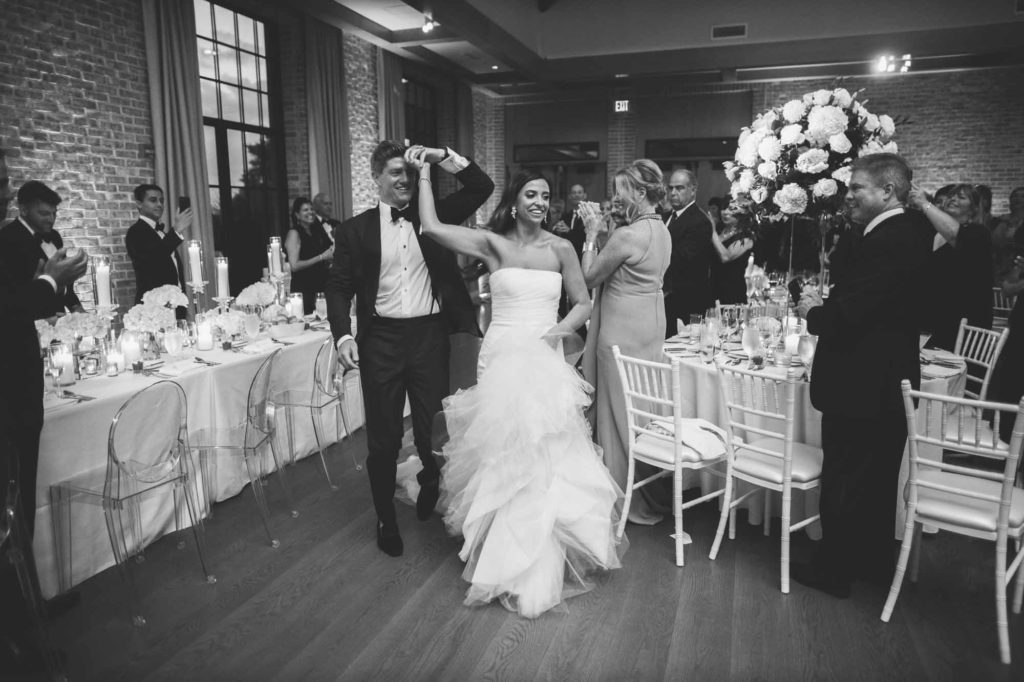
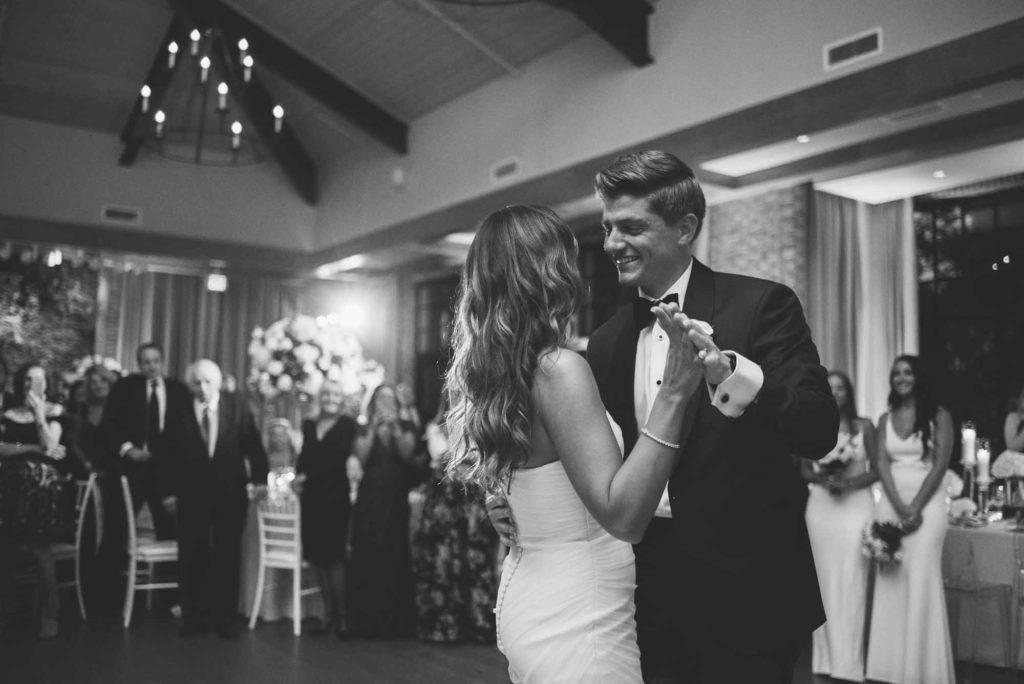
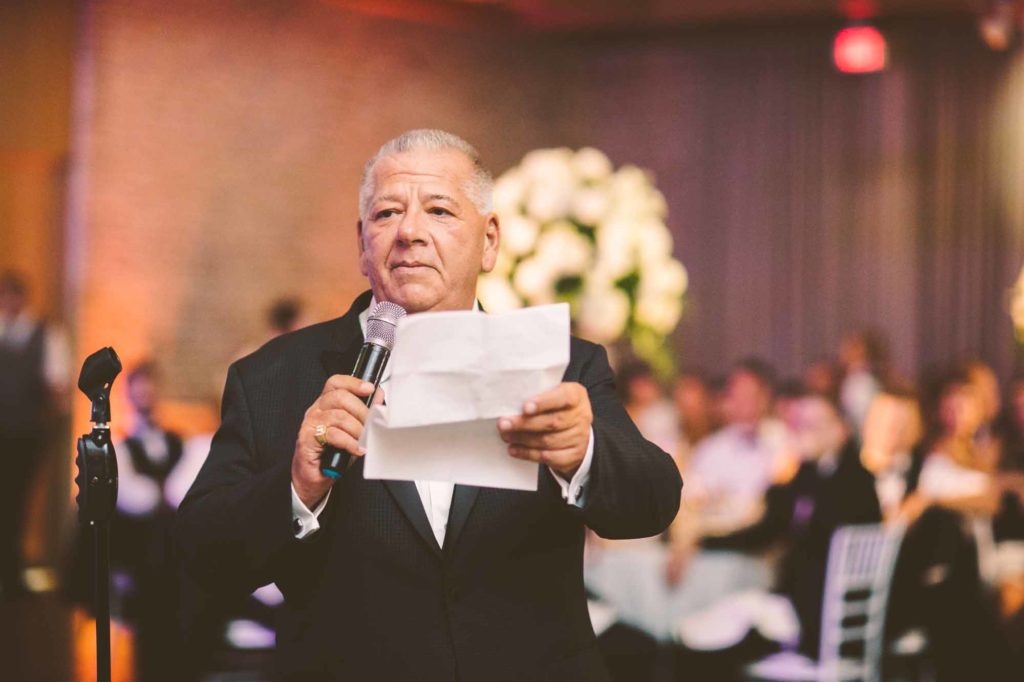
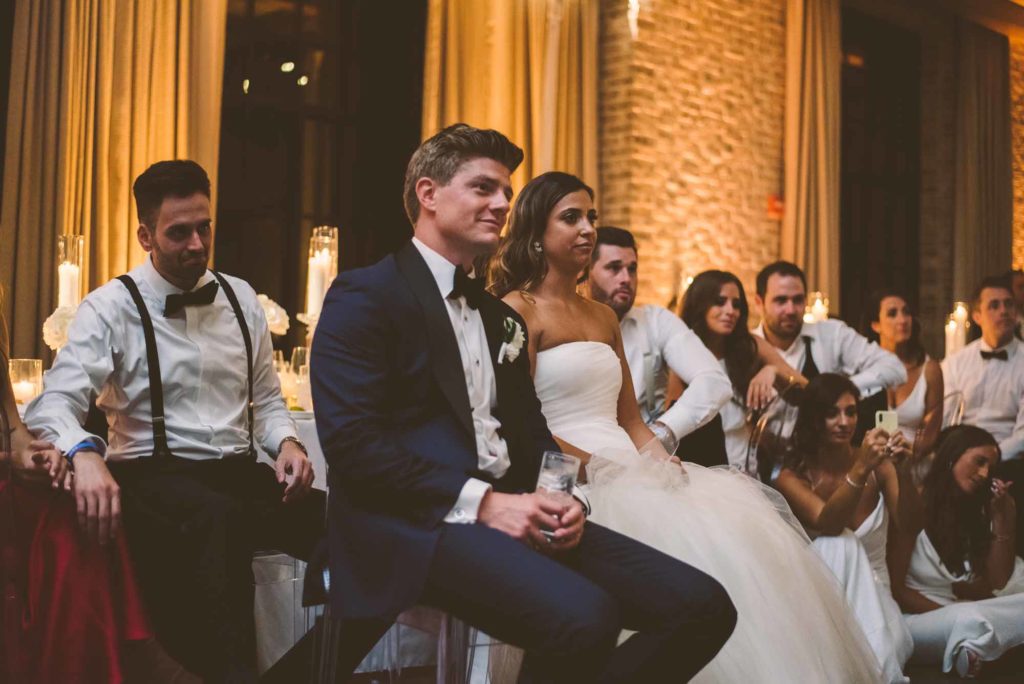
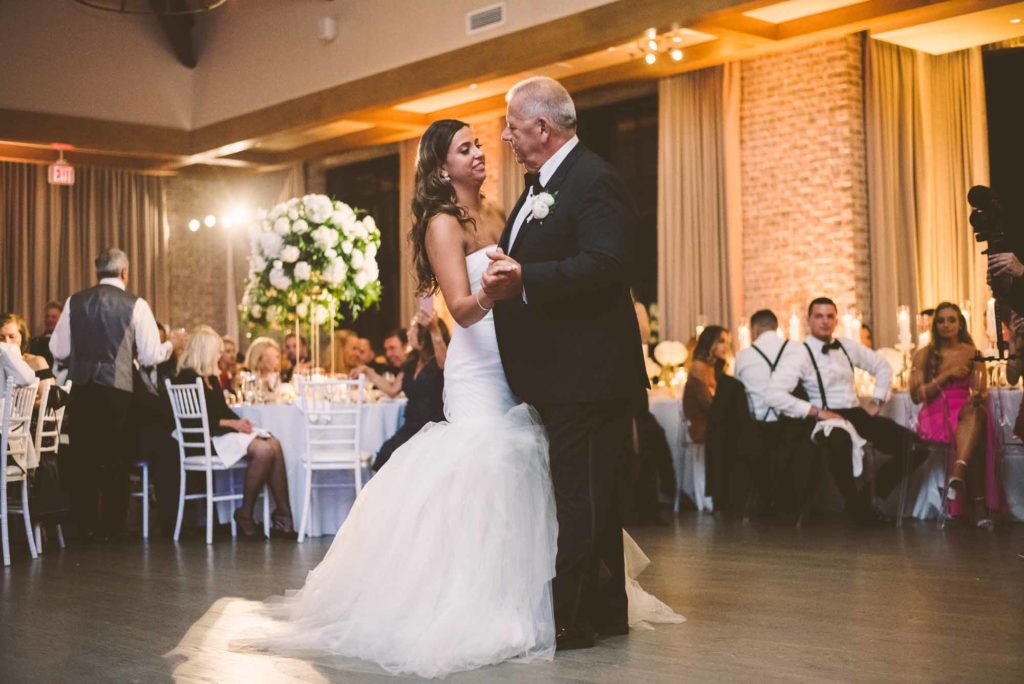
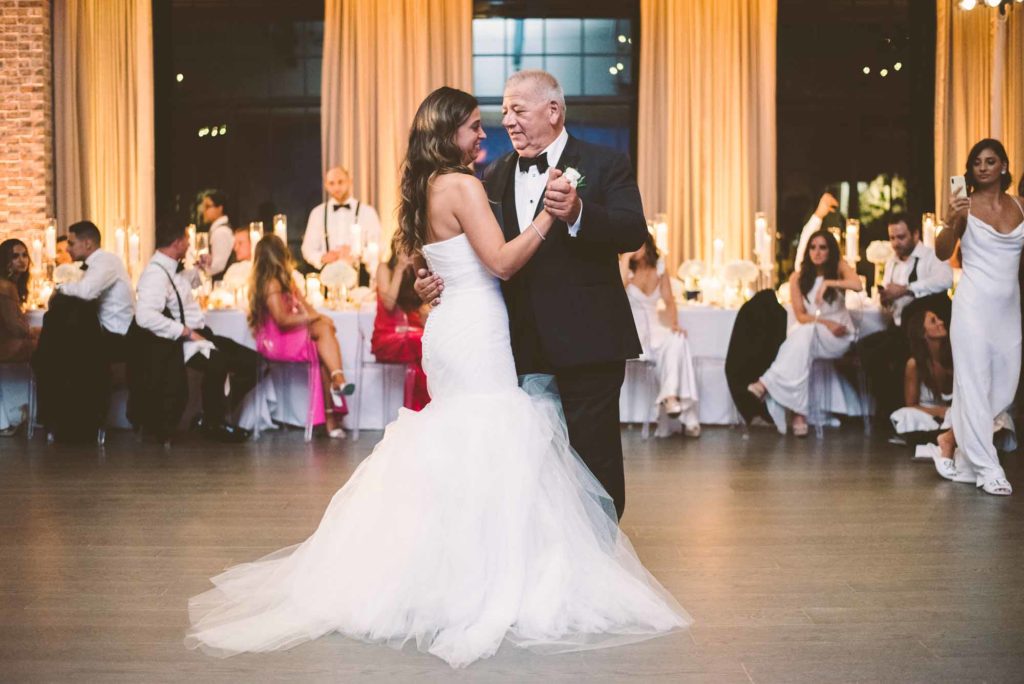
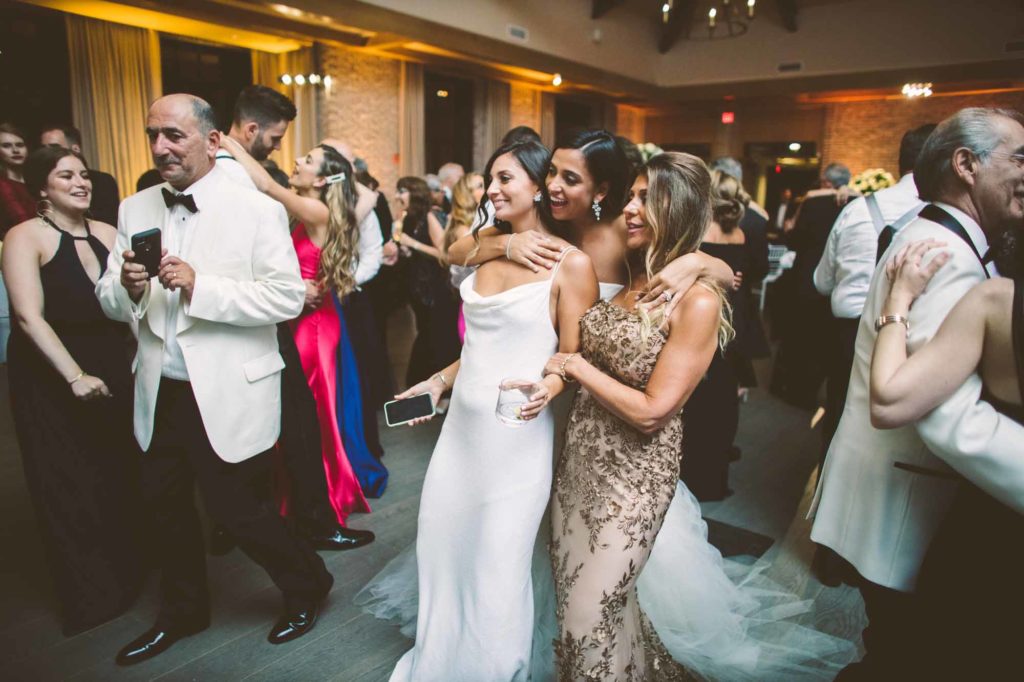
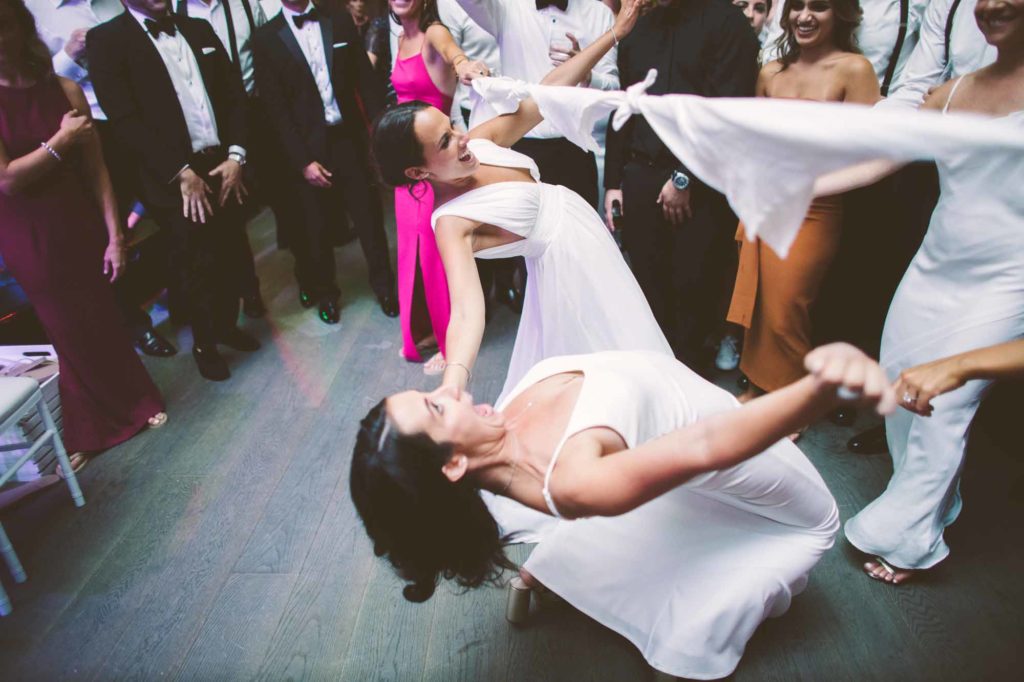
They came in to “One More Time” by Daft Punk, which tells you most of what you need to know about the evening. The first dance followed, then Mr. Latilla and Alyssa to “My Little Girl”. Bridesmaids in cream along the edge of the floor, and every phone down for once.
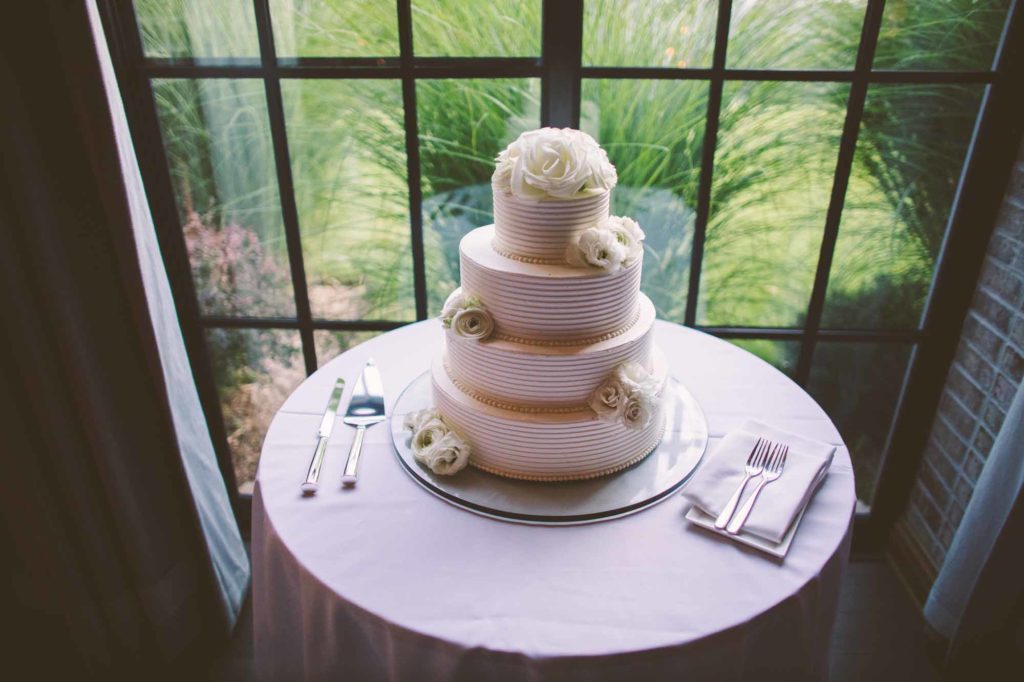
Dessert, dancing and a cigar table
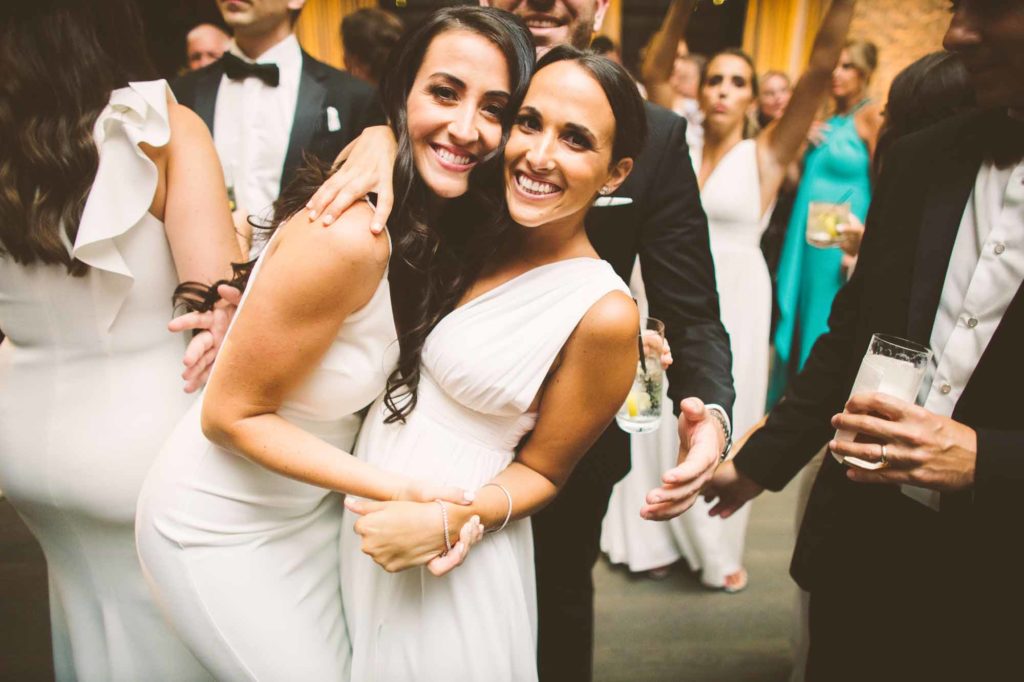
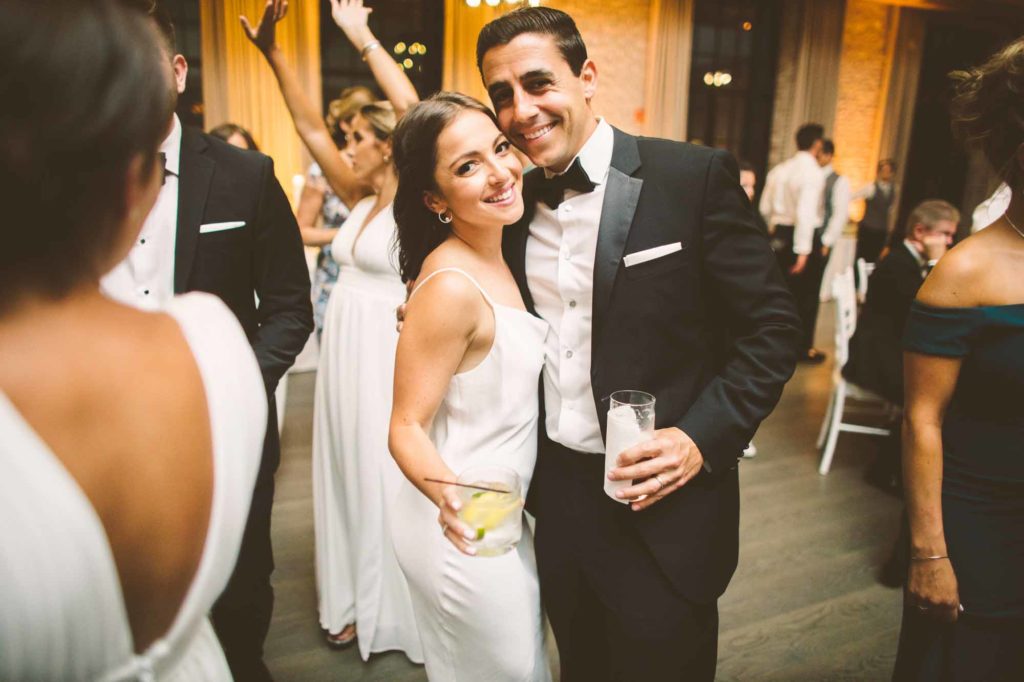
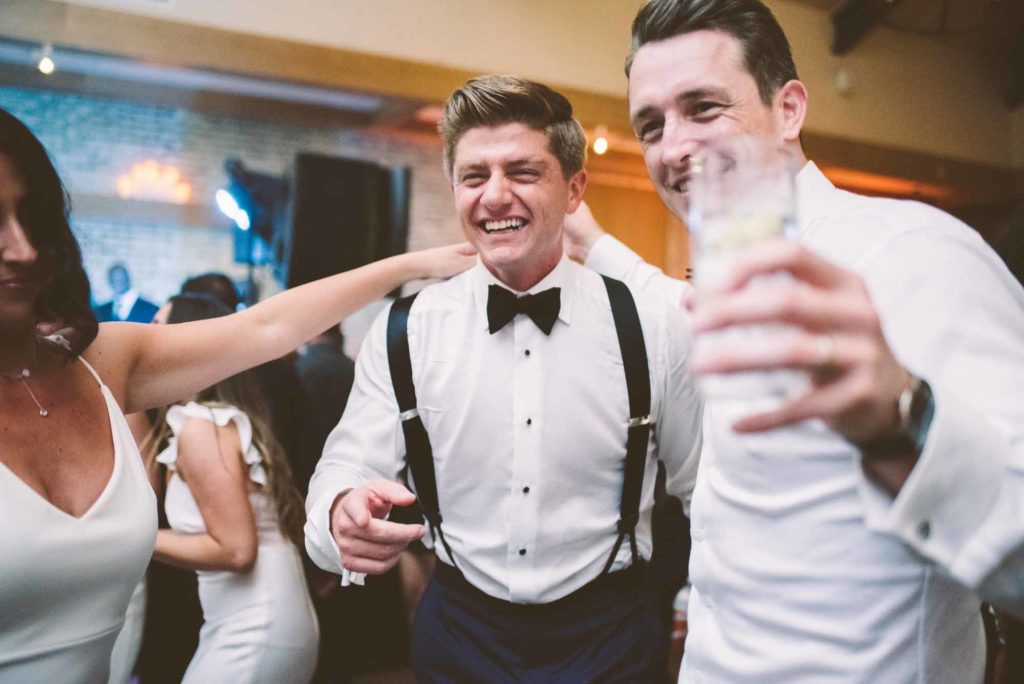
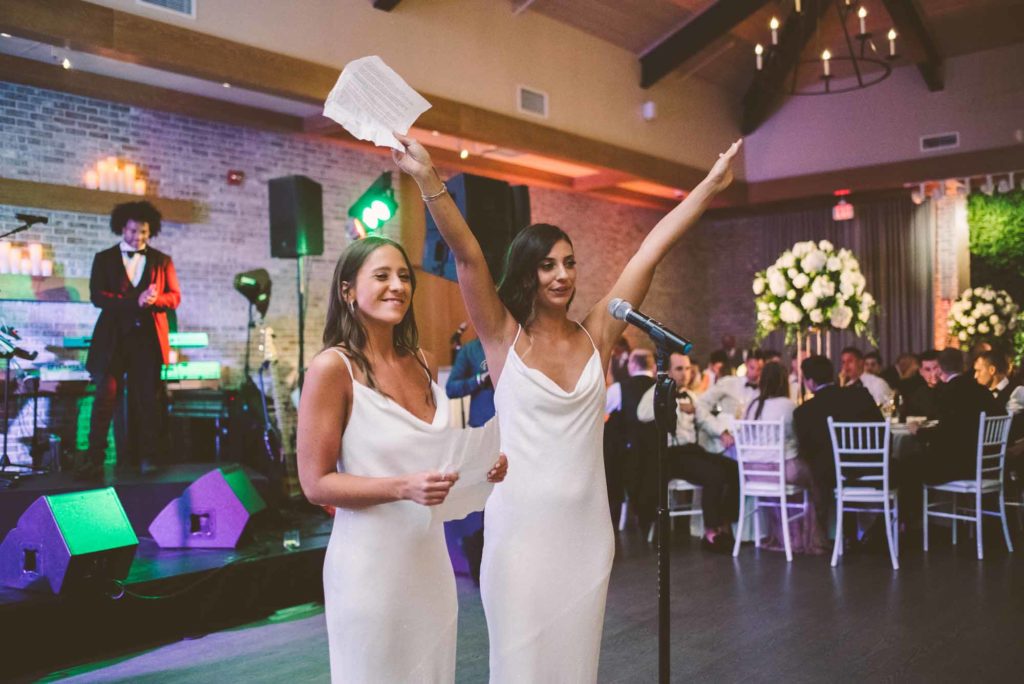
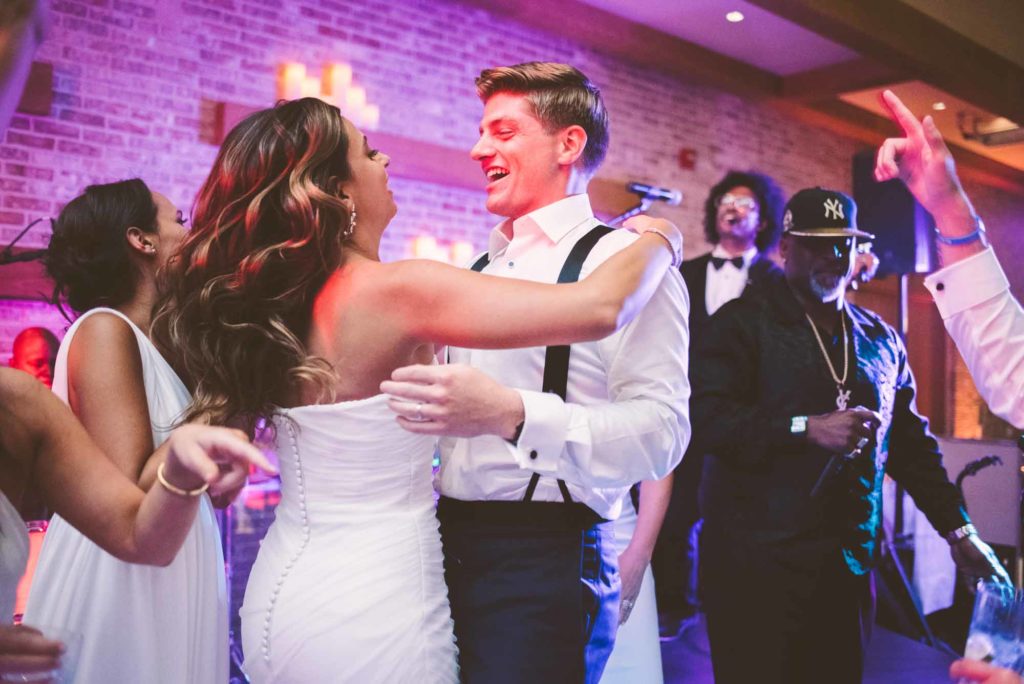
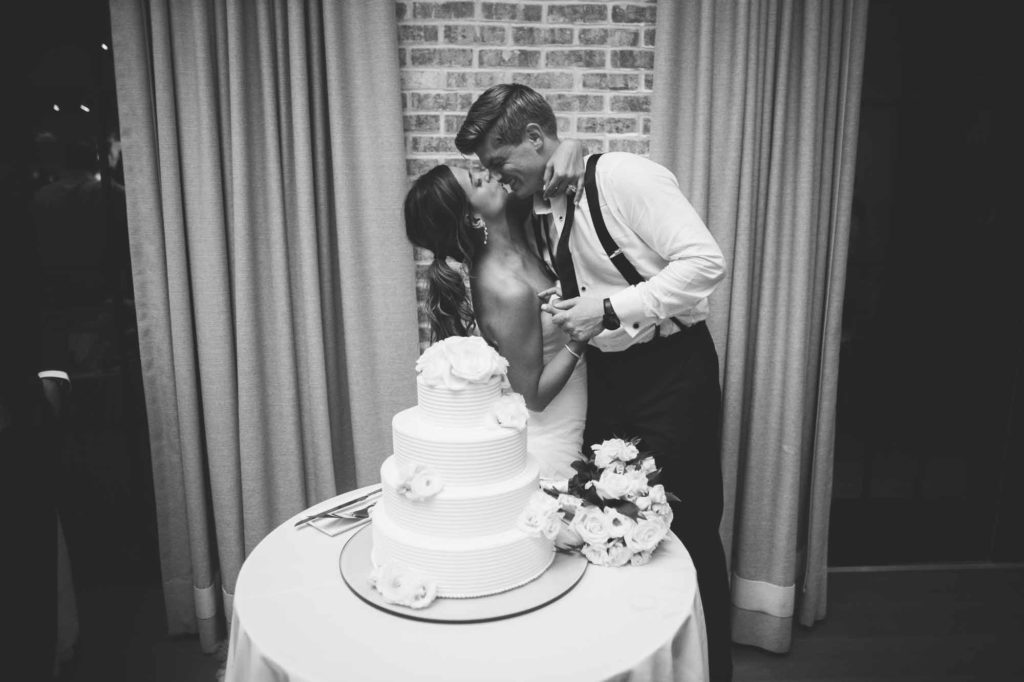
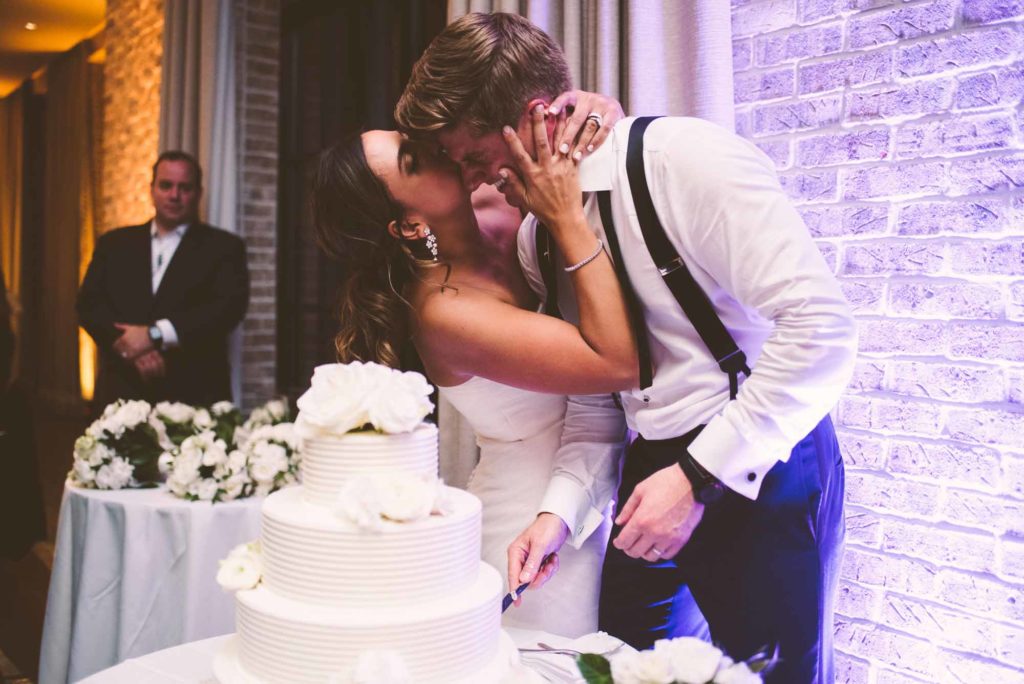
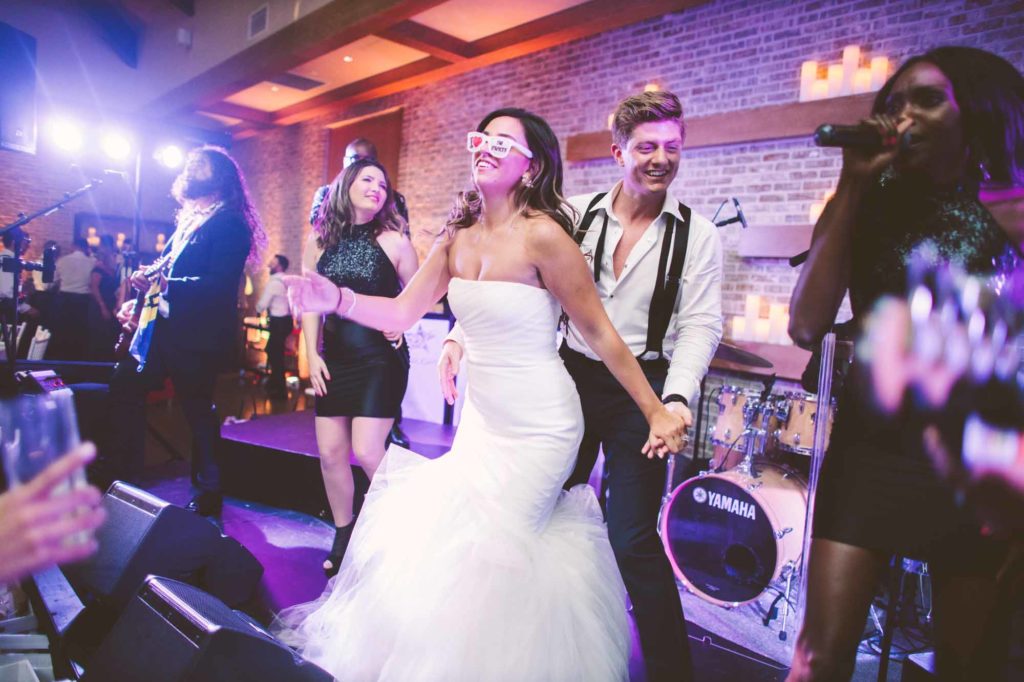
Starlight Music played and the floor stayed full, which is the short version of a very good night. The longer version is that Alyssa and Joe were unusually good at the last two hours of a wedding, which is the part most couples plan least.
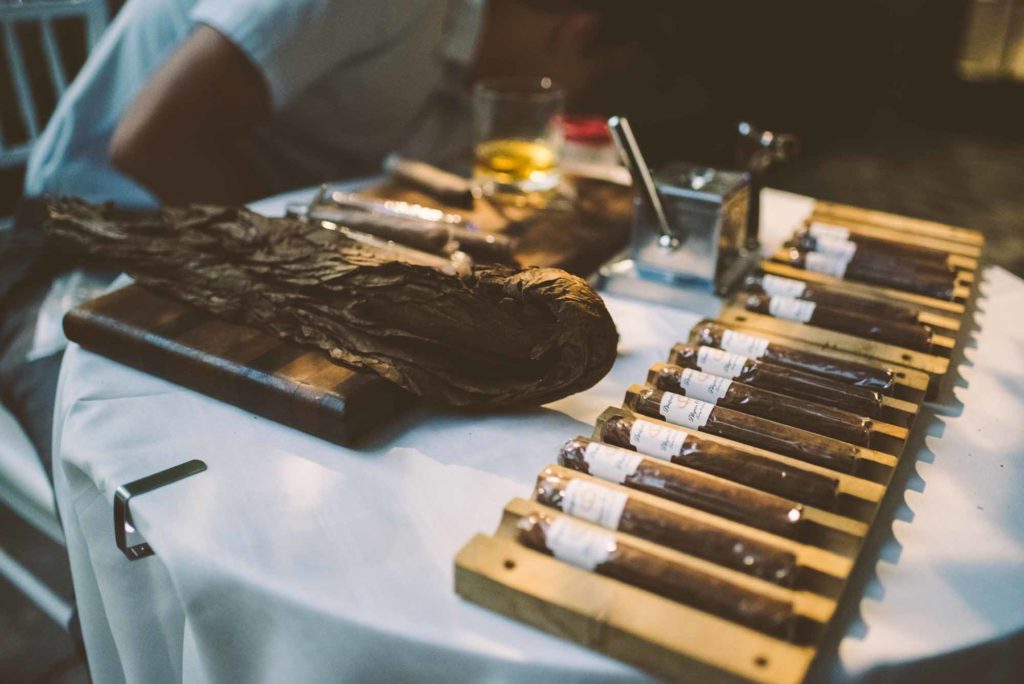
Tony Santana Cigar Company set up a rolling station out on the terrace: tobacco leaves laid across boards, finished cigars racked in rows, a glass of something brown alongside. A cigar table pulls people outside into the dark in small groups, and they talk to each other differently out there. It gave me twenty minutes of photographs I would not otherwise have had.
Then Shake Shack and Mister Softee turned up for late night. Neither was announced. The timeline actually says guests would find out about both trucks by word of mouth, and that is exactly how it went.
I am not being flippant. That is the single best planning decision on this whole wedding. Guests four hours into a black-tie evening on a country estate did not expect a burger and soft serve, and the pictures of people in gowns and dinner jackets holding paper cups are among my favorites from the night. It cost a fraction of what the flowers did and people are still talking about it.
The band closed on “Shout” just before midnight, and Partners In Sound ran the after party in the Conservatory from there.
What I’d tell you about photographing The Mansion at Natirar
Everything below is what I would say to a couple sitting across from me who had just told me they were considering this venue.
The light on the west lawn is the whole game
Build your timeline around the hour before sunset and treat it as fixed. Everything else can move. If your ceremony is late and you have not done a first look, you will trade those frames away and you will not get them back.
The interiors carry a rainy day
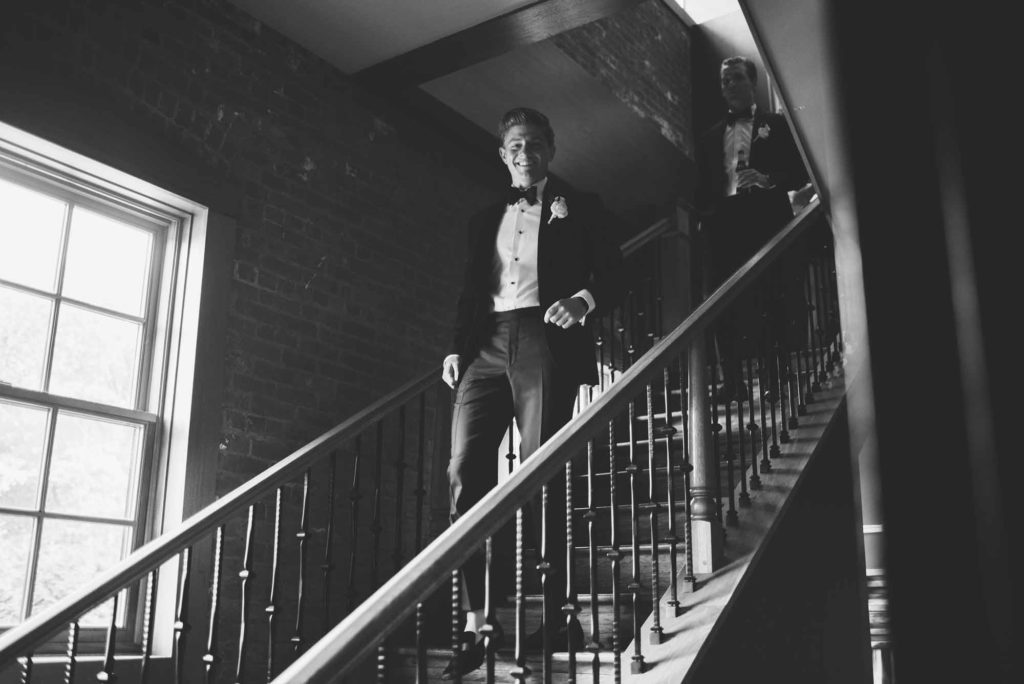
This is the reason I am relaxed about weather here. The mansion is strong enough on its own that a rained-out terrace becomes a change of plan rather than a loss. Carved fireplaces, paneling, tall windows and a staircase that photographs from below, from above and from the landing. Not every estate venue can say that. Most cannot.
The property needs time, not luck
Twenty minutes gets you the lawn. Forty gets you the estate: the stone walls, the bridges over the streams, the drive up through the fields. The most common thing couples tell me afterwards is that they wish they had allowed for the walk.
It is windier than it looks
Open farmland with no windbreak. Veils, hair and anything freestanding on the terrace will move more than the photographs suggest. Worth a word to your planner and your stylist.
Know which space you are actually booking
Pendry lists more than a dozen event spaces, and the names matter when you are comparing quotes.
The Grand Ballroom is 5,000 square feet and takes up to 225 guests. It is a newly designed space that sits adjacent to the Mansion rather than inside it, which surprises couples who assume they are dining under the historic ceilings. The Gallery next door adds 1,143 square feet for up to 75, and works well for late-night.
Ninety Acres, in the estate’s original carriage house, is 2,269 square feet and seats anywhere from 18 to 120. It is a different experience rather than a smaller one, and if your list is under 120 it deserves a proper look before you default to the ballroom.
The historic rooms are on the Mansion’s second floor: The Parlour at 952 square feet for up to 60, Persimmon at 710 for up to 50, plus Walnut and Maple at around 40 each. Those are where the paneling and the fireplaces are.
Outdoors, the Grand Ballroom Terrace and Grand Lawn runs to 4,002 square feet and up to 300 guests, and The Parlour Terrace holds 80 above the lawn.
Arrive earlier than you think for the drive
The last few miles are country roads and the drive up through the fields is part of the arrival. Guests coming from the city consistently underestimate it, and a wedding where thirty people arrive during the processional is a different wedding. Put real directions and a real travel time on the invitation, not just a postcode.
Why we cover Natirar with two photographers, and lately three
Every wedding we shoot has at least two photographers, and recently we have been running three. That is not something couples have to ask for and it is not an upgrade. It is how the studio works.
Natirar is the kind of property that shows you why. When the ceremony is finishing on the terrace, the Grand Ballroom is being set inside, and the light on the lawn has about forty minutes left, those three things are happening at once in three different places several minutes’ walk apart. One photographer has to choose. Two do not. Three means somebody is always already where the day is going next.
On an estate this spread out, that is the whole difference between a record of the day and a record of the parts of it one person could reach.
Ask where you are getting ready, and pick the Mansion
The paneled Mansion rooms are the reason the early frames look the way they do. Pendry also offers the Movement Studio inside Spa Pendry, 967 square feet with floor-to-ceiling mirrors, which is a comfortable modern space and photographs like a comfortable modern space.
Both are fine. They are not the same picture. Confirm what you have access to and for how long, because it varies with the booking.
Capacity and cost
Natirar does not publish a rate card, and no two weddings there are quoted the same. Public reporting puts entry around $100,000 for a full wedding, with per-person catering commonly in the $370 to $475 range, plus a site fee, a food and beverage minimum that varies by day of the week, and an administrative fee reported near 26%. Friday-to-Sunday weddings typically require a two-night guest room block.
Treat those as orientation, not arithmetic. The only figure worth planning against is a written quote for your date and guest count.
For photography, the thing that actually drives coverage here is the geography rather than the guest count. A property with four separate locations and a sunset window on the far side of the estate is a longer day than a hotel wedding with the same number of guests.
Hire a planner for the last month, even if you plan it yourself
Alyssa planned nearly all of this herself and loved doing it. For the final month she brought in Veronica Polce of Veronica Joy Events, and she told me afterwards it was the best decision she made. She got to keep the parts she enjoyed and hand over the parts that turn into work on the day itself.
I would repeat that advice to anyone getting married on an estate. On a property this spread out, somebody needs to be watching the clock who is not you.
Pendry Natirar wedding FAQs
How much does a wedding at Pendry Natirar cost? There is no published rate card. Public reporting puts entry around $100,000 for a full wedding, with per-person catering commonly in the $370 to $475 range, plus a site fee, a food and beverage minimum varying by day, and an administrative fee reported near 26%. Ask for a written quote for your specific date.
What is the difference between Pendry Natirar, The Mansion at Natirar and Ninety Acres? They are one estate. Natirar is the property, the Mansion is the historic house, Ninety Acres is the carriage-house restaurant and garden, and Pendry is the operator. Older listings say Mansion at Natirar, newer ones say Pendry.
How many guests does Natirar hold? The Grand Ballroom takes up to 225 for dinner and the Grand Lawn up to 300. Ninety Acres seats 18 to 120. There are smaller Mansion rooms from 40 to 60. The estate has 68 guestrooms including 21 suites, which is what makes an on-site room block workable.
How far is Natirar from New York City? Pendry puts it at less than an hour from New York City, in Peapack-Gladstone, New Jersey. The last stretch is country road, so allow more time than a map suggests.
Can you get married outside at Natirar? Yes. The ceremony terrace looks out over open farmland with no visual boundary, which is unusual for New Jersey. The mansion interiors are a genuine alternative if the weather turns.
What does a wedding at The Mansion at Natirar actually look like? Alyssa and Joe’s day is above, start to finish, in the light it actually happened in.
Can you bring in outside food and entertainment? Alyssa and Joe finished the night with a cigar rolling station on the terrace and Shake Shack and Mister Softee for late night, alongside the venue’s own catering. Confirm what is permitted with your quote, since policies change, but the estate has clearly accommodated it.
Vendors
- Photography: Julian Ribinik Photography
- Venue: The Mansion at Natirar, now Pendry Natirar
- Wedding planner: Veronica Joy Events, Veronica Polce · @veronicajoyevents
- Florist: Jardiniere Fine Flowers · @jardinierefineflowers
- Band: Starlight Music
- Hair: Craft Hair Studio
- Cigars: Santana Cigars, Tony Santana
- Transportation: Country Club Services
- Lighting: C & C Special Events
- Videography: JLM Video
- After-party DJ: Partners In Sound
- Officiant: Rev. Phil Passantino, Spruce Weddings
- Makeup: ArtSVP Makeup
- Dress: Vera Wang
- Shoes: Sophia Webster
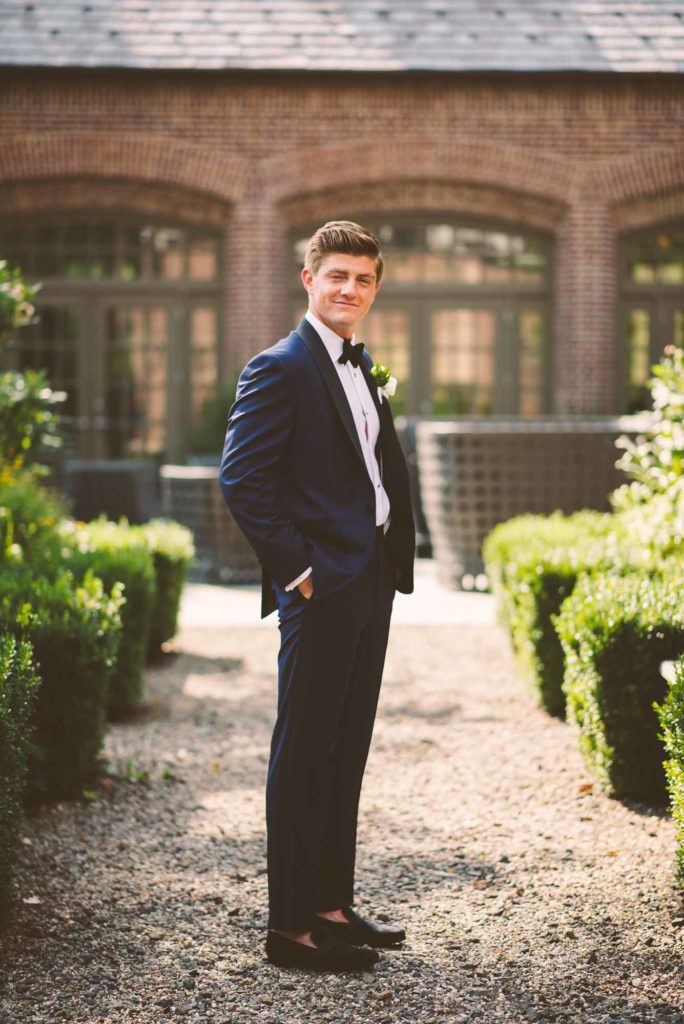
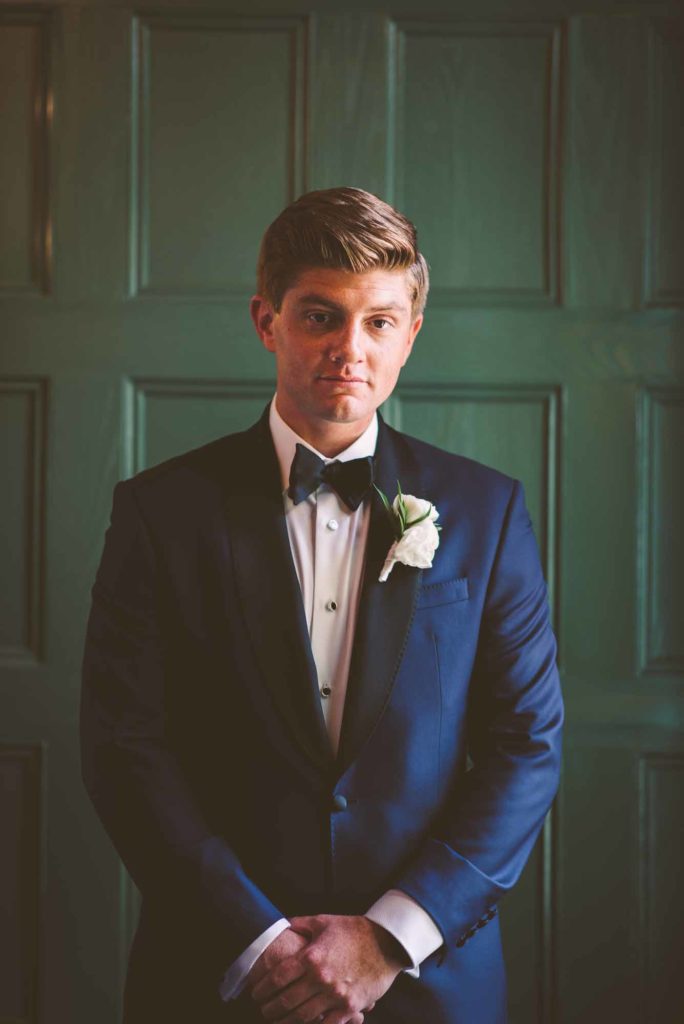
- Tuxedo: Biltmore Tuxedo
- Guest hotel: Bridgewater Marriott
- Late night: Shake Shack and Mister Softee
Planning a wedding at Pendry Natirar
Pendry Natirar is a property I know well enough to plan around rather than react to. If you are considering it, I am glad to talk through the timeline, the light and the walk between the spaces, whether or not you end up working with me.
Follow along @julianribinikstudios